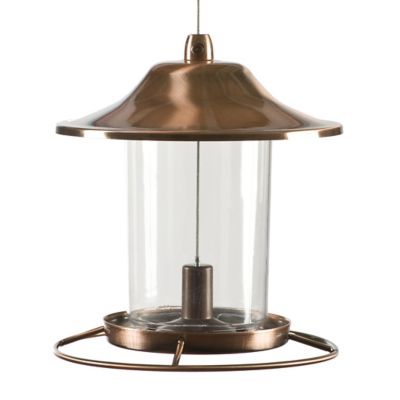
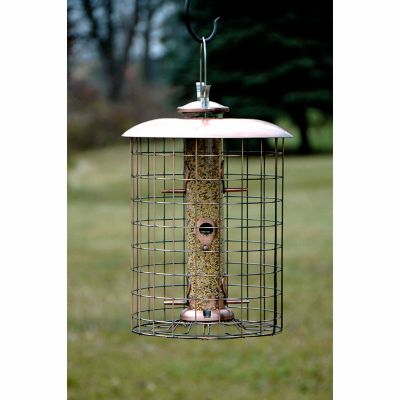
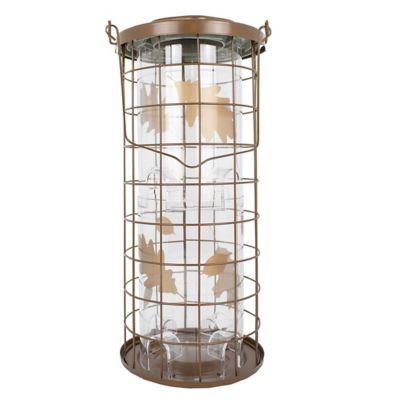
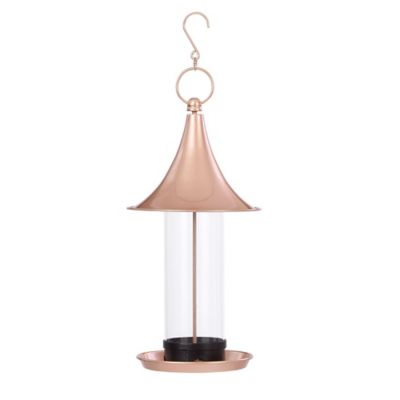
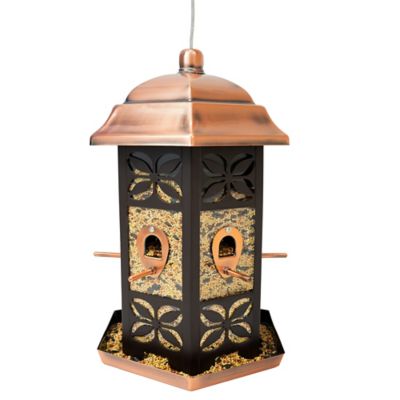
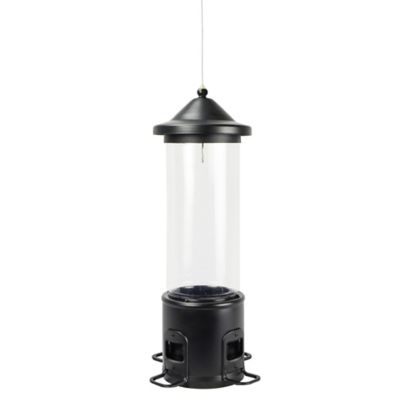
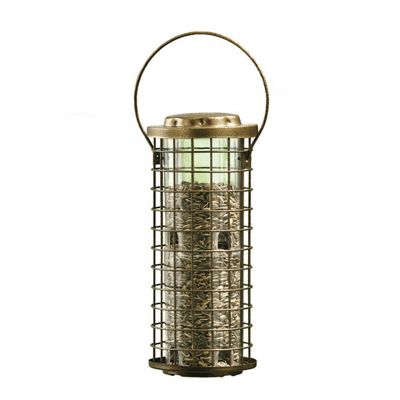
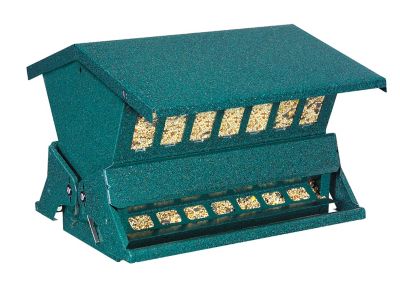
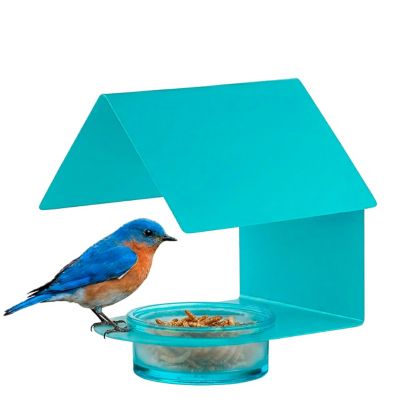
A copper topped bird feeder brings a little old-fashioned charm to the yard while giving backyard birds a dependable place to find seed. The copper roof is often the first thing that catches the eye, especially when it gleams in the sun, but its good looks are only part of the appeal. Copper holds up well outdoors, and when left untreated, it gradually changes from a bright metallic finish to warmer brown tones and, over time, a soft green patina. That natural aging can blend beautifully with a garden, pasture edge, porch, or tree line. Some shoppers prefer the polished look and choose to protect the roof with an outdoor metal finish, while others enjoy letting the weather tell its own story. Feeder bodies may be made from wood, powder-coated metal, vinyl, PVC, or recycled poly lumber, so there are options for everything from a small hanging station to a substantial post-mounted feeder that becomes a lasting part of the landscape. Hanging gazebo-style designs work well near a porch, deck, or sturdy tree limb where birds can be watched from a window. Post-mounted styles are a solid choice for an open lawn, flower bed, or garden border, particularly when a steady feeding spot is easier to reach from ground level. A cottage-inspired design can add the same welcoming feel in a smaller footprint; browse the selection of
Cottage Bird Feeder styles when a cozy, homey look fits your outdoor space.
When choosing a copper topped bird feeder, start with the birds you hope to attract and the amount of seed you want to keep on hand. A larger hopper means fewer trips out with a scoop, which can be handy for a busy household or a yard that sees a steady stream of cardinals, chickadees, finches, jays, and other local visitors. Smaller feeders can be easier to move, clean, and refill, and they make sense when you are just getting started or want to place feeding stations in several parts of the property. Look for a roof that gives birds plenty of cover from light rain and snow, along with a base that includes drainage openings so damp seed does not sit in the bottom and spoil. A removable roof, lift-off top, or stay-open design makes refilling much simpler, especially when the feeder is mounted high enough to require a step stool. Check that perches feel sturdy, seams are well finished, and hanging hardware or mounting posts are appropriate for the feeder’s weight. Stainless steel hardware and weather-resistant construction can help the feeder stay dependable through wind, wet weather, and changing temperatures. Placement matters, too. Set the feeder where it can be seen from a kitchen or living room window, but keep it far enough from dense brush that cats can hide nearby. Many people place feeders several feet from a window or farther away, depending on the layout, to give birds a clear approach and reduce the chance of collisions. Squirrels and larger animals may also take interest, so a strong hanging point, baffle, or well-chosen post location can help protect the seed supply. A copper topped bird feeder makes a thoughtful gift for a bird watcher, gardener, new homeowner, grandparent, teacher, or anyone who enjoys adding more life to the view outside. It can mark a move to a new home, complement a garden project, or give a family an easy way to notice seasonal changes together.
Good feeder care keeps the birds coming back and helps protect their health. Empty old seed and brush away husks regularly, especially during damp weather when mold can develop quickly. Many bird lovers give feeders a thorough cleaning about once a week, or more often when the feeder is busy, using hot soapy water followed by a careful rinse and complete drying. Avoid topping off a half-full hopper without checking what is already inside; fresh seed mixed with clumped or spoiled seed can make it harder to notice a problem. Store seed in a cool, dry container with a tight-fitting lid, and choose a blend suited to the birds in your area. Black oil sunflower seed is a popular all-around option, while smaller seeds and specialty mixes can appeal to different species. Sweep spilled seed from beneath the feeder when possible, since a clean feeding area is less likely to attract rodents and other unwanted visitors. During the cooler months, birds use extra energy to stay warm, so a reliable feeding station can be especially welcome when natural food is harder to find. Even so, the feeder should be checked after strong wind, freezing rain, or heavy snowfall to make sure the roof, perch, hook, and mount remain secure. Copper itself needs little day-to-day attention. Leave it bare for a naturally weathered finish, or use a suitable protective coating if keeping the brighter shine matters to you; always follow the coating directions and keep any treatment away from seed surfaces. With a sensible location, easy access for cleaning, and a roof that sheds water, a copper topped bird feeder can become one of those simple backyard fixtures that feels like it has always belonged there—from the first birds of the morning to the last quiet visitors settling into the trees at dusk.