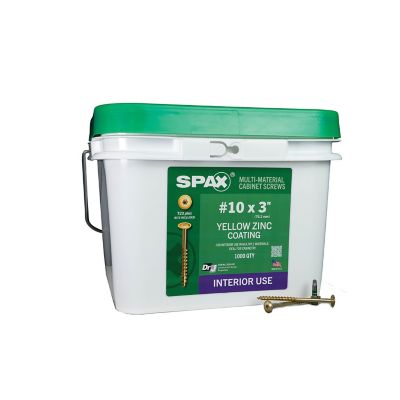
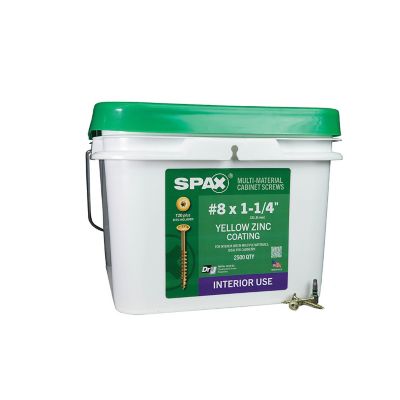
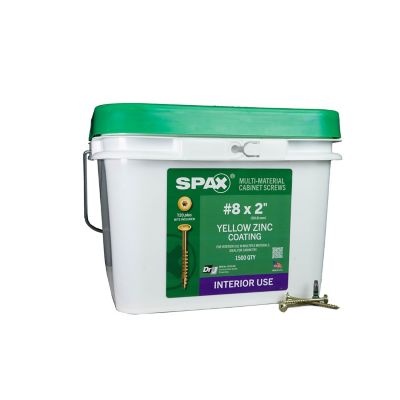
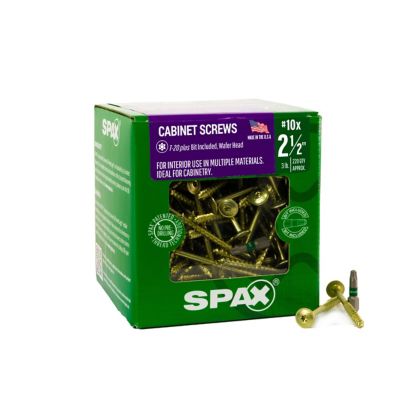
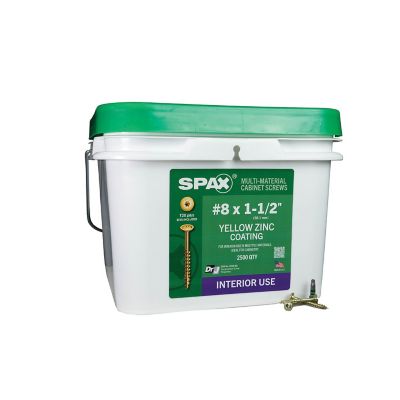
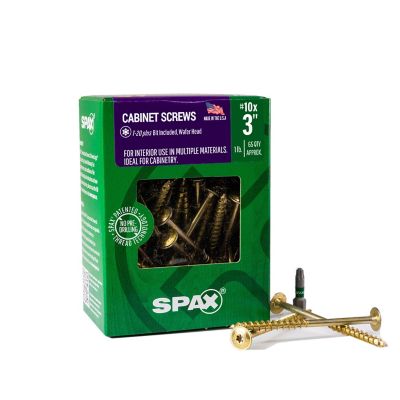
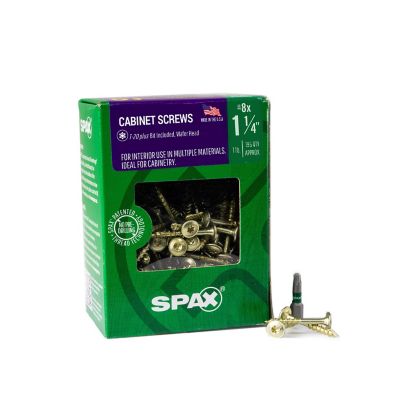
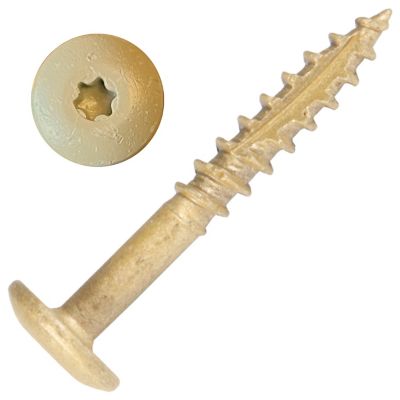
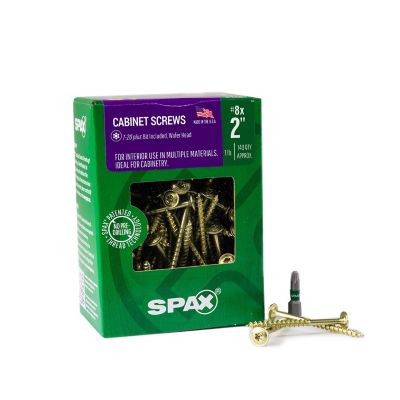
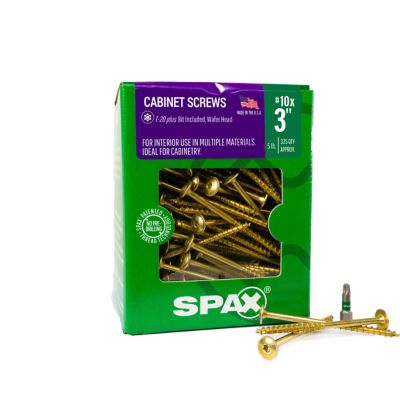
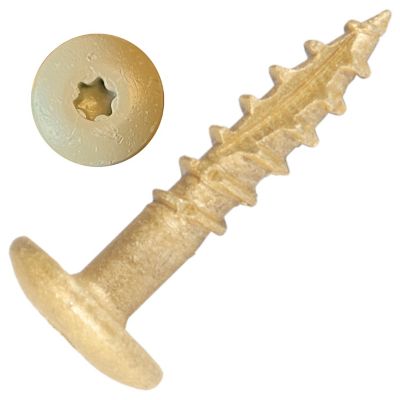
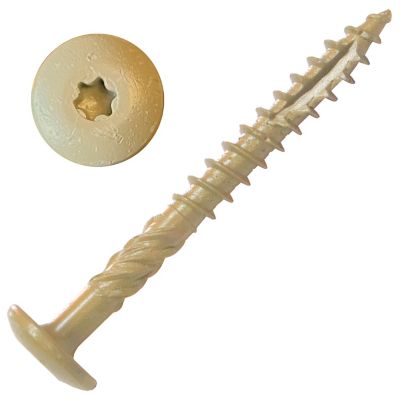
Cabinet installation screws help fasten cabinets to the framing that carries their weight, keeping storage steady as shelves fill with dishes, tools, cleaning supplies or hardware. For many wall cabinets mounted to wood studs, screws with a wide washer head and lengths of 2½ to 3 inches are common choices. The right screw still depends on the cabinet maker’s requirements, the wall construction, the thickness of the mounting rail and the required penetration into solid framing. A broad head spreads clamping pressure across the rail and helps resist pull-through, which matters when a cabinet holds a stack of dinner plates or a row of tool cases. Length alone does not tell the whole story: part of the screw passes through the cabinet, any shims and the wall covering before reaching the stud. Thicker wall finishes or a deeper gap behind the cabinet can change how much of that length actually reaches the wood. Longer is not automatically better, either, since concealed wiring and plumbing also affect fastener selection and placement. Screw diameter, thread design and the strength of the cabinet’s attachment points all play a part in the connection. A thin cabinet back is not necessarily a mounting surface; many cabinets have a separate hanging rail or reinforced area intended to carry the load. Cabinet installation screws also serve a different purpose from screws that join neighboring cabinet boxes or secure hinges and drawer slides. Those connections have different requirements for head shape, length and clearance. In a kitchen, laundry room, farm office or workshop, choosing fasteners around the actual cabinet and supporting structure matters more than matching a familiar screw size. The expected load includes both the cabinet itself and everything stored inside, so an empty box can give a misleading impression of what its mounting hardware will eventually need to support.
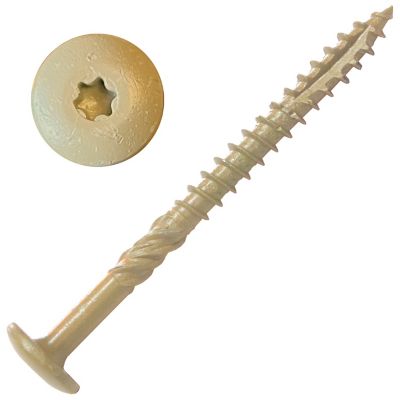
Materials and construction help explain the differences among cabinet fasteners. Steel provides strength for many cabinet-mounting applications, while the finish or coating helps protect the metal under the conditions specified by the manufacturer. Zinc-plated finishes are common for indoor fastening, and other coatings or stainless steel may suit applications where moisture exposure calls for additional corrosion resistance. Those options are not automatically interchangeable: fastener strength, compatibility with surrounding materials and the intended environment still matter. A cabinet beside a utility sink may face splashes that a cabinet in a dry office never sees. Head design deserves just as much attention as the finish. Washer-head and certain wide, low-profile designs provide a broad bearing surface, while a countersinking head is intended to seat differently in the material. Driving a head that does not match the mounting surface can crush fibers or damage a thin rail. Some cabinet systems call for a particular screw and washer arrangement rather than an integral washer head, making the cabinet specifications an important part of the fit. Drive recesses also vary. Square and star drives can provide positive bit engagement, while other drive styles may suit existing tools or specified hardware. A properly matched bit helps limit slipping and damage to the recess, especially when access is tight near the top of a cabinet. Thread spacing, point shape and shank design influence how a screw enters the material and develops its hold. A self-drilling or self-tapping description does not automatically mean a fastener suits every cabinet material or eliminates every pilot-hole requirement. Within the broader range of
Installation Screws, cabinet mounting calls for particular attention to the head’s bearing surface and the fastener’s stated application. General-purpose wood screws, drywall screws and cabinet mounting screws should not be treated as equivalent simply because their lengths look alike.
Fit also changes with cabinet construction and the job the connection needs to perform. Face-frame cabinets may have neighboring frames joined together to keep their fronts aligned, while frameless cabinets often rely on connections through the sides of adjoining boxes. Neither connection replaces the attachment that supports the cabinet at the wall. Screws for joining cabinets need enough engagement to hold the adjoining material without projecting into a storage compartment or breaking through a finished face. Hardwood, plywood, particleboard and medium-density fiberboard do not all respond the same way to a given thread or amount of tightening force. Hardware intended for one material may be a poor match for another, particularly near an edge. Wall construction brings another set of considerations: wood studs, steel framing and masonry require fastening systems suited to those substrates. Ordinary drywall anchors are not a substitute for the specified structural attachment of a loaded wall cabinet. In a workshop, a shallow cabinet above a workbench may carry boxes of fasteners; in a laundry room, a similar-size cabinet might hold heavy bottles and cleaning supplies. Both settings call for attention to the load rather than appearance alone. Straight, level cabinet placement also depends on sound backing and proper support at gaps, since pulling a cabinet against an uneven wall can strain the box or distort its shape. Over the life of the installation, keeping leaks under control and checking for movement, damaged mounting rails or corrosion helps protect the connection. Rust streaks, a widening gap at the wall or a cabinet that shifts when a door opens deserve attention rather than another turn of the driver without checking the cause. Before installation, keeping screws dry and separated by size makes it easier to identify the intended fastener and avoid mixing similar-looking hardware. For homeowners refreshing a kitchen, tradespeople fitting out a workspace or property owners adding storage to a utility room, well-matched cabinet screws are a small part of the project with a substantial job: holding everyday storage firmly to its supporting structure.