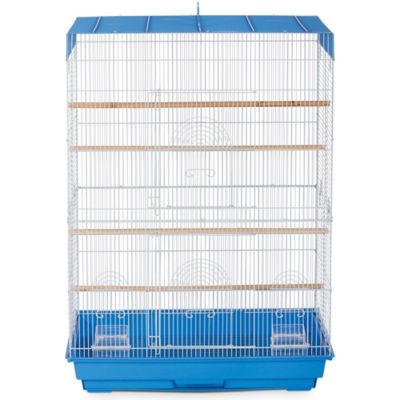
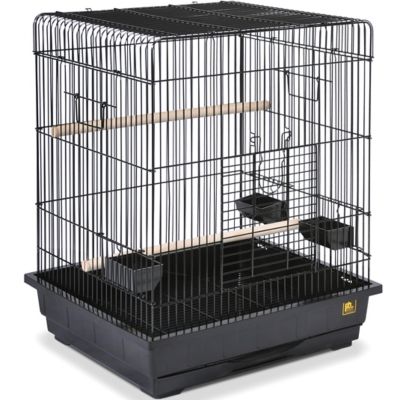
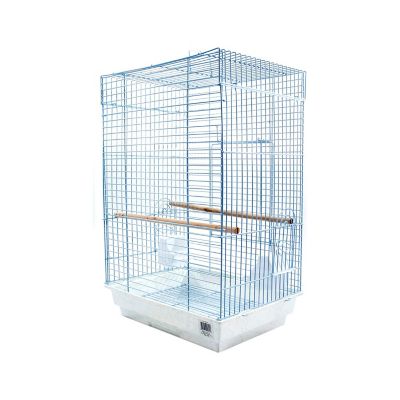
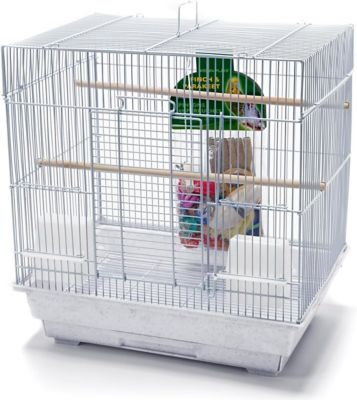
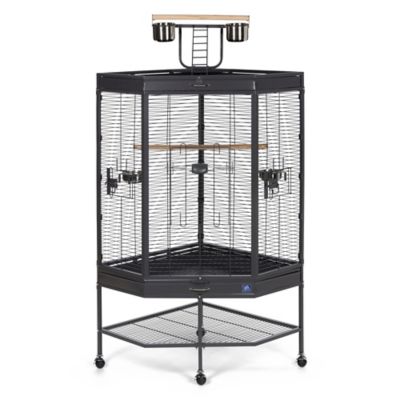
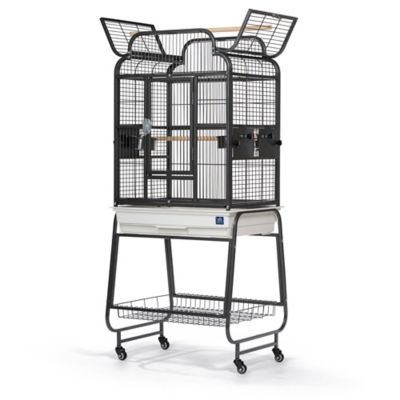
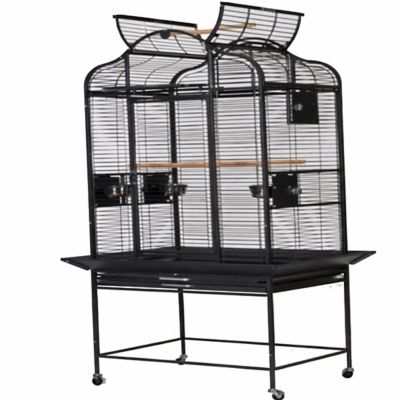
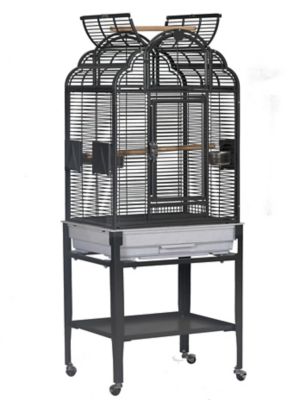
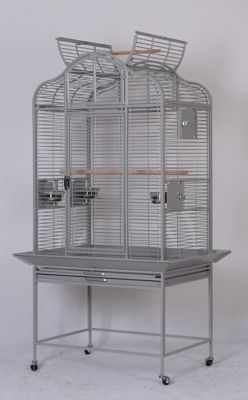
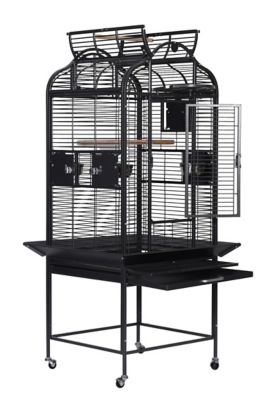
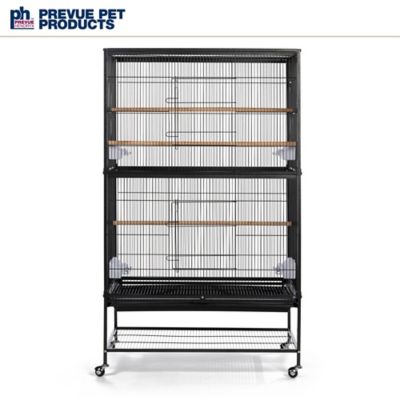
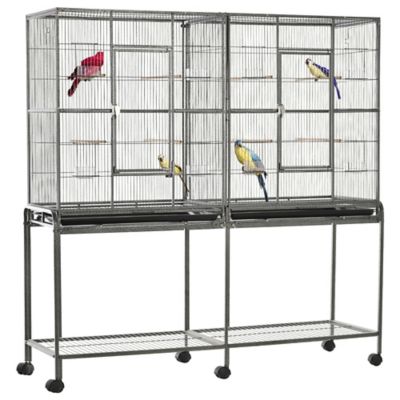
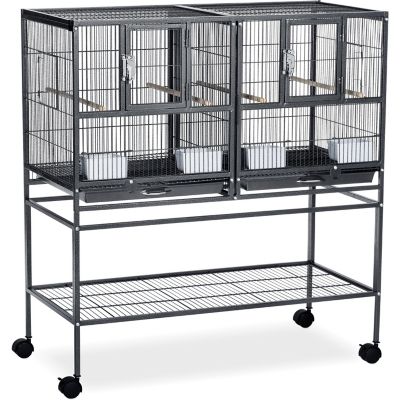
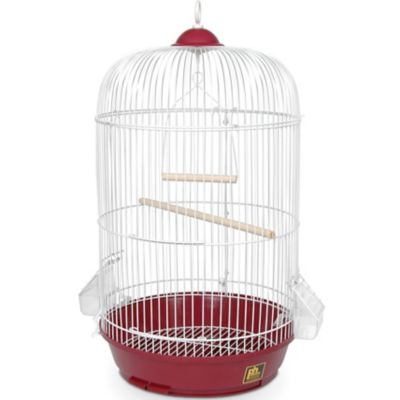
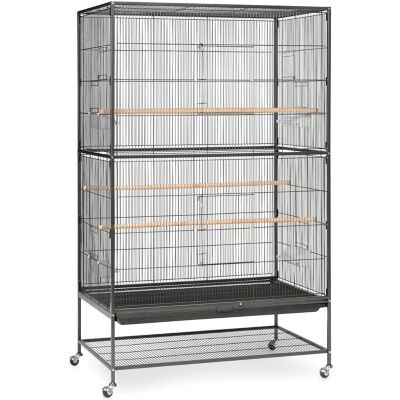
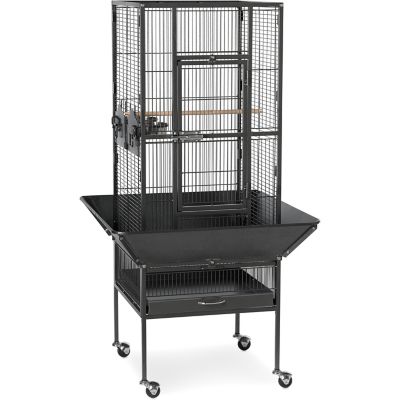
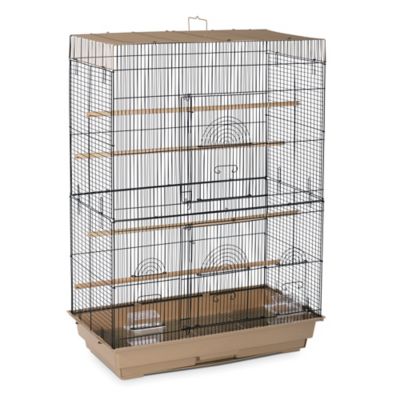
Bird cages for parrots give these bright, busy companions a secure place to eat, rest, climb and settle between supervised time outside the cage. The right fit starts with the bird’s species, adult size, wingspan and beak strength—not simply the height of the enclosure. A tall cage may look roomy beside the couch yet offer too little width for a parrot to spread both wings without touching the bars. Interior space needs to accommodate that full stretch, along with comfortable movement between perches, feeding bowls and hanging toys. Long tail feathers also need clearance from the floor and cage furnishings. For smaller parrots, including budgies, lovebirds and many conures, usable horizontal space supports movement from one side to the other. Larger parrots need more room as well as heavier bars and hardware suited to stronger beaks. Bar spacing is a separate consideration from overall cage size: the gaps must be narrow enough to keep the bird’s head from passing through. A large enclosure with widely spaced bars is not a safe match for a small parrot, even if the extra space seems appealing. Appropriate spacing depends on the species and individual bird, so manufacturer recommendations and advice from an avian veterinarian matter more than broad size labels. Horizontal bars can provide climbing opportunities, while smooth welds and well-fitted joints help limit snagging and sharp contact points. Interior measurements tell more about living space than dimensions that include a stand, roof overhang or seed guard. A spacious layout also leaves room to rearrange furnishings without crowding the bird’s normal paths. For an older parrot or one with limited mobility, accessible doors, lower perch positions and easy-to-reach food stations may matter as much as climbing height. The best-fitting enclosure supports the bird’s everyday habits while leaving enough open space to move comfortably.
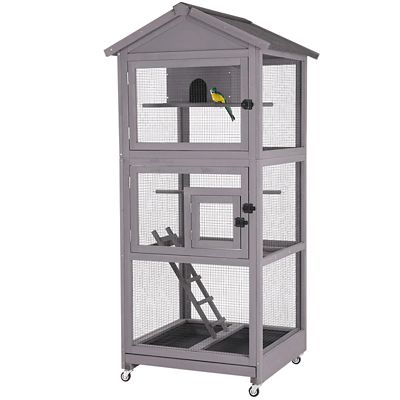
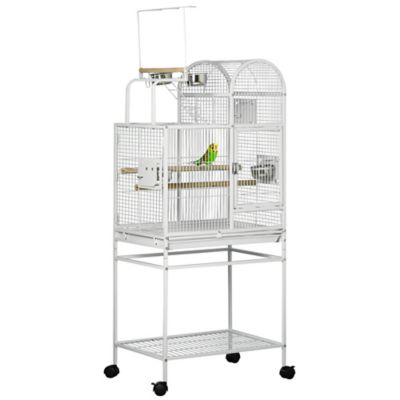
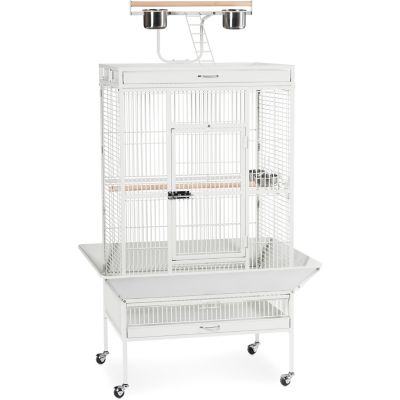
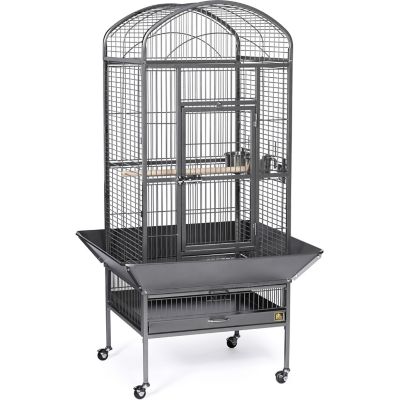
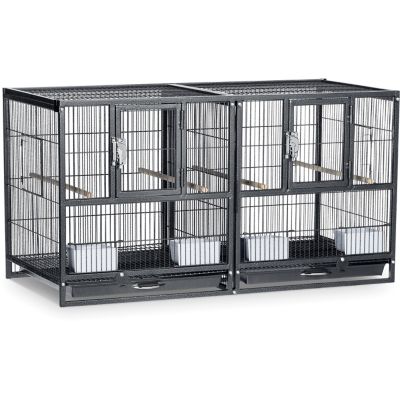
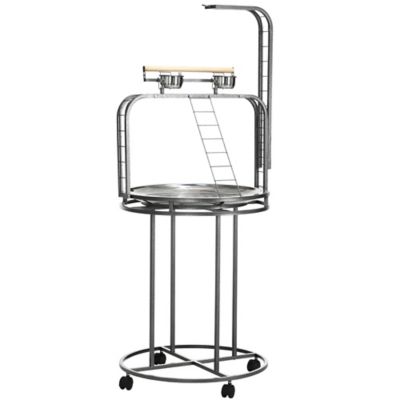
Materials and construction affect how a parrot cage handles chewing, climbing and regular cleaning. Stainless steel and properly finished, bird-safe powder-coated steel are common options, with differences in weight, finish care and resistance to corrosion. Stainless steel still needs routine cleaning, while a coated surface needs regular inspection for chips, peeling or exposed metal. Any enclosure should have smooth surfaces, secure connections and no accessible sharp edges. Unknown paints, exposed lead-containing components and galvanized wire that a bird can chew are concerns because parrots explore their surroundings with their beaks. Bar thickness and the strength of the frame deserve attention alongside spacing, especially for birds that pull at doors or work on fittings. Secure latches are particularly important for parrots that can lift simple hooks or slide loose catches. Feeder doors can make bowl changes easier, but they need to close firmly without leaving an escape gap. Cage styles bring different benefits to a household. Flight-style cages emphasize horizontal room, dome-top designs add upper space, and playtop cages provide a perch or activity area above the enclosure for supervised time. A rooftop play area does not replace a roomy interior or regular opportunities for exercise outside the cage. Large front doors make it easier to position branches and retrieve bowls without squeezing everything through a small opening. Rolling stands can help with cleaning beneath the enclosure, and locking casters help keep it from shifting during everyday activity. The full footprint matters, too: projecting seed guards, open doors and attached play areas can take up more space than the cage body alone. A cage intended to roll between rooms needs clearance through doorways and a stable base. These practical details make a difference in a busy home, where feeding, floor cleanup and moving around the enclosure are part of the daily routine.
Easy access for cleaning helps keep a parrot’s living space comfortable without turning every small mess into a major chore. Slide-out trays, removable grates and bowls that lift out readily can simplify the steady cleanup of food scraps, pellet crumbs, feathers and droppings. Plain paper liners make changes straightforward and allow a clear look at droppings, which can help an owner notice changes worth discussing with an avian veterinarian. A grate does not eliminate cleaning; droppings and food can collect on its bars as well as in the tray below. Cage surfaces and accessories need bird-safe cleaning methods, thorough rinsing when appropriate and time to dry before the bird returns. Strong fumes and aerosol cleaners do not belong around parrots. Inside the cage, perches with suitable, varied diameters and textures give feet different gripping positions. Bird-safe natural branches can add that variety, provided the wood is correctly identified, free of pesticide exposure and properly prepared. Perch placement matters just as much as the material: food and water bowls stay cleaner when they are not directly beneath a favorite resting spot. Space for
Parrot Toys allows chewing, foraging and other engaging activity without filling every open stretch of the enclosure. Toys need secure attachment and inspection for frayed strands, broken pieces or openings that could trap toes or a beak. Around the cage, a settled spot near household activity can offer company without putting the bird in the middle of constant commotion. Kitchens, smoke, cooking fumes, accessible cords and unsupervised contact with other pets pose hazards. A quieter setting for uninterrupted rest matters, too. For a new parrot keeper, a growing bird or a companion moving into a better-fitting enclosure, the most useful features are the ones that suit daily life. A cage can also be a thoughtful gift for an established bird owner when the bird’s needs and the available floor space are confirmed beforehand.