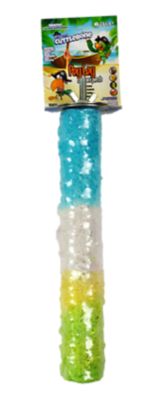
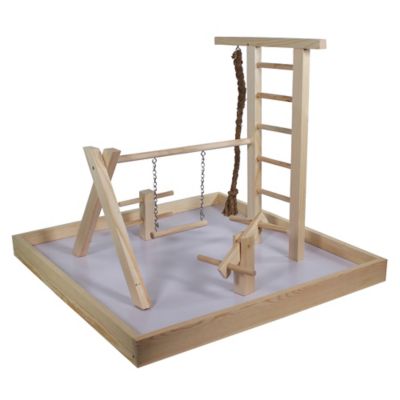
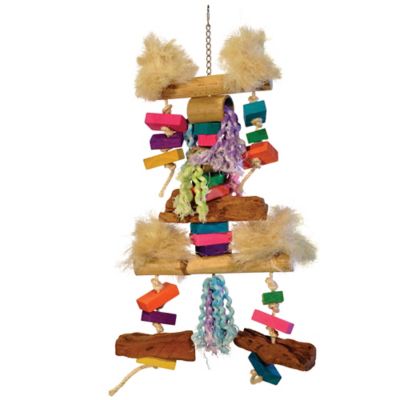
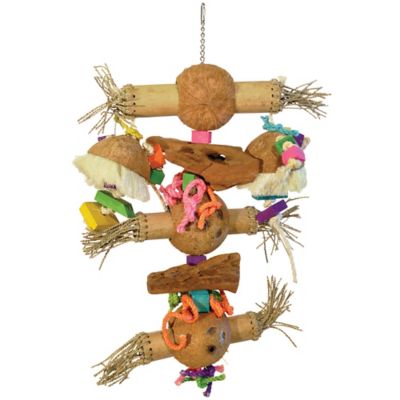
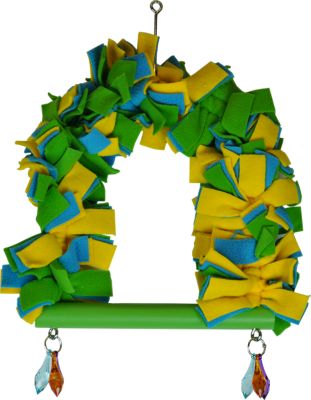
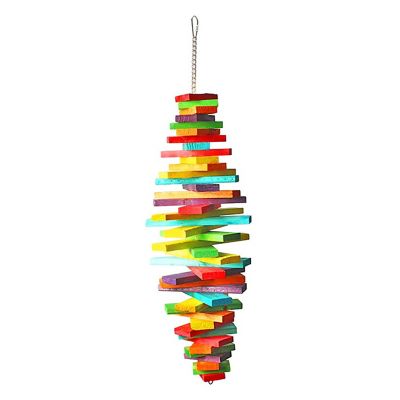
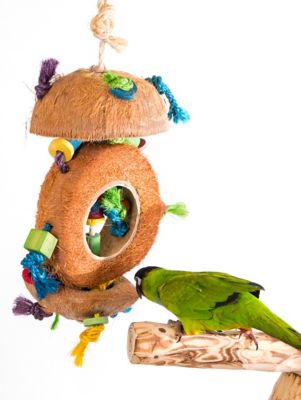
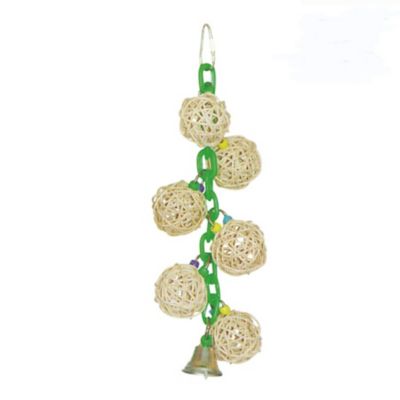
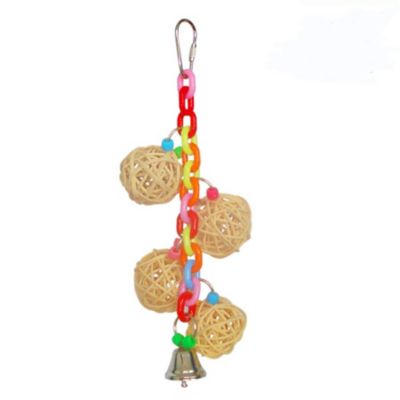
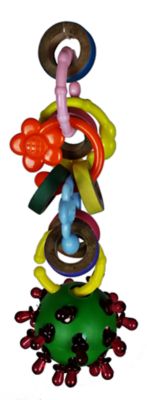
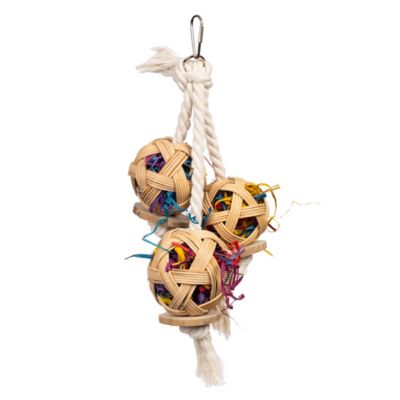
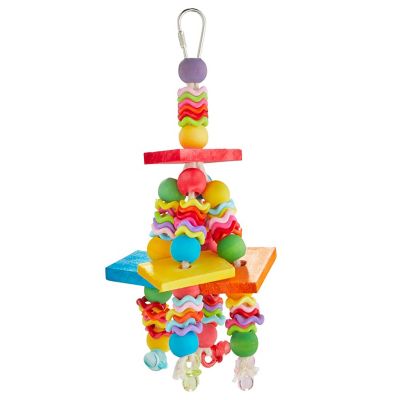
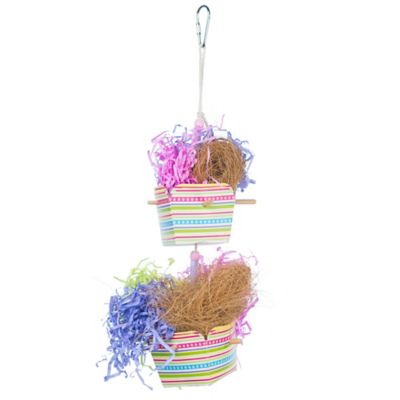
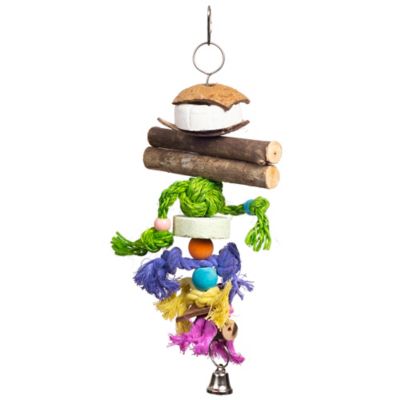
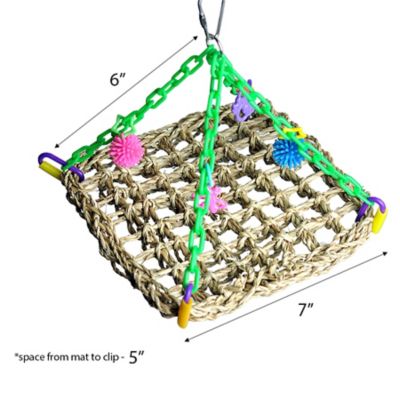
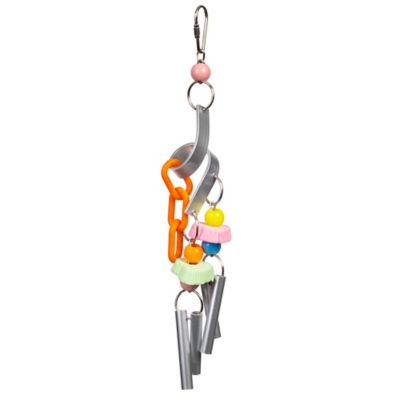
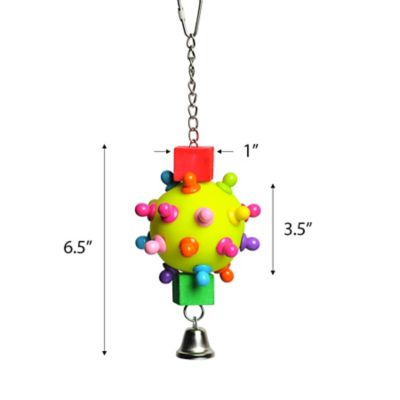
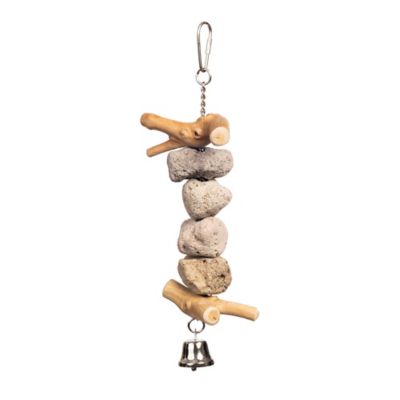
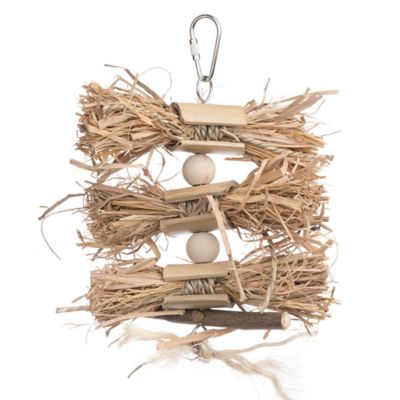
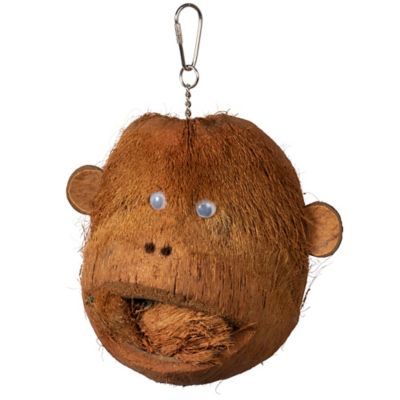
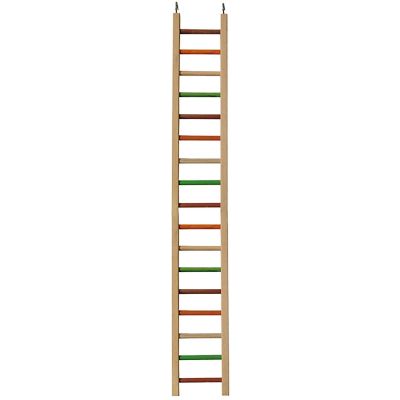
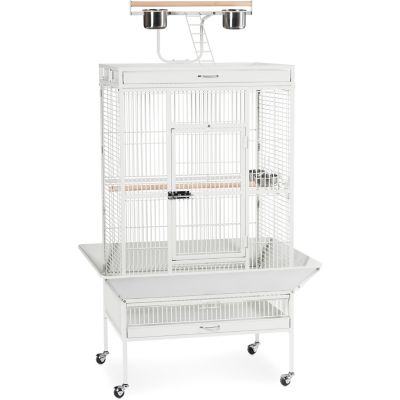
Bird toys for African greys provide opportunities to chew, forage, solve puzzles, and stay physically active. A well-rounded assortment includes different kinds of play, since a bird that loves peeling paper may show little interest in a hard wooden block, while another settles in for a long chewing session. Chew toys offer an outlet for shredding and gnawing, foraging toys turn part of the daily food ration into something to search for, and puzzle toys add compartments or moving parts to investigate. Foot toys bring play down to a perch or play surface, where an African grey can grip, turn, and explore an object with a foot and beak. Swings and climbing toys offer movement when their size and placement suit the bird. Together, these toy types give an active parrot several ways to stay busy without making every activity the same. The goal is not to fill every inch of the cage, but to offer engaging choices while leaving room to stretch, move between perches, and reach food and water. For a cautious grey, a small paper bundle holding a familiar food reward may draw more interest than a large hanging toy. A confident chewer may favor layered wood pieces that give way a little at a time. Some birds enjoy working through a puzzle beside their person before tackling it on their own. Others prefer something straightforward that they can pick apart at their own pace. Browsing
Parrot Toys can help round out that mix with options that match a grey’s beak strength, habits, and comfort level. Preferences may change over time, so having several textures and activity types makes rotation easier. Toys are one part of daily enrichment, alongside social interaction, appropriate exercise, a balanced diet, and regular avian veterinary care. A good match gives the bird a manageable challenge rather than simply adding another object to the cage.
Materials and construction matter when a strong beak gets to work. Bird-safe, untreated wood offers a satisfying chewing surface, while plain paper and cardboard intended for bird play provide lighter textures for tearing and exploring. Softer wood can suit a hesitant chewer, while denser wood may give a more determined bird a longer project. Harder does not automatically mean better; a toy that never gives way can be less appealing than one the bird can gradually dismantle. For shredding toys, some wear is the point, and replacement is part of their intended use. Paper components should be free of staples, exposed adhesive, and coatings that are not identified as bird-safe. Color alone says little about suitability, so material information matters more than a bright appearance. Stainless steel hardware is a practical feature to look for, with secure attachment points and no sharp edges or openings that could catch a toe, beak, or leg band. Metal parts should have a clearly identified composition rather than an unknown coating. Puzzle components need to withstand normal handling without cracking into sharp pieces, and small removable parts can present swallowing hazards. Rope deserves close attention because loose fibers and unraveling strands can snag toes or create ingestion risks. Any rope toy needs frequent inspection and removal when it starts to fray. Sizing matters: a toy should be manageable for the bird without having parts small enough to swallow or gaps that could trap the head. A heavy hanging toy also needs an attachment and cage location that can support its weight. African greys vary in confidence and chewing strength, so a species label is a starting point, not the whole decision. Construction, dimensions, and the way an individual bird handles a toy all help determine whether it belongs in that bird’s play space. A toy that holds up well for gentle exploring may not suit a parrot that goes straight to the connectors and starts taking things apart.
Fit also includes how a toy works within the everyday setup. A hanging chew toy near a steady perch can be easier to reach than one swinging out in open space, while a foraging activity needs a position where the bird can work comfortably. Climbing and swinging toys should leave clearance from cage walls, feeding dishes, and neighboring accessories. A few thoughtfully placed toys often make more sense than a crowded arrangement that blocks movement. New additions are best introduced under supervision, especially for a grey that hangs back from unfamiliar shapes. Keeping a new toy nearby at a comfortable distance before moving it closer gives a cautious bird time to look it over without pressure. Foraging difficulty should match experience, too. An easy-to-reach reward can help a beginner understand the activity, while additional layers or compartments can offer more work for a practiced bird. Food rewards count toward the daily diet, and any fresh food left in a toy needs prompt removal before it spoils. Care requirements depend on the materials: washable parts need cleaning according to their care directions and thorough drying, while soiled paper, cardboard, and other absorbent components generally need replacement. Routine checks around connectors, knots, drilled holes, and chew surfaces help catch damage before the next play session. Cracked parts, sharp edges, loose hardware, and frayed strands are reasons to take a toy out of reach. Rotation can keep familiar favorites interesting without changing the whole setup at once, and a well-loved toy does not need to disappear just because something new joins the mix. For someone choosing a gift for an African grey’s caretaker, the bird’s established preferences, cage dimensions, and chewing habits are more helpful than appearance alone. Whether the household includes a longtime parrot keeper or someone welcoming their first grey, the right assortment supports a steady routine of chewing, exploring, and problem-solving, with room for the bird’s own personality to lead the way.