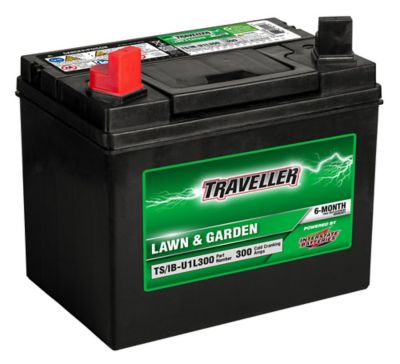
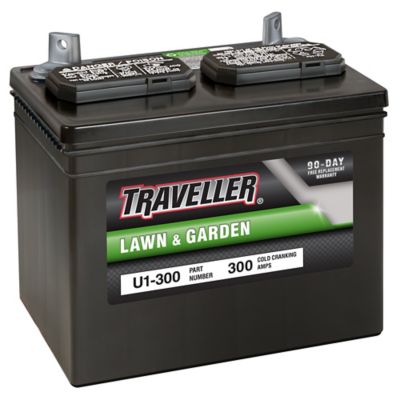
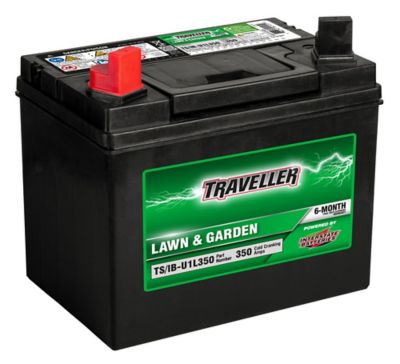
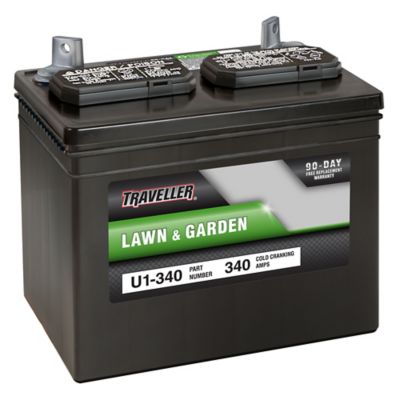
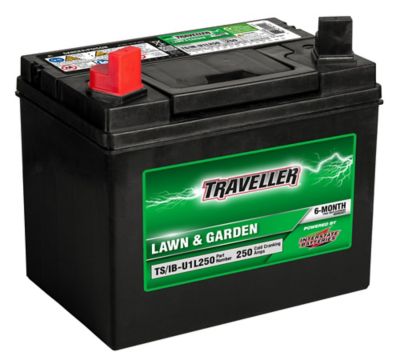
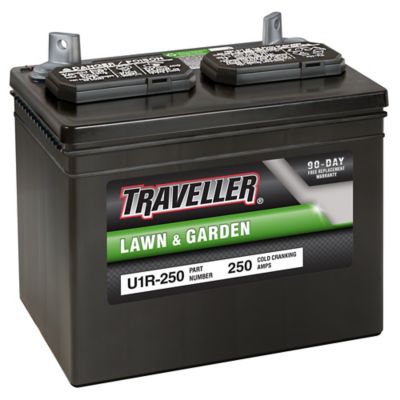
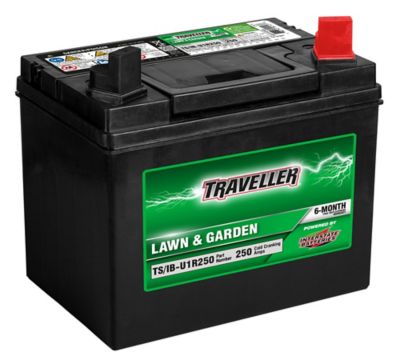
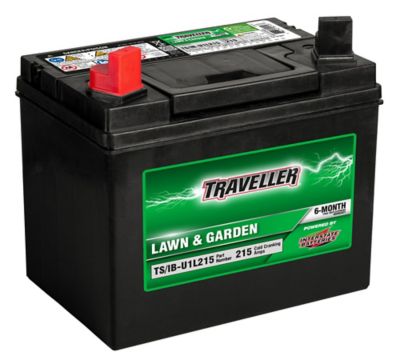
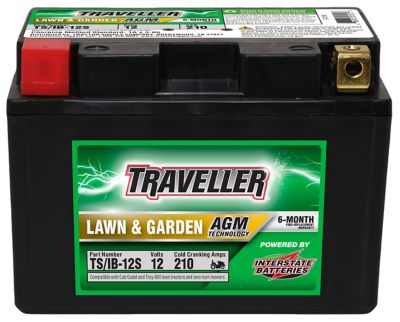
Batteries for lawn mowers keep equipment ready for the work around a farmhouse, a fenced backyard, or a long stretch of grass beside the driveway. The right replacement depends first on how the mower gets its power. On a gas-powered riding mower or lawn tractor, the battery supplies the electrical energy needed to crank the engine and support electrical components. On a cordless electric mower, the battery supplies the energy that runs the machine, so battery capacity has a direct bearing on mowing time. Those jobs call for different battery designs, even when the equipment handles similar ground. Many riding mowers take a 12-volt Group U1 starting battery, but the mower’s manual and battery specifications are the deciding references. Group size describes a case size and layout standard; it does not make every battery with that designation interchangeable. Case length, width, height, terminal location, and the hold-down arrangement all matter. A battery needs to sit securely in its tray, leave clearance beneath the seat or hood, and connect without stretching or crossing the cables. U1 and U1R designations commonly indicate different terminal arrangements, making the position of the positive and negative posts worth checking against the mower’s requirements. Terminal style matters, too, since the cable ends need a proper connection to the battery posts. Cold cranking amps, often shortened to CCA, describe starting capability under standardized test conditions. Meeting the engine manufacturer’s minimum CCA requirement is more useful than choosing by case size alone, while a higher CCA number cannot make up for the wrong voltage or terminal layout. For a mower that stops and starts several times while moving between fenced sections, a properly matched starting battery helps keep those restarts from turning into interruptions. Slow cranking can also come from loose cables, corrosion, or a charging-system problem, so a replacement battery is only one part of a sound starting system.
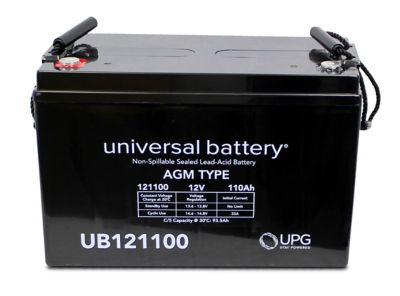
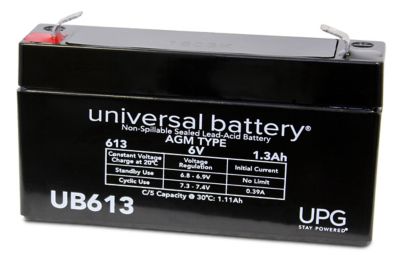
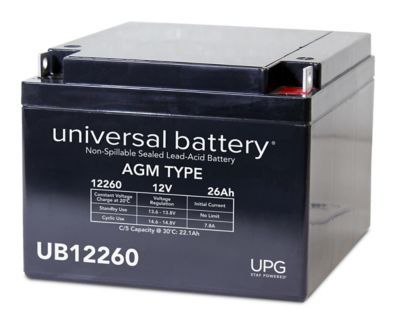
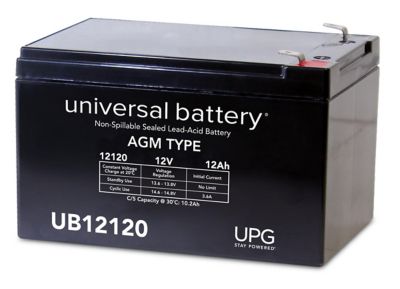
Lead-acid lawn mower batteries generally come in flooded and absorbed glass mat designs, each with care requirements worth considering alongside fit. Flooded batteries contain liquid electrolyte around lead plates. Some have accessible cell caps and require periodic electrolyte checks according to the manufacturer’s directions; others have sealed designs that do not allow water additions. Where topping off is permitted, distilled water is the appropriate choice, not extra acid. AGM batteries hold electrolyte in fiberglass mats between the plates and do not require watering. Their construction helps resist spills and handle vibration, which can be helpful on equipment that travels over rutted ground or uneven turf. An AGM battery still needs compatible charging, clean connections, and a secure mounting point; a sealed case does not eliminate routine attention. The tray and hold-down do more than keep the battery tidy beneath the seat. They help limit movement that can strain cable connections or damage the case while the mower crosses bumpy ground. Clean, snug terminal connections also help the starting system deliver current without unnecessary resistance. A lead-acid mower battery often provides around three years of service, and some reach five with suitable charging and care, though frequent deep discharge, electrical faults, and long periods without charging can shorten that span. Starting batteries are built for brief bursts of current rather than repeated deep discharge, so running accessories with the engine off can take a toll. For equipment that sits between mowing jobs, a compatible automatic maintainer can help keep the battery charged without the continuous charging associated with a basic, unregulated trickle charger. Charger settings need to match both battery voltage and chemistry, including any AGM requirements. Lead-acid batteries also need upright handling and a ventilated charging area away from sparks and flames. Cracked cases, leaks, or swelling call for attention before charging or installation, and spent batteries belong in an appropriate battery recycling program rather than household trash.
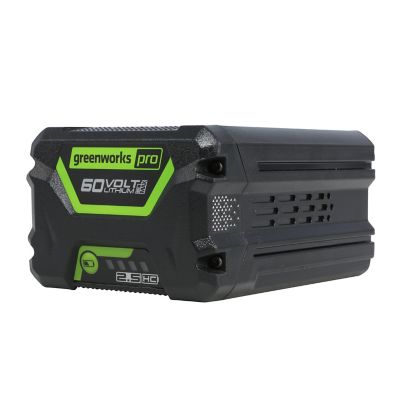
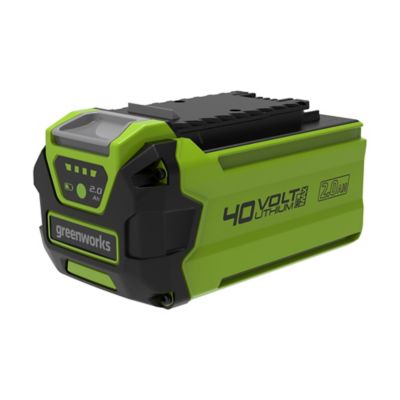
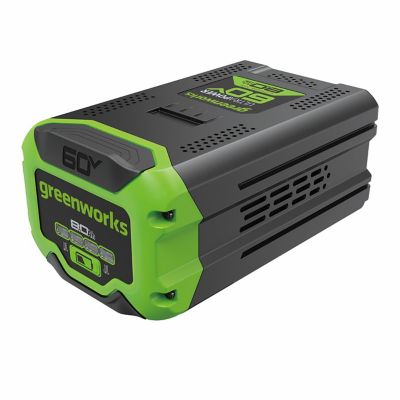
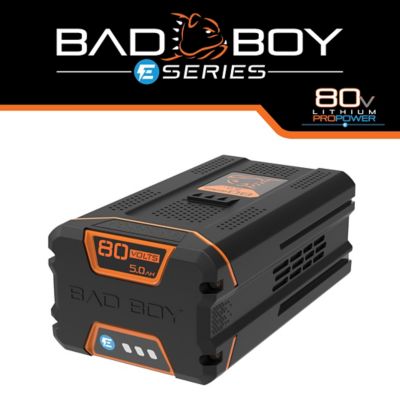
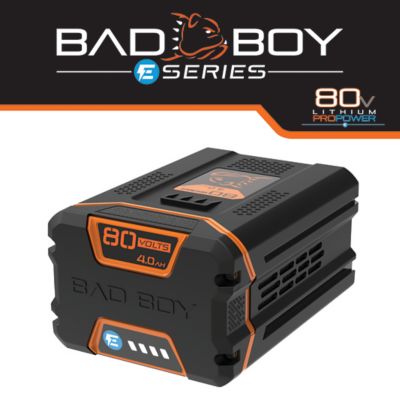
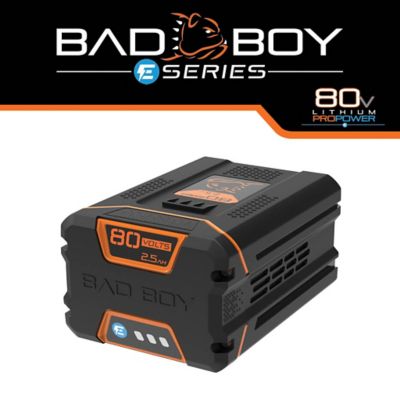
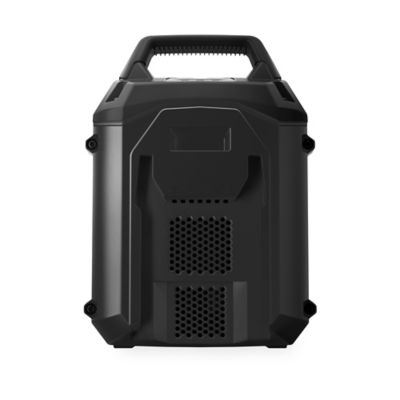
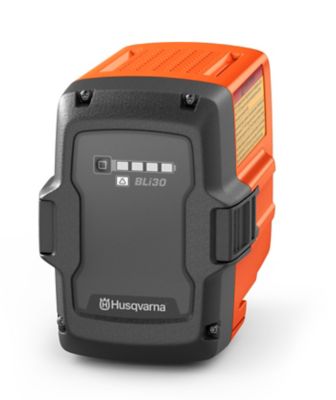
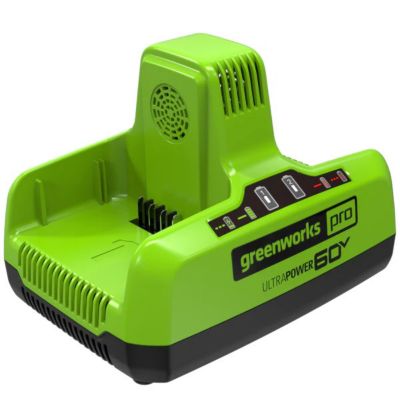
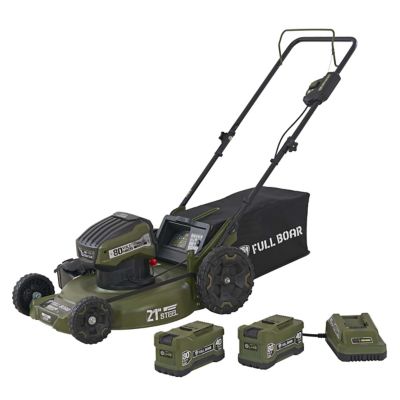
Cordless mower batteries bring a different set of considerations, especially for folks moving away from gas equipment or sharing battery power across several yard tools. Rechargeable lithium-ion packs commonly power these mowers, and compatibility depends on the tool platform, battery connection, electronic controls, and charger—not simply the voltage printed on the pack. A battery with a similar shape or matching voltage is not necessarily suitable for another mower. Some machines take one pack, while others require two batteries together or have separate bays that allow the operator to switch power sources. Those arrangements affect how many batteries are needed for a mowing session and how charging fits around the rest of the yard work. The
Cordless Lawn Mower Batteries category focuses on these rechargeable power sources rather than conventional engine-starting batteries. Amp-hour ratings describe charge capacity, while watt-hours account for both voltage and amp-hours and help describe stored energy. Capacity comparisons are most useful within a compatible platform, and neither rating promises a fixed amount of mowing time. Tall grass, thick growth, self-propelled operation, slopes, and bagging can all increase power demand. A small yard with short, regular cuts places different demands on a battery than a broad lawn broken up by trees, gates, and banks. Greater capacity can extend working time, but it may also add weight, so pack size and mower compatibility still matter. A compatible spare pack can make sense when one mowing session stretches beyond a single charge, provided the mower manufacturer permits that battery combination. Care centers on protecting the housing and contacts, keeping packs dry, and following the maker’s charging and storage directions. Packs with impact damage, swelling, or damaged contacts should not go back into service. Whether the job calls for cranking a riding mower or powering a cordless machine through the last pass beside the fence, matching battery construction, electrical specifications, and care needs to the equipment helps keep mowing plans on track.