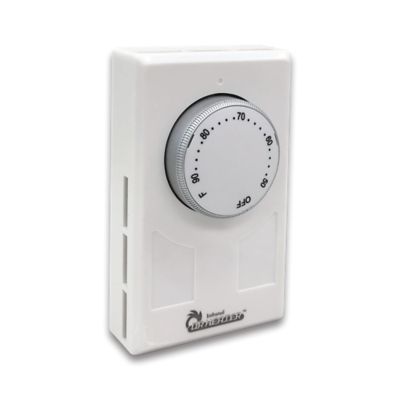
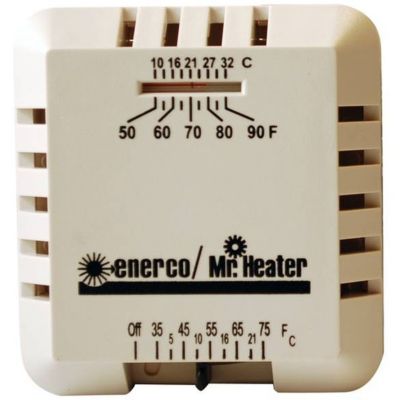
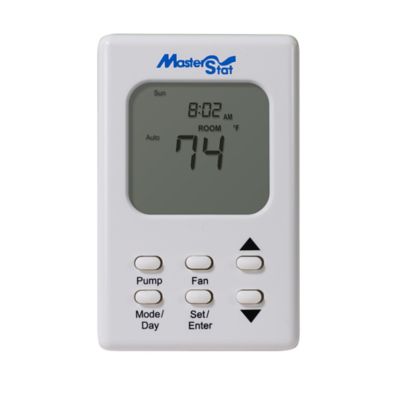
An adjustable thermostat is a control that lets you choose a target temperature and regulates compatible heating or cooling equipment to help maintain that setting. It gives you a practical way to manage comfort, ventilation, or a temperature-sensitive space without standing beside the equipment and switching it on and off yourself. Around a home, workshop, greenhouse, or utility building, the right thermostat connects the needs of the space with the way the equipment operates. Adjustable thermostats range from straightforward mechanical controls with a turning dial to electronic controls with buttons and a digital display. A dial can make sense where simple operation matters most, especially when several people need to recognize and change the setting without working through menus. A digital display can make the selected setting and the measured temperature easier to distinguish, depending on the design. Manual adjustment and programming are separate features: a thermostat can have an electronic display while still requiring someone to change its setting by hand. Programmable controls, where compatible, can follow a schedule instead of holding one setting around the clock. For a shop that sees regular work hours or a room with a predictable routine, that distinction can matter more than the appearance of the faceplate. Readable markings, a comfortable adjustment knob, and clearly identified operating modes all contribute to everyday ease of operation. Some applications call for a broad adjustment range, while others benefit from a narrower range suited to the connected equipment. The temperature differential also matters. This is the amount of temperature change associated with the control switching equipment on or off, and it influences how closely the space stays near the selected setting. A tighter differential may produce more frequent cycling, while a wider one allows a greater swing. The appropriate balance depends on the equipment, its operating requirements, and what the space needs to support.
Compatibility is the foundation of a useful thermostat setup, whether the control belongs on a wall, mounts near a fan, or connects through an approved plug-in arrangement. Low-voltage heating and cooling controls, line-voltage controls, and millivolt controls are not interchangeable simply because their adjustment ranges look similar. The thermostat must match the equipment’s control voltage, wiring arrangement, operating mode, and electrical load requirements. A rating suitable for a resistive heater does not automatically establish suitability for a motor-driven fan, since different loads place different demands on switching components. Motor ratings, starting demands, and any need for a separate relay or contactor belong in that compatibility check. Heating and cooling operation also differ: a heating control generally calls for operation when the measured temperature falls below its switching threshold, while a cooling control generally calls for operation when it rises above that threshold. Some controls support both functions, but the wiring and settings still need to match the intended application. In a greenhouse, for example, a ventilation thermostat may signal a compatible exhaust fan to move heat out of the building. In a work area, a thermostat may control an appropriate heater to maintain a chosen working temperature. A control intended for room comfort may not suit an enclosure, process, or other application with different sensing and safety requirements. Physical fit matters alongside electrical fit. Mounting dimensions, electrical box requirements, terminal access, probe length, and cord routing can determine whether a control fits neatly into an existing arrangement. A remote sensor can offer placement flexibility when the control body cannot sit at the measurement point, provided the sensor and cable meet the application’s requirements. Any hardwired installation needs to follow the equipment instructions and applicable electrical codes, with a qualified professional handling work that calls for electrical expertise. A thermostat is an operating control, not a substitute for required overheat protection, equipment safeguards, or other independent safety devices.
Construction and placement help determine how well an adjustable thermostat holds up to everyday chores. Indoor living spaces, dusty workshops, and damp agricultural settings present different demands, so the enclosure’s stated environmental rating matters more than a rugged appearance alone. Depending on the design, housings may feature plastic or metal, while sensing components may sit inside the housing or at the end of a separate probe. Moisture protection, corrosion resistance, impact exposure, and the permitted operating conditions all deserve attention when a control will sit near tools, feed handling, irrigation equipment, or busy work areas. An indoor control does not become suitable for a wet location just because it sits beneath a roof. Placement also affects what the thermostat senses. Direct sunlight, a nearby heater, an open doorway, or an air stream from a fan can cause a reading that does not represent the rest of the space. In a workshop with benches along one wall and equipment across the room, the air beside the thermostat may differ from the air where people spend most of their time. Air movement is part of that larger picture, and
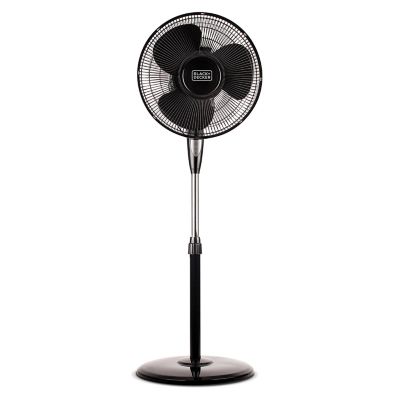
Adjustable Fans offer ways to direct airflow where it is needed, though a fan does not replace temperature control or lower air temperature by itself. Routine care generally centers on keeping vents and sensing areas clear, protecting cords and probes from damage, and following the manufacturer’s cleaning directions. Battery-powered controls also need attention to battery condition so the display and switching functions remain ready for operation. Clear access makes those small upkeep tasks easier and keeps the setting visible without reaching behind equipment. For property owners, growers, maintenance crews, and folks keeping a home workspace comfortable, a well-matched adjustable thermostat brings the setting, sensor, and equipment together in a manageable arrangement. The most useful choice fits the electrical system, the mounting space, the surrounding conditions, and the everyday job it needs to do.