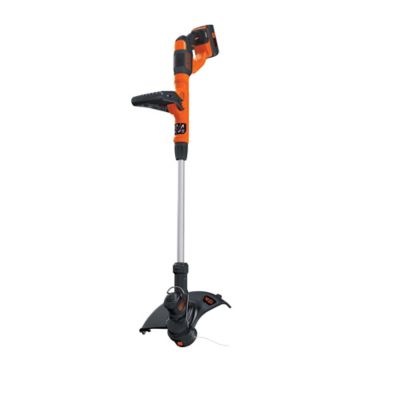
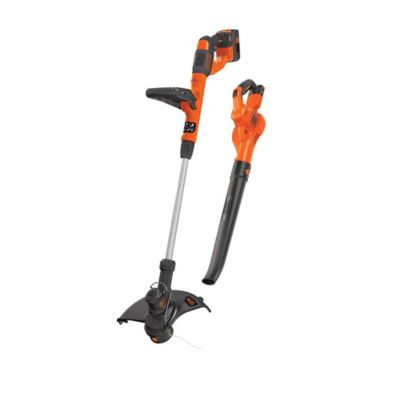
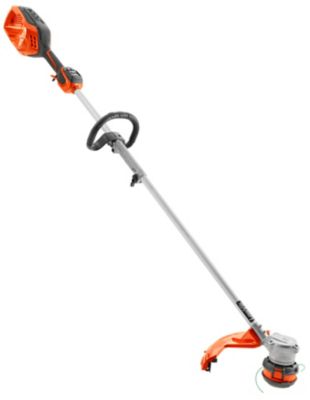
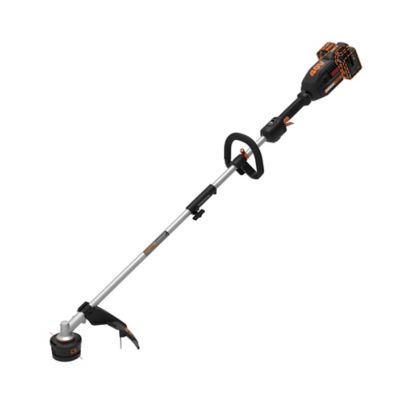
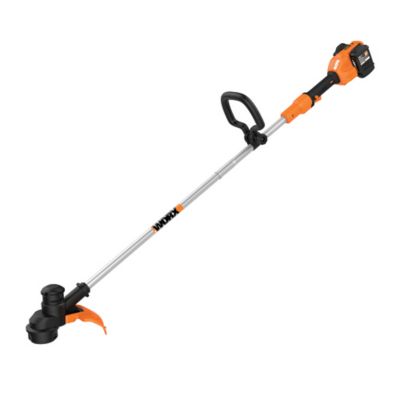
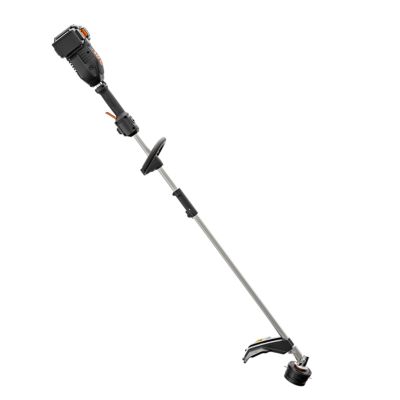
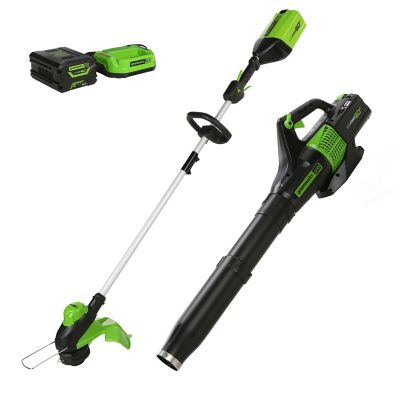
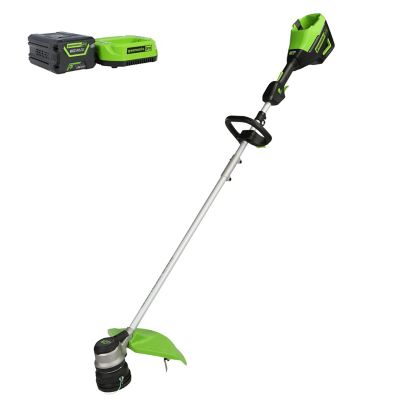
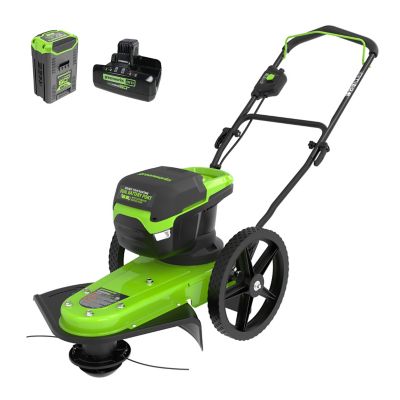
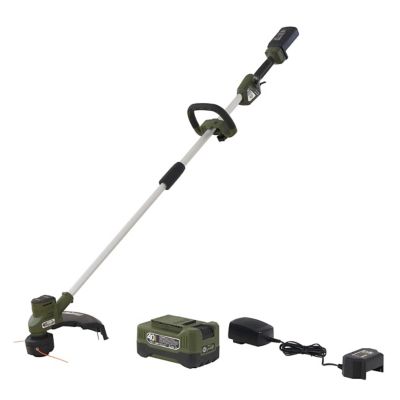
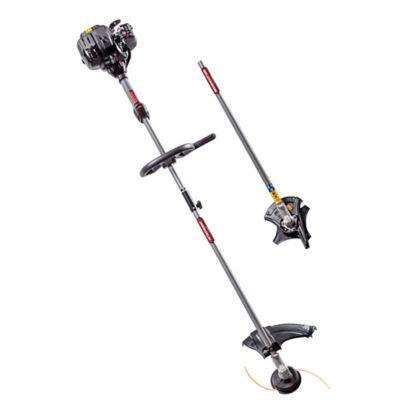
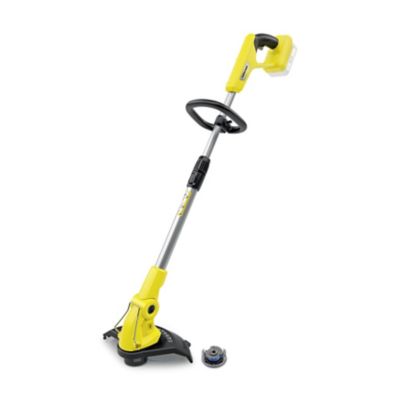
A 40V string trimmer is a handy choice for keeping grass and weeds under control without dealing with gasoline, oil mixing, or a pull cord. These cordless yard tools are well suited to the places a mower cannot reach, including fence lines, mailbox posts, shed corners, tree trunks, garden borders, ditches, and the narrow strip along a driveway. Many homeowners use one to clean up after mowing, while acreage owners and rural property managers may keep one ready for taller grass, light brush, and fast-growing weeds around outbuildings. A 40V battery system offers more muscle than lighter-duty cordless trimmers, making it a practical fit for small to medium residential yards and many larger properties when the work is divided into manageable sections. Runtime commonly falls somewhere around 30 to 60 minutes, though the actual time depends on battery amp-hours, grass thickness, cutting width, line size, and whether the tool is running at full power. A larger battery can help cover more ground, while a smaller battery may be easier to carry for quick touch-ups. Keep in mind that advertised runtime is generally measured under particular test conditions, so dense weeds and heavy overgrowth will use more power than trimming a neatly maintained lawn edge. If you already use cordless equipment, choosing a trimmer that shares a battery platform with your other yard tools can make it easier to keep charged batteries on hand and get more value from the system. A battery-powered mower can also be a useful match for a quieter, lower-maintenance lawn care setup; browse
40 Volt Lawn Mowers when comparing cordless equipment for the rest of the yard.
When comparing 40V string trimmers, start with the work you expect to do most often. A wider cutting swath can clear more grass with each pass and speed up open areas, while a narrower head may feel easier to control around flower beds, fence posts, landscaping stones, and young trees. Look for a variable-speed trigger if you want to ease off the power around delicate areas or save battery while trimming light grass, then add power when you reach thick weeds along a pasture edge. Some models use a bump-feed system, where the trimmer line advances when the head is tapped against the ground, while others offer automatic or fixed-line feeding. A bump-feed head can be convenient when you prefer to control the amount of line, though it may take a little practice to avoid feeding more than needed. Check the recommended line diameter as well. Thicker line is often better for stubborn weeds and rough growth, but it can draw more battery power and may require a trimmer designed to handle it. Weight and balance matter just as much as power, especially when the job includes a long fence row or several acres of lawn. An adjustable shaft, pivoting head, padded handle, and shoulder strap can make a noticeable difference by keeping the cutting head positioned comfortably instead of forcing your wrists or back to do all the work. Some 40V trimmers are attachment-capable, allowing one powerhead to work with compatible tools such as an edger, cultivator, brush cutter, or pole saw. That setup can save storage space and reduce the number of motors to maintain, but compatibility is not universal, so check the attachment system before purchasing. For straightforward grass trimming, a dedicated trimmer may be all you need. For broader property upkeep, an attachment-ready option may fit better into a seasonal tool collection.
Cordless equipment is especially convenient during the warmer part of the year, when grass edges grow quickly and weeds seem to appear overnight, but a 40V string trimmer can stay useful through the cooler months as well. It can clear late-season growth around gates and sheds, tidy up areas before winter weather, and handle light cleanup whenever paths, fence lines, or garden borders become overgrown. The lower noise level compared with many gas-powered tools is helpful in neighborhoods, around livestock, and near homes where you do not want a loud engine running for a small job. Even with less noise, wear eye protection, sturdy shoes, long pants, and hearing protection when appropriate, and keep people and pets away from the cutting area. Rocks, wire, sticks, and bits of mulch can be thrown from the head, especially when trimming beside gravel drives or rough ground. Before each use, inspect the guard, shaft, handle, line, and battery contacts, then remove the battery before clearing tangled grass or making adjustments. Keep spare batteries stored in a dry, protected place and allow a hot battery to cool before charging. A clean, charged 40V string trimmer also makes a thoughtful gift for a new homeowner, someone caring for a rural property, or a family member who prefers simple cordless tools over gas equipment. It is useful for small touch-ups, routine lawn maintenance, and those in-between jobs that do not justify bringing out a larger machine. With the right battery size, cutting width, line setup, and comfort features, a 40V trimmer can become the tool you reach for whenever the lawn edges look untidy or weeds start crowding the places you work hard to keep neat.