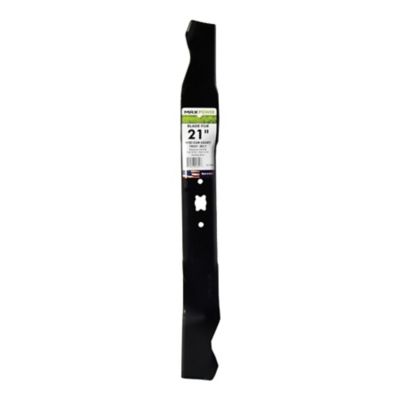
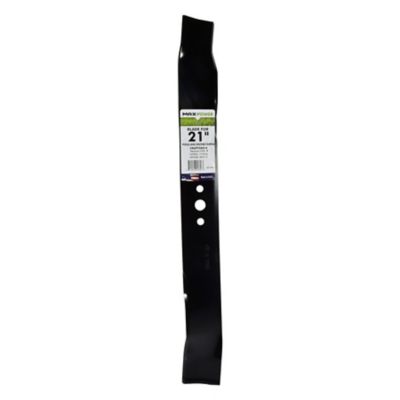
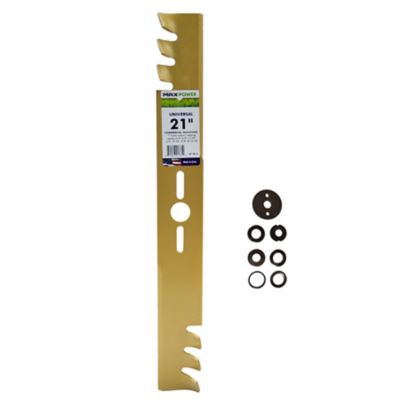
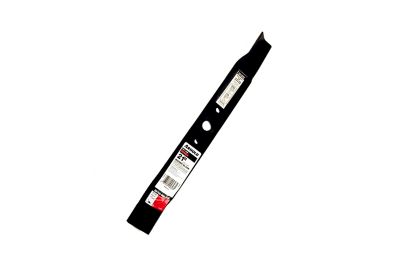
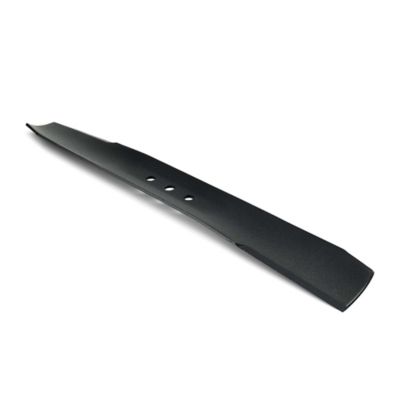
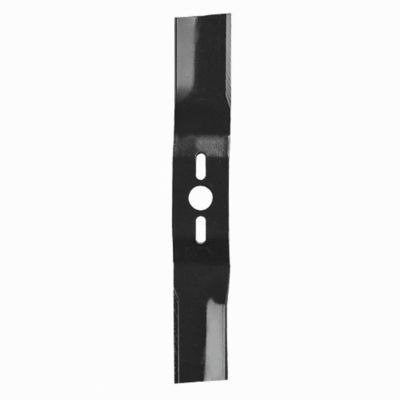
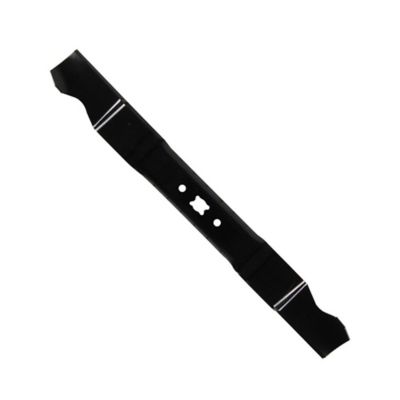
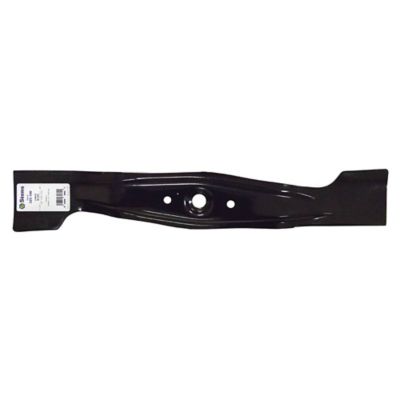
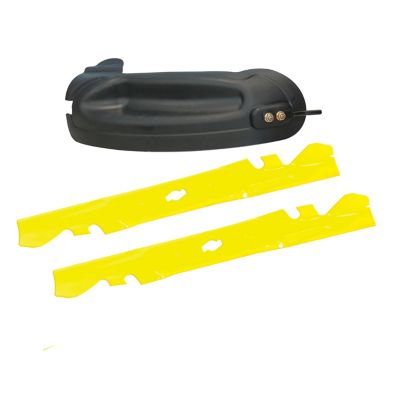
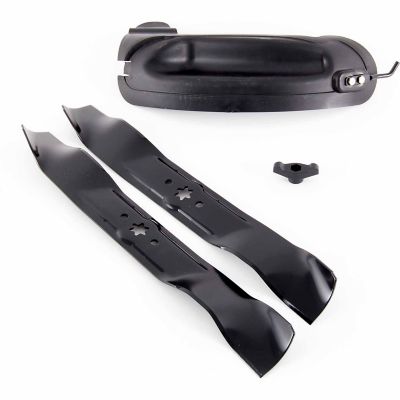
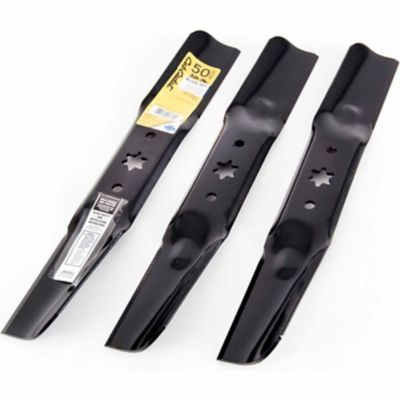
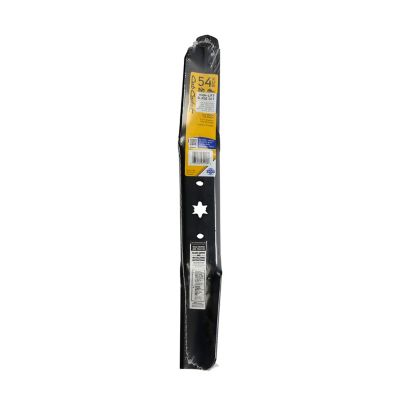
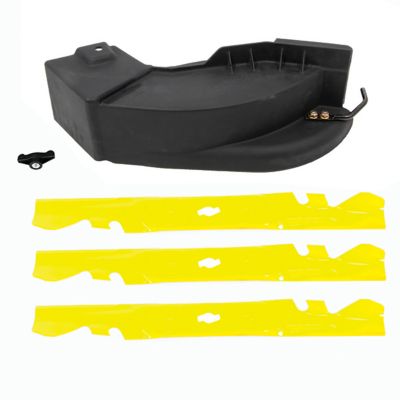
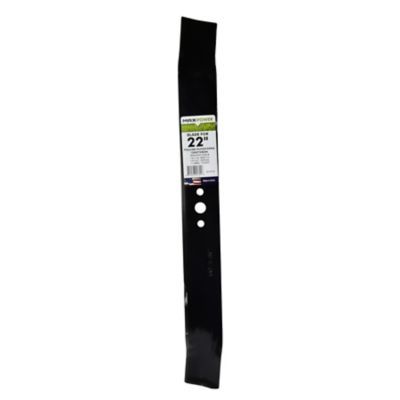
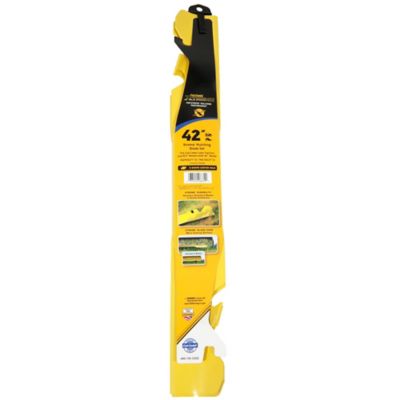
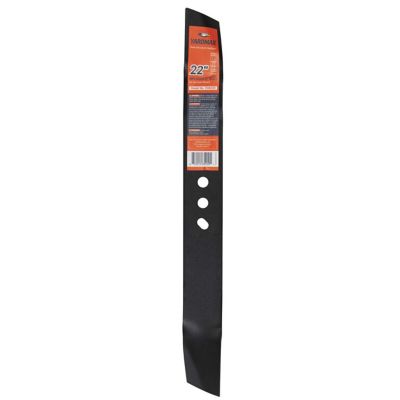
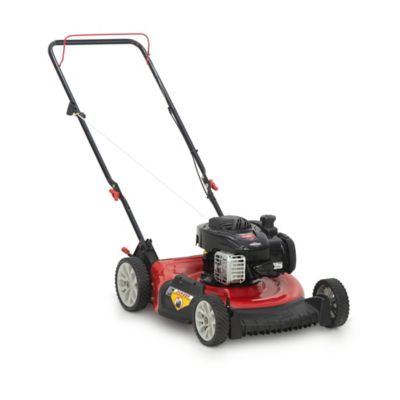
A 21-inch mulching blade is a common replacement part for a walk-behind lawn mower, sized to fit many mowers built around a 21-inch cutting deck. Instead of simply pushing grass clippings out of the deck, a mulching blade is shaped to lift and recut clippings into smaller pieces as the blade turns. Those fine clippings can settle back into the lawn, where they break down and return nutrients to the soil. For homeowners who mow around a farmhouse, acreage, rental property, or a few small outbuildings, a fresh blade can help the mower handle ordinary grass more cleanly and leave a neater finish. It can also be a handy item to keep on the shelf before the mower gets put away for the cooler months. Dull or damaged blades tend to tear grass rather than cut it, which can leave the lawn looking ragged and put extra strain on the mower. A replacement may be useful for anyone who maintains their own yard, from a first-time homeowner learning the ropes to an experienced property owner who keeps a mower ready for paths, garden edges, and open stretches of turf. These blades can also make a practical gift for a parent, neighbor, landowner, or do-it-yourselfer who takes pride in keeping equipment in working order. Since fit matters more than appearance, start by checking the mower’s model information and the blade already installed. A 21-inch length alone does not guarantee compatibility. The center mounting hole may be round, keyed, star-shaped, bow-tie shaped, or another pattern, and the blade’s overall profile, width, thickness, and mounting hardware must also match the mower. Looking up the mower model number and comparing it with the replacement part information is one of the simplest ways to narrow down the right choice.
Before adding a 21-inch mulching blade to your cart, inspect the old blade and note every detail that affects fit. The model and serial information is often found on a label near the rear of the deck, under the handle area, or along the mower housing, though the exact location varies. If the original blade has a stamped part number, record it and compare that number with the information provided for the replacement. Pay close attention to the center hole shape and diameter, as well as any outer holes, locating tabs, or washer requirements. Some replacement blades are designed for one mower family, while others are made to fit several configurations and may include adapter washers. A multi-fit design can be convenient, but the included hardware must be used exactly as directed so the blade sits centered and secure. Blade length is another important detail; a blade that is too long may contact the deck, while one that is too short may not provide the intended cutting path. It is also worth confirming that the blade is intended for mulching rather than side discharge or bagging alone, since the cutting edge and lift design can differ. Prices commonly vary with construction, compatibility, and whether the blade is sold with mounting hardware, with many standard options falling in the general range of $15 to $45. Treat that range as a starting point rather than a guarantee, because mower specifications and included parts can affect the final cost. For owners of a different mower setup, browsing related fitments such as
Snapper Mower Blades may help when sorting through replacement choices without guessing from blade length alone.
When replacing a mower blade, work on a level surface with the engine stopped and the mower fully cooled. Disconnect the spark plug wire on a gas mower, remove the battery or follow the manufacturer’s shutoff procedure on an electric model, and keep the mower from starting while the blade is being handled. Wear sturdy gloves because even a worn blade can have a surprisingly sharp edge, and use the correct wrench to loosen the retaining bolt. If the mower must be tipped, follow the mower manufacturer’s instructions so fuel and oil do not move into places they should not be. Take a moment to note which side of the old blade faces down before removing it; the cutting edge and raised lift area need to face the proper direction on the replacement. After installation, make sure the blade is centered, the mounting bolt and washer are correctly positioned, and everything is tightened to the mower maker’s specifications. A blade that is loose, installed upside down, or mounted with the wrong hardware can cause vibration, uneven cutting, or damage to the deck. Once the mower is back on its wheels, listen for unusual vibration during the first use and stop immediately if anything sounds or feels wrong. Mulching works best when the grass is dry enough to cut cleanly and the mower is not forced through tall, wet growth in a single pass. During the warmer part of the growing season, regular mowing and a sharp blade help clippings break down evenly; as the weather cools and mowing becomes less frequent, a clean, serviceable blade leaves equipment better prepared for storage. Keep the replacement information with the mower’s maintenance records so the next blade search is easier, especially when caring for more than one machine or helping a family member find the right part.