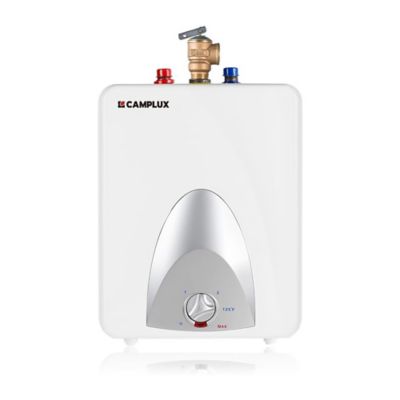
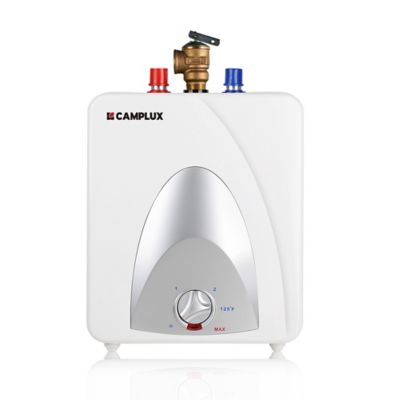
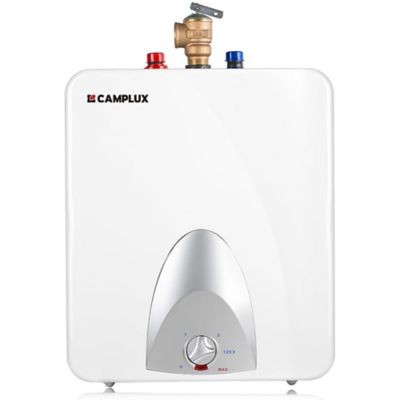
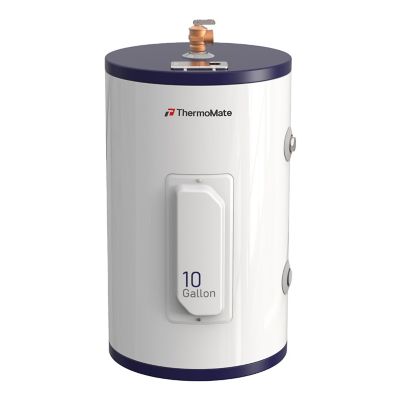
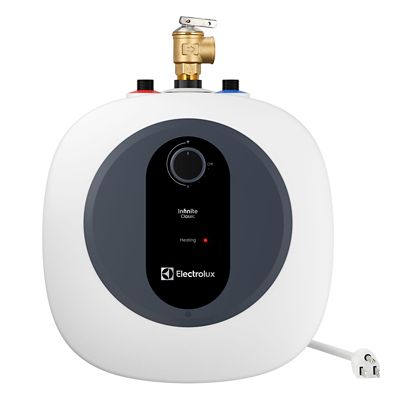
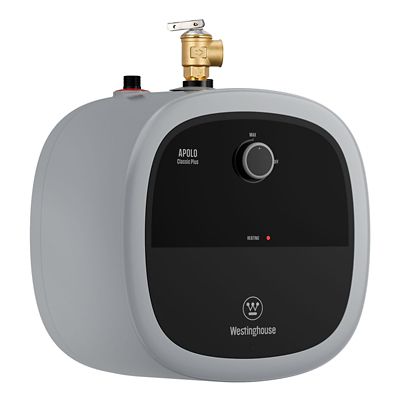
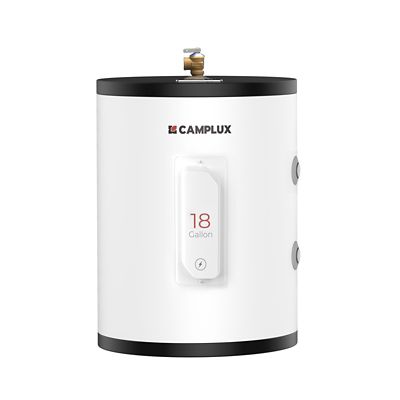
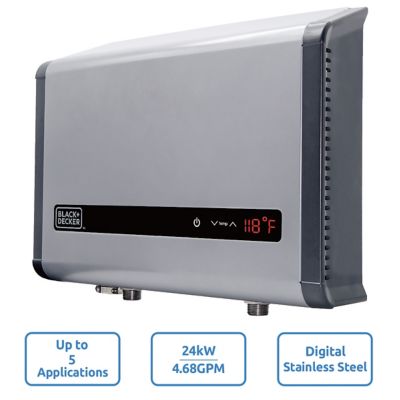
120V water heaters offer a handy way to bring hot water to places where running a new 240V circuit would be difficult, costly, or simply unnecessary. Many compact point-of-use models plug into a standard household wall outlet and fit neatly beneath a sink, inside a cabinet, or near a remote fixture. These small tanks are useful for a shop sink, guest bath, kitchen island, barn office, hunting cabin, garage, or other spot where the hot water line has a long run. Instead of waiting for water to travel from a distant water heater, a nearby unit can deliver warm water with less delay and less water going down the drain while you wait. Common sizes range from a few gallons to several gallons, so consider how the heater will be used before choosing a capacity. A handwashing sink or utility basin may work well with a smaller tank, while frequent dishwashing or several back-to-back uses may call for more stored water and a faster recovery rate. Check the available space, inlet and outlet locations, temperature controls, insulation, and manufacturer requirements. A 120V water heater can be a practical choice for a farmhouse addition, workshop, or outbuilding, but not every model operates from an ordinary outlet. Some larger plug-in heat pump units use a standard 120V connection, while certain tankless water heaters need a dedicated higher-amp circuit. Always review the electrical specifications rather than assuming every 120V model can be plugged into any nearby receptacle.
The right water heater also depends on whether you need hot water at one fixture or throughout a building. Mini-tank water heaters store a limited supply and are generally intended for point-of-use service. They are a good fit when a remote sink needs its own source of hot water or when a small addition does not justify extending a full-size plumbing system. Tankless units heat water as it flows, which can save cabinet space and avoid standby heat loss, but their flow rate and electrical requirements deserve close attention. Larger electric heat pump water heaters may serve more fixtures and use efficient heat transfer to reduce energy use, though they need suitable clearance, drainage, ventilation around the unit, and the right plumbing and electrical setup. Look at the number of people using the space, the number of fixtures that may run at once, incoming water temperature, and the desired hot water temperature. A heater supplying a bathroom sink has different demands than one serving a wash basin where muddy boots, feed scoops, or tools are cleaned throughout the day. In cooler months, cold incoming water can also affect recovery and output, especially in an unheated garage or outbuilding. Insulating exposed hot water lines, protecting plumbing from freezing temperatures, and keeping the heater in an appropriate location can help the system perform more reliably. For additional installation ideas, browse
Wall Mounted Electric Water Heaters when floor space is tight and keeping equipment off the ground would make the room easier to use.
Before purchasing, measure the installation area and make a simple list of the fixtures the heater must serve. Confirm the water pressure range, pipe connections, drain needs, recovery time, and available circuit capacity. A standard outlet should be properly grounded and located where it will not be splashed, and extension cords or undersized wiring should not be used unless the manufacturer specifically permits them. Water and electricity call for careful planning, so follow local plumbing and electrical codes and have a qualified professional handle hardwiring, new circuits, pressure relief valves, or any installation you are not comfortable completing. A temperature and pressure relief valve, safe discharge piping, and proper mounting are important parts of a sound installation. In a rural property, a 120V water heater can make everyday chores more comfortable by putting hot water close to the work, whether that means rinsing garden produce at an outbuilding sink, washing up after a muddy job, or giving visitors a warmer welcome at a cabin. It can also help improve convenience in a detached garage, RV setup, tiny home, or seasonal workspace, provided the unit is approved for that application and protected from freezing. During the cooler months, having a dependable hot water source near the back door or workbench can make cleanup feel like less of a chore. Focus on the actual demands of the space, the available power, and the installation requirements, and you will be better prepared to choose a 120V water heater that fits the job without taking up more room or resources than necessary.