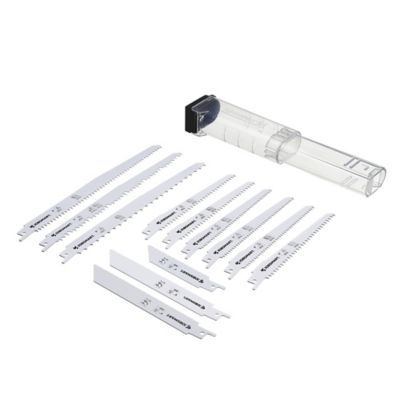
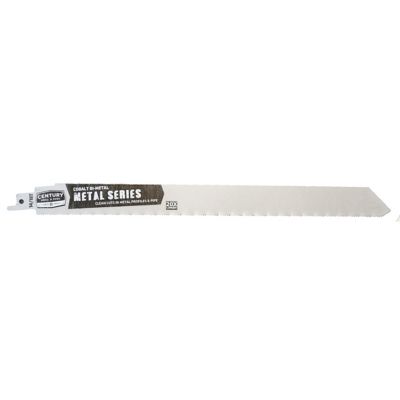
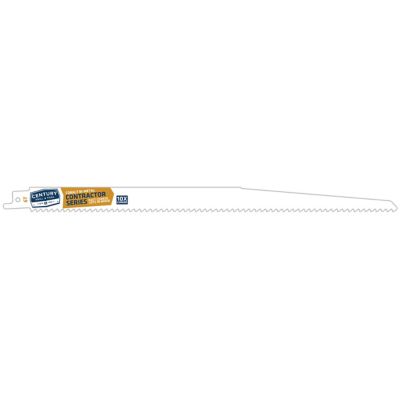
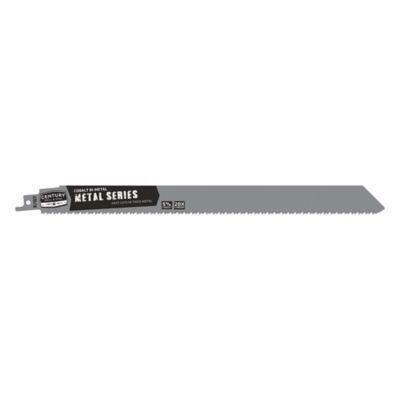
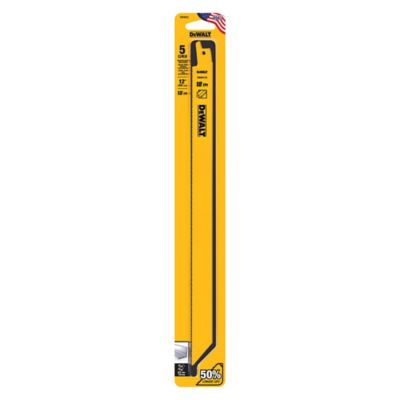
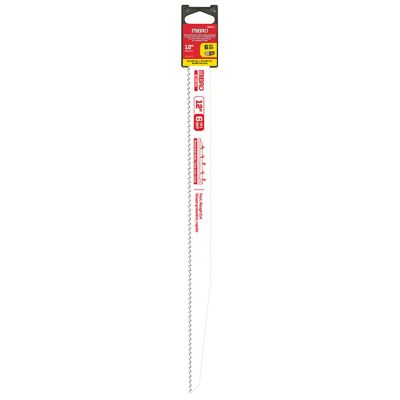
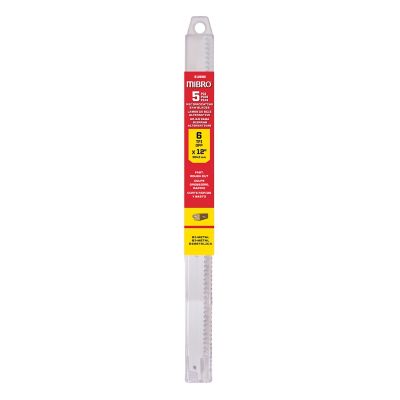
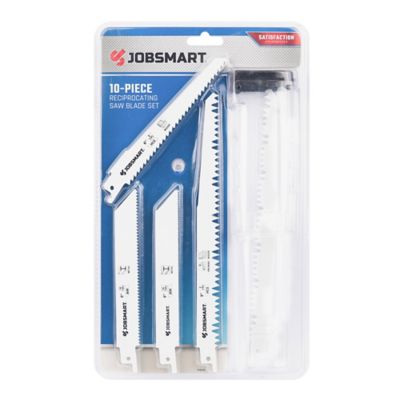
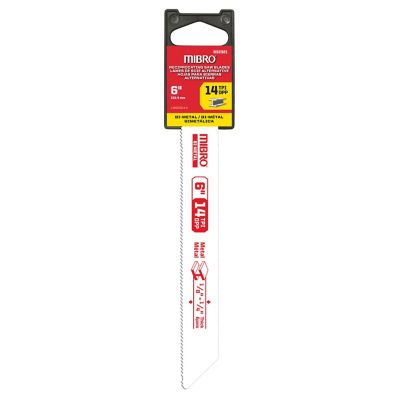
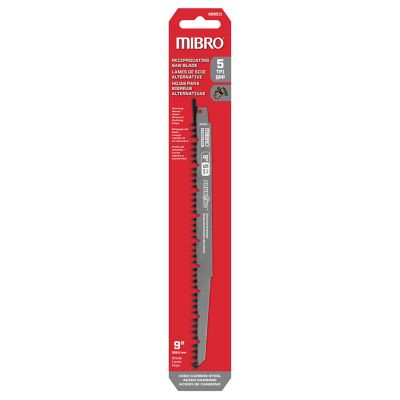
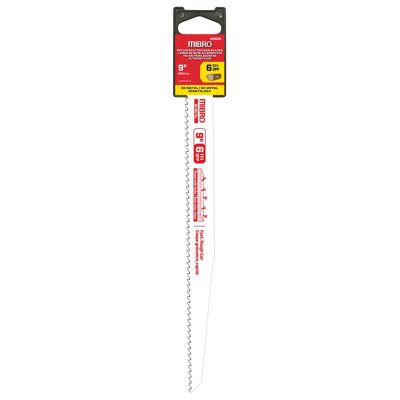
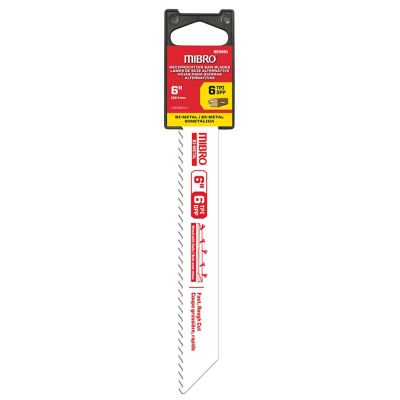
Twelve-inch reciprocating saw blades are made for jobs where a standard-length blade does not provide enough reach, depth, or flexibility. The extra length can help cut through large timbers, thick wall framing, stacked lumber, heavy branches, fence posts, pallets, roots, and other bulky material without forcing the saw body against the work. They are a handy choice for farm repairs, property upkeep, remodeling, demolition, and outdoor cleanup, especially when the material is too deep or awkward for a shorter blade. Homeowners may keep them on hand for removing old decking, cutting through nailed-in boards, trimming storm-damaged limbs, or opening up rough framing during a renovation. Contractors, builders, maintenance crews, and rural property owners can put them to work on everything from a barn repair to a stubborn section of fencing. Twelve-inch reciprocating saw blades also make a practical gift for someone who enjoys tackling projects with a cordless or corded reciprocating saw, since a fresh blade assortment can save a trip to the hardware store when a job turns up more material than expected. Before buying, check the blade holder and saw instructions to confirm compatibility, then match the blade to the material rather than choosing by length alone. Blade length describes reach, while tooth design, tooth count, thickness, and construction affect how the blade cuts and how long it holds up. A longer blade can flex during use, so steady pressure and a firm grip matter. Let the saw do the cutting instead of leaning hard into it, and use only as much exposed blade as the job requires. For overhead work, ladder work, or cutting in a tight spot, a shorter blade may be easier to control even when a 12-inch option is available.
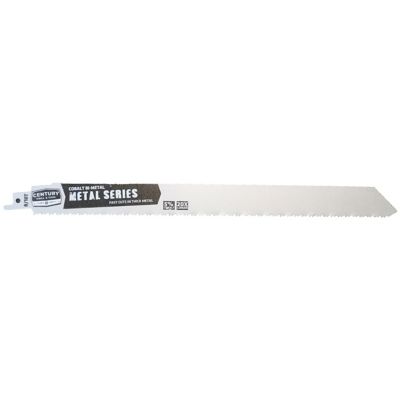
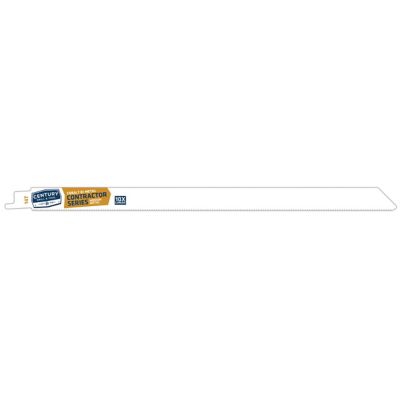
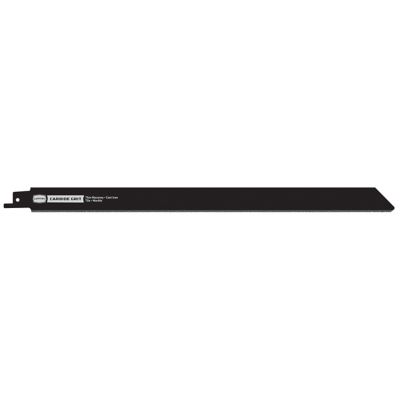
Tooth count is one of the most important details when comparing 12 inch reciprocating saw blades. Lower tooth counts, commonly around 3 to 6 teeth per inch (TPI), have larger, more aggressive teeth that clear chips quickly and move fast through raw wood, green branches, logs, thick lumber, and rough demolition material. These blades are often a good fit for pruning and heavy wood cutting, where speed and a deep bite are more useful than a finely finished edge. Medium tooth counts, often about 8 to 14 TPI, provide a more balanced cut for thicker plastics, composition materials, plywood, and general-purpose work. Higher tooth counts, generally 18 TPI and above, create a finer cut and are better suited to thicker metal pipe, conduit, sheet metal, and structural steel when paired with the right blade design and cutting technique. A blade marked for wood may not perform well on metal, and a blade intended for metal can cut wood slowly or clog with chips. For nail-embedded wood, demolition lumber, and mixed materials, bi-metal construction is a dependable option because it combines a flexible blade body with hardened teeth. This helps the blade tolerate bending, vibration, and occasional contact with nails or other hidden fasteners. For severe demolition or especially abrasive materials, carbide-tooth blades are built for added wear resistance and can last considerably longer than standard blades when the job is hard on cutting edges. Outdoor work calls for a blade with deep, widely spaced teeth that can clear green wood, sap, and chips as it moves through branches. When metal is the main material, browse
Metal Cutting Reciprocating Saw Blades for options designed around that type of work. It is also worth considering blade thickness: heavier blades resist bending during demanding cuts, while thinner blades may move faster and reach into tighter spaces. Coatings that reduce friction can help a blade slide through material more smoothly, though cutting technique, material thickness, and the condition of the saw still make a noticeable difference.
Good preparation helps a 12-inch reciprocating blade cut cleaner and last longer. Mark the cut when accuracy matters, support the material on both sides of the cut when possible, and check for nails, screws, wire, plumbing, and electrical lines before starting demolition or wall work. On a log or branch, keep the saw moving steadily and avoid twisting the blade in the kerf. With lumber, use a shoe that rests securely against the work so the blade does not whip around. When pruning, watch for spring tension in limbs and have a clear path for the branch to fall; a limb can shift suddenly as the cut opens. Wear safety glasses or a face shield, hearing protection, sturdy gloves, and work boots, and allow the blade to cool before handling it after a long cut. A dull blade often shows itself through slower progress, smoking, excessive vibration, or a cut that wanders, and replacing it is usually safer and more efficient than forcing it farther. Keep a few tooth patterns available for the kinds of work around the property: a coarse wood blade for firewood and branches, a durable demolition blade for old framing and nail-filled boards, and a finer blade for metal or plastic work. During the warmer part of the year, a long pruning blade can help with fast-growing limbs and cleanup around lanes, barns, and fence lines. As conditions turn cooler, the same reach is useful for storm cleanup, cutting scrap lumber, repairing outbuildings, and preparing materials for indoor projects. Store blades where their teeth will not be knocked against loose tools, and replace any blade with cracked welds, missing teeth, heavy warping, or other visible damage. With the right TPI, construction, and length for the job, 12 inch reciprocating saw blades give a reciprocating saw the reach and cutting power needed for demanding work in the shop, yard, workshop, and around the farm.