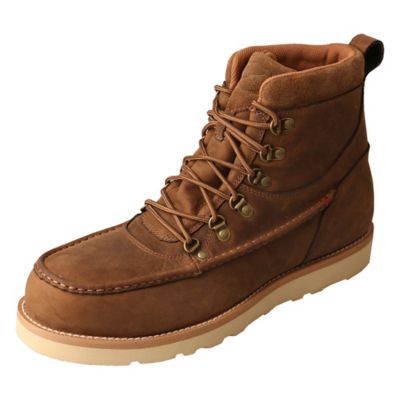
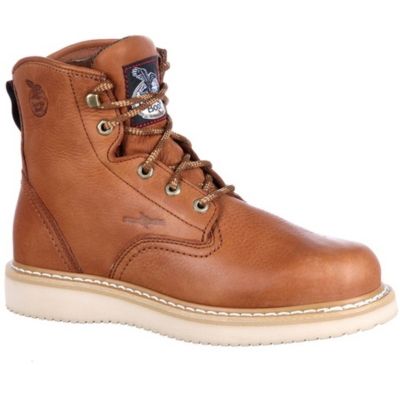
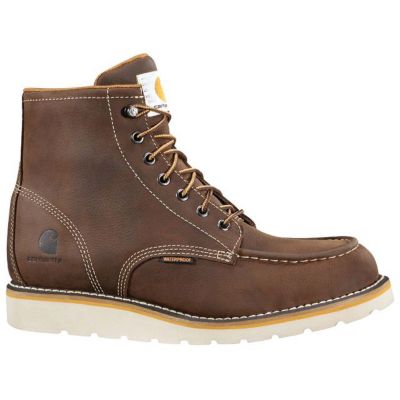
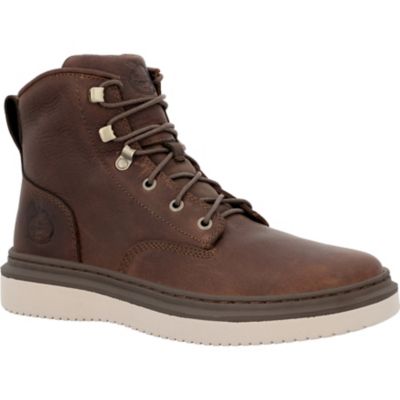
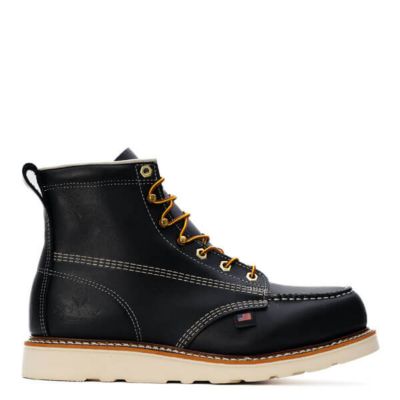
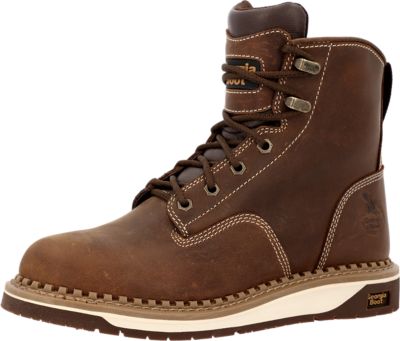
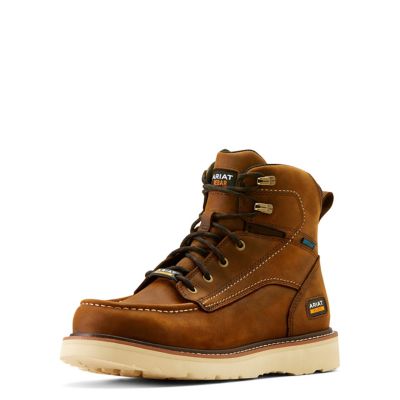
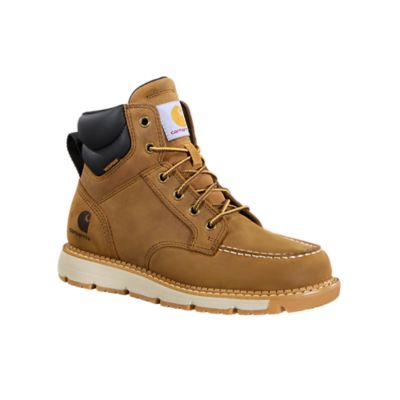
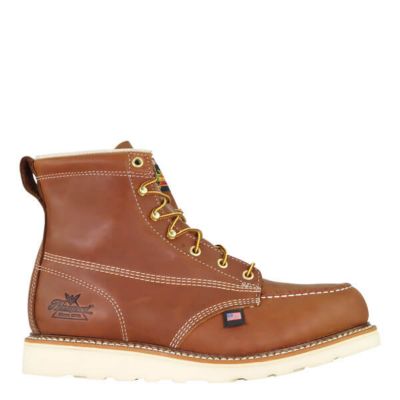
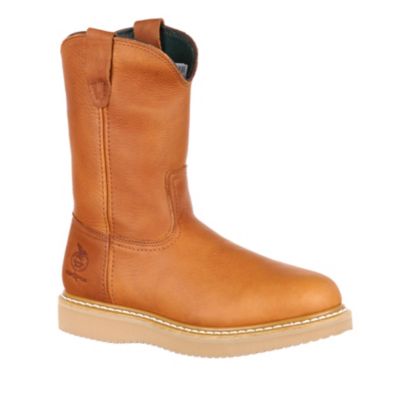
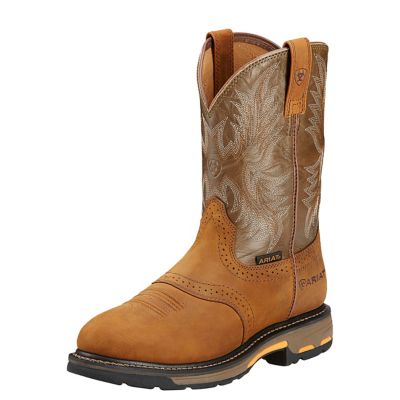
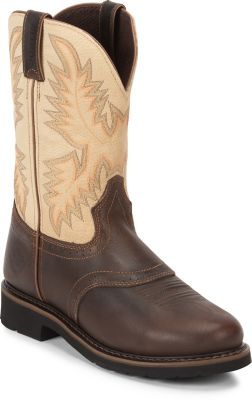
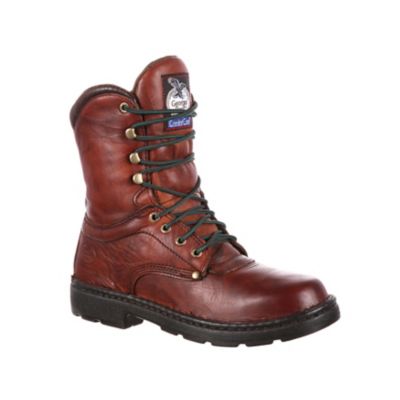
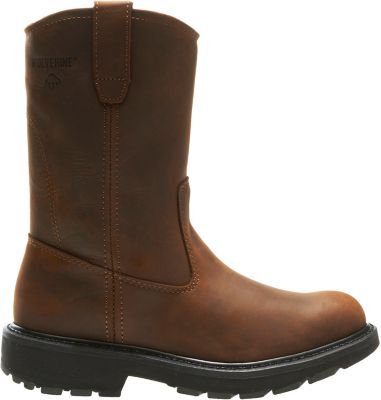
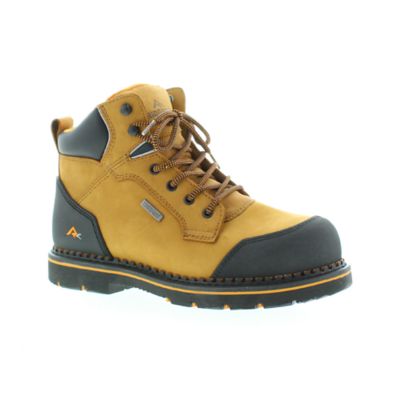
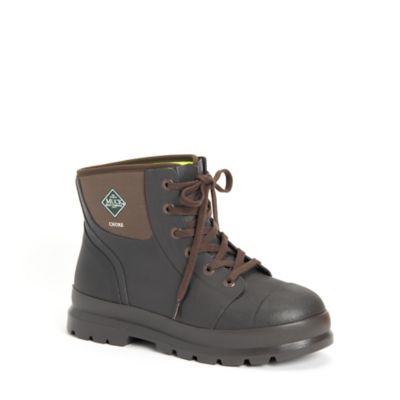
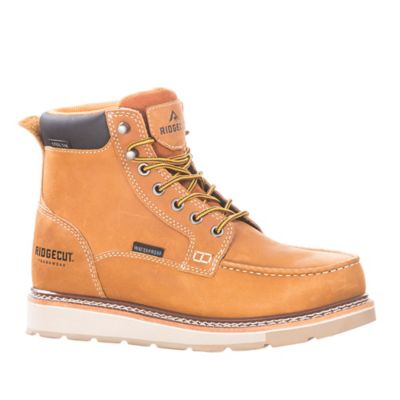
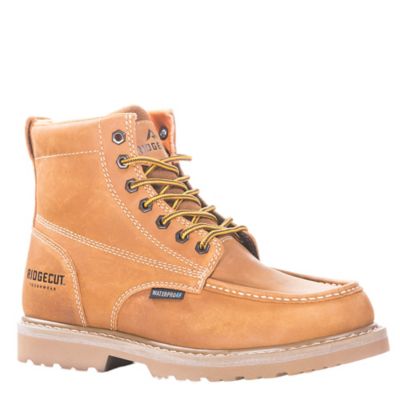
Work boots with a wedge sole feature a broad, nearly continuous outsole without the pronounced heel break found on many traditional work boots. That shape puts more of the sole in contact with firm, level ground, making wedge-sole work boots a practical choice for concrete shop floors, warehouse aisles, and similar work surfaces. Cushioning underfoot can help spread pressure and soften each step, which matters when a shift includes hours at a workbench or repeated trips between a loading area and a storage rack. The appeal is straightforward: steady footing and underfoot comfort for jobs that keep a person standing and moving. Carpenters working on finished floors, mechanics moving around service bays, and farmhands handling chores inside equipment buildings may all appreciate that feel. A wedge sole generally rolls from heel to toe without the distinct step of a raised heel, though flexibility, cushioning, and support vary with the construction. The sole shape alone does not determine grip. Tread pattern, outsole material, floor conditions, and the way a boot fits all play a part. A shallow tread that feels comfortable across smooth concrete may not provide the bite needed on loose ground, and a wedge profile may not meet a job’s requirements for ladder work or defined-heel footwear. Some work calls for a different outsole altogether. Within the broader range of
Work Boots, wedge-sole styles are worth considering when long stretches on hard, mostly level surfaces are a regular part of the day. Their benefits come from matching that shape to the task, rather than treating one sole design as the answer for every job. A person walking a feed warehouse has different footing needs from someone climbing equipment or crossing rutted ground, even when both spend the whole day on their feet. That distinction helps narrow the field before details such as toe shape, upper height, and closure style come into play.
Upper materials and sole construction influence how wedge-sole work boots feel, wear, and hold up to daily chores. Full-grain leather offers abrasion resistance and can gradually conform to the foot, while leather combined with textile panels may provide a different balance of flexibility, weight, and breathability. Reinforcement around the toe and heel can help in places where boots repeatedly brush against benches, pallets, or equipment. For work involving washdowns or other routine contact with water, waterproof construction may matter more than a leather upper alone; a waterproof membrane and sealed seams serve a different purpose from a water-resistant surface treatment. Inside, linings that move perspiration away from the foot can help manage dampness through a long shift. Underfoot, polyurethane, rubber, and foam components bring different combinations of cushioning, weight, abrasion resistance, and traction. A soft feel straight out of the box is only part of the picture. The outsole also needs to suit the floor and the substances it may encounter. Oil resistance describes how a material withstands oil exposure; it does not automatically establish slip resistance on an oily floor. Likewise, no tread can promise slip-free footing across every surface. Safety features deserve the same job-specific attention. A soft toe may suit tasks without a protective-toe requirement, while steel or composite safety toes may be necessary where falling or rolling objects are a concern. Material alone does not establish protection, so the boot’s marked safety classification and the employer’s requirements matter. Electrical-hazard protection, puncture resistance, and other features should also be verified rather than assumed from appearance. Electrical-hazard footwear is supplemental protection under specified conditions, not a substitute for safe electrical work practices. Construction methods matter, too: some stitched designs allow professional resoling, while other constructions do not. Repair options depend on the individual boot and the condition of its upper, so a wedge sole should never be taken as a promise that the footwear can be rebuilt.
Fit brings those materials and features together. Work boots with wedge soles should leave room for toes to move without allowing the foot to slide around on every step. Trying them with the socks intended for the job gives a better sense of space through the forefoot, instep, and heel. Feet can expand over the course of a day, so a fit check after several hours of normal activity can reveal pressure that might not show up first thing. Walking, bending, and crouching help show whether the upper creases comfortably and whether the heel stays reasonably secure. A safety toe should not press against the toes or rub when kneeling, and a longer size is not always the answer to a width problem. Leather may soften during break-in, but a painful pinch or cramped toe box is not something to count on wearing away. Footbeds and arch support also affect comfort, especially for someone standing at a parts counter before heading back across the shop. Replacement insoles need enough room inside the boot without crowding the toes or lifting the heel too high. Once the fit is right, regular care helps preserve the upper and the sole. Brushing away grit, wiping off worksite residue, and clearing the tread keep small problems from building up. Leather benefits from care products suited to its finish, applied according to the footwear maker’s directions. Damp boots should dry naturally with airflow rather than beside direct heat, which can harm leather and bonding materials. Laces, stitching, sole edges, and tread deserve a quick check along with the uppers. A sole worn smooth or unevenly can change footing, even when the leather still looks sound. Repairable construction can extend service life when a qualified repair shop confirms the boots are suitable for the work. As a gift for someone starting a trade or spending more time in the farm shop, wedge-sole work boots make the most sense when size, fit preferences, and workplace safety requirements are already known. Comfort starts with the right match for the person and the job, then depends on sensible care through daily wear.