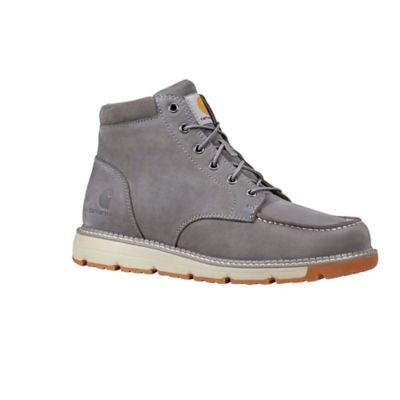
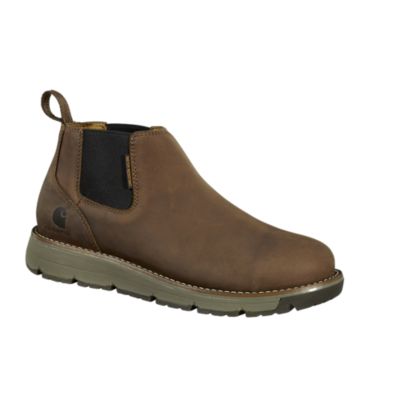
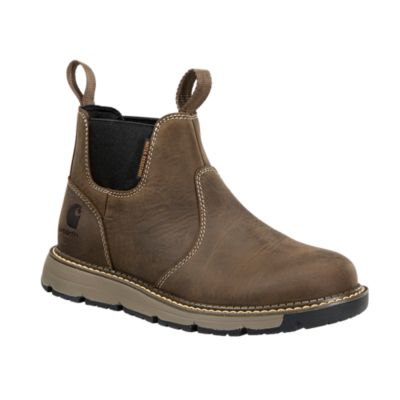
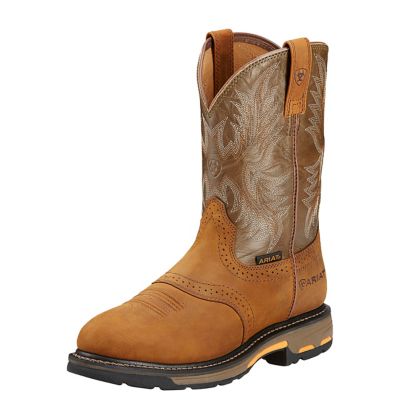
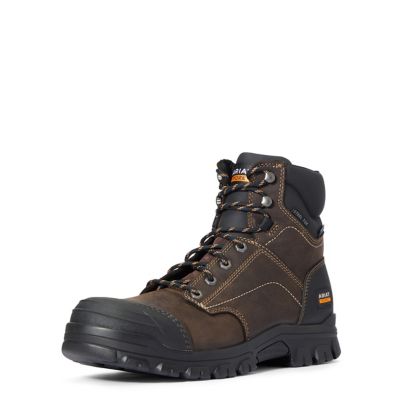
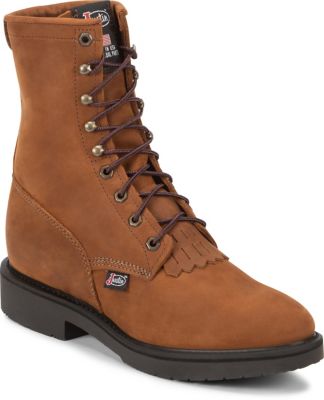
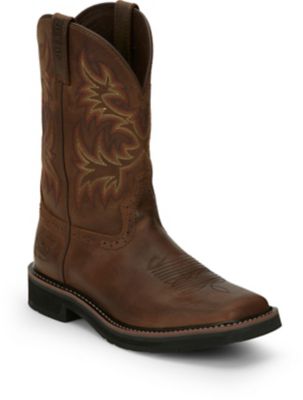
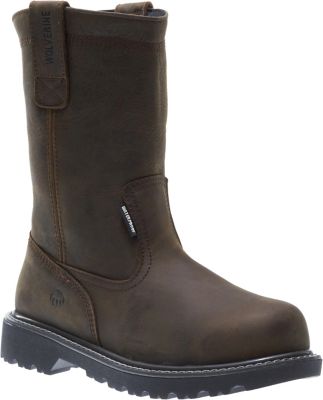
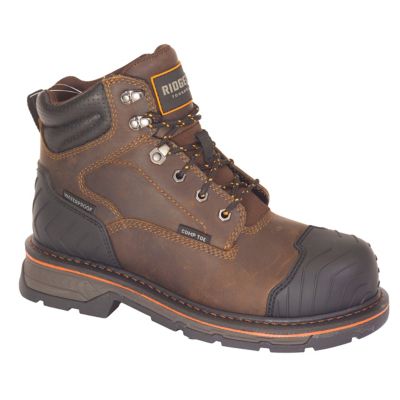
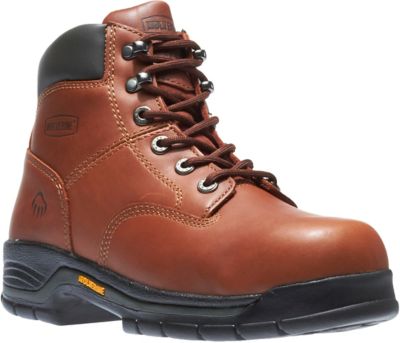
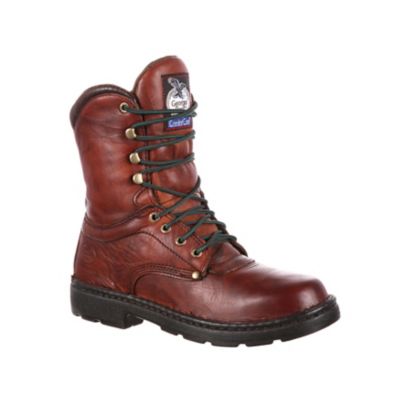
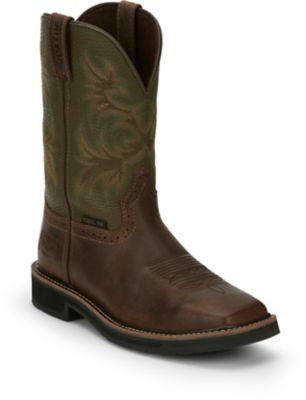
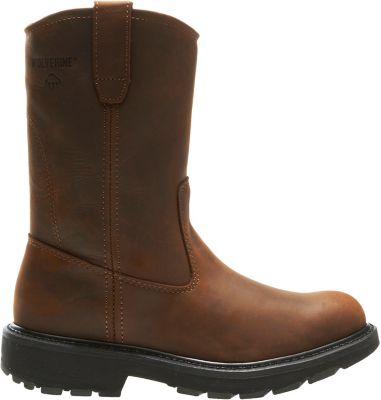
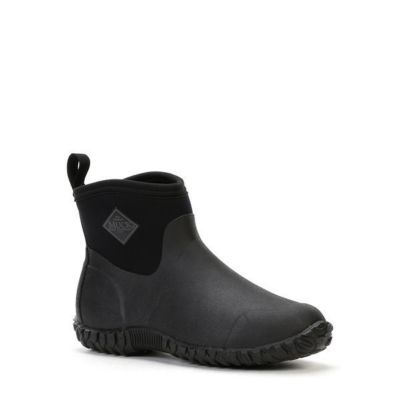
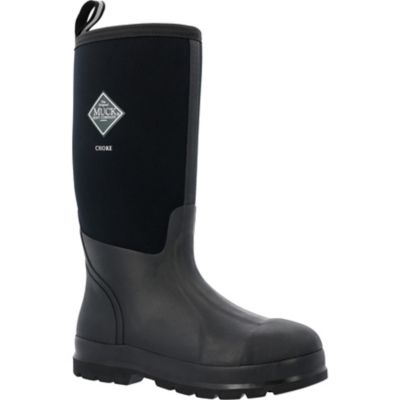
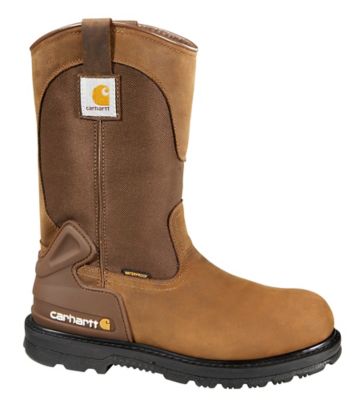
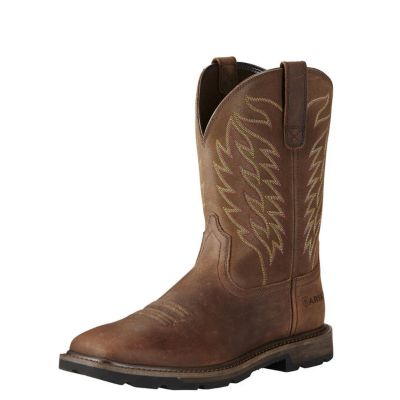
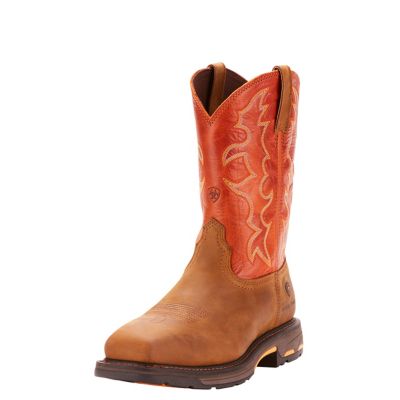
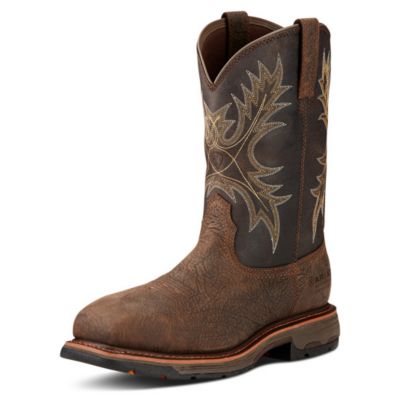
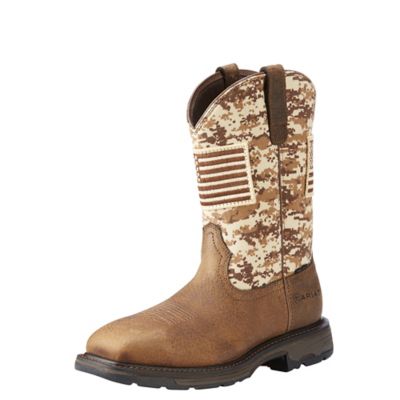
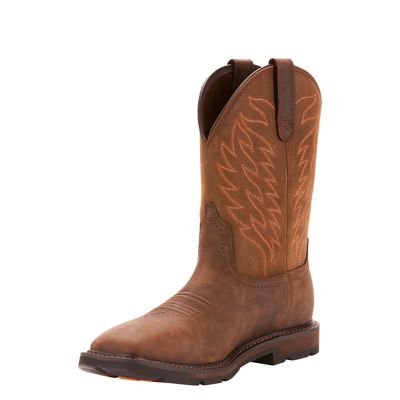
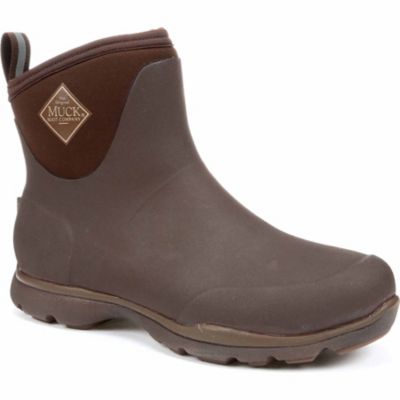
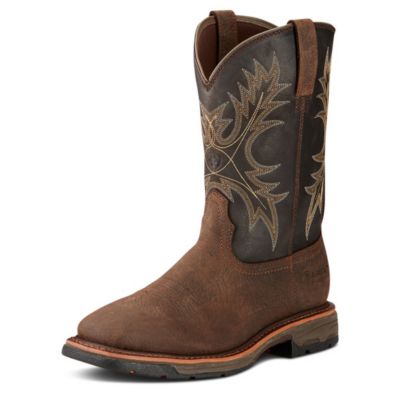
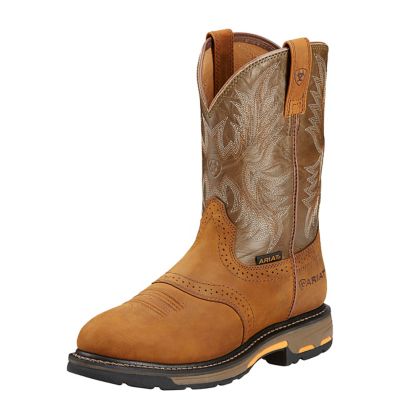
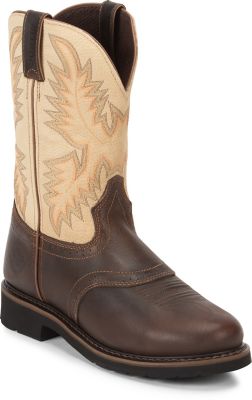
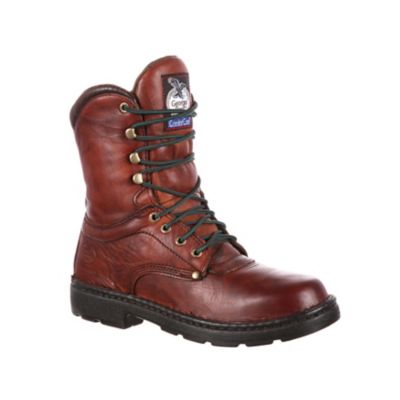
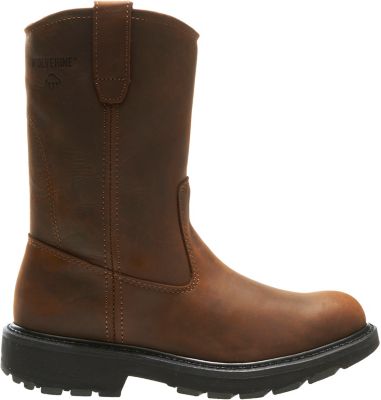
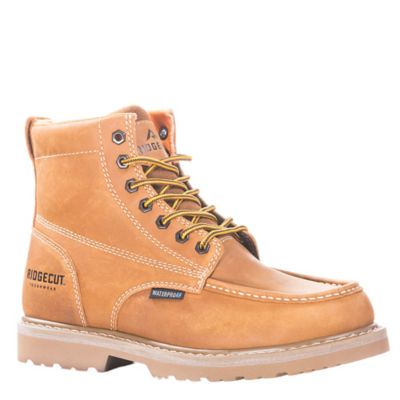
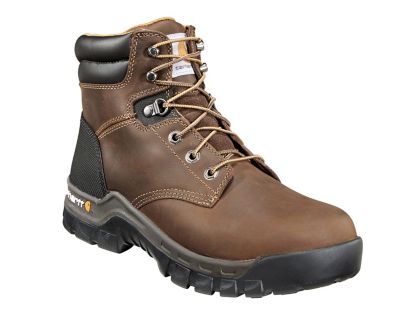
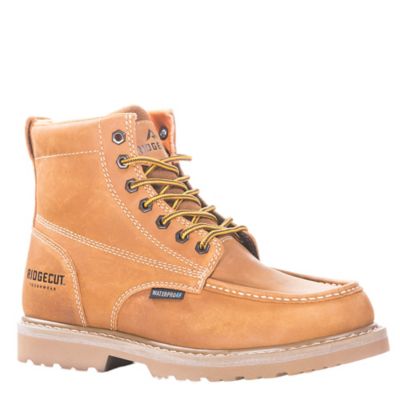
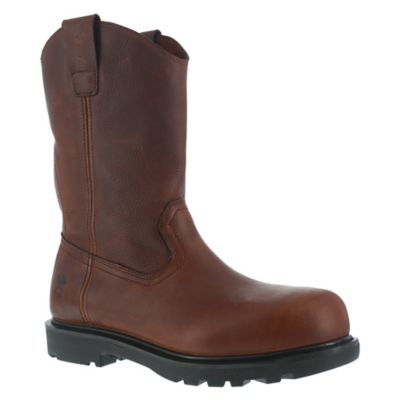
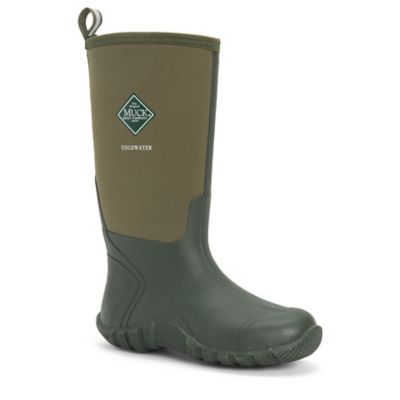
Workwear boots are made for the long haul, whether that means a full day on a jobsite, several hours in the shop, a shift on the farm, or chores that keep you moving from the feed room to the fence line. Unlike everyday footwear, work boots are built with the demands of the job in mind, using sturdy materials, supportive construction and outsoles designed to help keep your footing on changing surfaces. Leather and other durable uppers can stand up to regular wear, while reinforced stitching and solid heel counters help a pair hold its shape over time. The right boot depends on the work being done and the hazards found in that setting. Safety toes made from steel, composite or alloy materials can help protect against impact and compression, while puncture-resistant construction may be useful around nails, scrap metal or rough building materials. Some jobs call for metatarsal protection, chemical-resistant materials or electrical hazard-rated footwear, so check workplace rules and talk with an employer or safety professional before choosing. Slip-resistant outsoles can be especially helpful on smooth concrete, muddy ground, wet grass and other slick surfaces. If the work takes place outside or around wash areas, look for waterproof membranes, sealed construction or water-resistant coatings that help keep feet dry. For cooler working conditions, insulated boots can add warmth, while breathable linings and moisture-managing materials may help reduce clamminess when the day warms up. No single feature replaces a proper fit, and a boot that feels fine for five minutes in a store may feel very different after a long shift. Try boots on with the socks you normally wear for work, preferably later in the day when feet may be slightly swollen. Leave enough room to wiggle your toes without letting your heel slide, and make sure the widest part of your foot sits comfortably within the boot’s support. A secure lace-up or other adjustable closure can help hold the foot in place, especially when walking on uneven ground or climbing ladders. For shoppers looking for a simpler everyday style that still suits hands-on work and outdoor chores,
Men's Casual Work Boots can be a practical place to start.
Comfort matters just as much as protection when boots are worn from sunup until the work is done. Look for cushioning underfoot, a supportive midsole and enough flexibility at the ball of the foot for a natural stride. A firm shank can provide added stability when carrying loads or walking across rocky ground, while a padded collar and tongue help reduce rubbing around the ankle. Break-in time varies by construction and materials, but new boots should not cause sharp pressure, numbness or persistent hot spots. Wearing them for short periods around the house, barn or shop before a full shift can give your feet time to adjust and can reveal fit problems while there is still time to make a change. Good work socks make a noticeable difference, too. Merino wool or moisture-wicking blends can help manage sweat across changing temperatures, and medium-weight cushioning can reduce friction without making the boot too tight. Avoid cotton socks that stay damp against the skin for hours, particularly during wet work or strenuous jobs. Pay attention to the outsole as well. Deep lugs may provide useful traction in mud, loose gravel and pasture ground, while a flatter, slip-resistant tread may feel more natural on warehouse floors or concrete. A heel with a defined edge can offer extra stability on ladders, but a lower profile may be more comfortable for walking and driving. Check the boot’s safety ratings and care instructions before buying, since waterproofing, electrical protection, toe construction and chemical resistance can differ from one pair to another. Keep in mind that safety features are designed for specific conditions, not every possible hazard. A boot rated for electrical hazards, for example, is not a substitute for proper jobsite procedures or personal protective equipment. After use, brush away dirt and manure, let damp boots dry naturally away from direct heat, and follow the manufacturer’s recommendations for conditioning or waterproofing. Stuffing wet boots with plain paper can help draw out moisture, while rotating between pairs gives each one more time to dry. Inspect the soles, seams, eyelets and toe area regularly. Worn tread, separated stitching or a damaged safety toe are signs that the boots may no longer provide the protection or support they were designed to offer.
Workwear boots can be a useful gift for someone starting a new trade, heading to a first farm job, spending weekends on home improvement projects or replacing a worn-out pair before the cooler months bring mud, frost and wet ground. They are also a thoughtful choice for a partner, parent or friend whose days are spent on their feet, though sizing and workplace requirements are worth checking before wrapping them up. If the boots are a gift, keep the receipt and confirm the recipient’s preferred size, width and safety features whenever possible. A good fit may vary between people, even when they normally wear the same shoe size. For everyday chores, many people prefer a lighter boot that is easy to pull on and comfortable behind the wheel, while demanding construction or industrial work may call for heavier support, a protective toe and a sole built for rough surfaces. People who work outdoors should consider exposure to rain, snow, standing water and cold wind, while those working indoors may place greater value on slip resistance, cushioning and breathability. Hunters, ranchers, landscapers, mechanics, warehouse workers, contractors and do-it-yourself homeowners can all have different priorities, so start with the setting rather than choosing by appearance alone. Think about how far the wearer walks, whether they climb ladders, how often they kneel, what surfaces they cross and whether the boots will be exposed to oil, mud, manure, water or abrasive materials. During the transition from warmer weather into the cooler season, waterproof construction and dependable traction can make early-morning chores more comfortable, especially when grass is slick with dew or paths turn soft after rain. At the same time, removable insoles, breathable materials and the option to layer socks can make a pair more versatile when temperatures change through the day. Before wearing new boots on the job, check that the sole grips well, the closure stays secure and the foot does not slide forward on slopes. Store boots upright in a dry, ventilated spot, and give them a quick inspection before each shift. With the right combination of fit, protection, durability and comfort, workwear boots can help support steady footing and comfortable movement through the daily work that keeps a home, farm, shop or jobsite running.