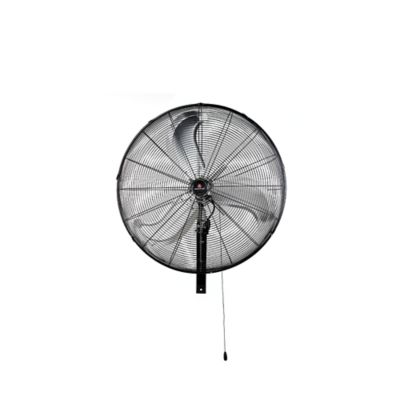
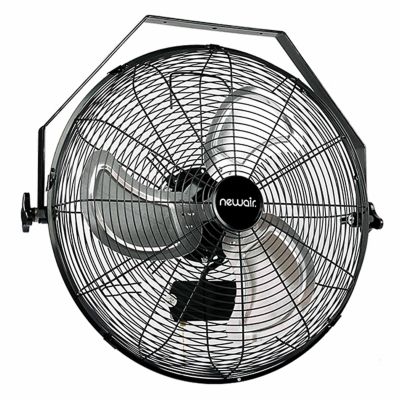
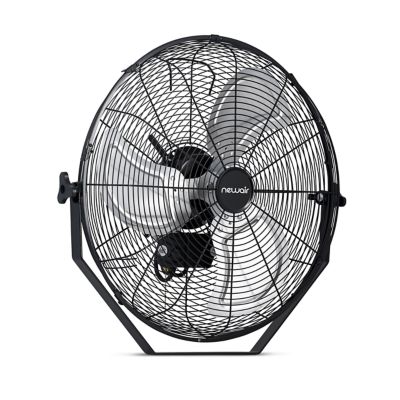
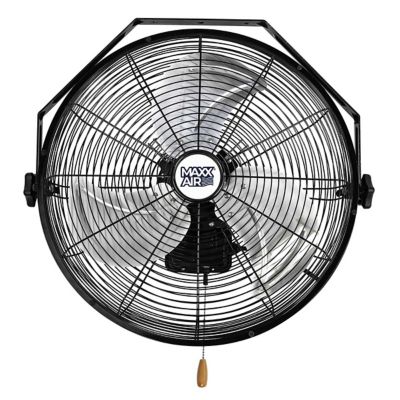
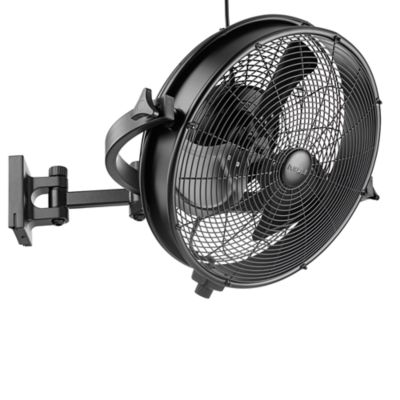
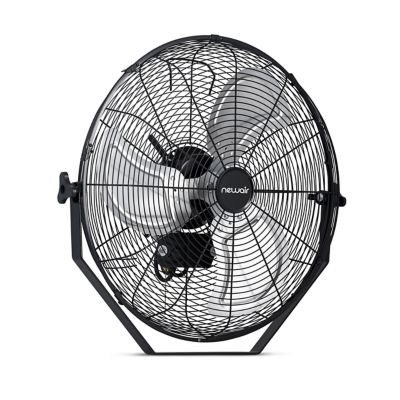
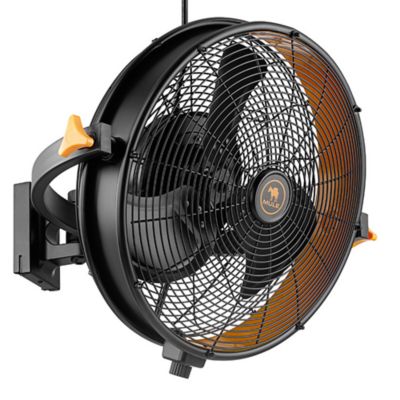
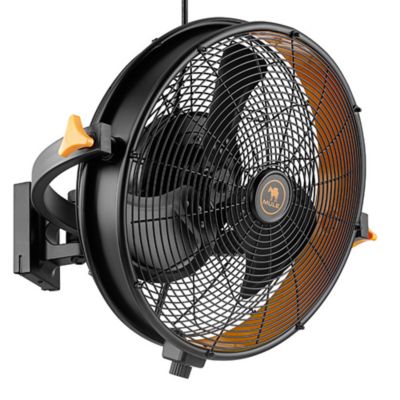
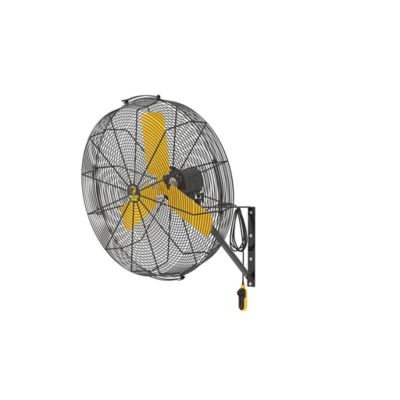
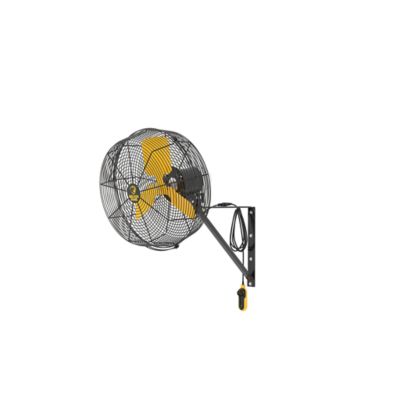
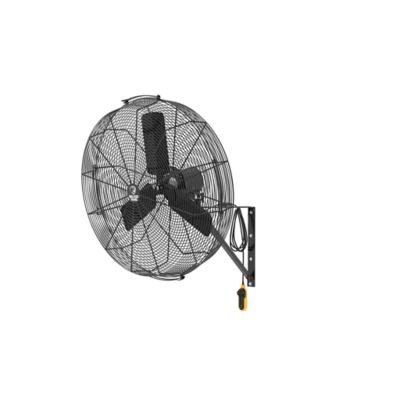
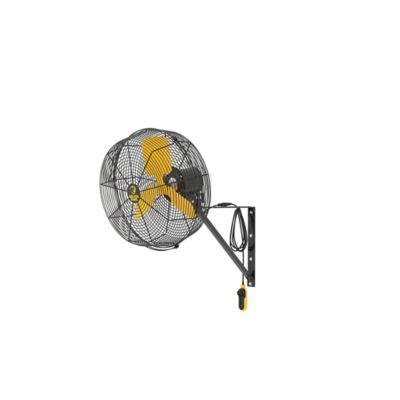
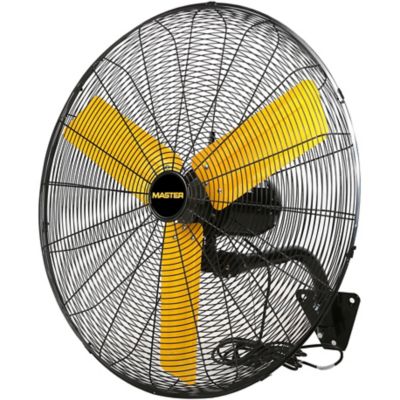
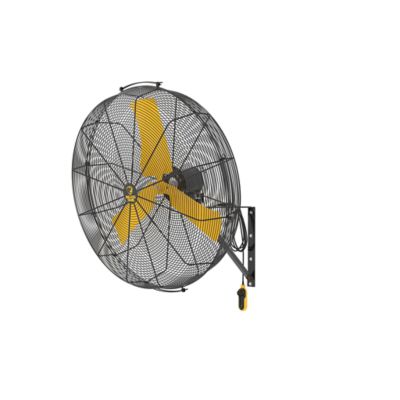
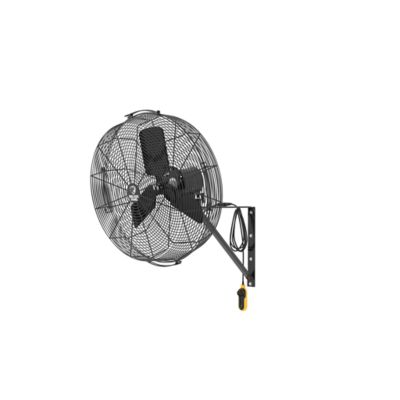
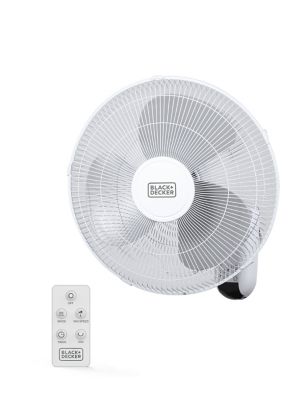
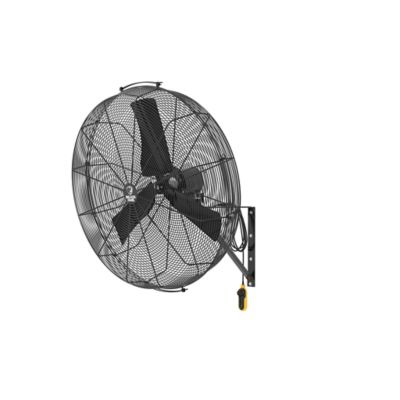
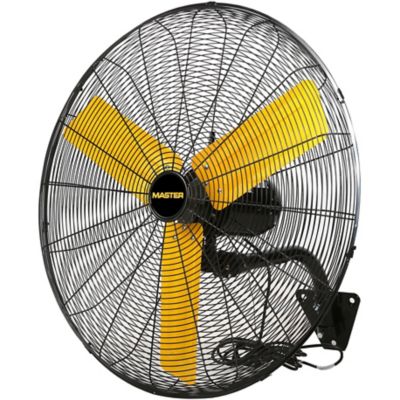
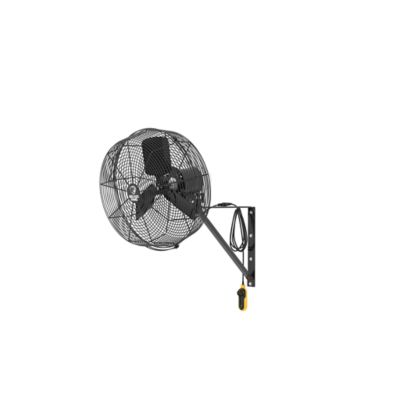
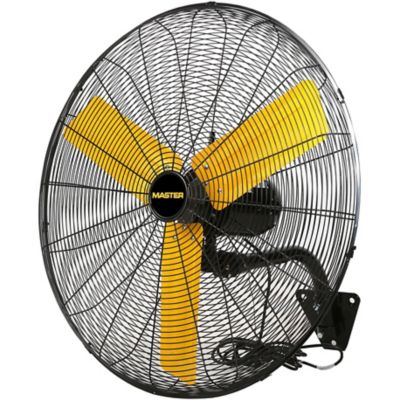
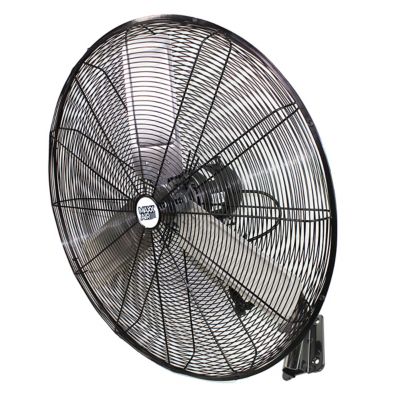
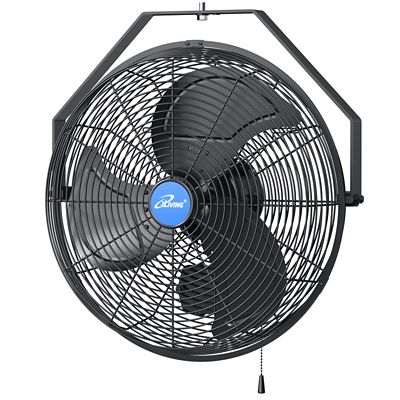
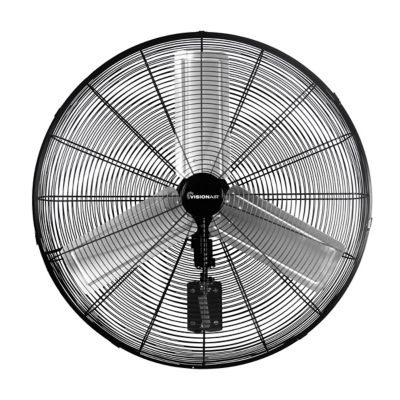
Wall-mounted fans provide directional airflow without taking up floor or tabletop space, making them a practical choice for garages, workshops, barns and other busy areas. Mounting a fan above a workbench leaves more room for clamps, hardware and the project spread across the bench. Along a garage wall, it keeps the floor open for rolling tool cabinets, feed carts and equipment. In an appropriate barn location, wall mounting can put air movement where people work while keeping the fan out of an aisle. These fans help people feel cooler by moving air across the skin; they do not lower room temperature like an air conditioner. That distinction matters in an enclosed space where heat continues to build, since air circulation does not replace fresh-air ventilation or cooling equipment. Fan size, airflow output, speed settings and the shape of the room all affect how well the breeze reaches its target. Airflow ratings expressed in cubic feet per minute, or CFM, describe the volume of air a fan moves, but the largest number is not automatically the best match for every corner. A strong, concentrated stream may suit a deep work area, while a gentler setting can be more comfortable near a desk, potting bench or seating area. Oscillating wall fans sweep air from side to side, spreading the breeze across several workstations or a wider section of the room. A stationary fan head keeps airflow aimed at one location, and an adjustable tilt helps direct it downward from a higher mounting point. The angle matters as much as the height: air aimed over a seated person’s head may do little for comfort at the bench. Blade diameter alone does not tell the whole story, either. Housing design, motor performance and the distance between the fan and the people nearby all contribute to the feel of the airflow. Sound deserves a place in that comparison, especially where conversation, phone calls or close attention to equipment are part of the day.
A good wall-mounted fan setup fits the building as well as the job. The fan’s overall width, depth and oscillation path determine how much clear wall area it needs, while its weight and mounting bracket determine the support required. Solid framing or another manufacturer-approved mounting surface is important; drywall alone should not be assumed to support a fan. Mounting hardware must match both the fan and the wall material, and installation needs to follow the manufacturer’s directions. A clear stretch of wall above a bench may look convenient, but shelves, cabinet doors, overhead garage-door tracks and tall equipment can interfere with movement or block airflow. There also needs to be enough room to reach controls and remove the guard for cleaning when the design allows it. Metal housings and guards are common in work-focused fans, while lighter plastic components appear in many fans intended for indoor comfort. Material choice affects weight, handling and cleaning, but a metal housing does not by itself establish suitability for outdoor exposure, damp conditions or airborne debris. Finishes, fasteners, motor protection and the fan’s stated operating environment matter to its service life. A covered porch can still expose equipment to windblown rain, and a barn can present moisture, dust and conditions that an ordinary indoor fan is not built to handle. Any fan for those locations needs an appropriate rating for the actual exposure. An enclosed motor may help limit debris entry, but it does not make a fan suitable for combustible dust or flammable vapors. Placement around livestock also calls for attention to cords, guards and mounting height, keeping equipment beyond animals’ reach without aiming a strong stream through bedding or loose feed. At a sanding bench or welding area, a circulation fan is not a replacement for dust collection or proper exhaust ventilation. Electrical needs belong in the fit check as well: the cord should reach a suitable receptacle without crossing a walkway, and any hardwired installation calls for a qualified electrician.
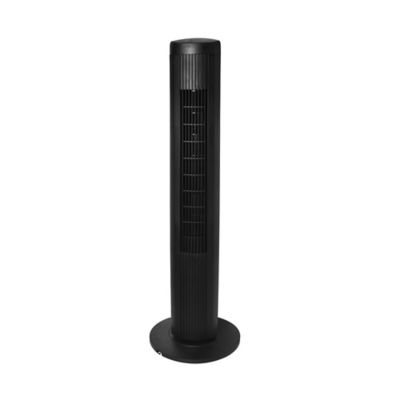
Everyday convenience often comes down to small details that become noticeable after a full day in the shop. Multiple speeds let the airflow suit the task, from a light breeze while sorting hardware to stronger circulation during physical work. Pull-cord controls can make sense on a higher wall, provided the cords remain clear of moving equipment and out of children’s and animals’ reach. A remote control offers another way to adjust a fan without leaving a work area, while a timer can limit operation to a set period. Control placement is worth considering alongside mounting height, especially if the fan will sit above shelving or behind a parked mower. For a spot without a suitable wall surface,
Space Saving Tower Fans offer another compact approach, with a floor footprint that needs to stay clear of traffic. Wall-mounted designs keep that footprint off the ground, though they still need accessible space for upkeep. Dust buildup on blades and guards can affect airflow and balance, so easy access for routine cleaning is a practical consideration. Disconnect power before cleaning or servicing, follow the care directions, and keep water and cleaning sprays away from electrical parts. Removable guards can make cleaning easier, but guards and fasteners need to be fully secured before operation. Cords, brackets and adjustment knobs deserve a look during routine checks, particularly in a workshop where vibration and airborne debris are part of the surroundings. A new rattle, wobble or loose mount calls for stopping the fan and addressing the cause rather than turning up the speed. With suitable mounting, the right environmental rating and controls that are easy to reach, a wall-mounted fan can bring a welcome breeze to the places where work happens without crowding the bench or taking over the aisle.