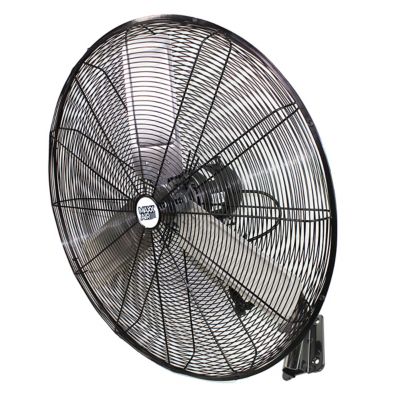
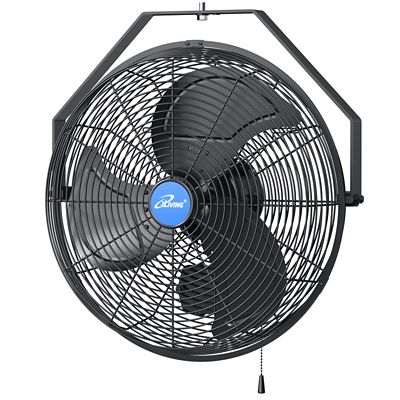
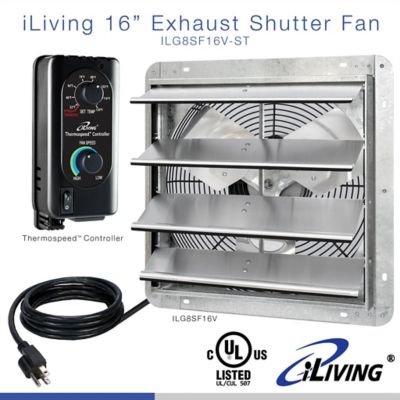
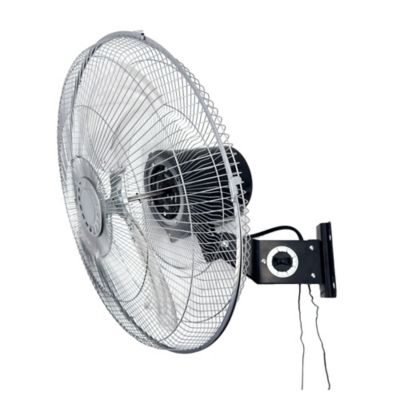
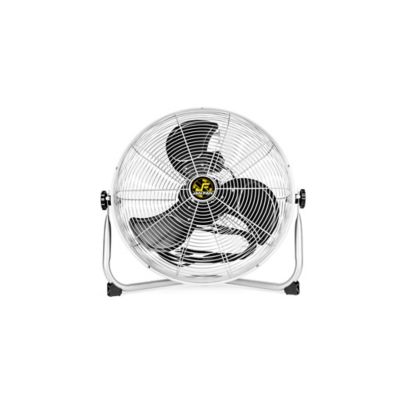
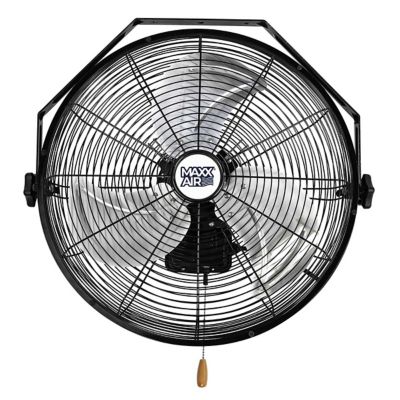
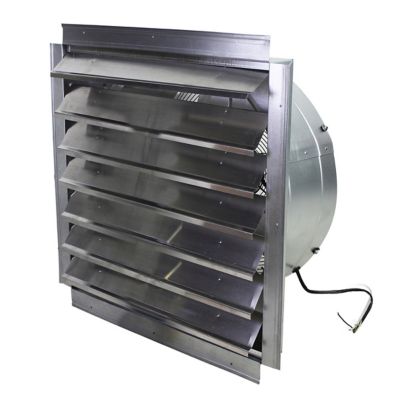
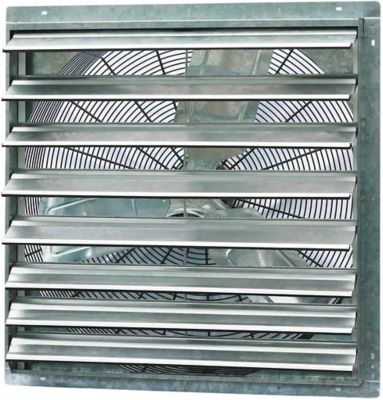
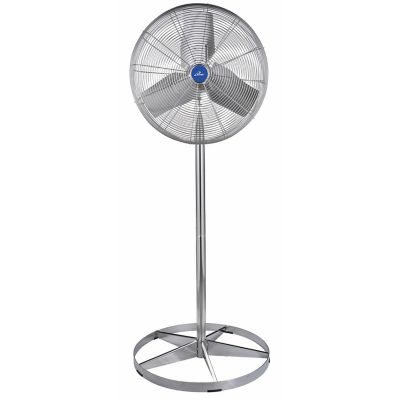
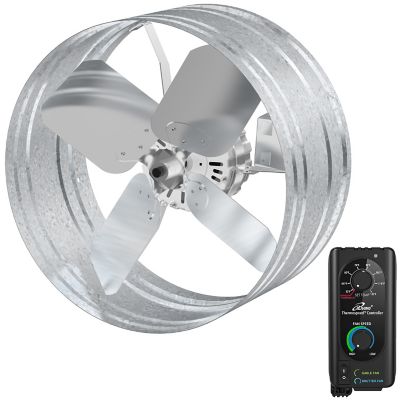
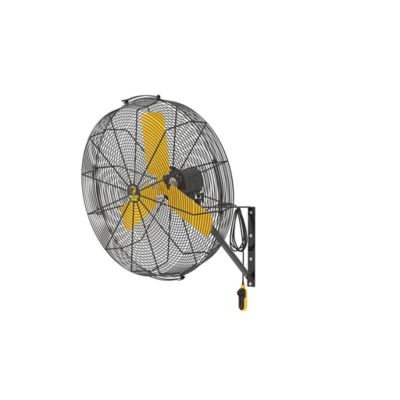
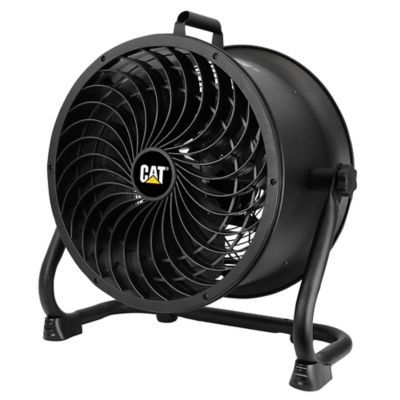
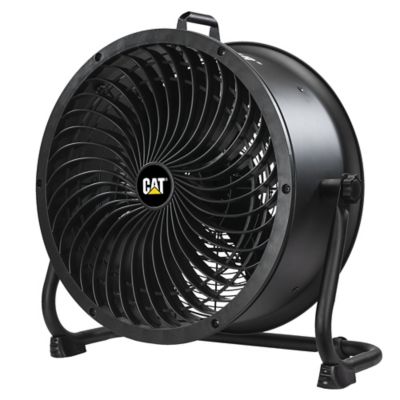
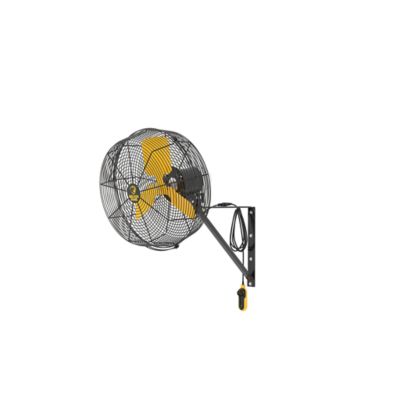
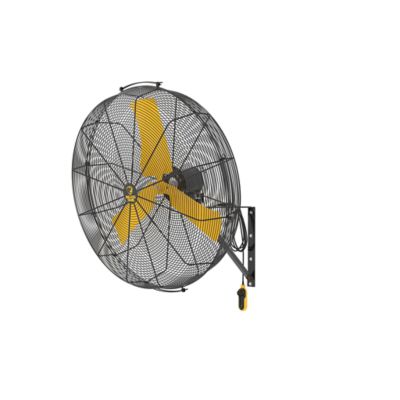
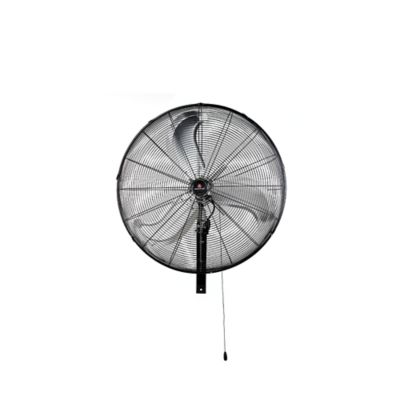
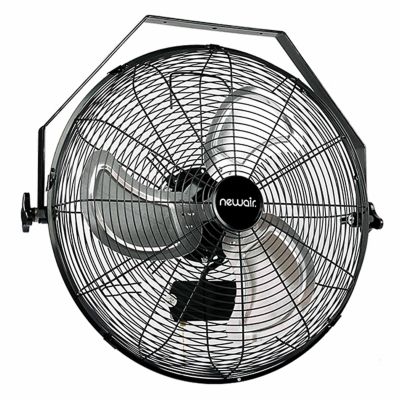
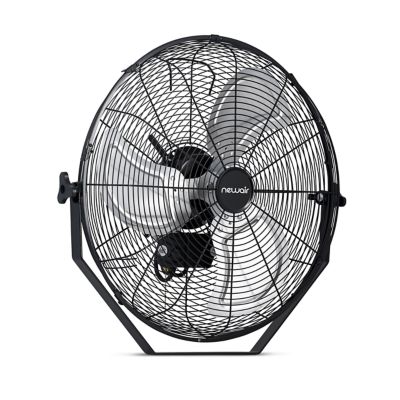
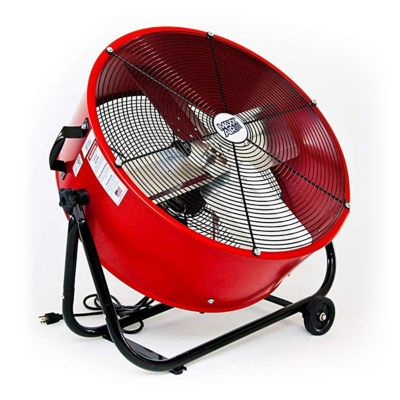
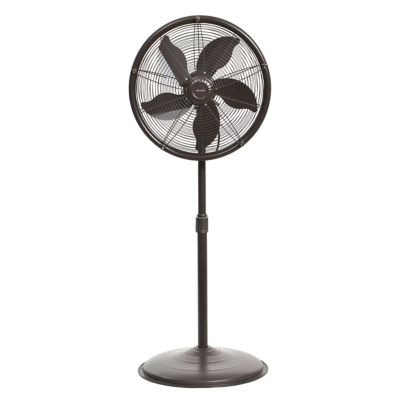
Industrial wall mount fans deliver concentrated air movement without taking up floor space, making them a practical fit for workshops, warehouses, equipment bays and farm repair buildings. Mounted above the work area, they leave more room for tool carts, benches and the steady traffic that comes with a busy shop. That matters when a tractor is pulled in for maintenance, a workbench is covered with parts or a packing station needs an open path for moving boxes. These fans circulate air within a space; they do not replace an exhaust system or bring in fresh air unless the building has a separate way to do that. Their performance depends on more than blade diameter alone. Airflow is commonly measured in cubic feet per minute, or CFM, which describes the volume of air a fan moves. A higher CFM rating generally means more air movement, but mounting height, distance from the work area, nearby shelving and the direction of the fan all affect what reaches the people working below. Blade size, motor design and speed settings also influence airflow and sound. A large fan running at a lower speed may suit a broad work area, while a smaller fan can serve a single bench or service station where space is tight. Fixed-position fans send air toward one area, while oscillating fans sweep from side to side to spread airflow across several work positions. An adjustable tilt head adds another way to direct that airflow without changing the bracket’s location. Multiple speed settings give the same fan a wider working range, whether the job calls for steady circulation across a repair bay or gentler movement near paperwork and small parts. Noise deserves a place in the comparison, too, especially around service counters, shared benches and areas where workers need to hear one another. CFM, blade diameter, speed controls and sound specifications together give a clearer picture than motor power alone.
Construction and mounting details help determine where an industrial wall-mounted fan belongs. Steel housings and guards are common in work settings, while blade materials can include aluminum or steel, depending on the design. Protective finishes help limit surface corrosion, though the finish alone does not make a fan suitable for outdoor exposure or frequent washing. The motor enclosure and the fan’s stated environmental rating matter just as much. An enclosed motor offers protection against certain exposures, but it should not be assumed to be waterproof, dust-tight or suitable for hazardous locations. Washdown applications require equipment specifically rated for that purpose, and a fan intended for a dry garage is not automatically a match for a damp processing area. The same distinction matters around grain dust, combustible dust, flammable vapors and spray operations, where ordinary circulation equipment may be inappropriate. A sturdy installation starts with a wall or structural member capable of supporting the fan’s weight and operating forces. Thin wall panels, loose boards and shelving are not substitutes for the mounting support specified by the manufacturer. Brackets, fasteners and any required safety cable should match the installation instructions, with enough clearance for the guard, tilt adjustment and full oscillation path. Placement also needs to account for overhead doors, light fixtures, stored materials and the reach of nearby equipment. A fan should not swing into a raised door or direct its cord across an aisle. Electrical requirements vary, so voltage, amperage, plug configuration and any hardwiring requirements belong in the comparison before installation. Accessible controls are another practical detail: a pull chain, wall control or remote can make a difference when the fan sits well above head height. Secure guards and stable brackets support safe operation, but they do not remove the need to keep hands, loose clothing, cords and other objects away from moving blades. Safety listings and certifications should be checked for the complete fan assembly rather than assumed from a motor marking alone.
Wall-mounted designs fill a particular role within the broader range of
Industrial Fans: they provide a permanent airflow position while keeping the working floor open. That arrangement suits mechanics, maintenance crews, woodworkers and property owners who return to the same work area day after day. In a repair shop, airflow can follow the length of a service bay instead of blowing directly into a tray of fasteners. Near a bench, an angled fan can move air around the worker without scattering invoices or pushing dust onto a freshly cleaned assembly. In a larger building, several thoughtfully placed fans may distribute air more evenly than one fan pointed across a long stretch of shelving and equipment. Open aisles let air travel farther, while stacked supplies, partitions and parked machinery can interrupt its path. The strongest setting is not always the best fit for every task, particularly around loose bedding, fine sawdust or lightweight packaging. Air movement can stir up those materials rather than remove them, so source collection, housekeeping and ventilation still have separate jobs to do. Routine care helps keep the fan working as intended. With power disconnected according to the manufacturer’s instructions, accessible guards and blades can be cleaned using the approved method. Dust buildup can restrict airflow, and uneven deposits on blades may contribute to vibration. Water should stay away from electrical components unless the complete assembly is rated for that cleaning method. Periodic checks can catch loose mounting hardware, damaged cords, bent guards or a change in operating sound before the fan goes back into service. Bearings may be sealed or may require attention on a stated schedule; the maintenance instructions settle that detail. The right match brings together airflow, mounting strength, access for cleaning and the demands of the space. For a working garage or shop, those everyday details matter as much as the size printed on the box.