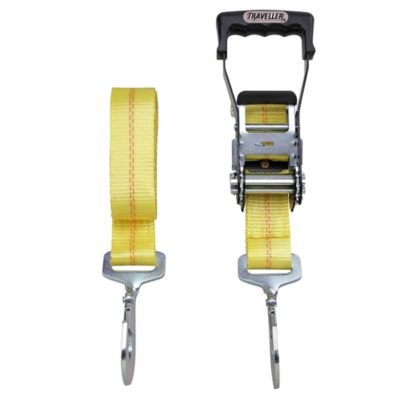
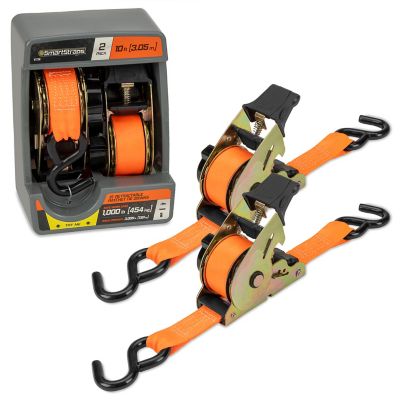
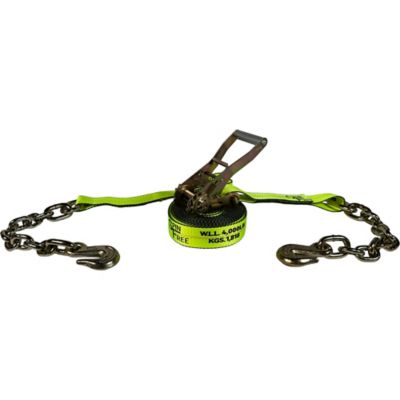
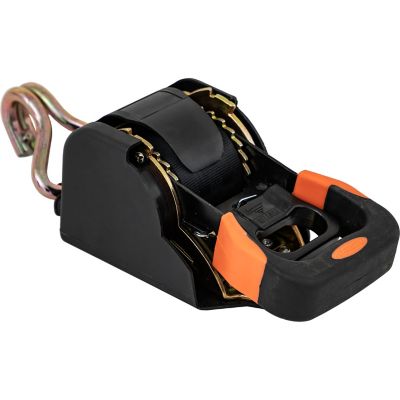
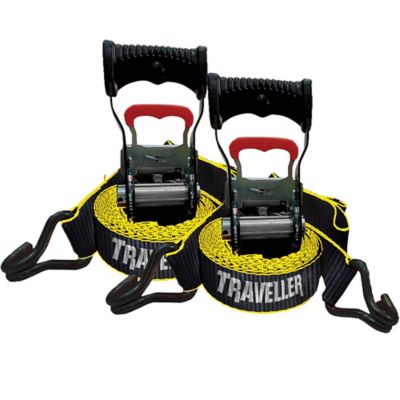
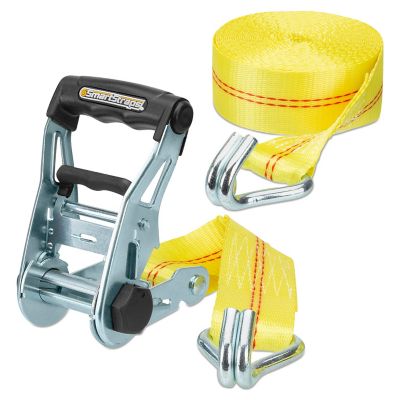
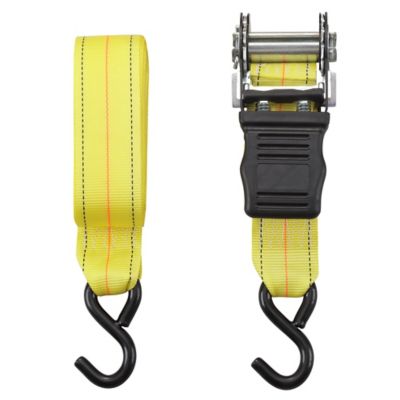
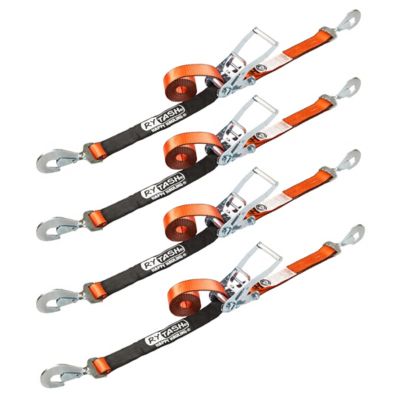
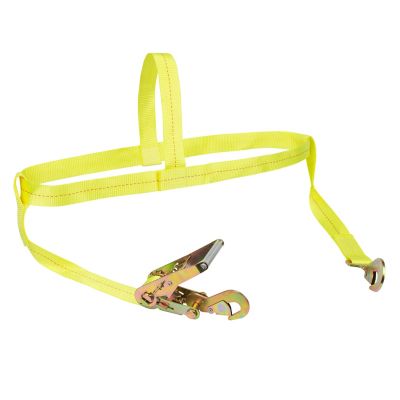
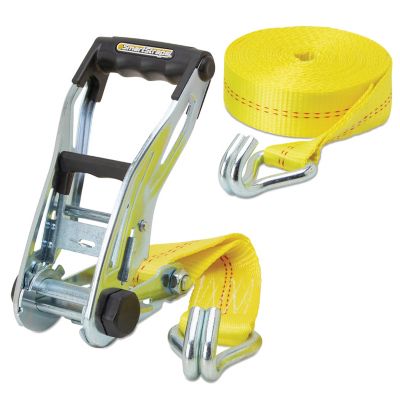
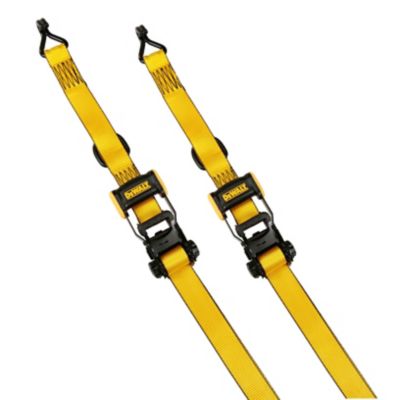
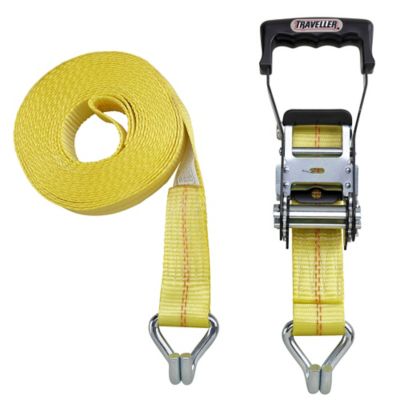
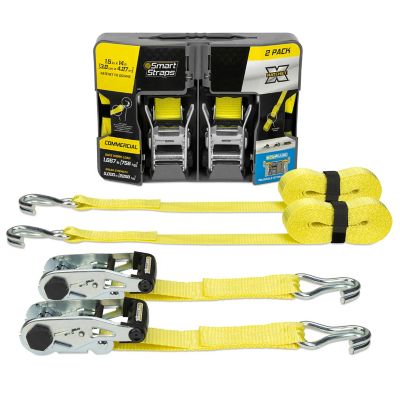
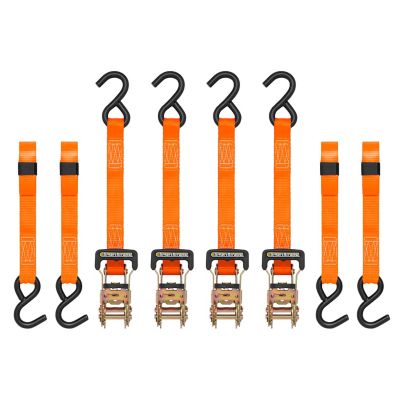
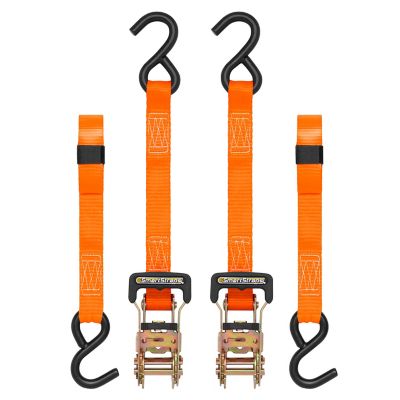
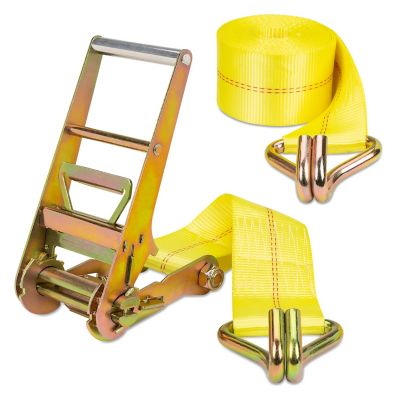
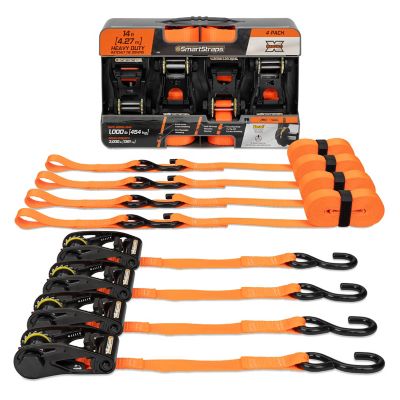
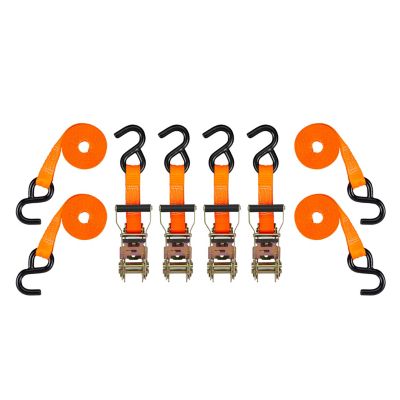
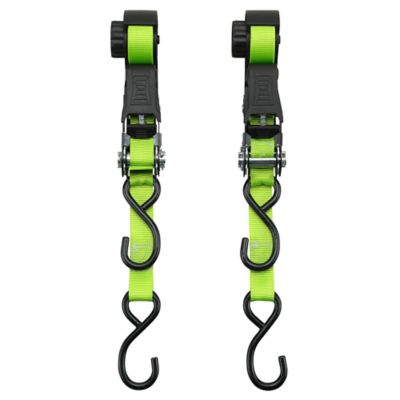
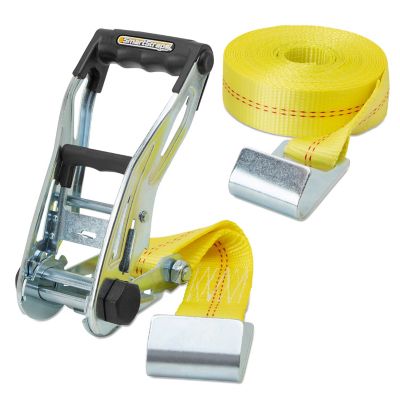
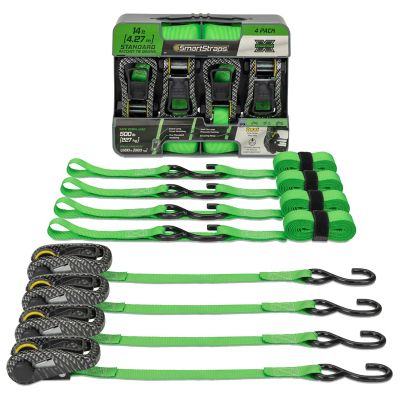
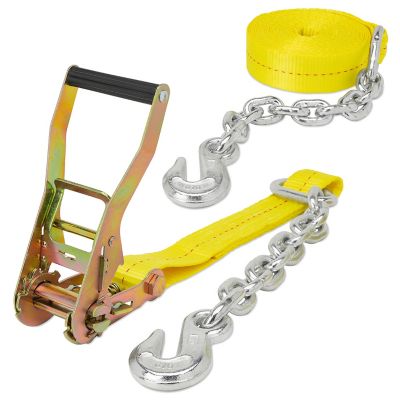
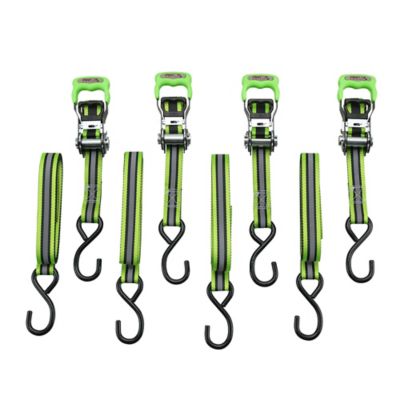
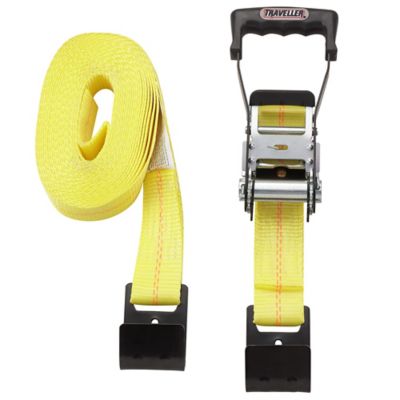
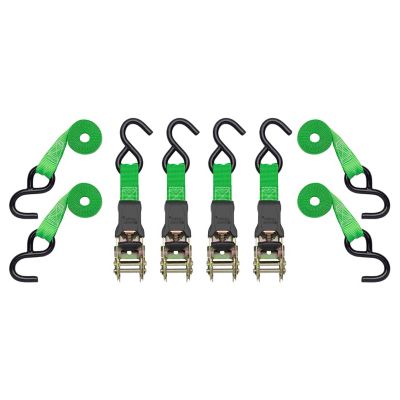
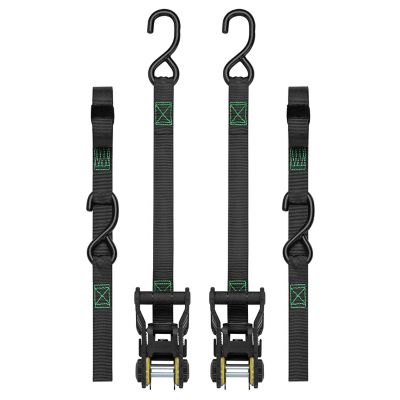
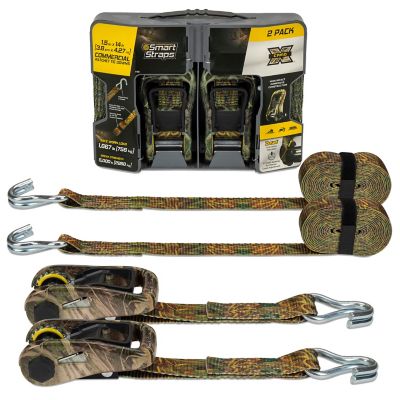
Trailer mounted ratchet straps are a handy way to keep tie-down gear attached to the trailer and ready for the next load. Unlike loose straps that can get buried under tarps, left in a toolbox, or dragged across a gravel driveway, these bolt-on retractable straps mount directly to a trailer frame, side rail, or other approved anchor point. When the cargo is unloaded, the spring-loaded spool winds the webbing back into its housing, helping keep the strap from lying in the mud or flapping behind the trailer. That clean, self-retracting design is especially useful for hauling ATVs, UTVs, riding mowers, compact equipment, motorcycles, watercraft, and other loads that travel on open utility trailers. Many setups use webbing about 2 inches wide and several feet long, with a working load limit commonly ranging from roughly 830 to 1,160 pounds per strap, though capacities vary by design. Always use the working load limit—not the higher breaking strength—as the number that guides your tie-down plan. A strap may have a several-thousand-pound break strength, but that does not mean it should be loaded to that figure. Before choosing trailer mounted ratchet straps, look closely at the weight of the cargo, the number of anchor points available, the trailer’s frame construction, and the direction in which the straps will pull. A pair of straps may work for a lighter machine when used with suitable front and rear restraints, while a heavier load may call for four independent tie-down points or additional equipment. The hooks should fit securely around approved trailer anchors without slipping, and the mounting hardware should match the trailer material and be tightened according to the manufacturer’s instructions. On an open utility trailer, a permanent bolt-on setup can make repeated loading a whole lot less fussy. On an enclosed trailer or a trailer fitted with E-track, a compatible bracket or clip-in system may offer more flexibility when anchor locations need to move. Boat owners should look for a configuration made for the hull and gunwale area, since direct-pull straps can help hold a watercraft upright without pressing hard against delicate sides.
The biggest benefit of trailer mounted ratchet straps is simple: they make a familiar hauling job easier to repeat correctly. A farmer moving a small tractor implement between fields, a landscaper carrying a mower to a new property, or a family taking an ATV down a wooded trail can leave the straps mounted where they belong instead of starting from scratch at every loading stop. Retractable designs also help reduce loose tails, which can whip against the trailer or cargo at highway speeds, collect dirt, or fray when they drag over rough surfaces. That does not make the straps maintenance-free. Before every trip, run a hand and a careful eye along the webbing to check for cuts, melted spots, heavy abrasion, pulled stitching, chemical damage, or sun-worn fibers. Check the ratchet handle, release lever, spool, hooks, brackets, and bolts for cracks, rust, bent parts, or unusual looseness. If a strap has been involved in a hard stop, wreck, or load shift, replace it even if the damage is not easy to see. During loading, keep the webbing flat and away from sharp corners; use edge protection where the strap could rub against steel, a stake pocket, a machine edge, or a rough trailer surface. Position the ratchet so it can be operated without reaching beneath the cargo, and avoid twisting the webbing as tension is applied. The strap should hold the load firmly against the trailer without crushing plastic panels, fenders, boat hulls, or other vulnerable parts. Secure equipment in a way that limits forward, backward, and side-to-side movement, then travel a short distance and stop in a safe place to inspect the tension. It is common for suspension, tires, and equipment tracks to settle after the first few miles, especially on a bumpy gravel road. Recheck the straps before entering faster traffic and at regular stops on a longer haul. Do not use tie-downs as a substitute for a properly rated trailer, working brakes, safe tire pressure, or a balanced load. Keep the cargo centered over the trailer, respect the trailer’s gross vehicle weight rating and carrying capacity, and follow local hauling rules for lights, flags, and overall load security. For additional hauling options, browse
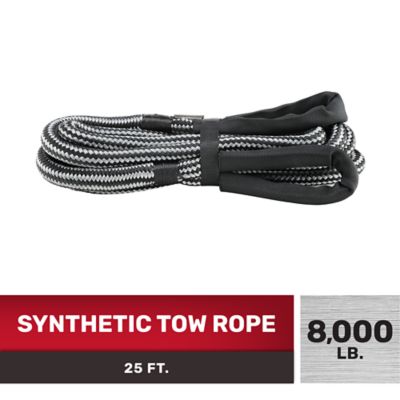
Towing Straps to compare tie-down styles for different trailers and loads.
Trailer mounted ratchet straps can also be a practical gift for someone who spends weekends fixing fence, maintaining a few acres, riding trails, or hauling gear to a hunting camp. They suit the neighbor who always seems to be lending out a trailer, the small-business owner who moves equipment between job sites, or the relative who keeps an ATV and mower ready for outdoor work. A good setup saves the little bits of time that add up over a season: no hunting for a strap under a seat, no loose webbing blowing against the trailer, and no last-minute knot tied around an unsuitable rail. Choose a mounting style that matches the trailer rather than assuming one design fits every rig. Measure the available rail or frame space, confirm that the mounting surface is strong enough for the load, and check that the strap length reaches the cargo without stretching at a sharp angle. A permanent bolt-on ratchet strap is best for a trailer with a dependable mounting location and regularly hauled equipment; an E-track-compatible option may make more sense when the trailer carries different sizes of cargo; and a boat-oriented arrangement may be the right choice for vertical restraint around a watercraft. During the warmer part of the hauling season, dust and road grit can work into moving parts, while cooler, wetter conditions can leave moisture around hardware and webbing, so wipe down the straps after muddy or rainy trips and store the trailer where the components can dry. Keep retracted straps out of contact with exhaust heat, fuel, solvents, and sharp edges. With the right capacity, sound mounting points, and routine inspections, trailer mounted ratchet straps offer a tidy, dependable way to secure everyday cargo from the farm lane to the highway.