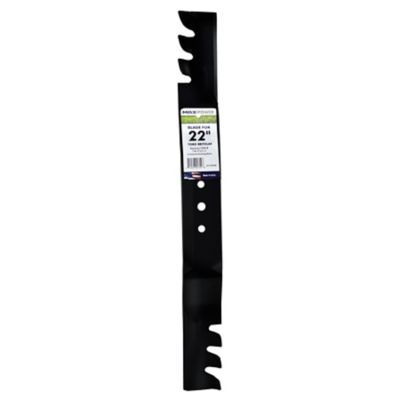
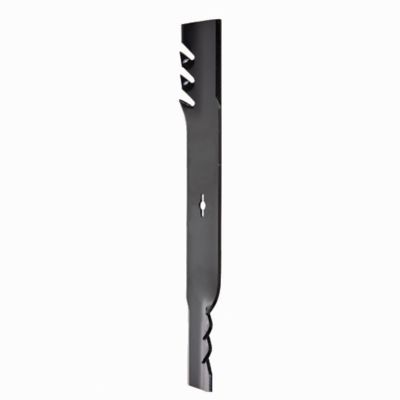
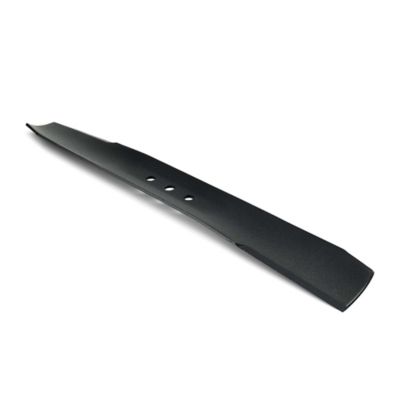
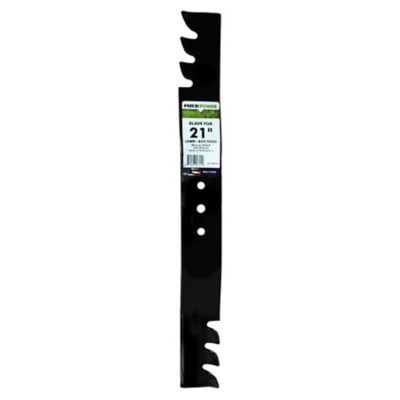
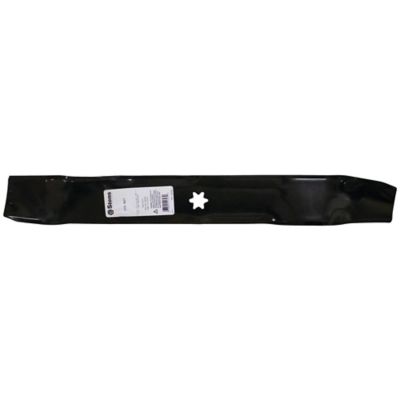
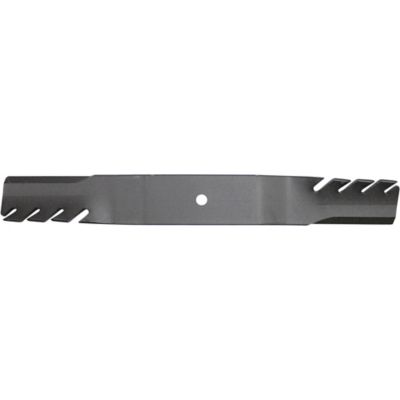
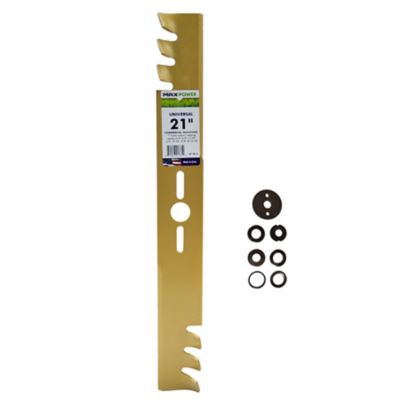
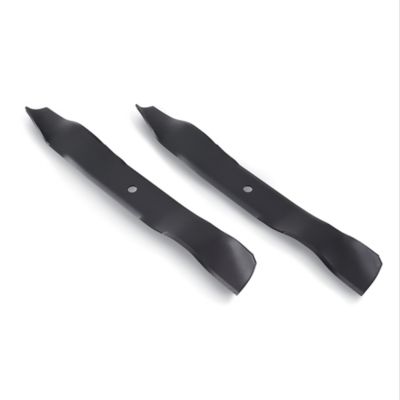
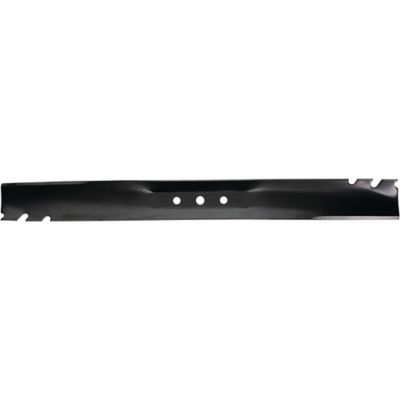
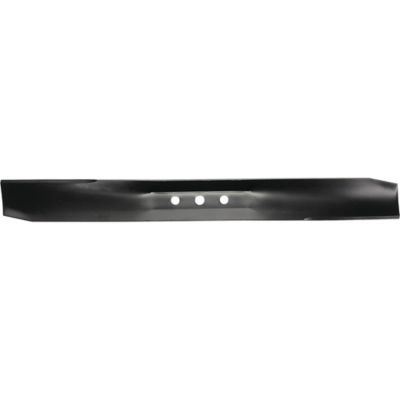
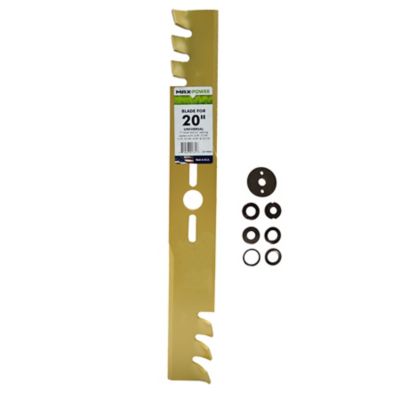
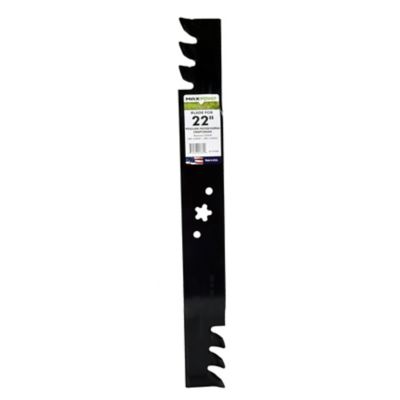
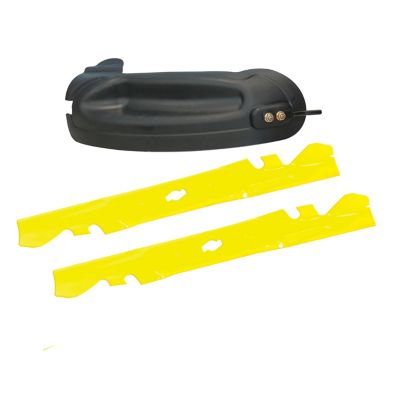
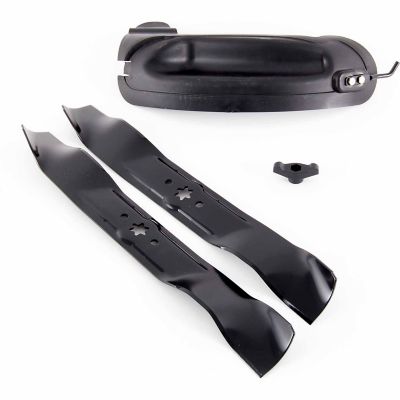
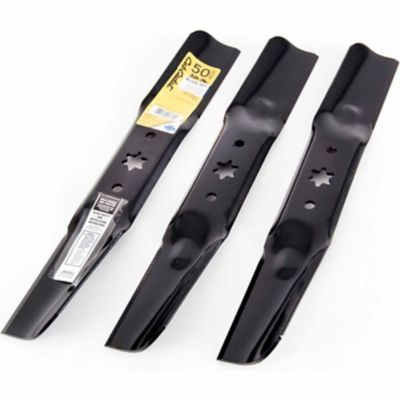
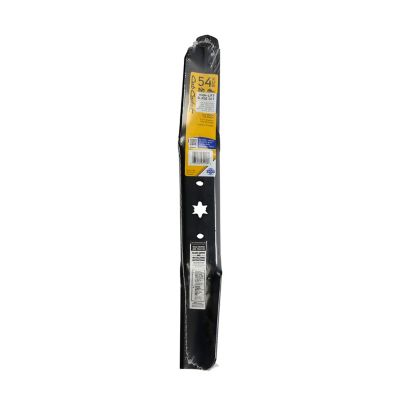
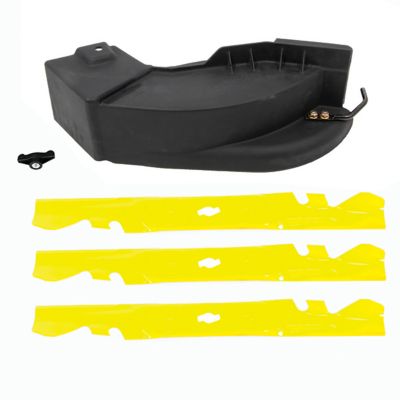
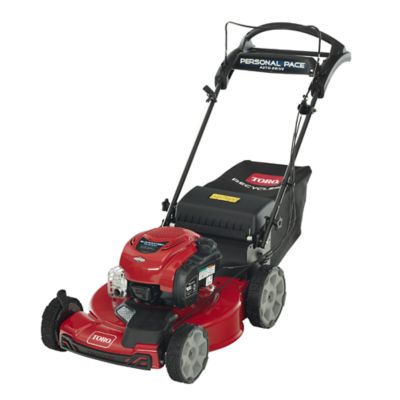
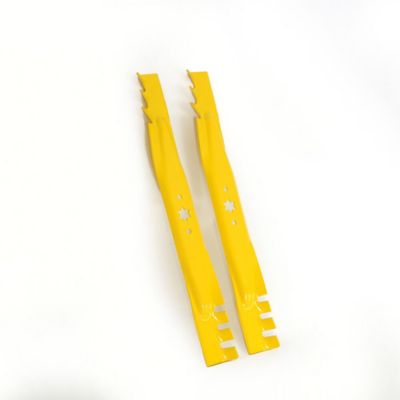
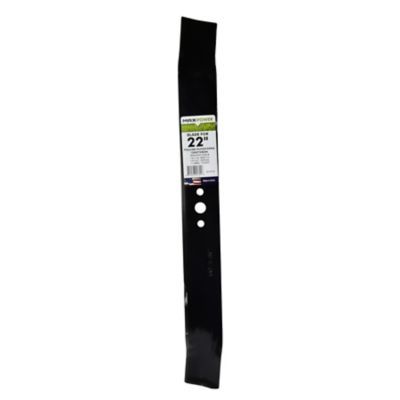
Toro mulching blades are made for mower owners who want to return finely chopped grass clippings to the lawn instead of collecting every cutting in a bag. Their curved cutting surfaces and extended edges help lift clippings inside the mower deck, giving the blade more than one chance to cut the material into smaller pieces. Those fine clippings can settle between the blades of grass, where they break down and return moisture and nutrients to the soil. It is a handy approach for keeping up with regular mowing, especially when the lawn is growing steadily and the clippings are short enough to be handled by the deck. A replacement mulching blade can also help bring back a clean, even cut when an old blade has become dull, nicked, bent, or worn thin from contact with rough ground. Homeowners, acreage owners, groundskeepers, and anyone caring for a residential lawn may find these blades useful for routine maintenance. They can be a practical gift for a new homeowner, a parent who enjoys keeping the yard tidy, or the person in the family who takes pride in neat mowing stripes. Before choosing one, match the blade to the mower model and deck rather than relying on appearance alone. Walk-behind mowers commonly use blades in the low-20-inch range, while riding and zero-turn mower decks may require longer blades or multiple blades working together. The correct length, width, thickness, center-hole shape, mounting pattern, and blade rotation all matter. Checking the mower manual, the original blade, or the equipment manufacturer’s fitment information is the safest way to narrow down the right replacement.
A good fit helps the blade sit securely and maintain the deck’s intended airflow. That airflow is important because a mulching blade needs room to lift and circulate clippings without striking the mower housing. Inspect the deck for built-up grass, check that the blade adapter and fasteners are in good shape, and replace damaged mounting hardware when needed. Always shut off the mower, disconnect the spark plug wire on a gas-powered walk-behind model, remove the battery or key as appropriate, and wait for every moving part to stop before working underneath the deck. Wear sturdy gloves when handling a blade, and use a block or approved tool to keep the blade from turning while loosening or tightening the fastener. The cutting edge should be installed in the correct direction, with the raised or curved portion facing the proper way for the mower. After installation, confirm that the blade is firmly secured and that it turns freely without rubbing the deck. A sharp blade usually produces a cleaner cut than a dull one, which may tear the grass tips and leave a pale or ragged appearance across the yard. It is worth checking the blade several times during the mowing season, particularly after mowing near gravel drives, tree roots, fence lines, or uneven patches. Even careful operators can pick up a hidden stone, and a small bend can affect balance and vibration. For additional mowing flexibility, some owners pair a compatible blade with a
Toro Mulching Kits setup, following the mower’s instructions to make sure the deck is equipped for mulching rather than discharge or collection.
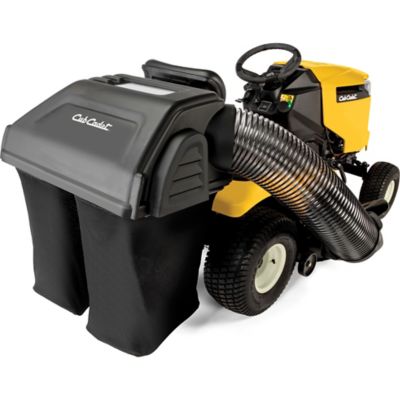
Mulching works best when the mower is used regularly and no more than about one-third of the grass height is removed in a pass. Tall, damp, or heavily matted grass can overwhelm the deck, leaving clumps behind or slowing the mower as the blade works to recut the material. In those conditions, raise the deck, mow at a slower pace, or make a second pass after the first layer has been reduced. Wet grass is also more likely to stick beneath the deck, so letting the lawn dry when practical can improve performance and make cleanup easier. Dedicated mulching blades are designed to keep clippings circulating, which can mean they do not collect wet or overgrown grass as efficiently as a standard blade in a bagging setup. Owners who switch between mulching and bagging should check whether their mower calls for a different blade, plug, deflector, or configuration for each job. During the warmer part of the growing season, regular mowing and a sharp blade can help keep clippings small and unobtrusive. As cooler weather arrives and growth slows, the same equipment can help clear remaining leaves and grass when used according to the mower’s capacity and operating instructions. Keep the blade dry after cleaning, store it where the edge will not be damaged, and avoid using a blade that is cracked, excessively worn, or difficult to balance. With the right fit and sensible maintenance, a mulching blade can make ordinary lawn care feel less like a chore at the end of a long day, leaving behind a clean-looking yard and fewer bags of clippings to haul away.