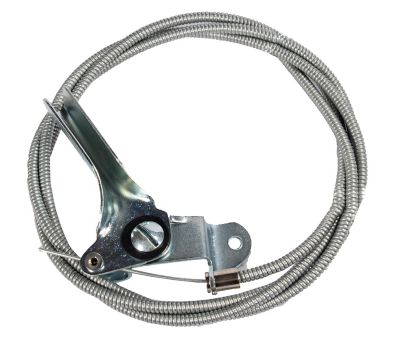
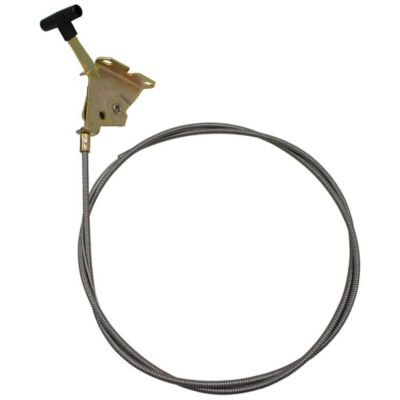
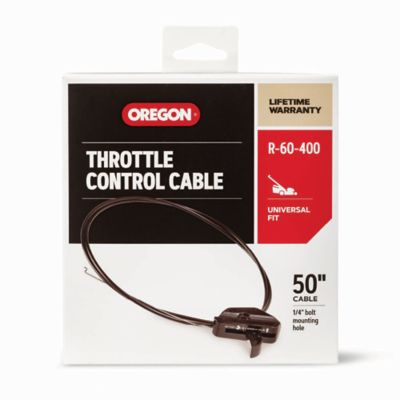
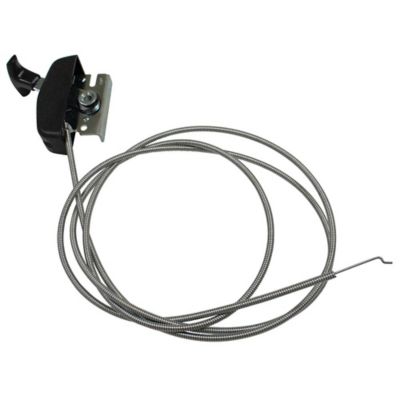
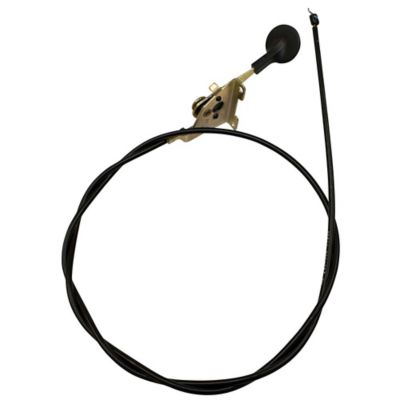
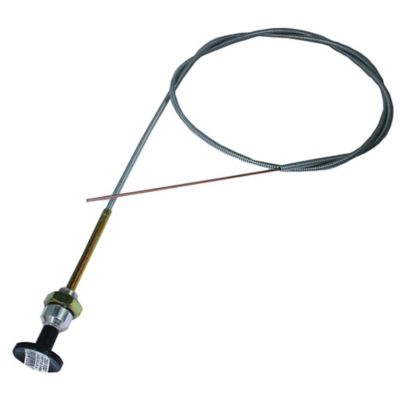
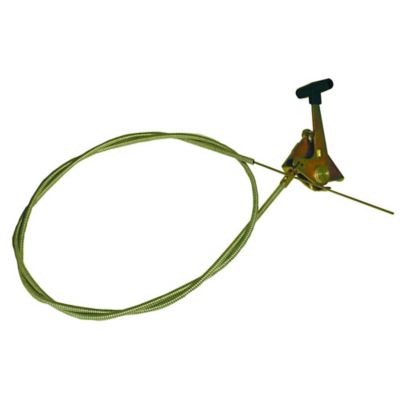
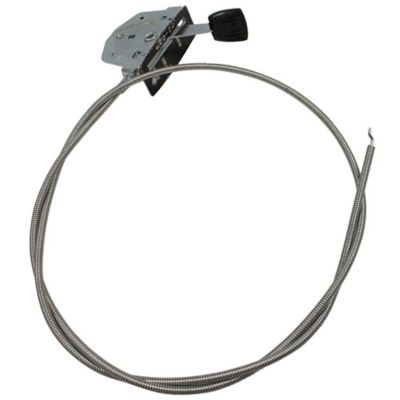
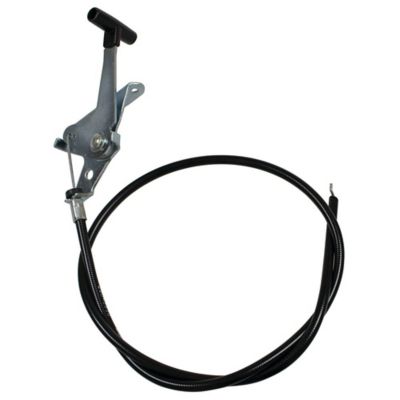
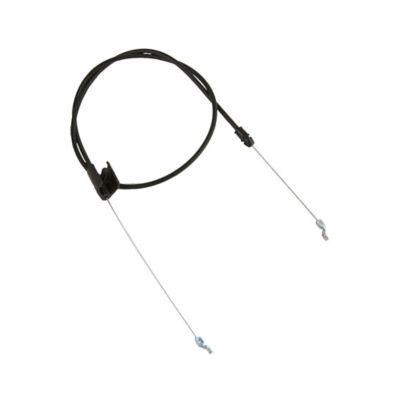
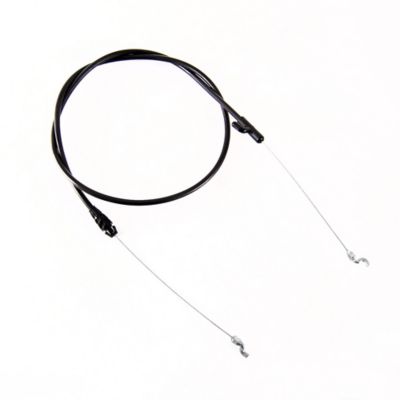
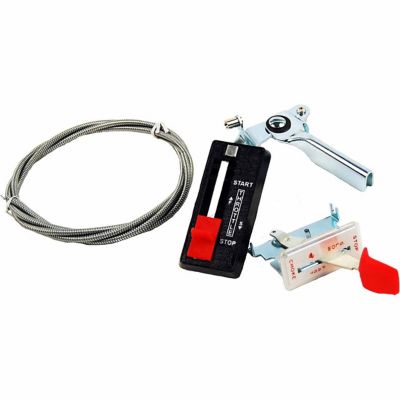
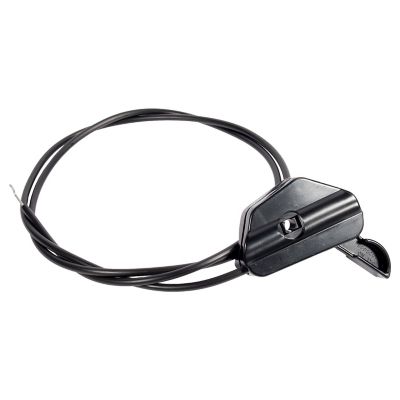
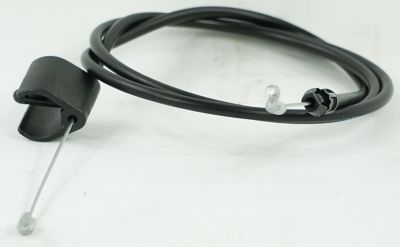
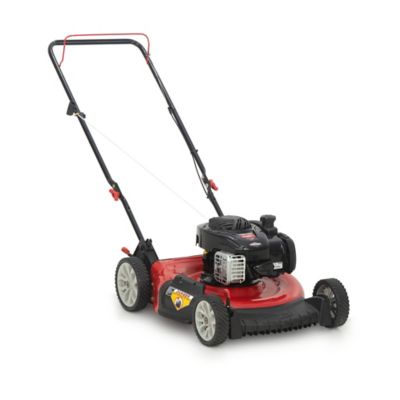
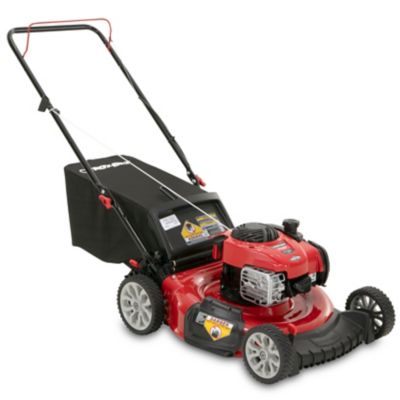
A throttle cable for a lawn mower is a small connection with a big role in how the machine responds at the handle or dash. On mowers with a manual engine-speed control, it carries movement from the throttle lever to the engine’s throttle or governor control, depending on the design. That connection lets the operator select the engine setting specified for the job, whether the mower is cutting a yard beside the house or maintaining grass around a barn. The mower manufacturer’s recommended operating speed still matters, especially while cutting; the cable simply provides the connection needed to reach that setting. A cable that slides freely and stays anchored helps the control feel steady rather than stiff, loose or unpredictable. Frayed wire, a cracked outer covering or an attachment that no longer holds firmly can interfere with that movement, though similar symptoms may also come from the lever or engine linkage. For homeowners keeping a familiar walk-behind mower going, landowners tending several grassy areas and folks responsible for grounds maintenance, a properly matched cable supports everyday equipment upkeep without changing how the mower was designed to operate. Throttle cables are not interchangeable with blade-brake, drive-control or blade-engagement cables just because they look alike. Each connection has its own job, travel and attachment points. Some mowers also run at a fixed governed speed and do not have an operator-adjustable throttle cable at all. On equipment that combines throttle and choke movement at one control, the replacement has to accommodate that arrangement, too. These differences make the mower’s model information, engine configuration and original cable specifications more useful than appearance alone. A nearly matching cable can still leave the lever short of its intended range or put the connection under strain. The goal is a cable that belongs with the machine, from the control beside the operator to the bracket near the engine.
Fit comes down to several measurements and connection details, not just the length printed in a description. Overall cable length, outer housing length and the amount of inner wire extending beyond the housing can each affect installation and control travel. A cable that is too short may pull tight along the mower’s frame, while excess length can create awkward loops or bends. End fittings matter just as much. Depending on the mower, the wire may connect through a formed bend, loop, barrel end or another shaped fitting, and the housing may seat in a bracket, clamp or threaded adjuster. Those details need to match the original mounting arrangement so movement at the lever reaches the engine control instead of shifting the housing. The cable’s construction also needs to suit the job. A solid-wire core may support push-pull action where specified, while other designs work through cable tension and a return spring. These arrangements are not automatic substitutes for one another. Steel inner wire provides the mechanical connection, while the surrounding housing supports its path through the mower. Depending on the design, that housing may include metal reinforcement, a protective outer jacket or an internal liner that helps reduce sliding friction. The outer covering helps shield the assembly from grass clippings, dust and incidental moisture, but it does not make the cable immune to abrasion or corrosion. Contact with a sharp frame edge, repeated tight bending or exposure to hot engine parts can shorten its working life. Routing space is therefore part of fit, especially on a mower with a folding handle or a crowded engine compartment. A handle that folds for storage needs the cable arrangement specified by the manufacturer so the housing does not get pinched or stretched. For related mower and equipment applications,
Replacement Throttle Cables provides a broader category to consider, with the same attention to dimensions, end fittings and control function. Matching those details helps keep a straightforward replacement from turning into a struggle with brackets that do not line up.
Long service life depends on more than the wire inside the housing. Secure mounting points, a sound control lever and a clear routing path all help a lawn mower throttle cable do its job without unnecessary strain. A fresh cable cannot make up for a cracked lever mount, a missing retaining clip or an engine linkage that binds. Those surrounding parts deserve attention whenever the cable shows wear, particularly on a mower that travels over uneven ground or gets moved between properties. Normal equipment care also includes keeping packed clippings away from accessible control connections and watching for places where the outer jacket rubs against the frame. Inspection belongs with the engine off, all moving parts stopped and starting disabled according to the mower’s manual. Lubrication requirements vary by cable construction; some assemblies have liners or other features that call for specific care rather than a general application of oil. Following the equipment and cable instructions helps protect those materials and keeps maintenance suited to the assembly. Storage habits matter as well. A cable trapped beneath a folded handle or pulled against other equipment can develop a kink even when the mower is not running. For a mower that handles the home lawn, the grass beside a workshop or the open space around an outbuilding, consistent control starts with these small mechanical details. A correctly fitted throttle cable should allow the specified range of lever movement while its housing remains firmly seated. It should not depend on sharp bends, improvised extensions or a stretched connection to reach its mounting points. Whether the work is part of regular mower upkeep or bringing a familiar machine back into service, the practical choice is a cable matched to the mower’s design, built for the required motion and cared for according to its instructions. That keeps the focus where it belongs: a mower that responds as intended when there is grass to cut.