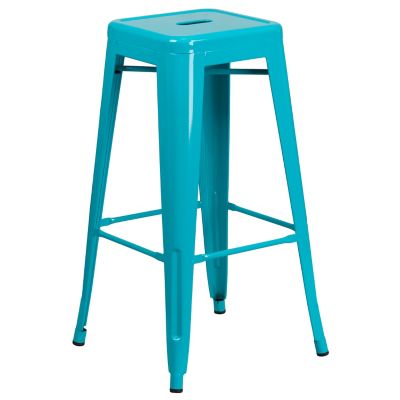
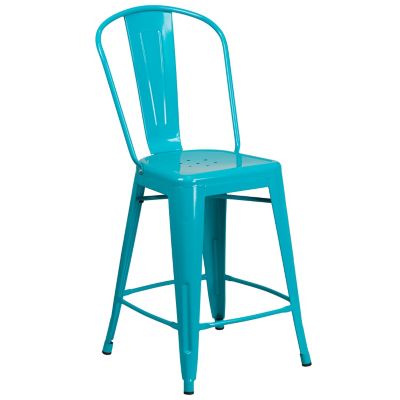
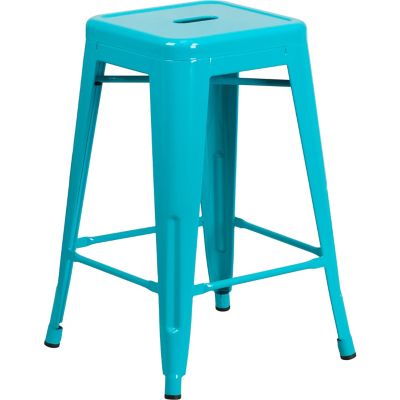
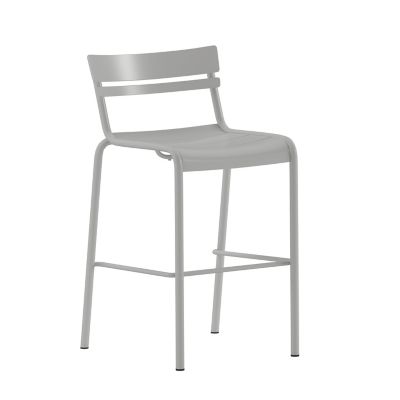
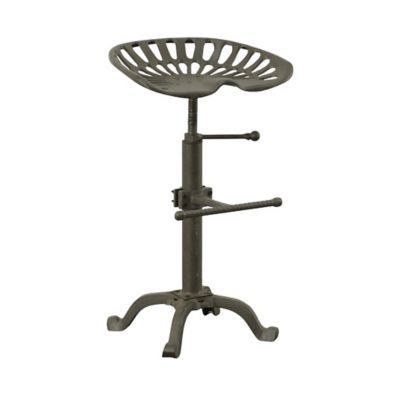
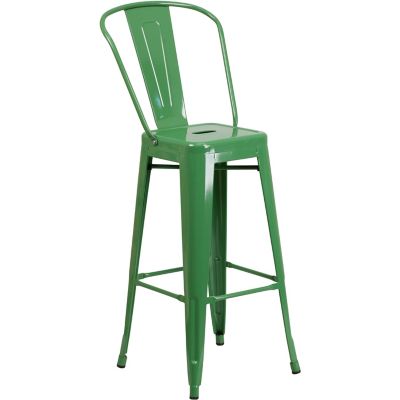
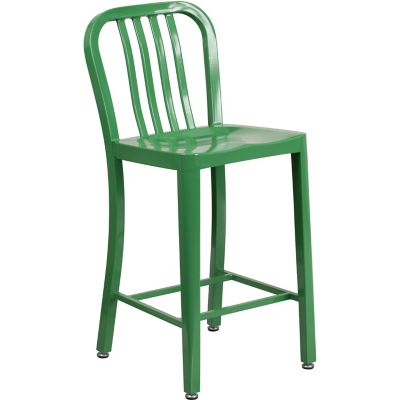
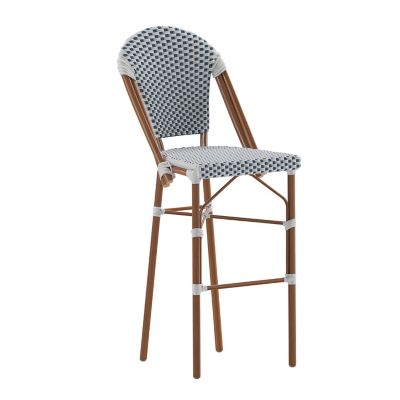
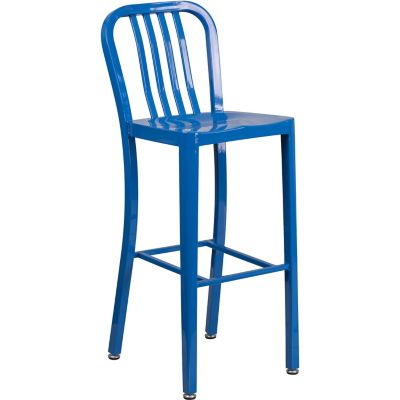
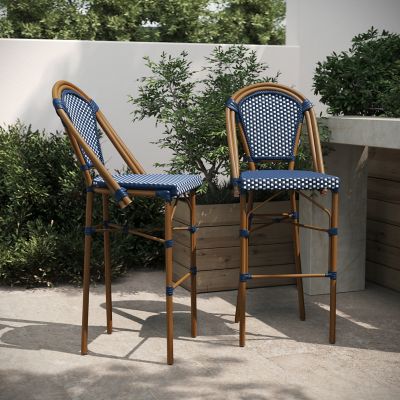
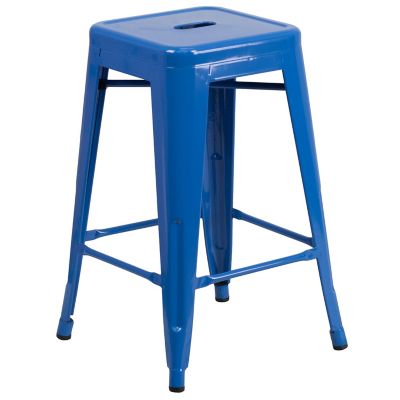
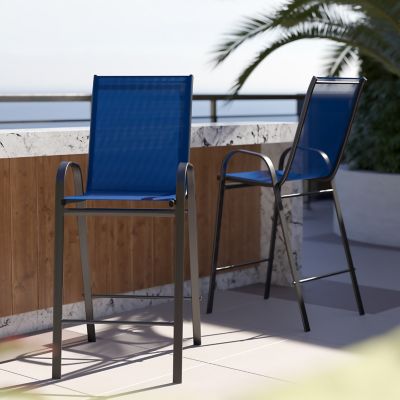
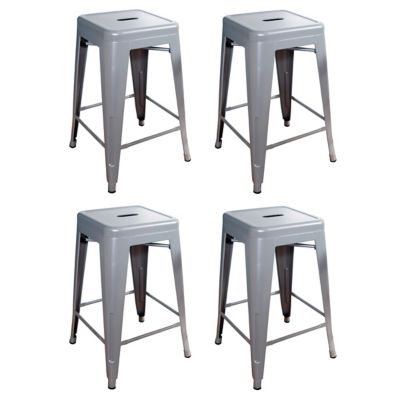
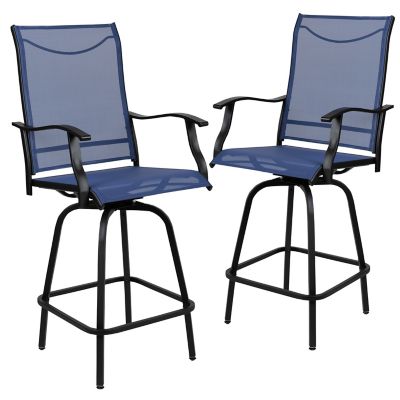
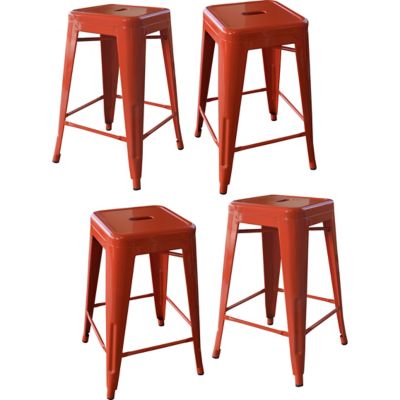
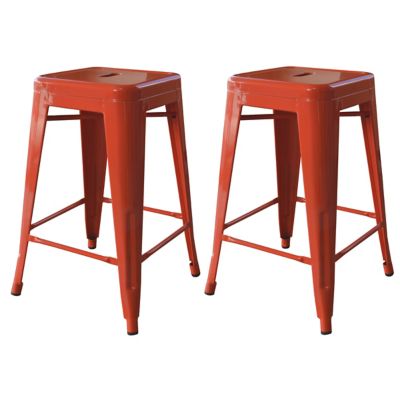
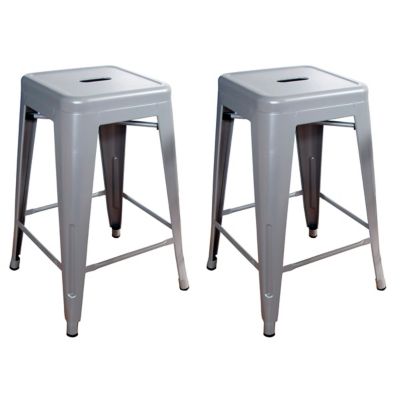
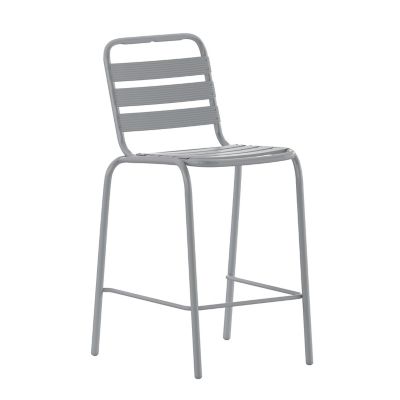
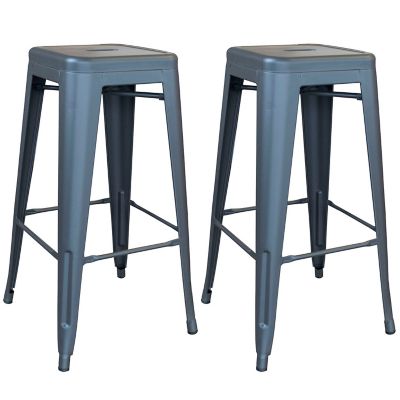
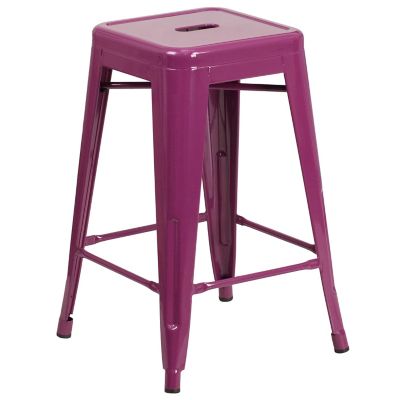
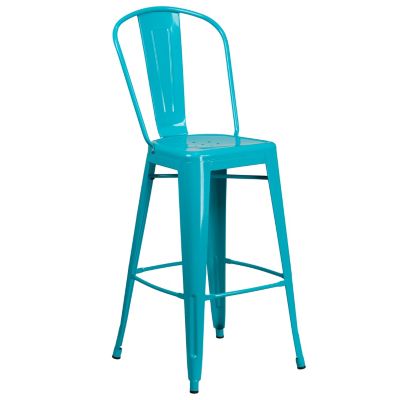
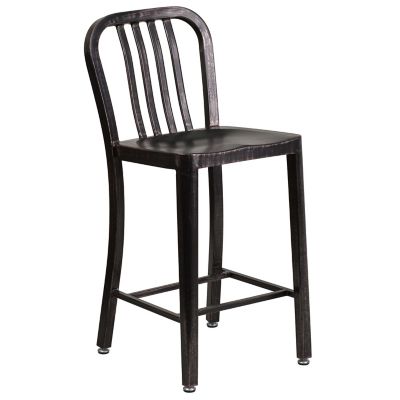
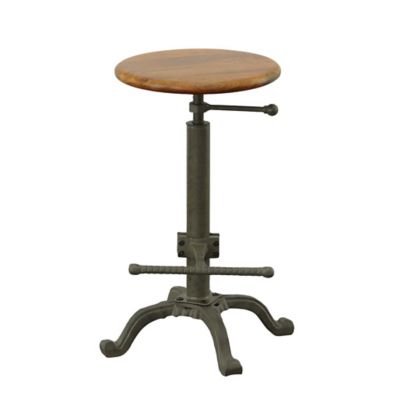
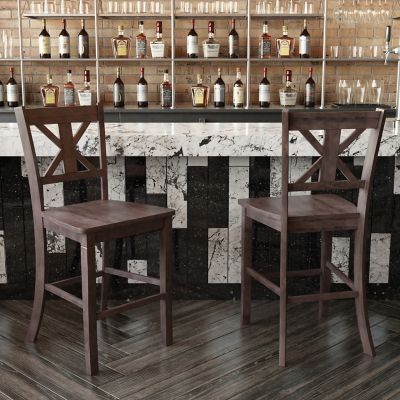
Teal metal bar stools bring a blue-green splash of color to the kitchen island, breakfast bar, or gathering spot off the game room. The shade has enough character to stand out against white cabinets and enough depth to sit comfortably beside oak, pine, brick, and dark hardware. Some teal finishes lean toward blue, while others have a greener cast, so the overall effect can range from a quiet accent to the strongest color in the room. Metal frames give these stools a straightforward, hardworking look that fits a farmhouse kitchen just as easily as a space with exposed beams and concrete floors. Steel is a common frame material, offering a solid feel, while aluminum construction can make a stool easier to move between seating spots. Frame weight, joint construction, and the width of the base all affect how a stool feels beneath someone settling in for breakfast before chores. Welded connections and securely fastened braces contribute to frame strength, though weight limits should always come from the manufacturer rather than appearance alone. Powder-coated and painted finishes add color to the metal, with matte surfaces tending to look softer and glossy surfaces reflecting more light. Neither finish makes every stool suitable for every setting; the care instructions and intended placement still matter. Backless designs keep sightlines open and often tuck neatly beneath an overhang. Slat-back and other backed styles create a more defined seat, making them a natural fit where folks tend to linger over supper or a card game. A metal seat keeps the look simple, while a wood seat adds grain and a different feel against the frame. Teal also works alongside the clean shapes found in
Contemporary Metal Bar Stools, bringing color to a streamlined arrangement without requiring every piece in the room to match. That mix of color, open framing, and practical seating gives the category its broad appeal.
A comfortable fit starts with the relationship between the seat and the surface in front of it. Counter-height stools commonly have seats around 24 to 26 inches high for counters about 34 to 36 inches tall, while bar-height stools commonly have seats around 28 to 30 inches high for surfaces about 40 to 42 inches tall. Those ranges are a starting point, not a substitute for the dimensions of the actual stool and counter. Roughly 10 to 12 inches between the seat and the underside of the surface generally leaves room for legs, although a thick apron, support rail, or deep drawer can reduce that space. The seat height matters more than the overall height when comparing a backless stool with one that has a tall back. Width matters, too, especially when several people share one side of an island. About 24 to 30 inches of counter length per person is a useful planning range, with wider seats, arms, and swivel movement sometimes calling for more room. A pair can suit a short breakfast ledge, while a group of four needs enough space for elbows as well as the stool bases. The footprint deserves attention in a busy kitchen where someone may be carrying a feed bucket through the mudroom doorway or setting a full casserole on the counter. Splayed legs can provide a broad stance but may extend farther than the seat suggests. Swivel seats make turning toward a conversation easier, though nearby cabinets and walls need clearance. Footrests give feet somewhere to land rather than leaving legs hanging, and their height can make a noticeable difference during longer meals. Seat contours, rounded edges, and the position of the backrest also shape comfort. A cushion can soften a metal seat, provided it fits securely and does not interfere with sitting down or standing up. For a household with children or visiting grandkids, a stable base and an appropriate seat height matter more than a stool’s resemblance to the rest of the furniture.
Everyday care helps teal metal bar stools keep their color and stay pleasant to sit on through breakfast crumbs, homework sessions, and company around the counter. A soft cloth with mild soap and water is often enough for routine cleaning, followed by drying, but the manufacturer’s directions take priority for any particular finish or seat material. Abrasive pads and strong cleaners can scratch or dull painted surfaces, and liquid left around seams or fasteners can encourage corrosion on susceptible metals. Wood seats and upholstered cushions may need a different cleaning approach from the frame beneath them. Small finish chips deserve attention because exposed metal can be more vulnerable to rust; any touch-up coating should be compatible with the original finish. Floor glides are another small detail with a big effect, helping limit scuffs and scraping sounds when stools move across tile, wood, or other hard flooring. Glides can wear down or collect grit, so an occasional check helps protect both the floor and the stool’s footing. Loose fasteners, a rocking base, or a bent footrest call for attention before someone takes a seat. Footrests support seated feet, not someone standing up to reach a cabinet, and stools should not take the place of a step ladder. Metal construction alone also does not establish that a stool belongs outdoors; patio or porch placement requires a design approved for that setting. Around an indoor bar or island, teal can tie together smaller touches such as a patterned rug, pottery on an open shelf, or blue-green cabinet hardware. Keeping nearby finishes fairly simple lets the color carry the space without making it feel crowded. Matching stools create a tidy line along a counter, while coordinating shapes and seat heights can bring order to a more mixed arrangement. Whether the spot serves quick lunches, paperwork, or a place for neighbors to sit a spell, the right combination of frame construction, seat proportions, and finish makes teal metal bar stools both useful seating and a welcome bit of color.