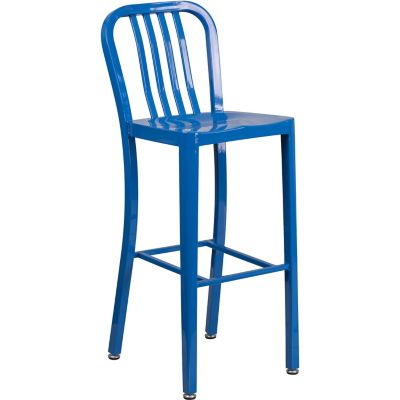
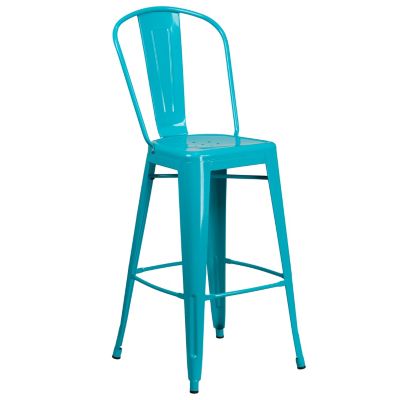
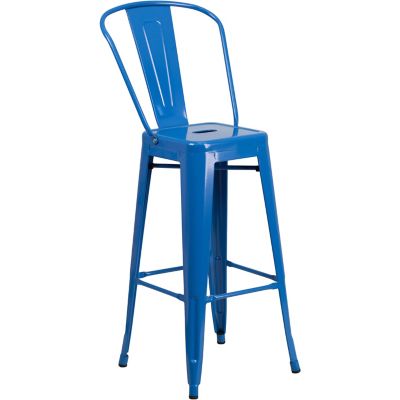
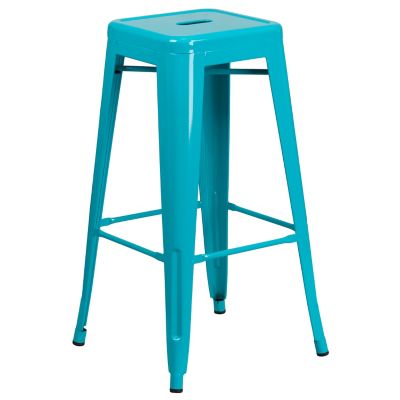
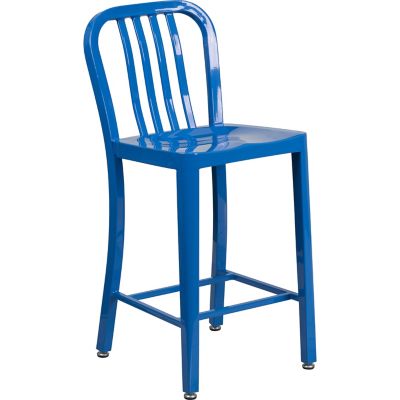
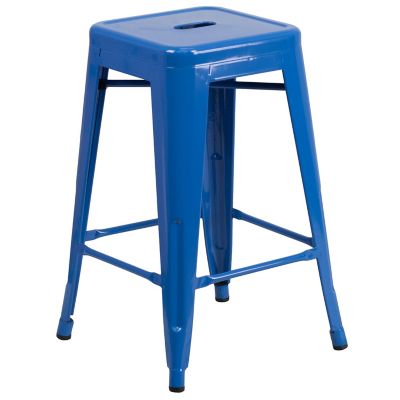
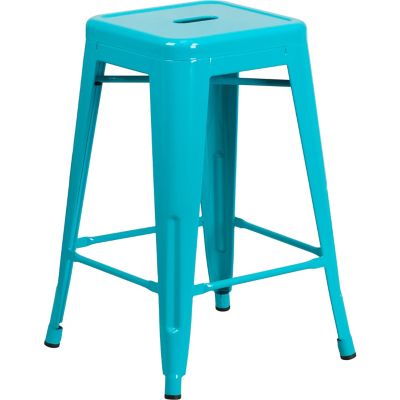
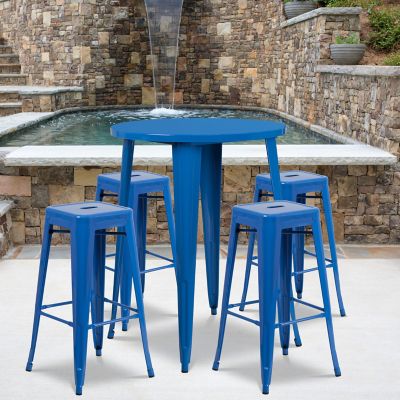
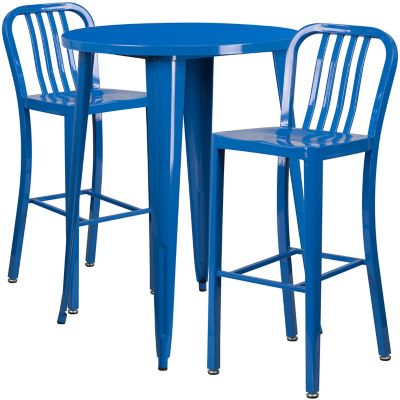
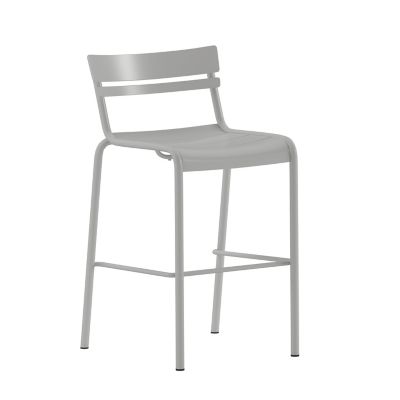
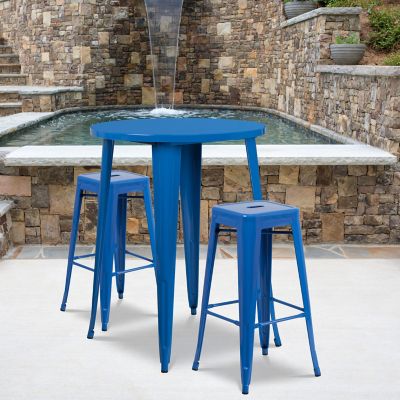
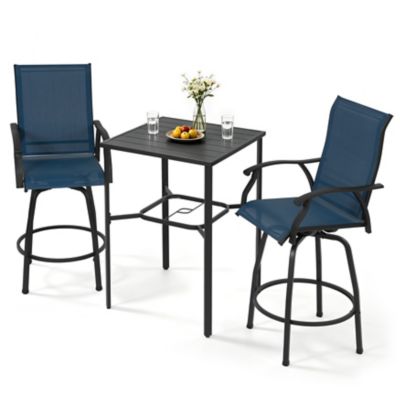
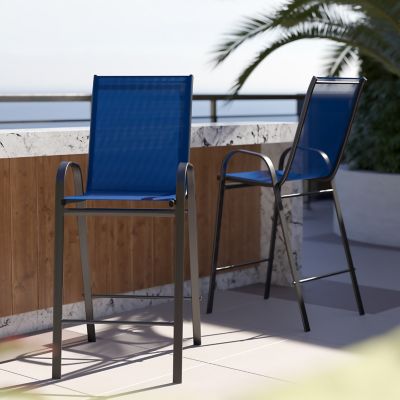
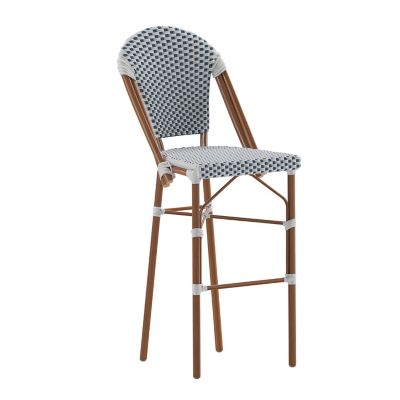
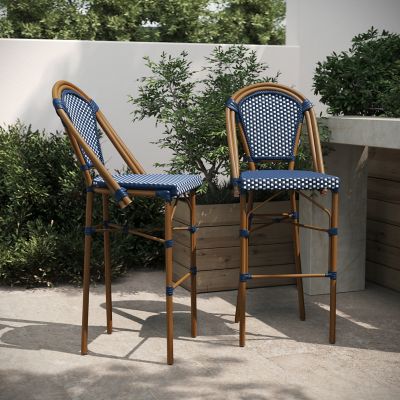
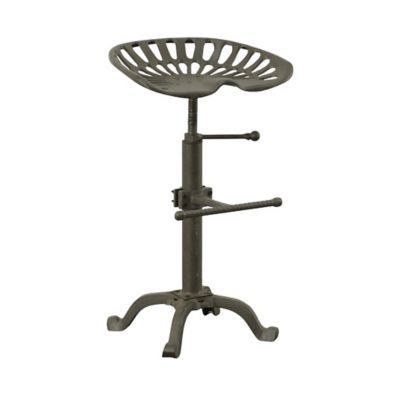
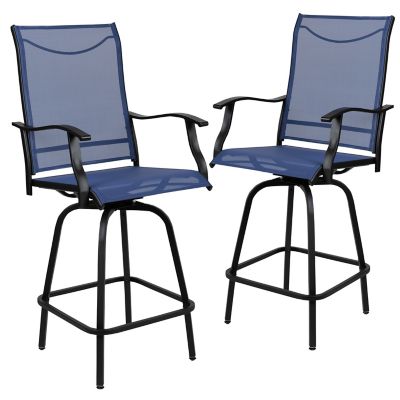
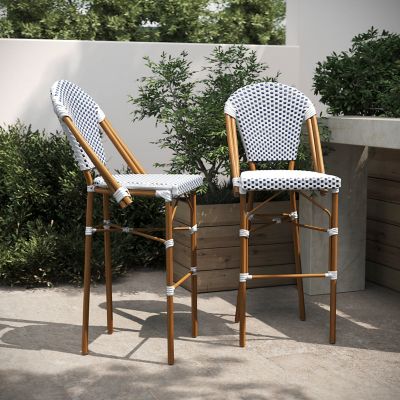
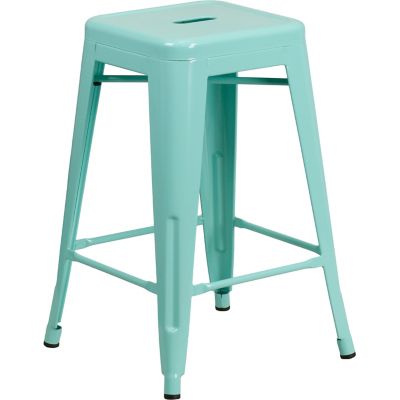
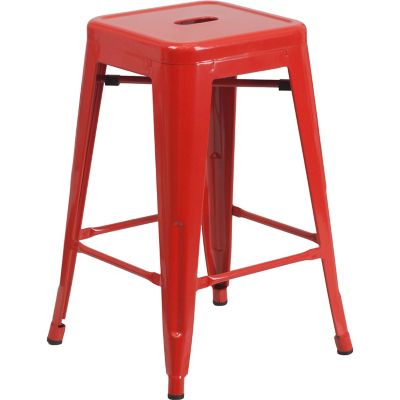
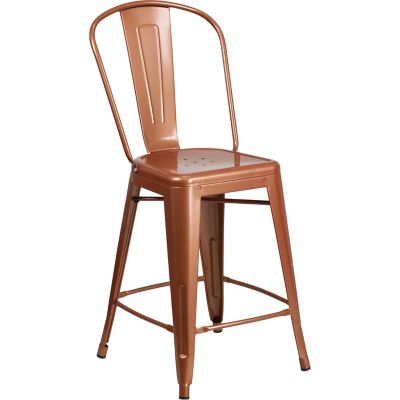
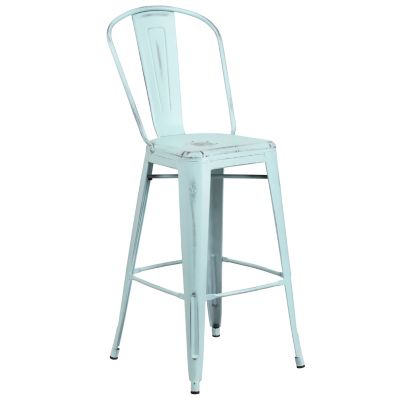
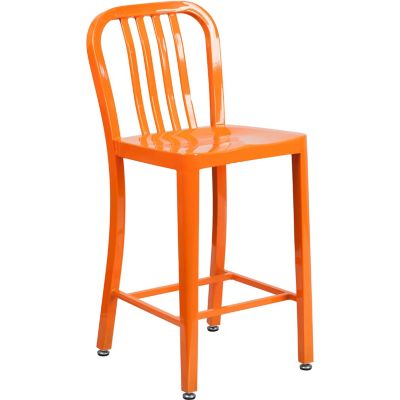
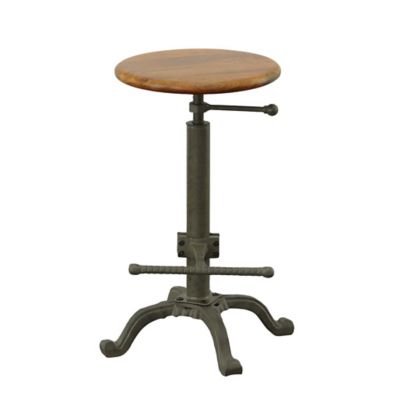
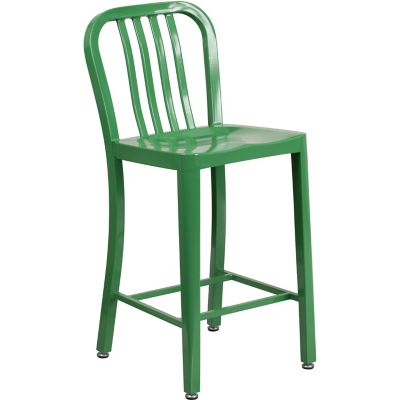
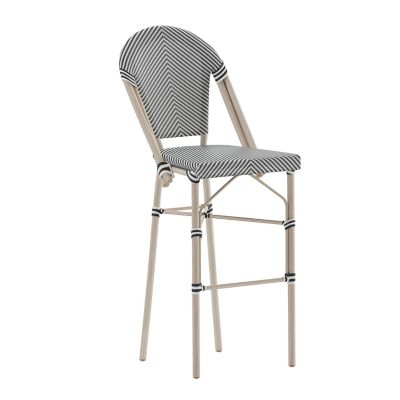
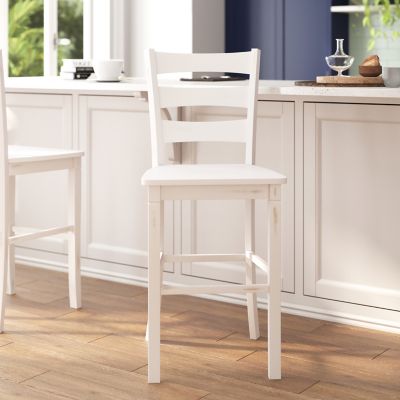
Blue metal bar stools bring a little color to the places where folks naturally gather, whether that’s a kitchen island, a breakfast bar or a game room counter. Blue has enough range to work with several looks without making the whole room feel matched from top to bottom. Navy sits comfortably beside dark wood, white cabinets and black hardware, while brighter blue makes a stronger statement against simple walls and natural wood surfaces. Softer, muted shades can blend into a relaxed farmhouse kitchen without disappearing into the background. The finish makes a difference, too: a glossy surface catches the light, while a matte finish gives the color a quieter presence. Metal frames add crisp lines that balance thick wood counters, stone surfaces and plank flooring. Depending on the construction, a stool may have an all-metal seat, a wood seat or a padded cushion, and each changes both the appearance and the feel. An all-metal design keeps the look straightforward, while wood introduces grain and upholstery adds softness for longer conversations. If that mix of materials suits the room,
Metal And Wood Bar Stools offer another direction to consider alongside an all-metal style. Blue seating can serve as the main color accent or pick up smaller touches already in the room, such as a rug, cabinet pulls or a favorite set of dishes. There’s no need for every blue surface to match exactly; a consistent light or dark tone often does more to pull a space together. Think about the view from adjoining rooms as well as the counter itself. A row of high backs becomes part of the room’s outline, while low-backed or backless stools leave more of the countertop visible. That difference matters in an open kitchen where the seating stays in sight even when everyone has moved on to other chores.
Getting the fit right matters more than choosing a color from across the room. Bar-height seating and counter-height seating aren’t interchangeable, even when the frames look much alike. A counter around 36 inches high generally pairs with a seat around 24 to 26 inches high, while a 42-inch bar generally calls for a seat around 30 to 32 inches high. Aim for roughly 10 to 12 inches between the top of the seat and the underside of the eating surface, then account for anything hanging below it. A thick apron, support bracket or shallow overhang can leave less knee room than the overall counter height suggests. Measure the actual space where someone’s legs will go, not just the distance from the floor to the countertop. Seat width and spacing deserve the same attention. As a starting point, allowing about 26 to 30 inches from the center of one seat to the next gives many adults room to sit and eat without bumping elbows. Wider seats, arms and swivel mechanisms may need more room. Leave space at the end of the counter and behind the stools so someone carrying a full plate can pass without squeezing sideways. For quick breakfasts or a short break over coffee, backless seating can keep a small room open and tuck neatly away when dimensions allow. For homework, card games or a long visit, a backrest, a well-placed footrest and a seat with enough depth can make a noticeable difference. Arms provide another place to rest, but they also need clearance beneath the counter if the stool will slide inward. Swivel seats make turning toward a conversation easier, though the surrounding space must accommodate that movement. Check adjustable-height ranges against the actual counter measurements rather than assuming one setting will suit every surface. A little measuring before choosing seating helps keep an everyday gathering spot from becoming a tight squeeze.
Frame construction and care help determine how blue metal bar stools hold up to everyday traffic. Steel and aluminum bring different weights and handling characteristics, so consider both how the seating is built and how often it will be moved. A heavier frame may feel substantial in place, while a lighter one may be easier to pull out for sweeping or rearrange when extra elbow room is needed. Weight alone doesn’t establish strength; joints, bracing, assembly and the stated weight capacity all matter. Look at where the legs connect to the seat and whether the footrest is positioned for comfortable support. Follow assembly directions, check fasteners periodically and address any wobble before it becomes part of the daily routine. Floor contact matters just as much as the frame above it. Protective feet can help limit scuffs, but they should stay clean and be checked for wear, especially where grit gets tracked across hard flooring. Leveling feet, when included, can help compensate for small differences in the floor. For cleaning, follow the care directions for the particular finish and seat material. A soft cloth and an approved mild cleaner are generally a better starting point than abrasive pads that can scratch a painted surface. Wipe away food and drink spills promptly, dry damp areas and pay attention to seams where residue can collect. Wood seats and fabric cushions may need different care from the metal frame, so treat each material accordingly. Inspect chips in coated metal and follow the maker’s recommendations for addressing exposed areas. If the seating is intended for a porch or patio bar, confirm that the entire stool is rated for outdoor placement rather than judging by its metal frame alone. For families, remember that bar stools are elevated seating, not steps or climbing equipment. A sensible match between construction, seating height and daily habits leaves room for what the counter is really for: a quick meal, a neighbor’s visit or a place to sit while supper comes together.