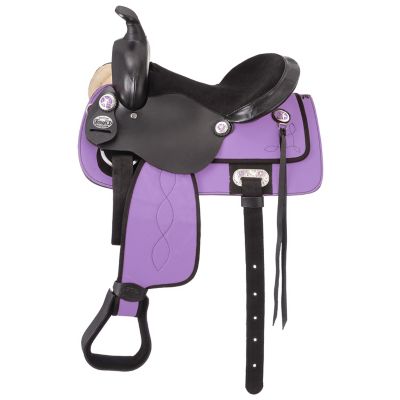
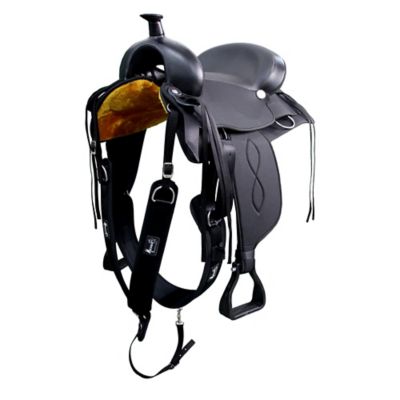
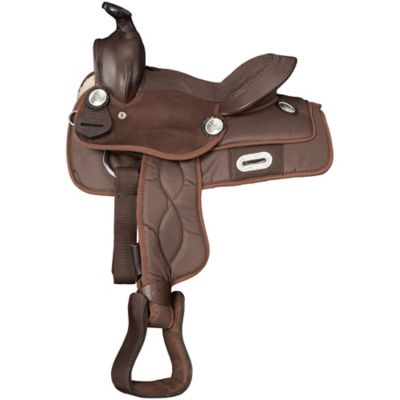
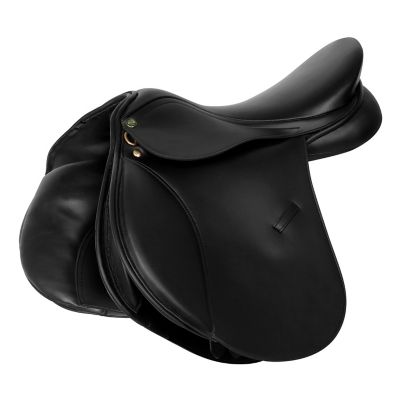
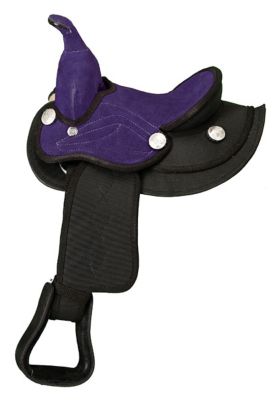
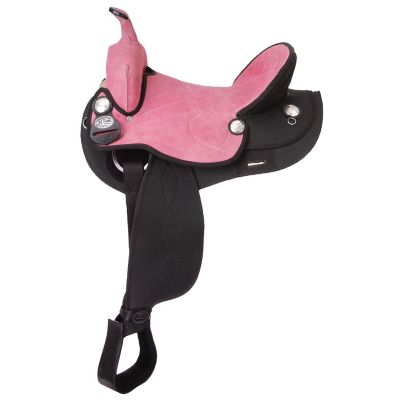
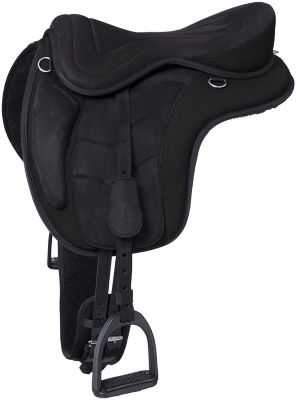
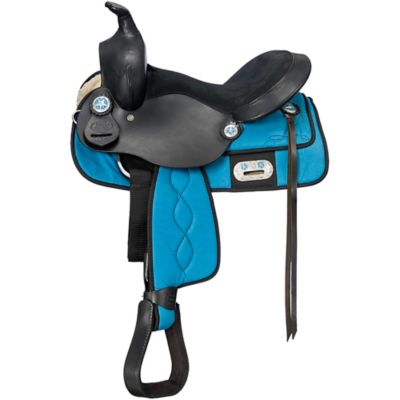
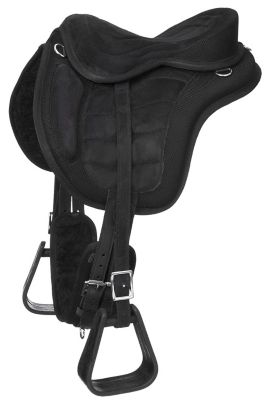
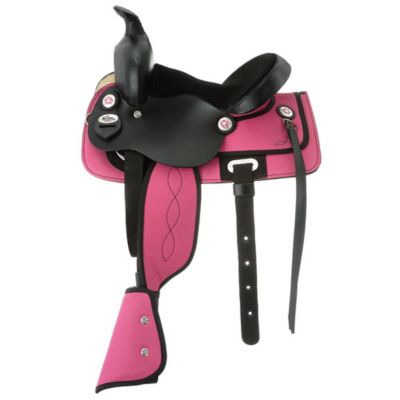
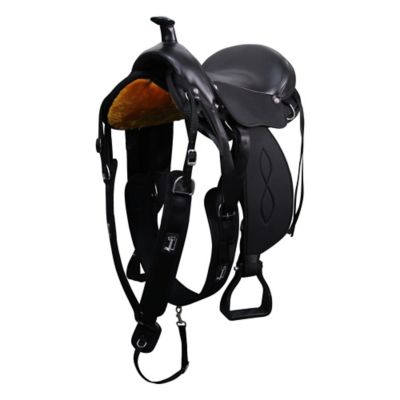
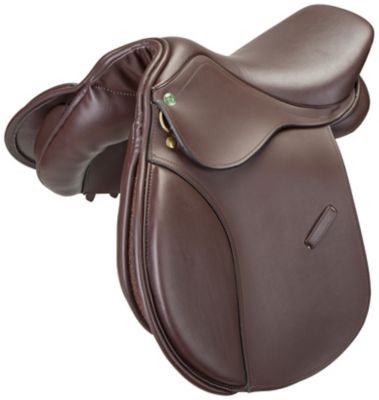
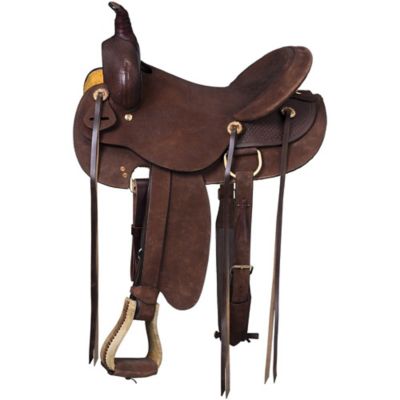
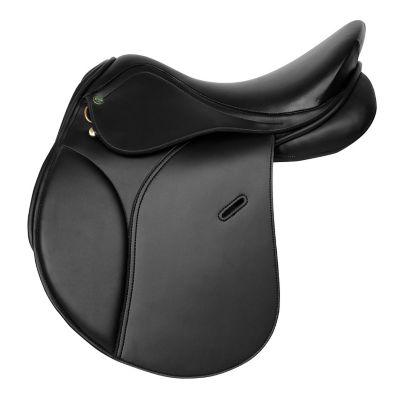
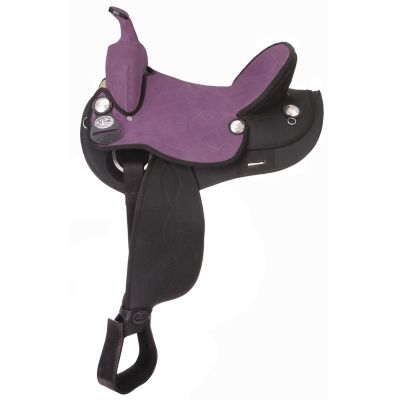
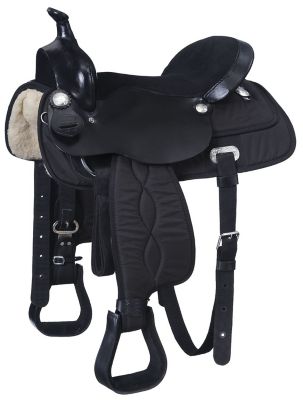
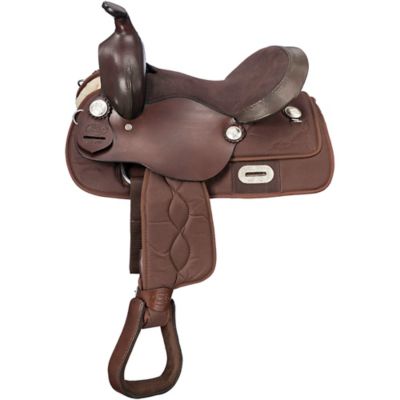
Synthetic saddles offer a practical way to enjoy comfortable, dependable riding without the weight and upkeep that often come with traditional leather tack. Made with materials such as synthetic leather, coated fabric, Cordura-style nylon or molded components, these saddles are generally lighter to lift, easier to carry and less bothered by rain, mud and everyday barn dust. Many weigh around 15 to 20 pounds, though the exact weight depends on the seat size, tree and construction. That lighter feel can make a real difference when you are saddling up before a trail ride, loading tack into a truck or helping a young rider get ready at the mounting block. Synthetic saddles are available in both Western and English styles, with options suited to trail riding, everyday pleasure riding, lessons and general arena work. Western designs may offer the deep, secure seat and familiar fender-and-stirrup setup many trail riders prefer, while English styles are often shaped for all-purpose riding, flatwork or other arena activities. They are especially popular with beginners, children, families who share tack between riders and anyone who wants a saddle that is simple to handle. A synthetic saddle can also make a thoughtful gift for a new rider, a growing child or a horse owner building a dependable set of basic equipment, though the best choice should always be based on proper fit and the intended type of riding rather than appearance alone.
Fit is the most important consideration when choosing among synthetic saddles. A saddle needs to suit the horse’s back, the rider’s seat and the work you plan to do. Start by identifying whether you need a Western or English style, then look closely at seat size, tree shape, gullet width and the overall length of the panels or bars. Horses have different backs, just as riders have different builds, so a saddle that feels comfortable on one horse may pinch, rock or bridge on another. The saddle should sit evenly from front to back, leave adequate clearance at the withers and allow the horse to move freely through the shoulders. For the rider, the seat should provide room without allowing excessive sliding, and the stirrup position should support a balanced leg. Young riders may need room to grow, but an oversized saddle can make it harder for a child to sit securely and follow the horse’s motion. If you are replacing an older saddle, compare its measurements and fit rather than assuming the same size will work. A qualified saddle fitter or experienced riding instructor can be a valuable second set of eyes, especially when you are fitting a horse with a broad, narrow, high-withered or changing back. Consider the saddle’s weight, rigging, stirrup adjustment, padding and hardware, too. Riders who tack up alone may appreciate a lightweight design, while those spending long hours on the trail may place greater importance on seat comfort, stability and room for movement. Depending on your setup, related tack such as
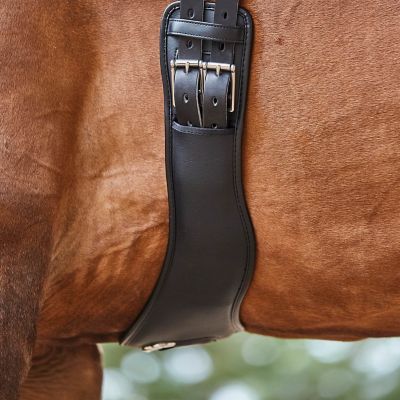
Horse Surcingles may also be useful for specific training, groundwork or equipment needs, but each piece should be selected for its proper purpose and used with careful adjustment.
One of the biggest advantages of synthetic saddles is straightforward care. After a dusty ride, brush away loose dirt and wipe the surface with a damp cloth or mild soap and water according to the manufacturer’s care directions. Unlike unfinished leather, most synthetic materials do not need regular oiling or conditioning, which can save time during busy stretches of the riding season. That easy cleanup is handy when a horse splashes through a muddy patch, when a saddle gets damp during an unexpected shower or when several riders share the same tack. Even weather-resistant materials benefit from sensible storage: let the saddle dry fully before putting it away, keep it out of prolonged direct sunlight and store it on a proper saddle rack so the shape stays supported. Check the stitching, girth billets, rigging, stirrup leathers, buckles and other load-bearing parts before each ride. Synthetic saddles can handle plenty of everyday use, but cuts, torn seams and damaged hardware should not be ignored. Unlike many high-quality leather saddles, some synthetic materials are harder to repair neatly once they tear, so replacing worn components or seeking professional advice may be safer than attempting a quick fix. Before mounting, confirm that the girth or cinch is snug, the saddle pad is smooth and the tack is positioned correctly. A clean, well-fitted pad can help reduce rubbing and protect both the saddle and the horse’s back. During the warmer part of the riding season, lightweight construction and simple cleaning can make regular evening rides easier to manage; as cooler, wetter weather arrives, the same low-maintenance qualities are useful around muddy trails, damp arenas and busy barns. With the right fit and routine inspection, a synthetic saddle can be a sensible choice for riders who value comfort, portability and less-fussy care.