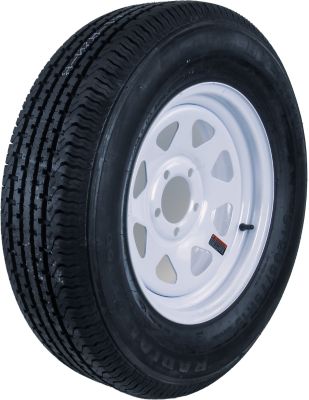
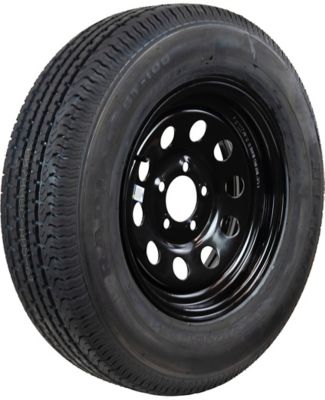
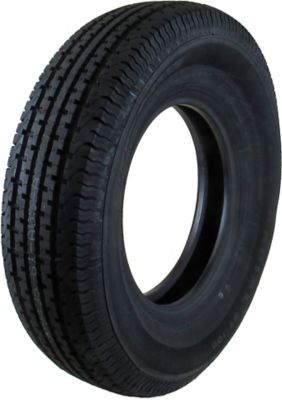
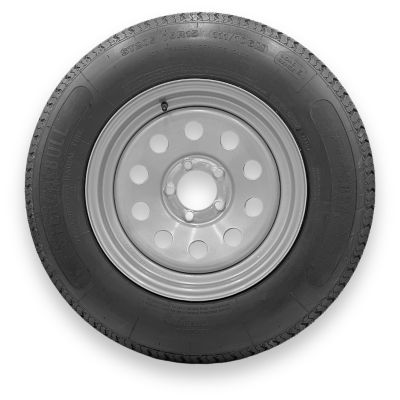
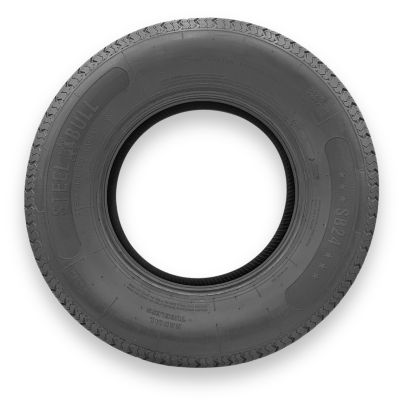
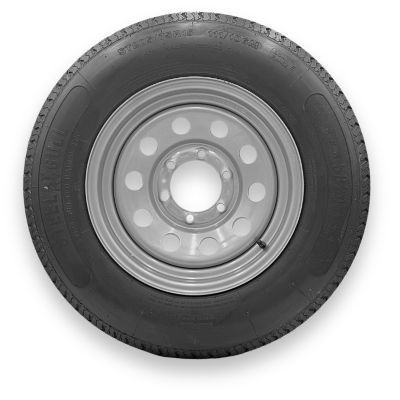
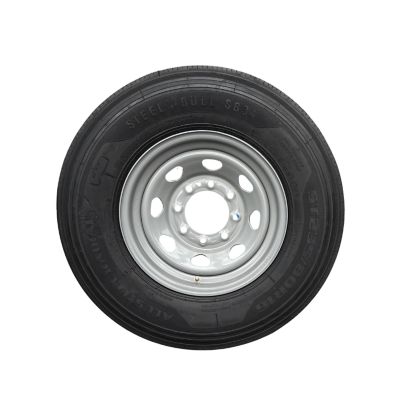
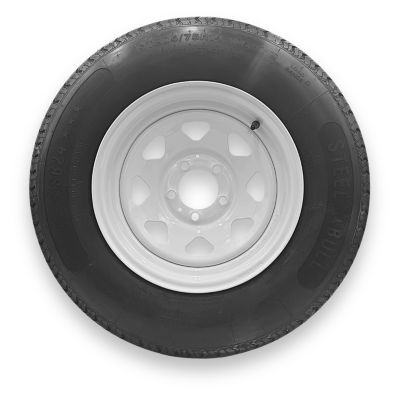
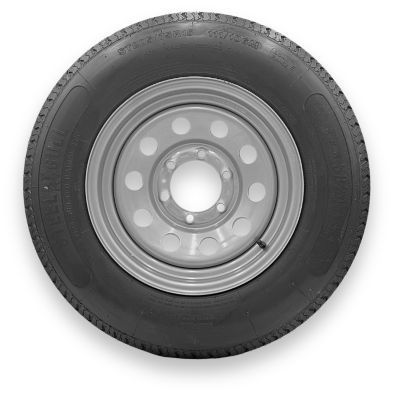
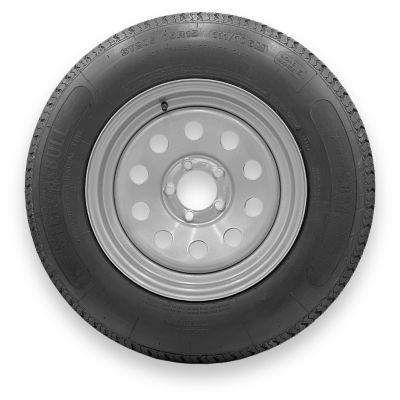
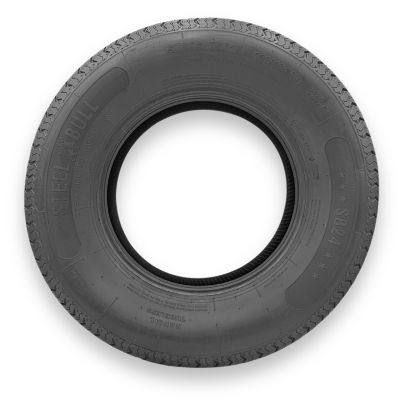
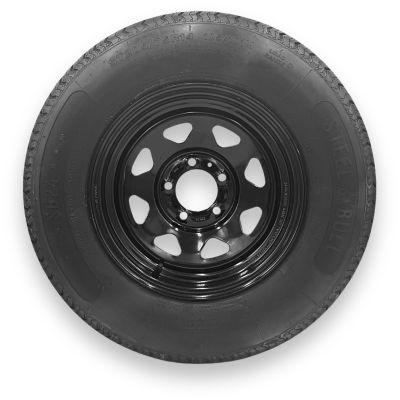
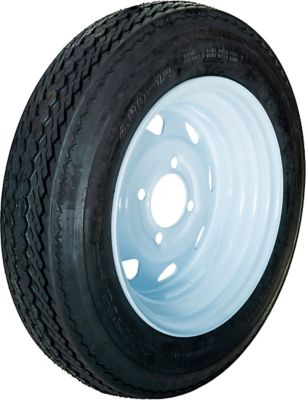
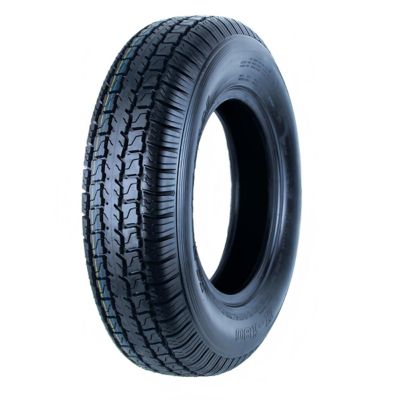
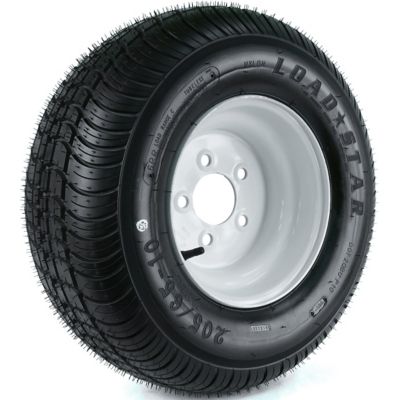
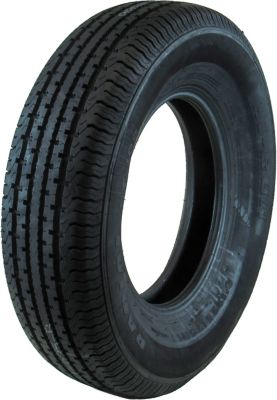
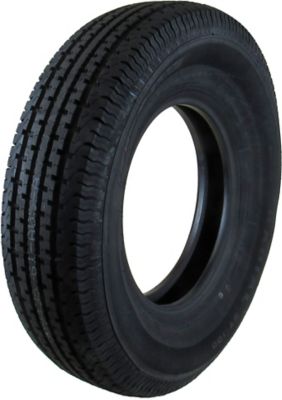
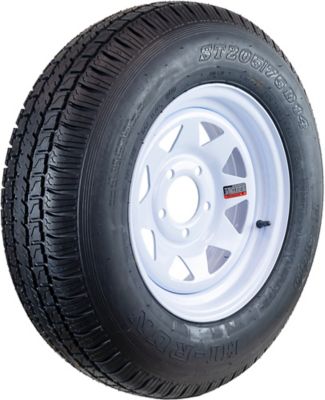
An ST205/75R15 trailer tire is a Special Trailer tire sized for a 15-inch rim, with a nominal section width of 205 millimeters and a sidewall height equal to 75 percent of that width. The R identifies radial construction. That combination appears on many utility trailers, enclosed cargo trailers, boat trailers, and smaller travel trailers, but the right fit always depends on the trailer’s specifications. The ST designation matters just as much as the dimensions: these tires are engineered for trailer service, not for installation on a passenger vehicle or pickup. Their job is to carry the trailer’s load and support steady tracking behind the tow vehicle, whether that means taking a mower to another property, bringing fence supplies back to the farm, or pulling a boat toward the ramp. Rubber tread compounds, internal cord reinforcement, and sidewall construction all contribute to how a trailer tire handles its work. Many radial trailer tires have steel belts beneath the tread, while the body cords run radially from bead to bead. Radial construction generally helps manage heat buildup during sustained road travel and can provide a smoother ride for the trailer and its contents. Tread patterns commonly emphasize straight-line tracking and even wear rather than the drive-wheel traction expected from truck tires. Sidewall support also matters when a loaded trailer turns, backs into a narrow equipment shed, or rolls through a tight entrance. A tandem-axle trailer can put considerable sideways stress on its tires during sharp, low-speed turns, making proper trailer-specific construction important beyond the highway miles. Although the size may also appear without slashes as ST205 75R15, the full sidewall designation is the best reference for comparing replacements. Matching those numbers is a starting point, not the whole fitment decision; load range, wheel compatibility, speed rating, and clearance still need to line up with the trailer’s requirements.
Load range is one of the biggest differences among ST205/75R15 trailer tires. Common single-tire maximum load ratings for this size include 1,820 pounds in Load Range C, 2,150 pounds in Load Range D, and 2,400 pounds in Load Range E, at each tire’s specified inflation pressure. The rating molded into the actual tire’s sidewall takes priority, since construction and specifications can vary. Ply ratings such as 6-ply, 8-ply, and 10-ply describe strength categories associated with those load ranges; they do not necessarily count the physical layers inside a modern tire. For a utility trailer carrying a compact mower, the load may be fairly predictable. An enclosed trailer packed with tools, fasteners, and building materials can gain weight faster than it looks, while a boat trailer also carries the motor, fuel, batteries, and gear. Tire capacity needs to account for the load on the trailer’s axles, including uneven weight distribution, rather than simply dividing an estimated cargo weight by the number of tires. A higher load range does not raise the trailer’s gross vehicle weight rating or increase the limits of its axles, wheels, hubs, or coupler. Wheel ratings matter, too, especially when a tire requires a different inflation pressure than the previous set. A tire-only replacement must match an approved rim width and diameter, while a mounted tire-and-wheel assembly also needs the correct bolt pattern, offset, center opening, and attachment style. There must be enough clearance around the fenders, frame, and suspension throughout normal travel. The tire’s speed rating is another separate specification, not something the size or load range establishes by itself. Staying within that rating and the trailer manufacturer’s limits supports sensible towing whether the trip crosses town or stretches along the interstate. Matching tires by size, construction, and suitable load capacity helps keep the trailer’s handling consistent, rather than leaving one position with a different set of capabilities.
Radial and bias-ply trailer tires can share similar size numbers without being interchangeable for every application. In the
ST205 75D15 designation, the D identifies diagonal, or bias-ply, construction; it does not mean Load Range D. Bias-ply tires have body cords laid at crossing angles, while radial tires have a different internal arrangement that changes how the tread and sidewall flex. The trailer manufacturer’s recommendations are the right reference when choosing between them, and mixing radial and bias-ply construction on the same trailer is generally not recommended. Whichever construction fits the trailer, ongoing care has a big effect on service life. Cold inflation pressure means the pressure before towing, when road travel has not warmed the tires. It should follow the trailer manufacturer’s requirements and remain within the tire and wheel limits. Checking pressure before a trip is especially worthwhile on a trailer that spends long stretches parked beside a barn or in a storage lot, since a tire can look reasonably full while still being underinflated. Tread depth alone does not tell the whole story, either. Sidewall cracking, bulges, exposed cords, repeated pressure loss, and uneven wear deserve attention even when the tread looks substantial. The date code helps establish tire age, and replacement timing should follow the tire manufacturer’s guidance rather than appearance alone. Uneven wear can also point to alignment, bearing, suspension, or loading issues that a fresh tire will not fix. During storage, a clean parking surface, protection from prolonged sunlight, and separation from petroleum products help protect the rubber. A properly matched spare is worth the same attention as the tires on the ground, including its pressure, condition, and wheel fit. For folks who count on a trailer to move equipment, feed, tools, or camping gear, the right ST205/75R15 tire brings together the correct dimensions, enough rated capacity, compatible construction, and care that keeps the whole setup ready for the next haul.