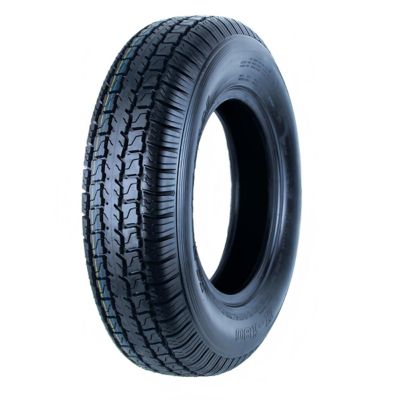
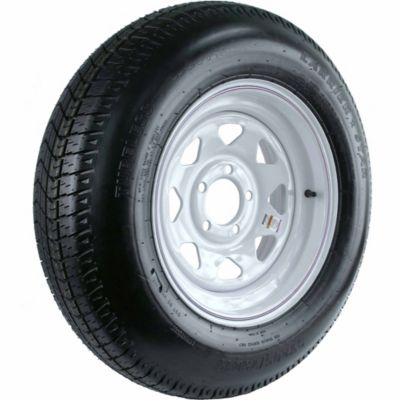
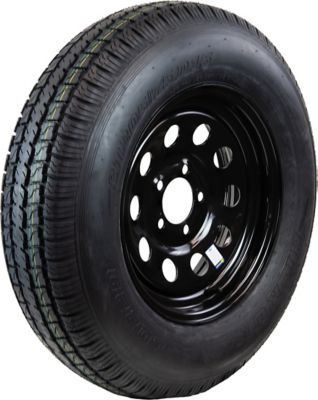
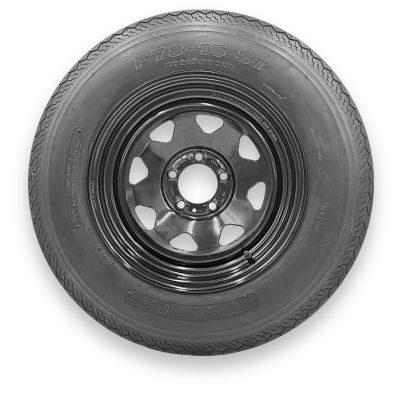
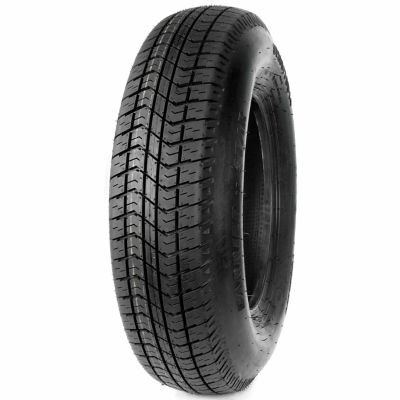
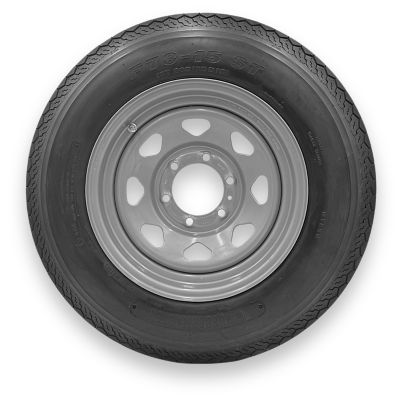
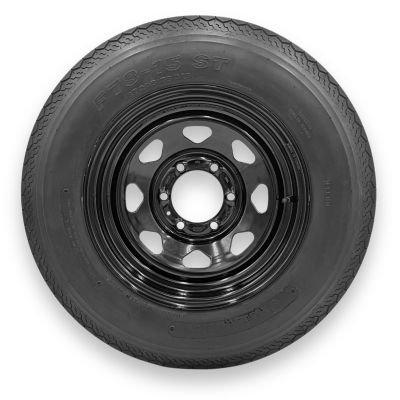
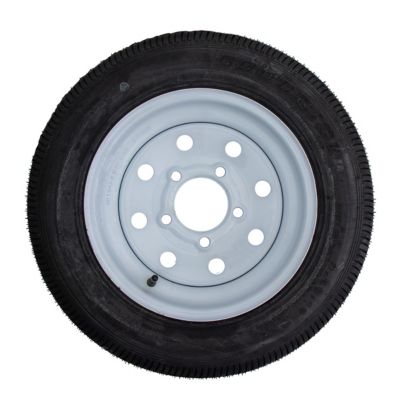
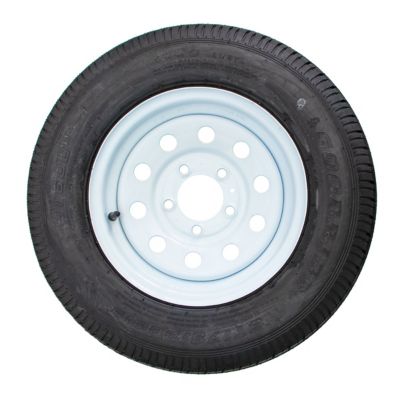
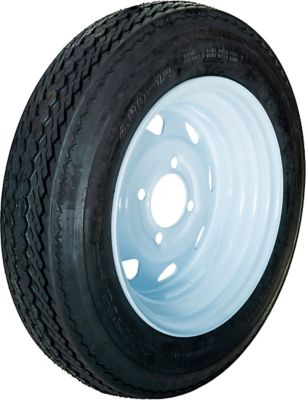
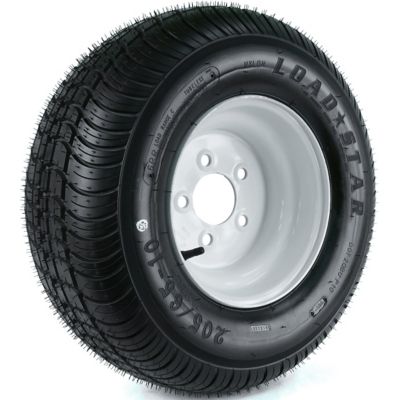
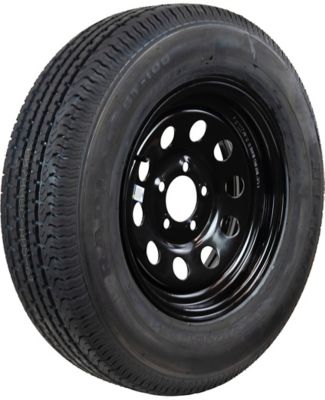
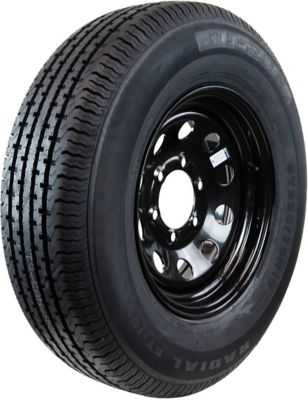
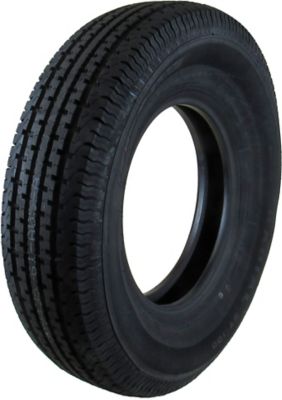
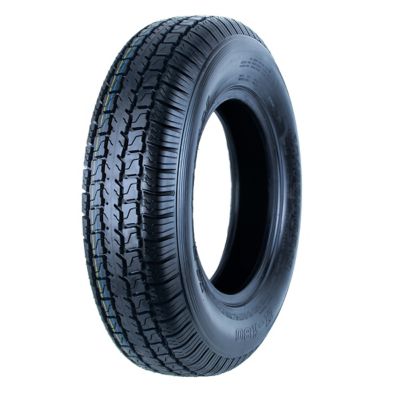
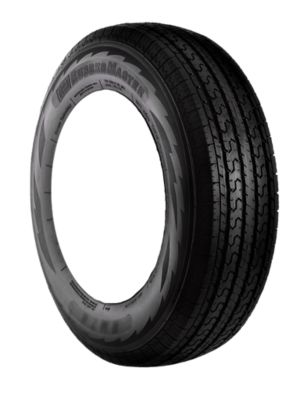
An ST205/75D15 is a special trailer tire with a nominal section width of 205 millimeters, a sidewall height equal to 75% of that width, bias-ply construction and a fit for a 15-inch wheel. Each part of that marking matters when matching a tire to a trailer. “ST” identifies a special trailer application, rather than a tire intended for passenger cars or pickup trucks. The “D” identifies diagonal construction, with reinforcing cords running across one another at opposing angles beneath the rubber. That construction gives bias-ply trailer tires their characteristic firm sidewalls, which help support a load as the trailer follows the tow vehicle. A common ST205/75D15 configuration is Load Range C, with a 6-ply rating and a maximum load capacity of 1,820 pounds per tire at 50 PSI cold inflation pressure. Those figures are not universal across every tire carrying this size, so the sidewall markings and manufacturer specifications remain the deciding references. A ply rating describes a strength classification, not necessarily the actual number of fabric layers inside the tire. For folks hauling a mower between properties, taking a fishing boat to the ramp or pulling a small enclosed trailer full of tools, this size can be part of a suitable setup when it matches the trailer’s requirements. Utility trailers, boat trailers and some campers may call for it, but the trailer type alone does not establish fit. The size specified by the trailer manufacturer, the weight carried on each tire and the wheel specifications all belong in that match. The 15-inch measurement refers to the wheel diameter where the tire seats, not the tire’s outside diameter. Section width is also different from tread width, and mounted dimensions can vary slightly by design and wheel width. That distinction matters around close-fitting fenders, suspension parts and wheel wells, especially when replacing a tire that already has limited room around it.
ST205/75D15 trailer tires combine rubber compounds, reinforcing cords and bead structures designed to hold the tire securely against a compatible wheel. Tread patterns and casing details differ, but the central job stays the same: carrying the trailer’s share of the load within the tire’s stated limits. Bias-ply construction can suit hauling that includes gravel lanes, farm drives and paved roads, provided the tire’s service description allows the intended travel. Construction alone does not establish puncture resistance, road speed capability or how long a tire will last. Load range, speed rating and proper inflation deserve as much attention as the size stamped on the sidewall. A trailer carrying fencing supplies on one trip and a riding mower on the next can place very different demands on its tires, particularly if a heavy piece of equipment sits closer to one side. The trailer’s empty weight, cargo placement and actual load on the axles all affect the weight each tire carries. Adding together the tires’ maximum capacities does not increase the trailer’s axle rating or gross vehicle weight rating, and a higher-rated tire cannot raise the limits of the wheels, bearings, suspension or hitch. Tire-only replacements and mounted tire-and-wheel assemblies also involve different fit considerations. A tire needs a wheel with a compatible diameter, approved width, pressure capability and load rating. A complete assembly adds bolt pattern, center bore, offset and lug-seat requirements to the picture. A five-lug wheel, for example, still needs the correct bolt-circle measurement; lug count by itself is not enough. Valve stems must also suit the pressure and wheel application. A matching spare deserves the same attention, since a roadside replacement needs to fit the hub and clear nearby components while supporting the required load. Where a trailer manufacturer calls for matching tire construction, size and load specifications, keeping that setup consistent helps avoid differences in how the tires carry weight and respond under tow.
Good tire care fits naturally into the routine of checking the coupler, lights and load before heading down the road. Inflation pressure is measured cold, before driving has warmed the tires, and the appropriate setting comes from the trailer manufacturer’s requirements and the tire manufacturer’s load-and-inflation information. The maximum pressure on a sidewall is a limit tied to the tire’s rating, not a substitute for confirming the correct setup. A tire can look reasonably full while carrying too little air for its load, so a suitable pressure gauge tells more than a glance across the yard. Visible cracking, bulges, cuts, exposed cords or repeated pressure loss call for attention before another haul. Uneven tread wear can also point to inflation problems, alignment concerns, worn suspension parts or an uneven load rather than an issue with tread alone. Boat trailers add another consideration: repeated launches bring wheels, valve stems and other components into contact with water, making inspection and care especially worthwhile. Between trips, clean tires and wheels make damage easier to spot, while storage away from direct sunlight and petroleum-based chemicals helps protect the rubber. Tire age matters even on trailers that travel only short distances, and plenty of remaining tread does not rule out age-related deterioration. Manufacturer inspection and replacement recommendations provide a better basis for decisions than appearance alone. When comparing nearby sizes, the
ST225 75R15 Trailer Tire designation describes a wider radial tire, not an automatic replacement for an ST205/75D15. Both fit a nominal 15-inch wheel diameter, but their width, overall diameter, construction and approved wheel requirements can differ. A size change needs sufficient clearance and approval for the trailer’s setup, rather than an assumption that a larger tire will solve a loading problem. For everyday hauling, the best match comes back to straightforward details: the specified size, enough capacity for the actual load, compatible wheels and sound tire condition. Those details matter just as much on a short run to the feed store as they do on a longer pull with equipment aboard.