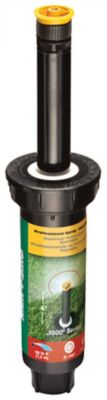
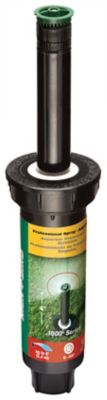
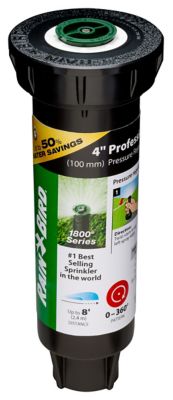
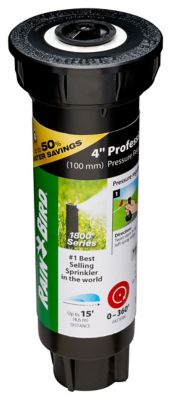
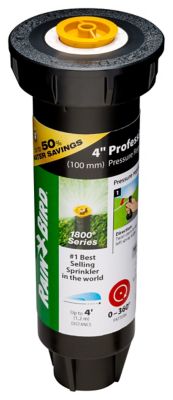
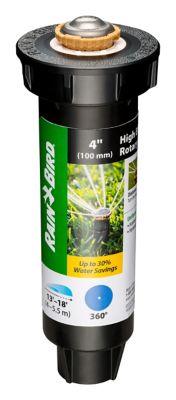
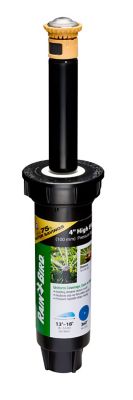
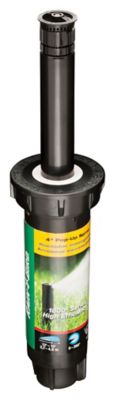
Four-inch sprinkler heads are a dependable choice for keeping lawn areas, planting beds, and other landscaped spaces watered without leaving tall equipment sticking up through the grass. These are usually pop-up heads, meaning the stem rises when the irrigation system turns on and settles back below the turf when watering is finished. With the head retracted, a mower can pass over the area more easily, and foot traffic is less likely to catch on the sprinkler. When shopping, check the pop-up height, inlet size, spray pattern, and operating pressure so the head fits the irrigation layout already in place. Many four-inch heads use a common 1/2-inch female-threaded inlet, but pipe fittings and system designs can vary, so it pays to remove an existing head or take a close look at the connection before ordering replacements. Pop-up height is not the same as overall body length—the housing may extend deeper into the ground than the stem rises above it. That detail matters when working around compacted soil, thick turf, mulch, or shallow utility lines. A four-inch rise is often a practical middle ground for ordinary residential lawns, giving the spray enough clearance to get above grass blades while keeping the assembly tucked away when it is not running. These sprinkler heads can be useful for homeowners maintaining a front yard, side strip, garden border, or new patch of sod, as well as landlords, property managers, grounds crews, and anyone repairing an older irrigation zone. They also make a handy, practical gift for a new homeowner or a friend who enjoys keeping a property neat and green. A few replacement heads in the shed can save a trip to town when a mower clips one, a seal wears out, or a buried fitting gets damaged.
The nozzle is just as important as the sprinkler body. A four-inch pop-up head may accept fixed-pattern nozzles, adjustable or variable-arc nozzles, and water-saving rotary-style nozzles, but compatibility should always be confirmed before mixing parts. Fixed-pattern nozzles are suited to predictable shapes, such as a quarter-circle at a corner or a half-circle along a straight edge. Adjustable patterns can be dialed in for unusual spaces, which helps avoid spraying a driveway, porch, fence, or neighboring property. Rotary nozzles apply narrower streams that turn across the coverage area and may be useful where slower watering and reduced overspray are priorities. Spray radius depends on the selected nozzle and the water pressure available at the head; many common setups cover roughly 3 to 24 feet, though actual performance varies with the design. Pressure is another key consideration. Some heads are made to operate across a broad range, commonly around 15 to 70 PSI, while other irrigation components may handle pressure up to about 100 PSI. Too little pressure can leave dry spots and produce a weak, uneven pattern. Too much pressure may create misting, runoff, and wasted water instead of a clean spray. Pressure-regulated versions can help in zones where the supply is stronger than the nozzle needs, while flow-control features can make fine adjustments easier. Look for a sturdy retracting spring and a reliable wiper seal, since these parts help the stem return fully below the surface and keep soil or grit from entering the housing. On a rural property, that matters after heavy rain, mowing, pets running through the yard, or tractors and utility vehicles passing nearby. Good coverage should overlap from one head to the next, often called head-to-head coverage, so each area receives a more even drink instead of a few soggy circles surrounded by dry grass.
Before replacing or adding a four-inch sprinkler head, map the area it needs to cover and note anything that should stay dry. A narrow strip beside a barn, for example, may need a half-circle pattern, while a broad open lawn can call for a full-circle spray or a rotating option. Measure the distance to sidewalks, beds, driveways, gates, and foundations, then choose a pattern and radius that stop short of those surfaces. Watering pavement wastes water and can leave slick spots, while spraying against siding or a wooden fence may contribute to staining or premature wear. Set the head level with the finished soil or turf surface; if it sits too high, a mower or wheel can strike it, and if it settles too low, grass and mud may interfere with the spray. Flush the line briefly before installing a new nozzle to clear out bits of soil, pipe shavings, or mineral deposits that could clog the opening. During warmer, drier stretches, inspect the spray while the zone is running and watch for tilted stems, broken caps, bubbling around the base, or misting that signals a pressure problem. As the weather cools and watering needs change, adjust the controller rather than letting the system run on the same schedule all season. In areas that experience freezing conditions, drain or winterize exposed irrigation components according to the system manufacturer’s instructions. Keeping a few matching nozzles, seals, and replacement heads on hand makes routine maintenance less of a chore, especially when a small repair is needed before the next watering cycle. For spaces that call for broad, uninterrupted coverage, browse
360 Degree Sprinklers as another option. With the right connection, pressure range, spray pattern, and installation height, four-inch sprinkler heads can quietly do their job day after day—delivering water where it belongs while staying out of the way when the lawn is being mowed, walked, or enjoyed.