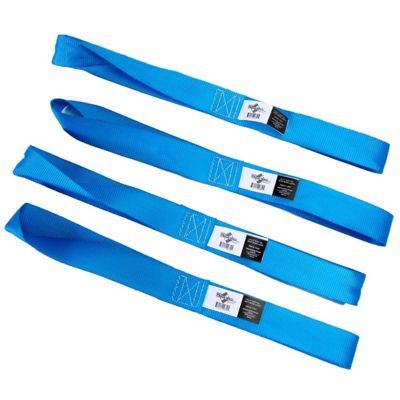
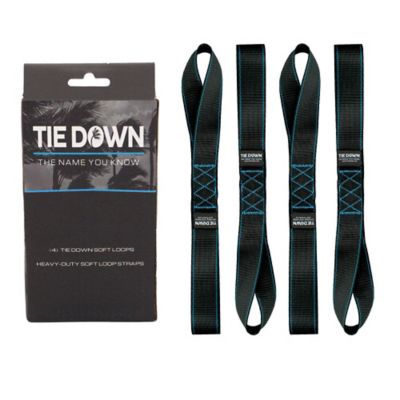
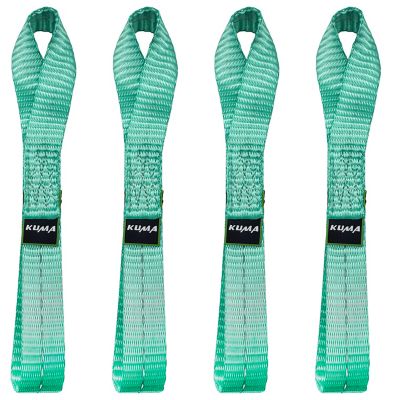
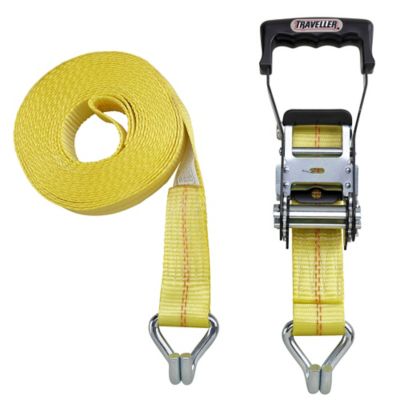
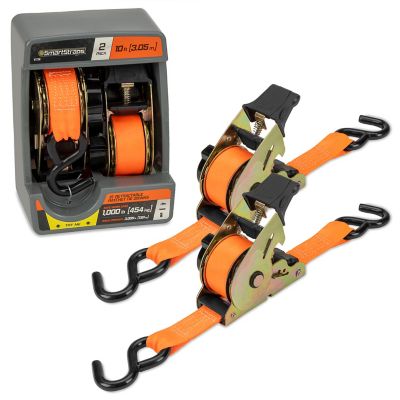
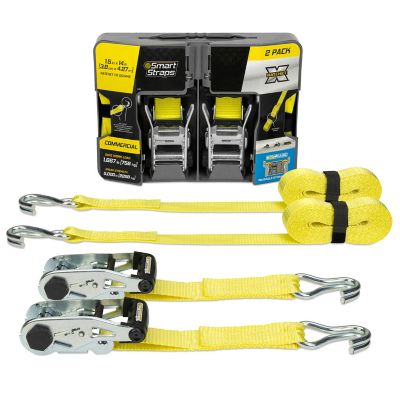
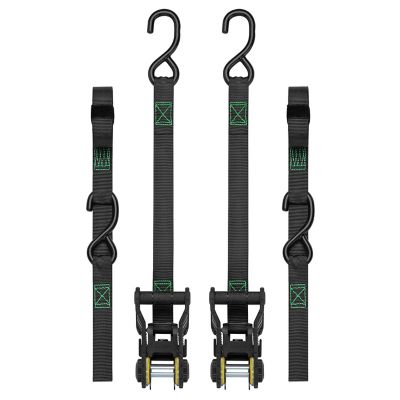
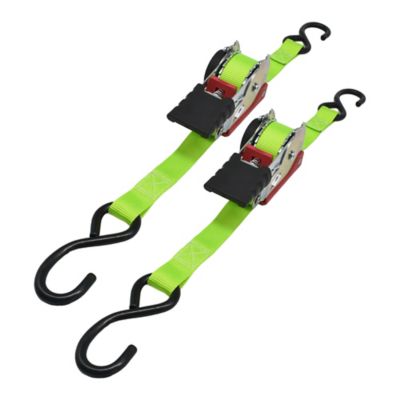
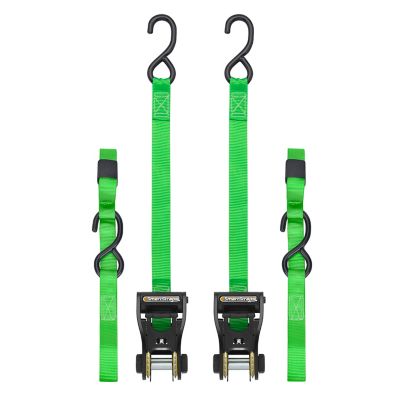
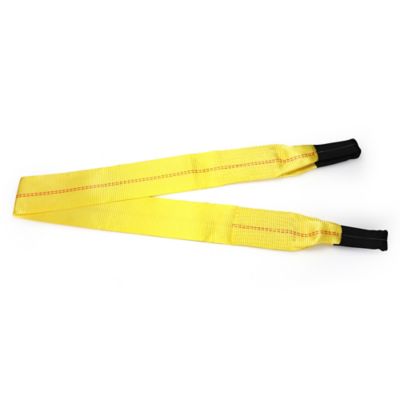
Soft loop tie-down straps give ratchet straps and cam-buckle straps a fabric connection point where a bare metal hook could rub against paint, chrome, or a finished surface. Typically made from woven webbing with sewn loops, these short straps wrap around a suitable attachment point and provide an exposed loop for the tie-down hook. They act as connectors, not as a complete cargo restraint system on their own. For someone hauling a motorcycle to a trailhead, moving an ATV between properties, or loading equipment onto a trailer, that extra connection can make a tight spot easier to reach while helping limit metal-to-surface contact. The benefit is especially noticeable around attachment points where a hook would otherwise sit awkwardly or press against nearby parts. Soft webbing still needs a clean contact surface, since trapped grit can scuff a finish under tension. Fit comes down to more than whether a loop will reach around a tube or frame section. Strap length affects how much webbing remains for the hook, while width affects how the material sits against the attachment point. A wider strap needs room to lie flat; a longer loop needs enough clearance to stay away from moving parts and surrounding bodywork. Sewn eyes also need to accommodate the intended hook without bunching into its tip or interfering with its latch. The attachment location matters just as much as the strap dimensions. A manufacturer-approved structural point provides a different kind of support than a plastic panel, cable, hose, or lightweight bracket. Soft loops do not make an unsuitable attachment point strong enough for transport. For a pickup bed or utility trailer setup, their main job is to bridge the connection between the load and the main tie-down strap while keeping the hardware positioned properly. That makes them a practical part of a hauling kit for riders, landowners, and anyone who regularly moves equipment with finished surfaces worth protecting.
Webbing material, stitching, and load ratings help separate soft loop tie-down straps suited to a particular hauling job from ones that are a poor match. Polyester and nylon are common materials, but their stretch and moisture characteristics differ. Polyester generally stretches less under load, while nylon typically has more stretch; the finished strap’s rating and manufacturer’s directions remain the deciding factors. A tightly woven surface, sound stitching, and clearly marked specifications give shoppers useful details to compare without judging strength by thickness or color alone. Reinforcement around sewn connections can help manage wear, though no stitch pattern or fabric appearance replaces a stated working load limit. The working load limit is the manufacturer’s rated load for normal service under specified conditions. Break strength describes a failure threshold under test conditions and is not the amount a strap should carry in everyday hauling. Those figures are not interchangeable, and ratings can depend on how the loop is connected. A wrap that passes one end through the other may have different limits than another attachment arrangement, so the applicable rating needs to match the intended setup. The full connection also depends on the main strap, its hooks, the trailer anchor, and the equipment attachment point. A higher-rated soft loop cannot increase the rating of weaker hardware elsewhere in that connection. Tie-down angles and the way a load can shift also affect the forces involved, so adding together label numbers does not, by itself, establish whether a hauling arrangement is suitable. Soft loops can complement
Motorcycle Tie-Down Straps when their ratings, dimensions, and hook connections match the bike’s transport requirements. Ratchet systems provide mechanical tension, while cam-buckle systems have a different adjustment method; either needs compatible components and appropriate placement. A loop that leaves the hook seated in its intended position is a better fit than one that forces hardware sideways against a frame or crowds it beneath a body panel.
Everyday handling makes a difference in how long soft loop straps stay fit for service. A loop riding against a sharp metal edge, rough weld, or abrasive trailer surface faces a different kind of wear than one resting flat against a smooth, approved attachment point. Edge protection may be necessary where the equipment and strap manufacturer call for it, and soft webbing alone should not be treated as protection against cutting. Clearance from exhaust components, moving linkages, chains, and pinch points matters, too. On a loaded trailer, the straps should be doing their intended work without rubbing across wiring or pulling on a control line. These details matter whether the trip is down a gravel lane between fields or several hours along the highway. Loads can settle during travel, which makes tension checks at safe stops part of responsible hauling rather than a sign that a stronger loop is automatically needed. Between trips, keeping the webbing free of embedded dirt helps protect both the strap fibers and the surfaces they touch. Cleaning methods should follow the manufacturer’s directions, with complete air-drying before storage and no exposure to harsh chemicals or strong heat. A clean tote or separate compartment keeps loops from tangling with hooks, grinding against tools, or picking up grease in the truck bed. Before another load goes on the trailer, the webbing and stitching need a close look for cuts, fraying, damaged seams, melted areas, or chemical damage. Straps with damage, uncertain ratings, or a history of severe loading may need replacement rather than another trip. Soft loops are cargo tie-down accessories, not lifting slings, tow straps, recovery gear, or restraints for people. Keeping those jobs separate helps preserve their intended role: providing a properly rated fabric connection within a complete transport setup. For riders, small-acreage owners, and folks who lend a hand moving equipment, a well-matched set is a useful addition to the hauling kit—small enough to keep organized, but worth selecting with the same care as the main straps and anchors.