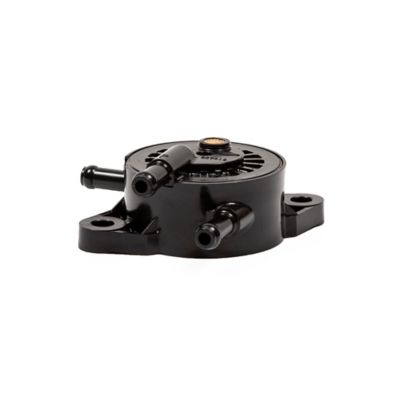
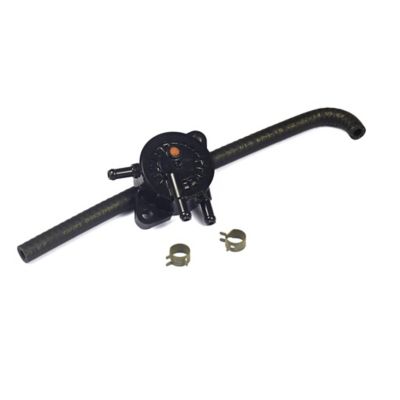
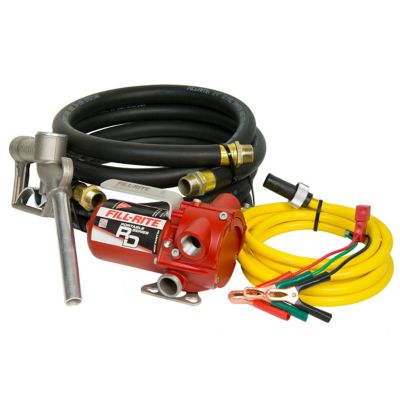
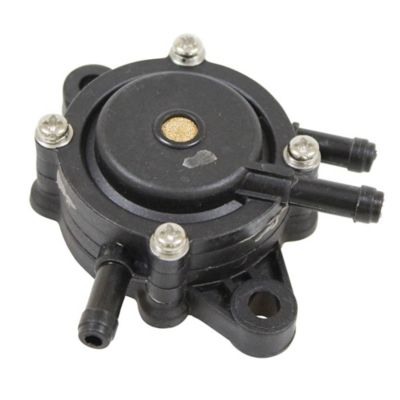
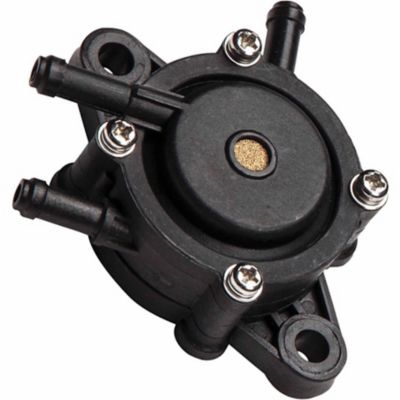
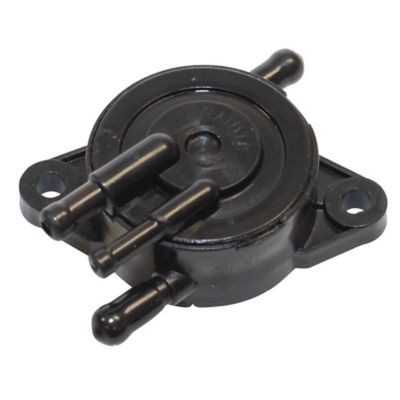
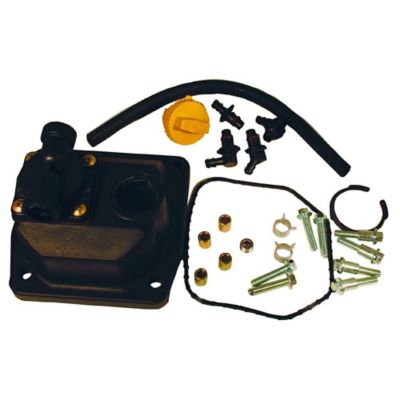
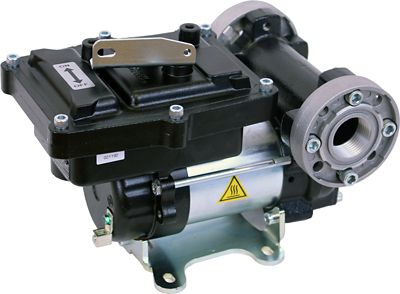
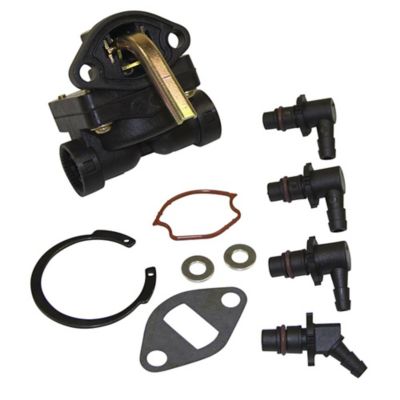
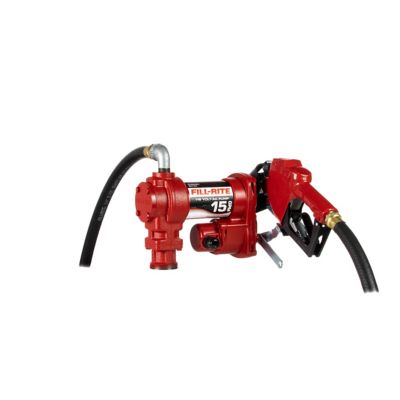
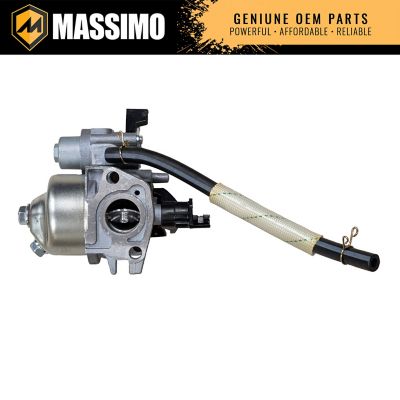
Small engine fuel pumps move gasoline from the tank to the carburetor or, on fuel-injected engines, supply fuel to the injection system at the specified pressure. They keep fuel moving when tank placement or the engine’s design does not allow gravity alone to do the job. On a riding mower working around fence lines, a garden tractor pulling a yard cart or a gasoline-powered utility vehicle making trips between outbuildings, that steady supply matters when the engine is under load. Not every small engine needs a pump, and a pump intended for a carburetor is not interchangeable with one intended for fuel injection. The main designs include pulse-operated diaphragm pumps, mechanically driven pumps and electric pumps. A pulse pump uses changing pressure from the engine, often carried through a dedicated pulse hose, to flex a diaphragm and move fuel through internal check valves. Many of these pumps have separate fuel inlet, fuel outlet and pulse connections, so the connection layout is part of the fit. A mechanically driven pump takes its motion from the engine through an actuating arm or another specified drive arrangement. An electric pump runs from the equipment’s electrical system and must match its voltage, fuel requirements and operating pressure. These differences matter more than whether two pump housings look alike on the workbench. A carburetor needs fuel delivered within a particular pressure range; too much pressure can overwhelm its inlet needle, while too little flow can leave the bowl short of fuel as demand rises. For equipment that earns its keep mowing acreage, hauling supplies or powering a water pump, the right replacement restores the fuel delivery the engine was built to have. More pressure or a larger pump is not automatically a better match.
Fit depends on the engine’s model information and the manufacturer’s replacement specifications, not just the name on the mower hood. Equipment from the same series can have different engines, and similar-looking engines can call for different fuel systems. Engine model, type and serial information, along with the original pump’s part number when readable, help narrow down the correct replacement. Mounting-hole spacing, bracket orientation, hose diameter and connection direction all affect how a pump fits into a crowded engine compartment. A housing that bolts into place can still be a poor match if a fuel hose must bend sharply, stretch across moving parts or pass too close to the exhaust. On pulse-operated systems, the pulse connection must match the engine’s arrangement; it is not another fuel outlet. Mechanical pumps also need the proper drive geometry and mounting interface, including any specified gasket or spacer. Electric pumps bring additional considerations, such as connector style, polarity, current draw and the manufacturer’s wiring and mounting requirements. A change from one operating style to another is not a simple substitute for matching the original design. Materials matter, too. Pump housings may be metal or molded fuel-resistant polymer, with internal seals, valves and, in diaphragm designs, a flexible pumping membrane. Compatibility with gasoline and the engine’s permitted ethanol blend matters throughout that assembly, not just at the outer housing. A metal body alone does not establish compatibility, and a plastic body does not rule out suitability for the application. The better comparison is whether the complete pump meets the engine’s requirements and fits its mounting location. Where a pump sits also affects its service life: vibration, rubbing hoses, unsupported connections and exposure to leaking fluids can put extra strain on the assembly. For a homeowner keeping a lawn tractor going or a property crew maintaining several machines, matching those details can save a second teardown after the first replacement fails to fit as expected.
A fuel pump works as part of a larger system, so its condition is closely tied to the tank, hoses, filter, fittings and carburetor or injection components around it. A restricted filter can limit delivery, a cracked suction hose can admit air, and a blocked tank vent can interfere with fuel flow even when the pump itself is functioning. Hard starting, surging or an engine that loses power while mowing thicker grass can point to a fuel-supply problem, but those symptoms do not establish that the pump is at fault. Ignition trouble, carburetor deposits and other engine conditions can look much the same from the seat. The manufacturer’s service information provides the proper checks and operating specifications before a replacement decision. Along the same fuel path,
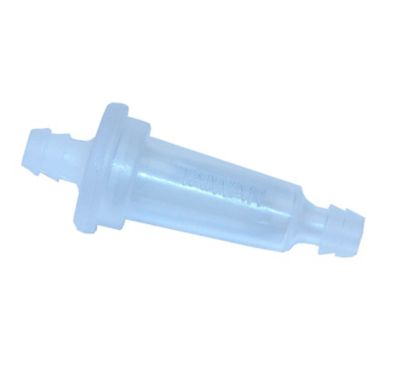
Small Engine Fuel Filters help catch debris before it reaches downstream components. Filter selection needs to match the engine’s requirements, including whether the system relies on gravity or a pump; the wrong restriction can interfere with delivery. Fuel hose, clamps and seals also need to suit their location and the fuel passing through them. Fresh gasoline that meets the engine manufacturer’s recommendations, a clean tank and scheduled filter service all support the pump’s working life. Equipment that spends stretches parked between jobs still needs the fuel-storage care outlined in its manual, since deposits can affect small passages and moving parts. Any fuel-system work belongs on a stopped, cooled engine in a well-ventilated area away from flames, sparks and other ignition sources, with the manufacturer’s electrical isolation and pressure-relief procedures followed where applicable. Leaks or a strong gasoline smell call for attention before the equipment goes back to work. Whether the machine handles a few acres at home or makes repeated trips around a working property, a properly matched small engine fuel pump helps keep its fuel supply suited to the job, without unnecessary changes to the engine’s original setup.