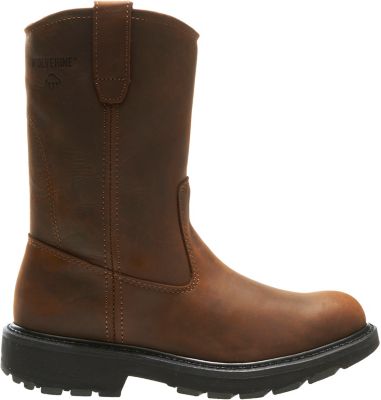
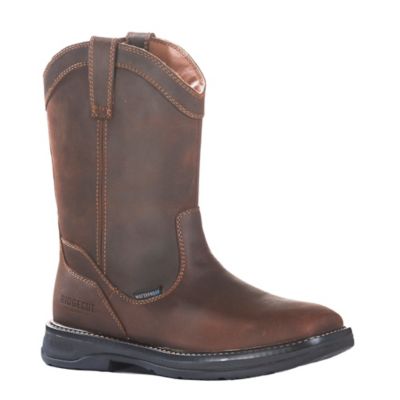
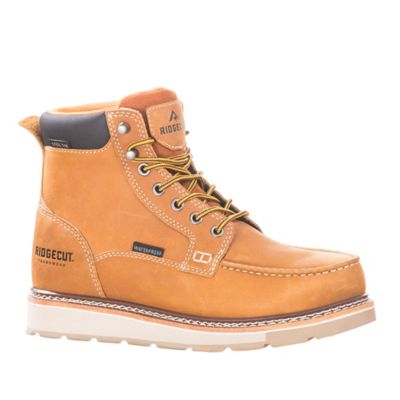
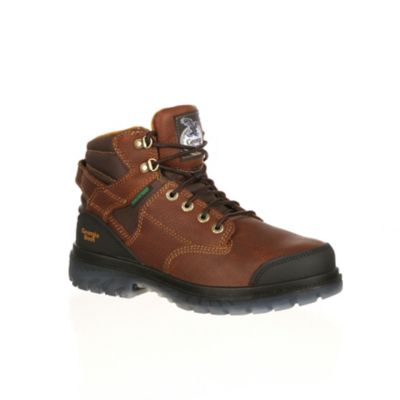
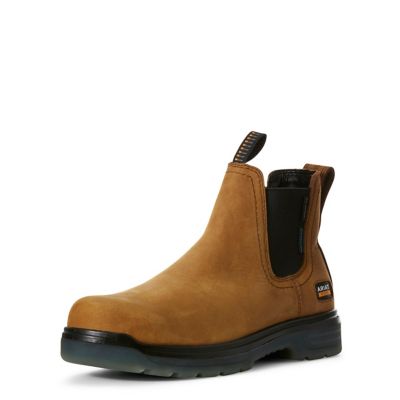
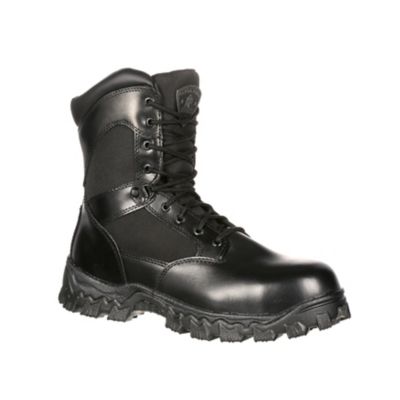
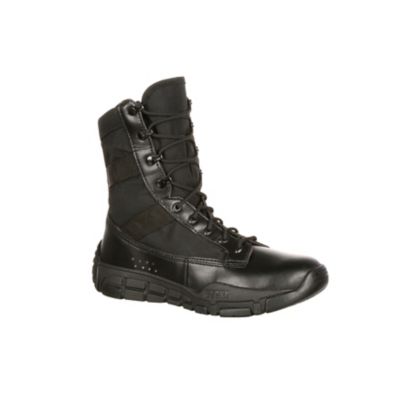
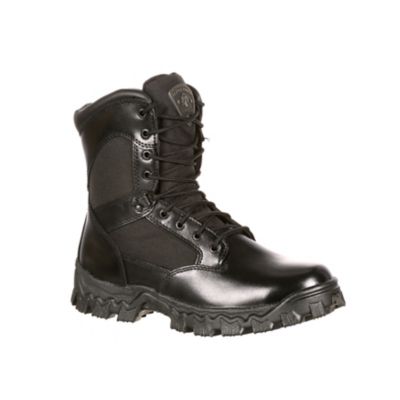
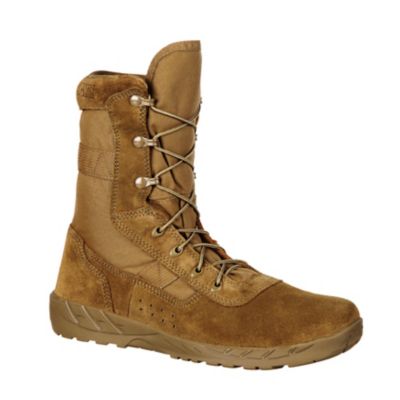
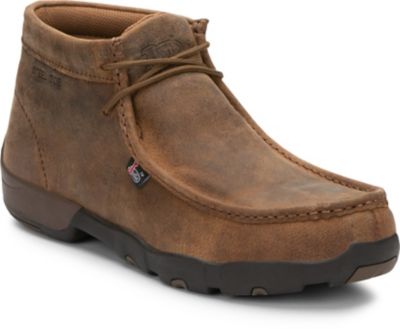
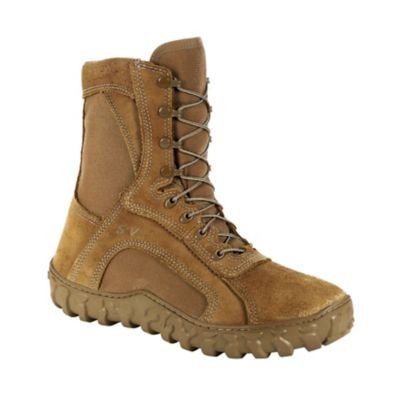
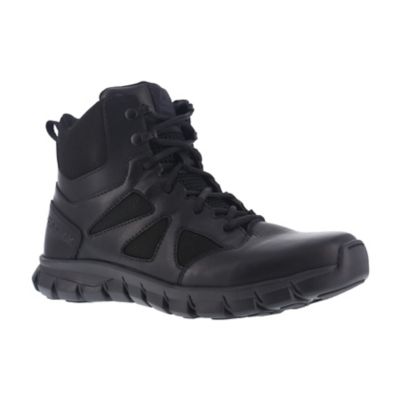
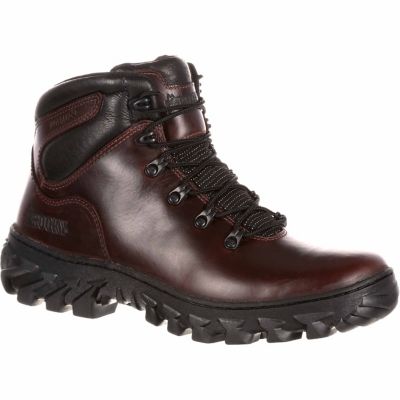
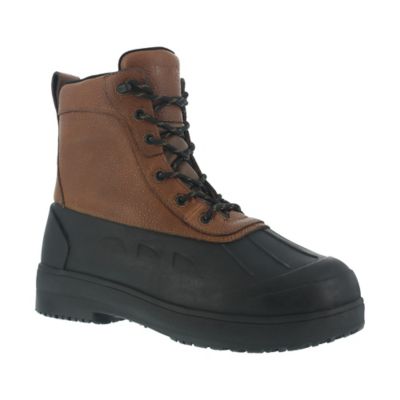
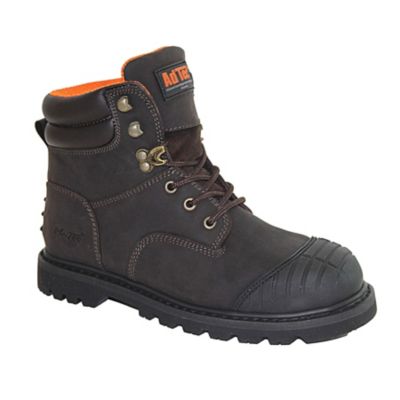
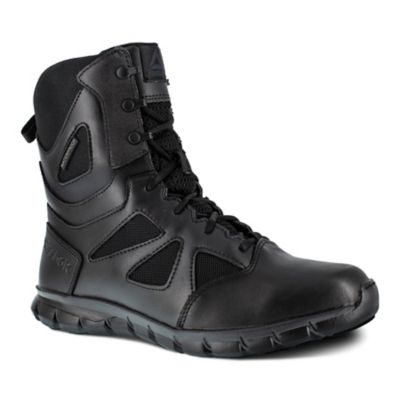
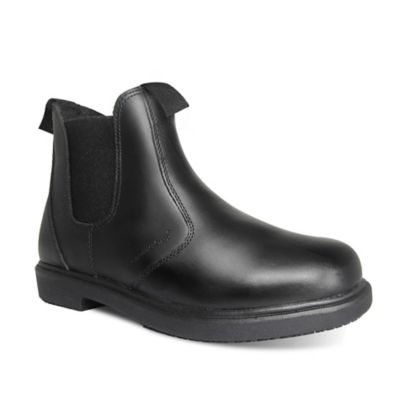
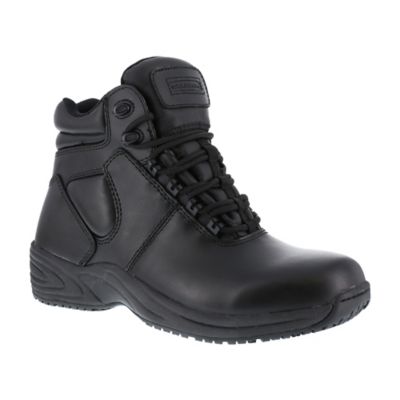
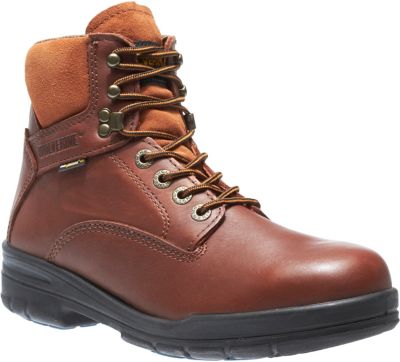
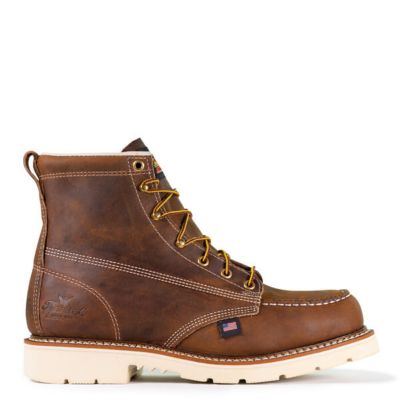
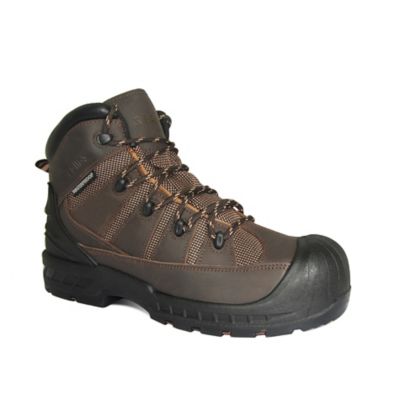
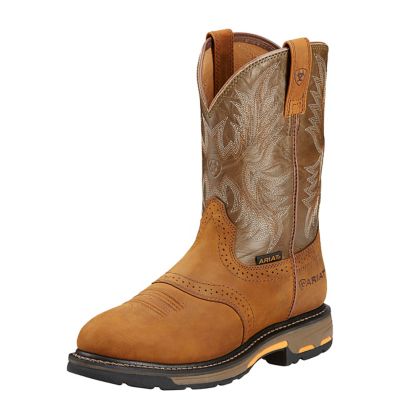
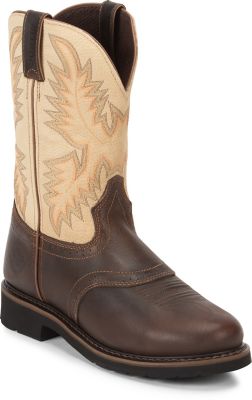
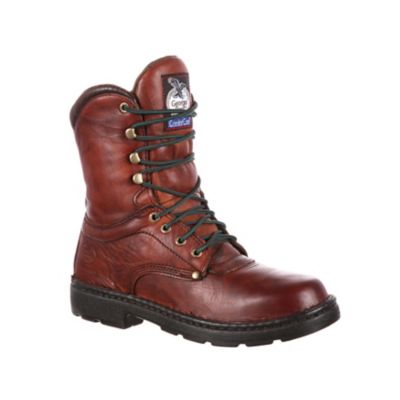
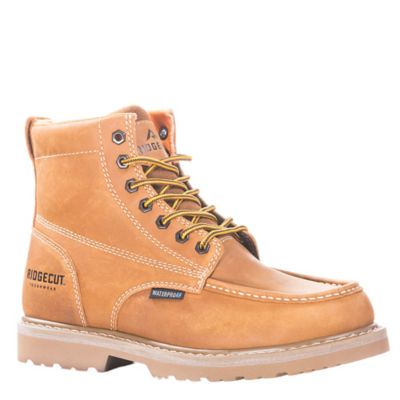
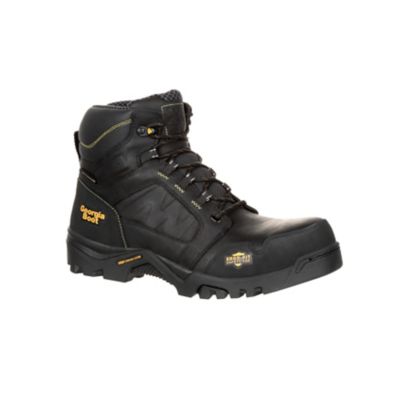
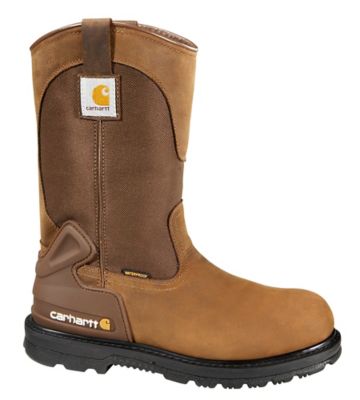
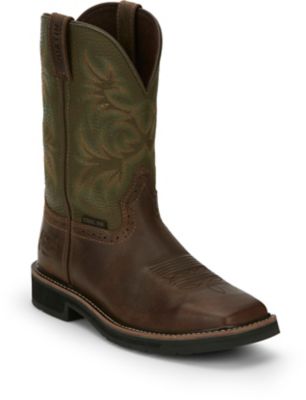
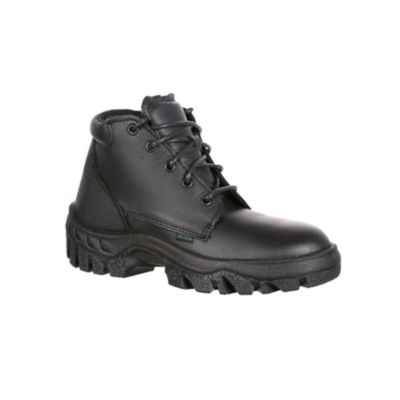
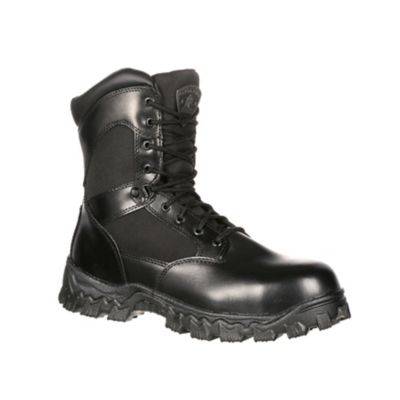
Slip-resistant military boots combine the coverage and secure fit of military-style footwear with outsoles designed to help reduce slipping on certain surfaces. They suit work that keeps you moving between buildings, across uneven ground and onto hard floors, whether that means a security patrol, a maintenance shift or a long day handling equipment around a property. Military personnel, public safety workers and folks who prefer a structured work boot may all find this style worth considering, though job requirements should always come first. The outsole does much of the traction work: its rubber compound, tread pattern and contact with the ground all affect how a boot grips. Deep, widely spaced lugs can help bite into loose ground and shed packed dirt, while smaller channels and tread edges may help manage moisture on smooth surfaces. A heavy tread alone does not establish slip resistance, and no sole can prevent every slip. Dust on sealed concrete, grease near machinery and loose gravel each present different footing challenges. Slip-resistant and oil-resistant also mean different things. Slip resistance concerns traction under particular conditions; oil resistance generally describes an outsole material’s ability to withstand exposure to oil without breaking down as readily. Neither claim should stand in for the other. Published slip-testing information can provide more useful detail than appearance alone, especially when the test conditions resemble the workplace. Military styling is separate from military uniform approval, too. A boot’s color, height, materials and construction may need to meet a specific service or unit requirement before it belongs in a duty uniform. Compliance with AR 670-1 or another applicable uniform requirement should be verified in the boot’s stated specifications rather than assumed from its shape. For everyday work outside a uniformed role, the same category offers practical features such as tall lacing, reinforced areas and supportive construction, with the right combination depending on the ground underfoot and the tasks ahead.
Materials and construction shape how slip-resistant tactical boots feel over a full shift, not just during the first few steps. Leather uppers can provide structure and abrasion resistance, while leather paired with nylon or other textiles can reduce weight and allow more flexibility. Rough-out leather, suede and smooth leather have different cleaning needs, so the finish matters as much as the look. Reinforcement around the toe and heel can help protect high-wear areas from scuffs when kneeling beside equipment or stepping around a loading area. A reinforced toe, however, is not necessarily a safety toe. Jobs involving falling objects, compression hazards or other workplace risks call for the specified protective rating, whether that involves a steel toe, a composite toe or another approved construction. Underfoot, cushioning helps soften repeated steps across concrete, while a firmer platform or internal shank can add support where the boot needs to resist bending. More cushioning is not automatically a better fit for every task; steady footing while carrying a toolbox can matter just as much as softness during a long walk. Boot weight also adds up over hours of walking, climbing stairs and getting in and out of a vehicle. Higher shafts offer more coverage around the ankle and lower leg, but height alone does not guarantee ankle protection. Lace-up designs allow tension to be adjusted through the foot and shaft, and some tactical styles include a side zipper for easier entry once the laces are set. Waterproof construction is another separate feature, not something implied by slip resistance. For work that calls for both a moisture barrier and traction-focused soles,
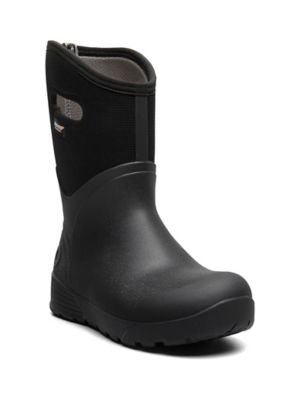
men's waterproof slip-resistant boots offer a related category to consider. A waterproof membrane can help limit water entering through the upper, though water can still enter over the collar. Breathable linings and moisture-managing socks also play a part in how comfortable boots feel during active work.
Fit is where all those features have to come together. Slip-resistant military boots should hold the heel securely without squeezing the forefoot, and toes need room to spread and move without striking the front when walking downhill or stepping off a platform. The socks worn on the job belong in the fitting process, along with any orthotics that will take the place of removable footbeds. Feet can swell during a long day, making a later-day try-on helpful for judging space. A boot that pinches across the toes or presses hard over the instep should not depend on break-in time to become the right size. Leather may soften and flex with wear, but the basic length and width will not change enough to fix a poor match. Lacing can fine-tune the hold, especially where a snug heel and a roomier forefoot are both needed. For someone buying boots as a gift for a service member, security worker or family member who spends the day on their feet, knowing the recipient’s size, width and job requirements matters more than matching a familiar color. Once boots get to work, regular care helps preserve their service life and keeps traction features from being overlooked. Dirt lodged between tread blocks can reduce their contact with the walking surface, so brushing out the soles belongs alongside cleaning the uppers. Cleaning methods should match the material: smooth leather may call for an appropriate cleaner and conditioner, while suede, rough-out leather and textile panels need their own care approach. Boots should dry with airflow, away from direct heat that can harm leather, adhesives or other components. Removable insoles can be taken out for drying when the manufacturer allows it. Worn-down tread, separating soles, damaged closures and crushed cushioning are signs that the boots deserve a closer look. Even a well-maintained pair has limits, and a sole that once gripped well may perform differently after months of abrasion. Matched to the task and kept in sound condition, military-style slip-resistant boots can bring secure footing, useful coverage and all-day support to demanding routines.