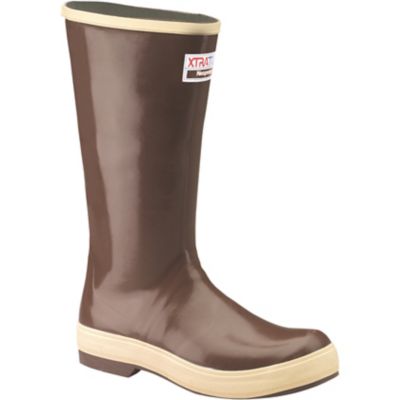
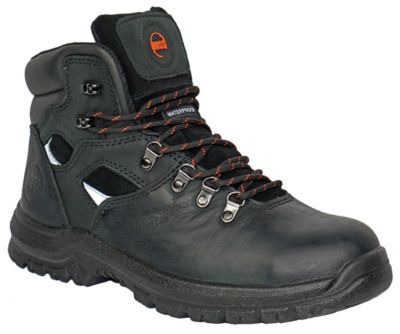
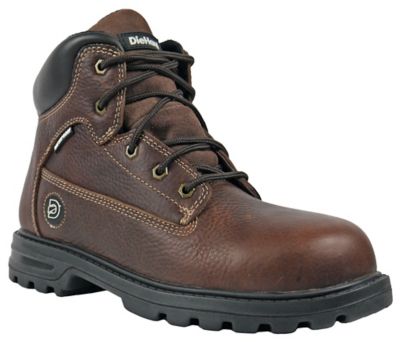
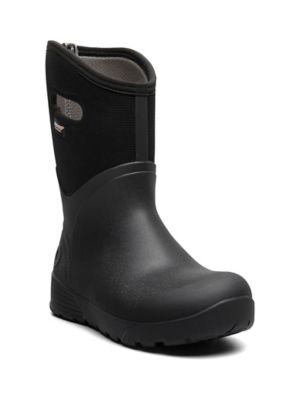
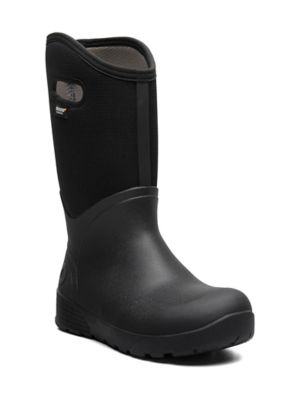
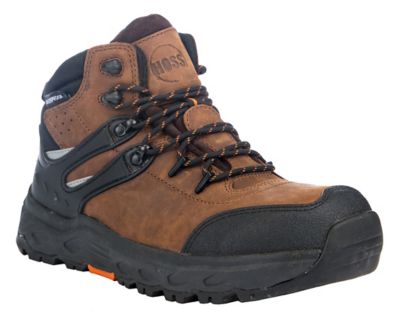
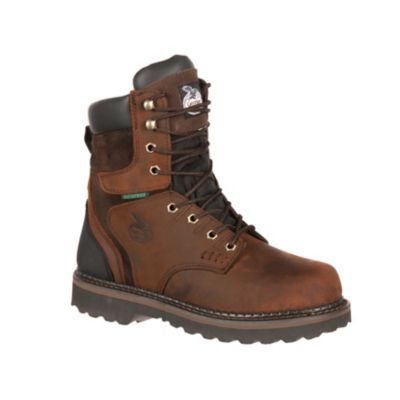
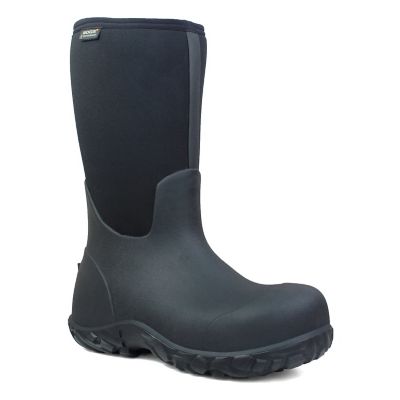
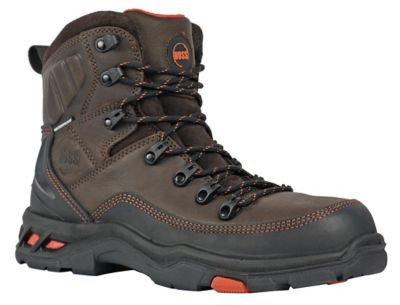
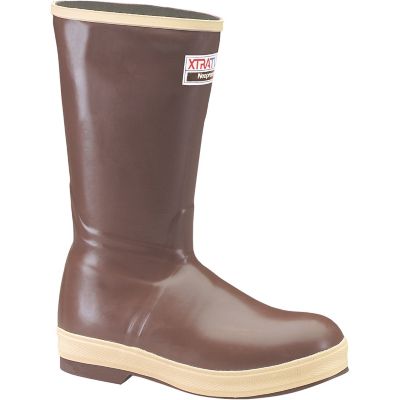
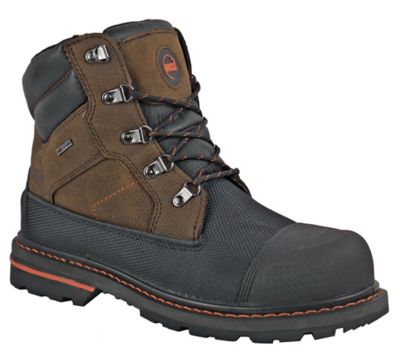
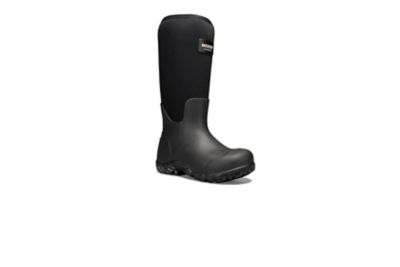
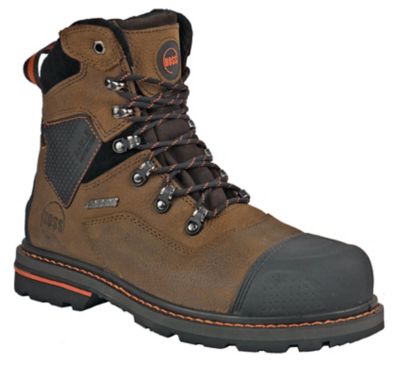
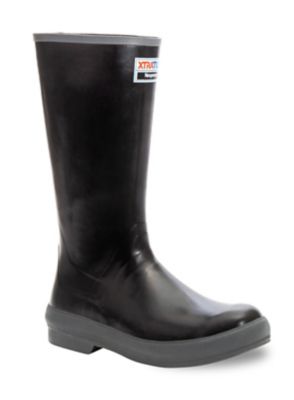
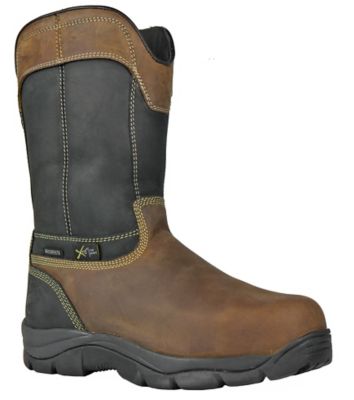
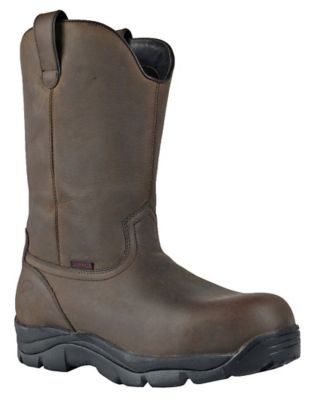
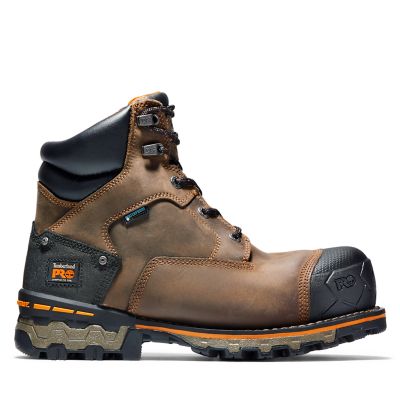
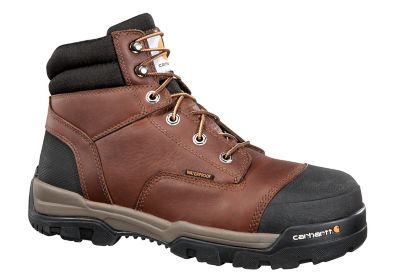
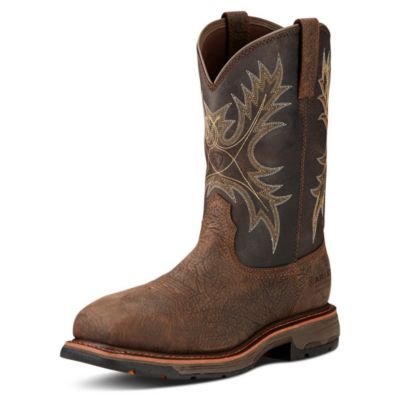
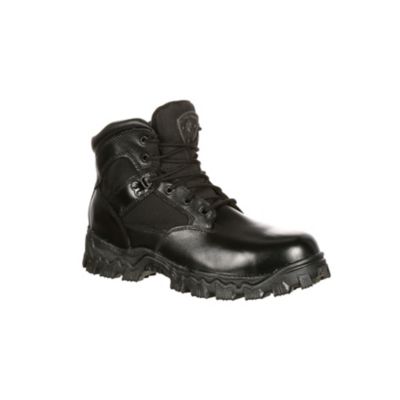
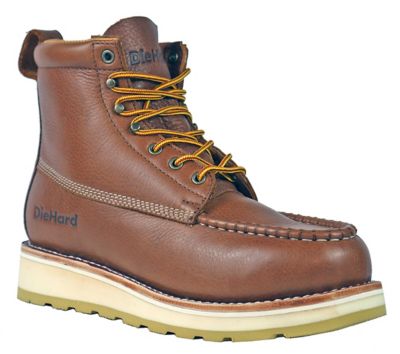
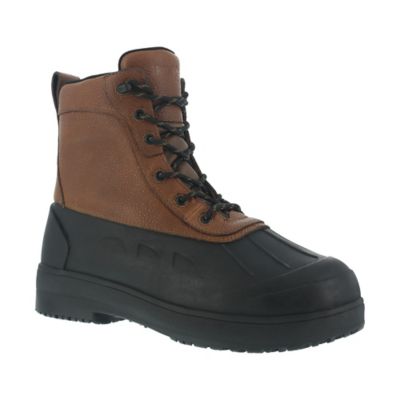
Men’s waterproof slip-resistant boots pair water-blocking construction with outsoles designed to improve traction on slick surfaces. That combination makes sense for farm chores, maintenance work, deliveries and other jobs where wet ground is part of the day. Crossing a puddled yard, carrying feed across damp concrete and working beside a wash rack put different demands on footwear, so both the upper and the sole deserve attention. Waterproof protection may come from a molded rubber shell, a waterproof membrane inside a leather or synthetic upper, sealed seams or a combination of these features. Water-resistant leather alone is not the same as a fully waterproof boot, and protection generally stops at the top opening. A gusseted tongue can help keep splashes and debris from entering around the laces, while a taller shaft adds coverage when the work involves shallow standing water or muddy ground. Even then, shaft height does not establish a safe wading depth; the construction and manufacturer’s stated limits matter. Underfoot, slip resistance depends on the outsole compound, tread pattern, walking surface and anything sitting between them. Deep, widely spaced lugs can help shed mud, while other tread designs focus on contact with hard floors and channels that move liquid away from the sole. An aggressive-looking tread is not proof of strong traction on wet concrete. Published testing, including ASTM F3445 compliance where specified, offers more meaningful information about slip-resistance performance under defined conditions. No boot can prevent every slip, especially where loose gravel, manure, oil or slick residue changes the footing. Waterproof and slip-resistant also describe different features: keeping water outside does not automatically mean an outsole grips well, and a grippy sole does not establish that the upper blocks water. For work that moves between gravel paths, concrete aisles and damp shop floors, those distinctions matter more than appearance alone.
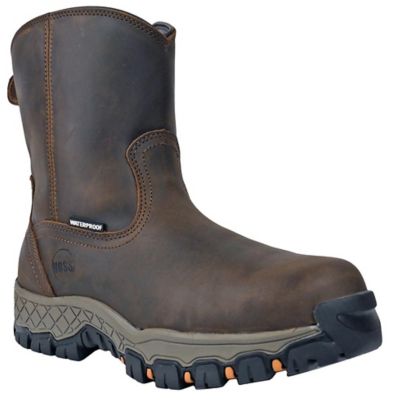
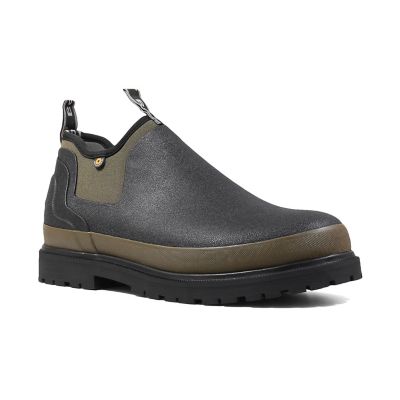
A good fit keeps the foot supported without turning a long shift into a battle with rubbing seams or cramped toes. Men’s waterproof work boots come in different widths, shaft heights and closure styles, and the right shape depends on the wearer’s feet as much as the job. There should be room for the toes to move, with a secure heel and enough space across the forefoot to avoid pinching when standing, bending or kneeling. Trying boots with the socks intended for work gives a better sense of that fit, especially when thicker socks or supportive insoles are part of the routine. A waterproof lining can change the feel inside a boot, so the labeled size is a starting point rather than a promise that every style fits alike. Lace-up designs allow adjustment through the instep and ankle, which can help when the day includes uneven ground or repeated climbing in and out of equipment. For a pull-on option,
Men's Slip On Waterproof Boots offer a way to get ready without tying laces, though a steady heel fit still matters once the boot is on. Cushioning, arch support and a stable platform each play a part in comfort on concrete; a soft footbed alone cannot make up for a poor fit. Boot weight and flexibility also affect how footwear feels after hours of walking, squatting or working at a bench. Breathable waterproof membranes may help moisture vapor escape, but sweat management still depends on socks, activity and how well the boots dry between wears. Toe protection is another separate choice. Soft-toe styles may suit chores without an impact or compression requirement, while safety-toe footwear needs to match the hazards and rules of the workplace. ASTM F2413 addresses protective footwear requirements; a steel, composite or alloy toe description by itself does not establish that a boot meets a particular employer’s requirements.
Keeping waterproof slip-resistant boots ready for the next round of chores takes regular attention to the parts that face the most wear. Mud packed into the tread can reduce the sole’s contact with the ground, so clearing it away helps the tread work as intended. Grit left around flex points, stitching and lace hardware can also speed wear as the boot bends. Cleaning methods should match the material: leather generally needs a gentle approach and compatible care products, while rubber and synthetic surfaces may have different washing instructions. A waterproof upper does not mean every boot belongs under a pressure washer or in a soak tub. Harsh cleaners, solvents and products not intended for the material can damage finishes, adhesives or waterproof components. After cleaning, opening the boots and removing removable footbeds helps moisture escape. Air drying away from direct heat protects leather and other components from unnecessary stress; setting wet boots against a heater can cause problems that extra waterproof treatment will not fix. Leather conditioners and waterproofing treatments should follow the maker’s directions, particularly when a membrane is involved. Regular checks also help reveal worn tread, splitting at flex points, loose stitching or separation between the sole and upper. A boot may still look serviceable from above even when the outsole has lost much of its tread. Oil resistance, chemical resistance, puncture protection and electrical-hazard protection are separate features, not benefits that can be assumed from waterproof or slip-resistant labeling. That matters in places where cleaning agents, sharp debris or energized equipment add hazards beyond wet footing. For the person making rounds through a barn, unloading supplies or spending a shift on damp concrete, the strongest match is footwear built for those actual conditions, with a comfortable fit and care requirements that fit the routine. Practical construction, appropriate traction and steady upkeep all contribute to boots that can stay in the work rotation longer.