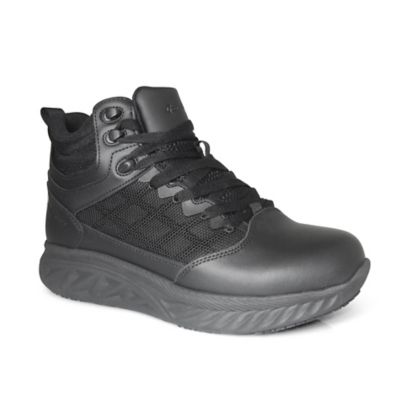
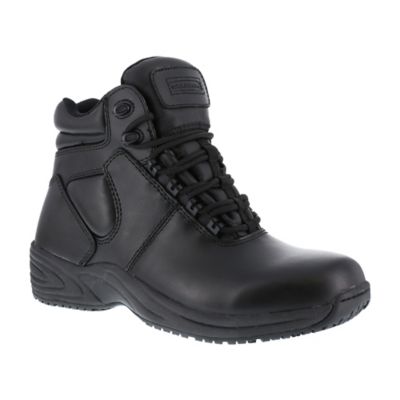
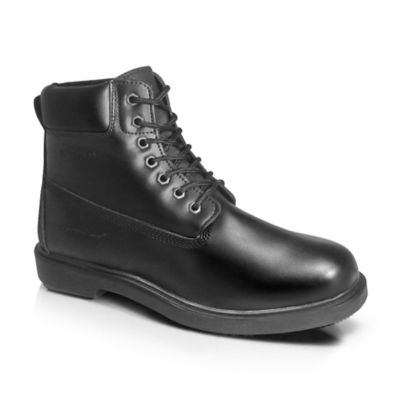
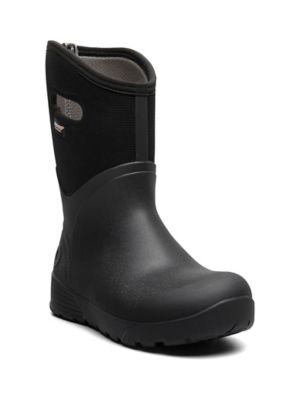
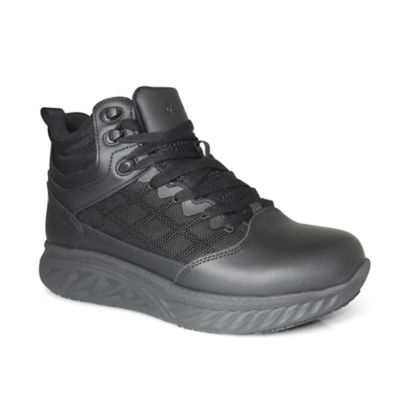
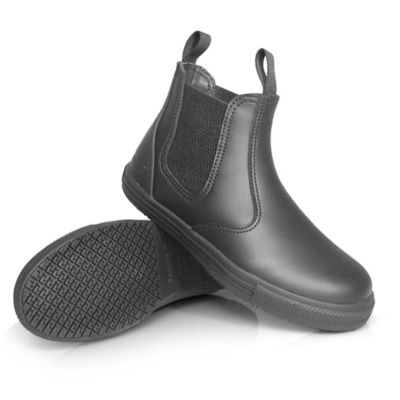
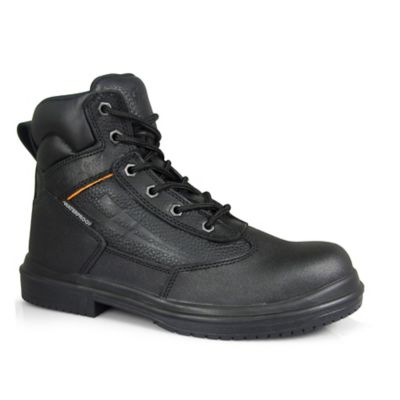
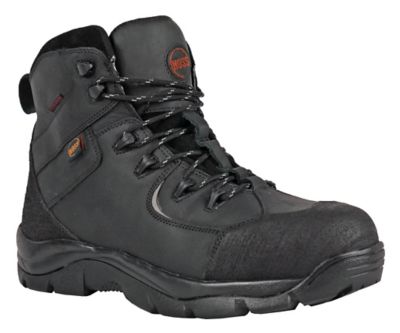
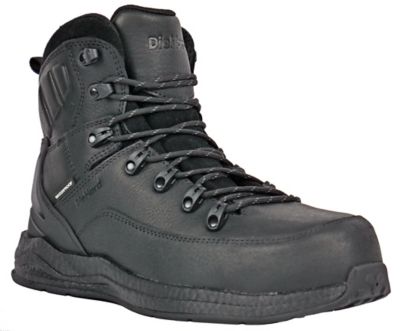
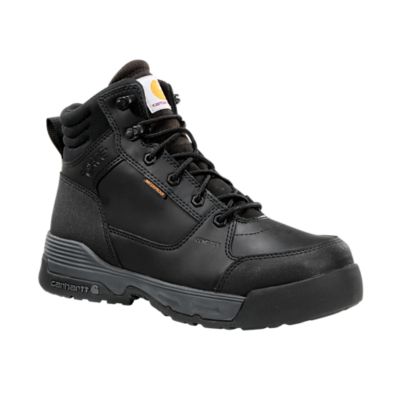
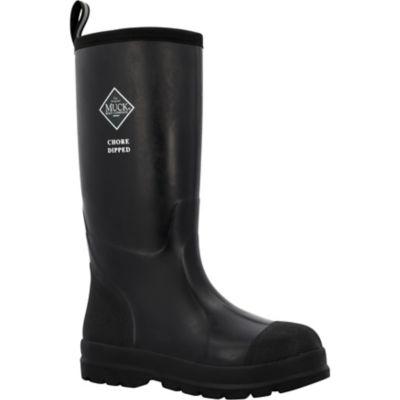
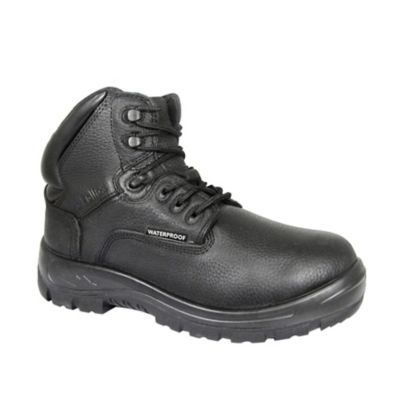
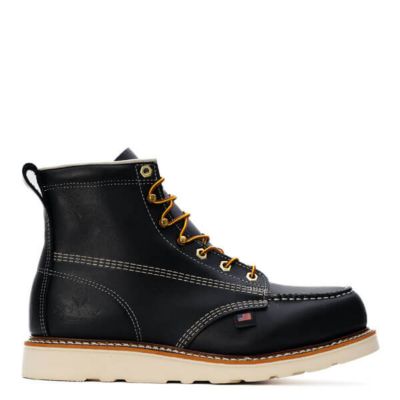
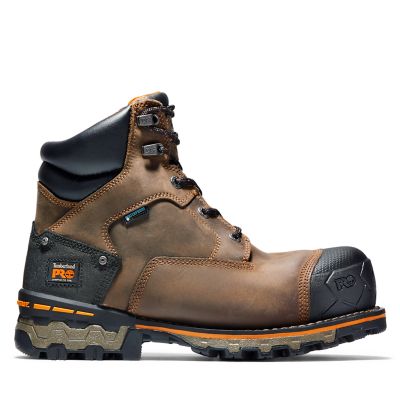
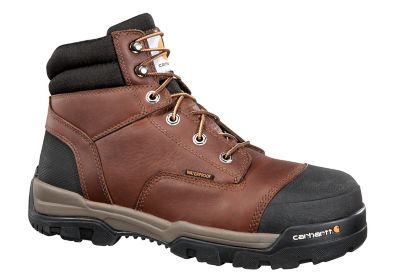
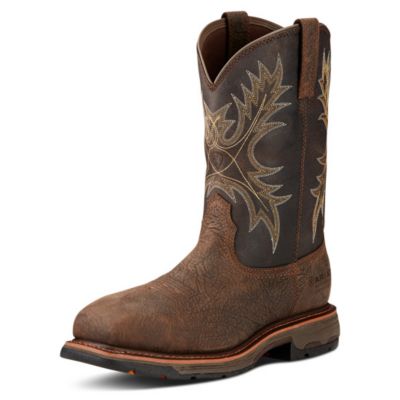
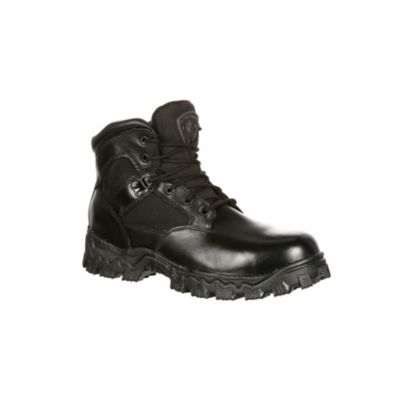
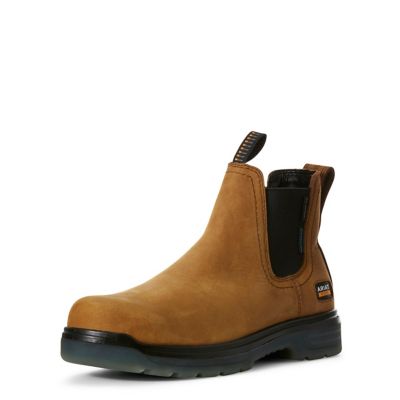
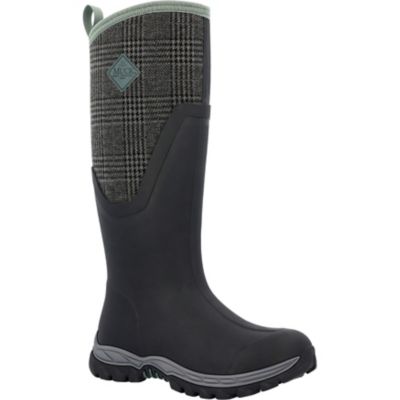
Black slip-resistant boots combine a black finish with traction-focused outsoles for work that involves standing, walking, and moving across slick surfaces. They make sense for folks tending livestock, working in a service shop, handling deliveries, or spending a shift on hard floors. The important difference is underfoot: slip resistance comes from the outsole material and tread design, not from the boot’s color or a rugged-looking profile. Rubber compounds, grooves, and contact patterns work together to help grip the ground and move liquid away from the contact area. Performance still depends on the surface and whatever is on it, whether that means water beside a wash station, grease near equipment, or fine dust across a concrete aisle. No boot is slip-proof, and an outsole that performs well on one floor may behave differently on another. Manufacturer testing information and workplace footwear requirements provide a stronger basis for comparison than appearance alone. Oil resistance and slip resistance also describe different things; an oil-resistant outsole is designed to withstand certain effects of oil, but that claim by itself does not establish traction on an oily floor. Tread shape matters, too. Closely spaced channels and broad contact areas serve a different purpose than deep, open lugs meant to shed loose material. Bigger lugs do not automatically mean better grip on smooth flooring. Black uppers bring a practical, straightforward look that works with work pants, uniforms, and jeans, without calling much attention to scuffs from everyday chores. Smooth finishes tend to wipe down more easily than textured surfaces, although neither stays clean without a little attention. For someone moving from a feed room to a concrete walkway and back to a workbench, the right combination depends on those actual surfaces, the amount of walking involved, and any protective features the job requires. Traction is one part of that decision, alongside fit, support, and construction that holds up to the work.
Materials and boot shape have a lot to do with how a pair feels halfway through a shift. Leather uppers can soften with wear and offer a firm, supportive feel, while synthetic materials vary in flexibility, weight, and how easily they wipe clean. Rubber boots can suit washdown chores and jobs involving frequent contact with water, though lining, shaft shape, and footbed design still affect comfort. Water-resistant leather and waterproof construction are not interchangeable, and a waterproof claim does not establish slip resistance. Seams, closures, and the height of the opening also influence how well a boot keeps water out during its intended use. A lining that helps move moisture away from the foot may be worth considering for long stretches of activity, especially when paired with work socks that fit without bunching. Lace-up styles allow adjustment across the instep and around the ankle, while pull-on shapes trade that adjustability for a simpler entry. Neither shape guarantees a better fit. There should be room for toes to move without the foot sliding forward, and the heel should feel secure without rubbing. A protective toe cap needs enough space around the toes because that rigid area will not stretch to make room. The
Ladies Slip Resistant Boots category provides a focused place to consider women’s sizing, with width, heel shape, and instep fit still worth checking against each boot’s measurements. A snug fit across the ball of the foot is different from pressure that pinches, and a taller shaft should not dig into the leg when kneeling beside a gate latch or climbing a step. Cushioning can soften the feel of concrete underfoot, while a supportive midsole and stable heel help the boot feel planted. Removable footbeds can make room for an appropriate replacement insert, provided the change does not crowd the toes or lift the heel too far. Familiar work socks and a little walking, bending, and crouching tell more about fit than standing still.
Construction and care influence how long black slip-resistant boots stay ready for the job. Reinforced toe areas can help with abrasion from kneeling, while sturdy stitching and well-protected seams matter where a boot bends repeatedly. A cemented sole, stitched construction, and a molded boot each have different strengths, so repair possibilities depend on how the footwear is built. A thicker outsole may offer more material to wear through, but thickness alone says little about grip or comfort. For work around falling objects, sharp debris, or electrical hazards, the relevant safety markings matter more than the general work-boot label. Soft-toe boots do not provide protective toe-cap coverage, and a steel or composite toe does not automatically mean the boot also meets electrical-hazard or puncture-resistance requirements. Each feature needs its own confirmation against the job’s rules. Everyday care is less complicated: loose grit and packed tread can be cleared away, and spills can be cleaned according to the material’s care directions. Leather generally benefits from an appropriate cleaner and conditioner, while rubber and synthetic uppers need products suited to their surfaces. Care products should stay off the tread unless the manufacturer specifically directs otherwise, since residue can change traction. Boots that become wet inside need time to dry fully before the next stretch of work. Rotating between pairs can give linings and footbeds more drying time, and replacing worn laces or flattened inserts may help keep an otherwise sound pair comfortable. Rounded tread edges, smooth patches, cracks, and sole separation deserve attention because the upper can still look presentable after the outsole has lost much of its working grip. For a practical gift, a known size is only the starting point; the recipient’s work rules, preferred closure, and fit needs matter just as much. Whether the job is around a barn, a loading area, or a maintenance shop, black slip-resistant boots earn their place through a sensible match between footing, protection, comfort, and everyday upkeep.