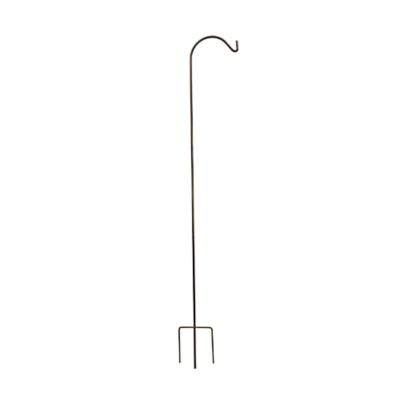
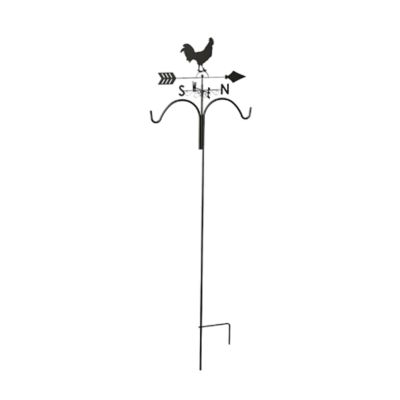
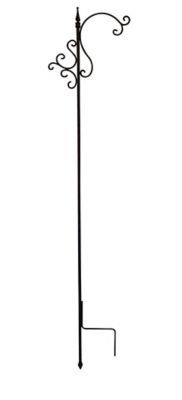
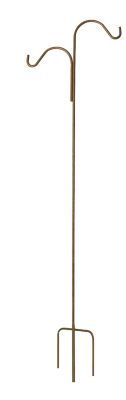
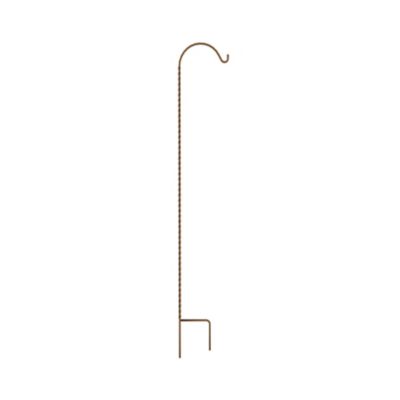
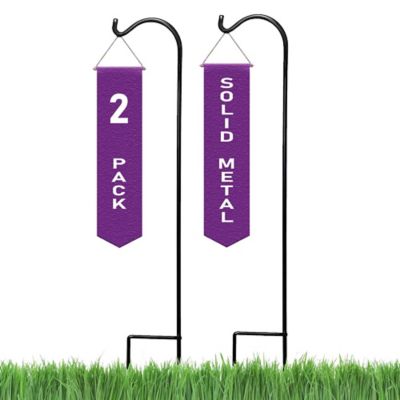
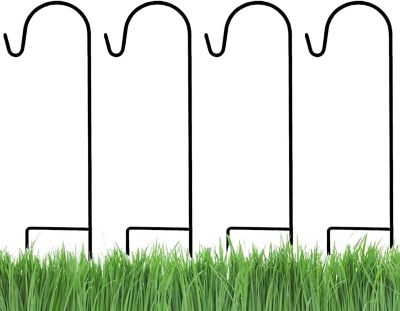
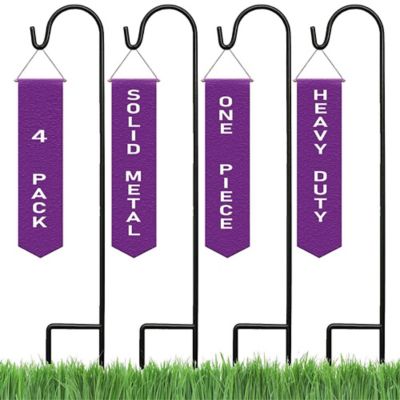
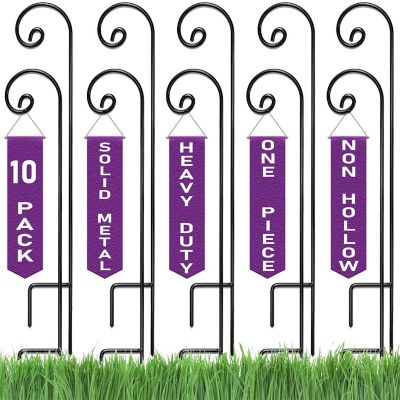
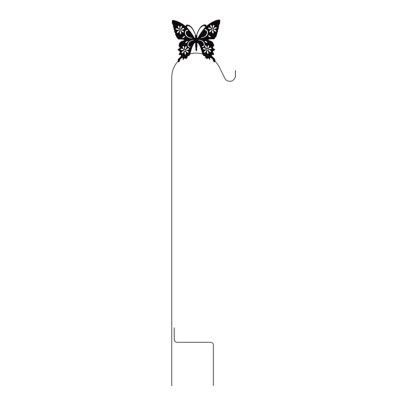
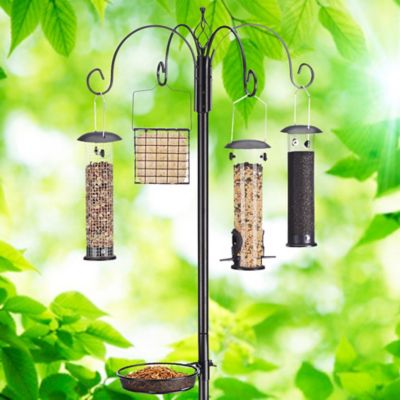
Shepherd hooks for bird feeders are upright supports with curved arms that hold hanging feeders away from the main pole. They give a feeding area its own place in the yard without requiring a tree branch overhead, making them a practical fit beside a garden, along a lawn edge or within view of a porch. A single-hook design keeps one feeder easy to reach, while double-hook and multi-arm styles make room for different feeder shapes on the same support. That flexibility suits everything from a small seed tube to a larger hopper feeder, provided the hook and base are rated for the full hanging load. Steel is a common material because it provides strength in a fairly slim profile, though solid rods and hollow tubing can behave differently under weight. Pole diameter, wall thickness, joints and the shape of the arm all contribute to how steady the setup feels. Powder-coated finishes provide a barrier over the metal, while galvanized finishes help protect steel against corrosion. Neither finish takes the place of sound construction, and scratches or exposed metal deserve attention before rust spreads. The curve itself matters, too: a generous opening can accommodate a broad hanging loop, while a narrower opening may fit a small wire hanger more neatly. Enough space beneath the arm lets a feeder hang freely instead of resting against the upright. Height is another important part of the fit. Listed measurements may describe the entire hook, including the portion that goes into the ground, rather than the height of the hanging point after installation. For a feeding area that calls for more overhead room,
Extra Tall Shepherd Hooks offer another height category to consider, with the feeder’s length and everyday reach still part of the decision. The best fit leaves space for birds to approach and gives the person filling the feeder a comfortable way to lift it off the hook.
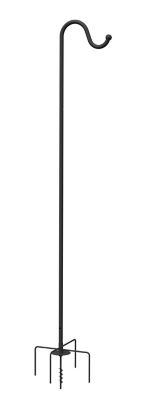
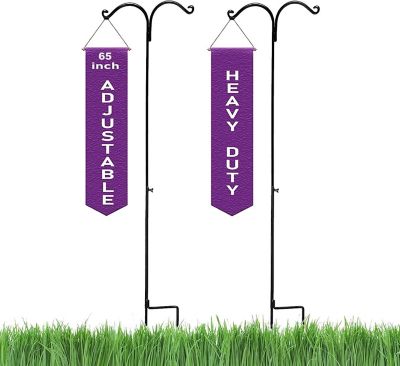
A steady bird feeder hook starts with a base suited to both the ground and the load above it. Ground-stake designs may have one main shaft with a stabilizing foot, several prongs or a separate anchoring system. Multiple prongs can help resist twisting and spread support across a wider area, but prong count alone does not tell the whole story. Their length, spacing and depth in the soil matter, as do soil firmness and the weight hanging from the arm. Loose fill, shallow soil and ground full of roots can make an otherwise suitable hook harder to seat securely. A wide base also needs enough clear space that its supports do not interfere with a walkway or mowing route. For deck-mounted styles, bracket fit, railing dimensions and the permitted load take the place of soil depth as the main mounting considerations. In either setup, the feeder’s empty weight is only part of the load. Seed, feeder hardware and any hanging accessories count toward the total, and a broad arm places that weight farther from the upright. On a double shepherd hook, two feeders of very different weights may pull unevenly, so the manufacturer’s guidance on load placement matters. Hooks with threaded sections or adjustable parts also need secure connections to keep the hanging point from shifting. Feeder shape affects spacing just as much as weight does. A wide roof, seed-catching tray or long perch needs clearance from the pole and nearby feeders, with room to remove lids and lift hangers free. For yards with persistent squirrels, an upright compatible with a properly fitted pole baffle can be helpful, but no hook height alone makes a feeding station squirrel-proof. Nearby fences, branches and railings can provide another route to the feeder. Placement also deserves a little thought around outdoor cats, busy paths and windows; bird-safe window treatments can help make nearby glass more visible. A clear view from a kitchen window is enjoyable, but access for birds and room for routine care belong in the same plan.
Everyday upkeep is easier when shepherd hooks for bird feeders match the way the feeding area gets tended. Someone carrying a seed scoop in one hand may appreciate a hanging point that is reachable without stretching, while a feeder with a large bail handle needs an opening that allows it to lift off without a wrestling match. Taller setups can provide more ground clearance, but they also bring the refill point higher, especially when the feeder hangs from a short loop. Removable feeders and accessible pole connections make cleaning and inspections less of a chore. Regular checks can catch a loose joint, bent arm, shifting base or chipped finish before a full feeder puts more strain on it. Cleaning methods should follow the finish manufacturer’s directions; gentle cleaning and attention to exposed metal help preserve the protective surface. Hanging hardware deserves the same attention, since a worn loop or loose connector can undermine an otherwise sturdy support. Beneath the feeder, space to rake up spilled seed and hulls helps keep the feeding area manageable, particularly near a garden bed or a regularly mowed patch of lawn. Feeder cleaning remains important even when the hook itself needs little attention, and a layout with room between feeders makes it easier to take one down without disturbing the rest. These supports suit backyard bird-watchers, folks tending a farmhouse yard and anyone who enjoys seeing birds while taking a break on the porch. They can also make a thoughtful gift for someone who already has a favorite feeder but lacks a suitable place to hang it. Matching the hook to that feeder’s weight, hanger and intended location makes the gift more useful than choosing by appearance alone. A simple curved profile can sit comfortably beside a vegetable patch or flower bed without taking much space, while several arms can bring a feeding area together in one spot. With the right balance of reach, clearance, anchoring and carrying strength, a shepherd hook becomes a practical part of the yard rather than another thing to work around.