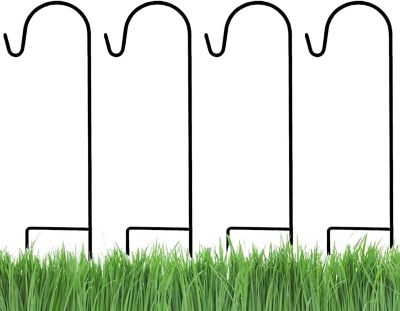
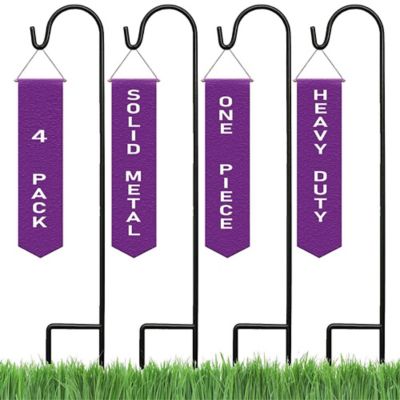
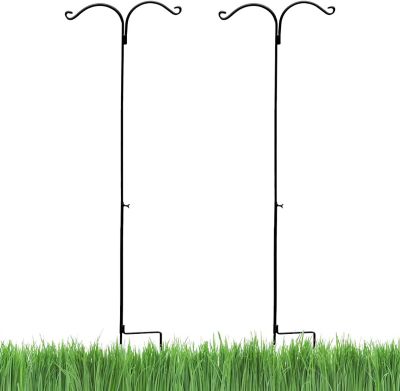
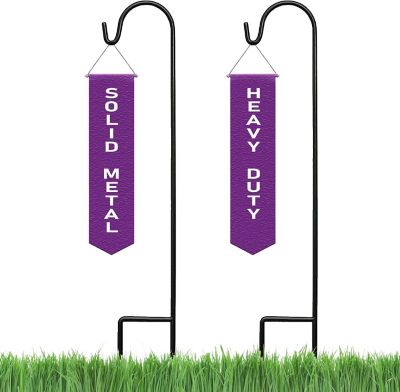
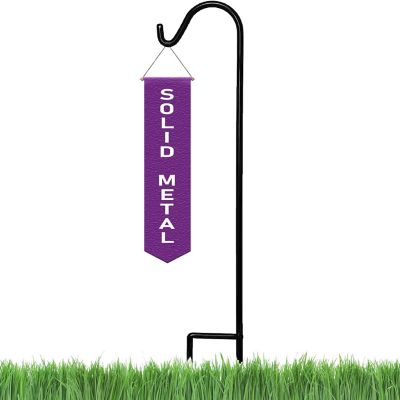
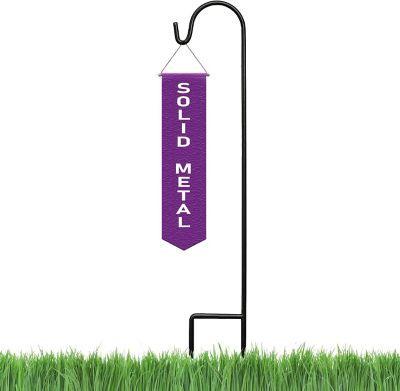
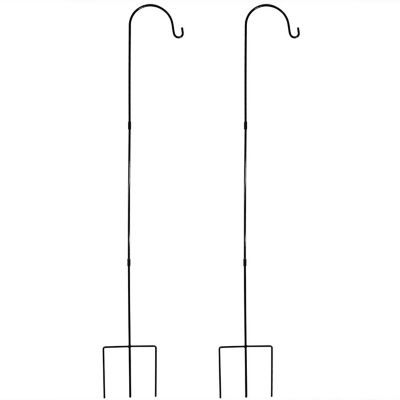
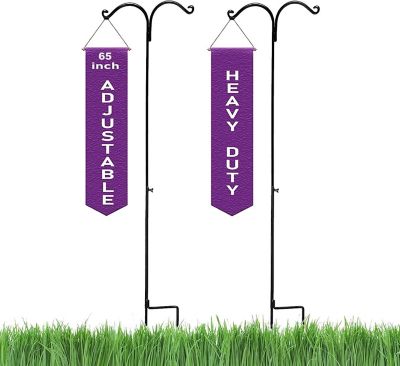
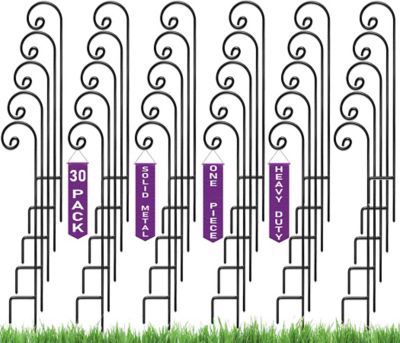
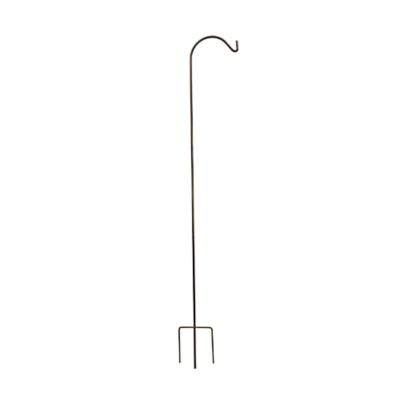
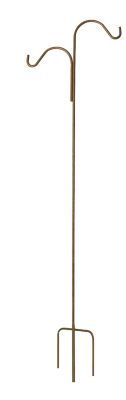
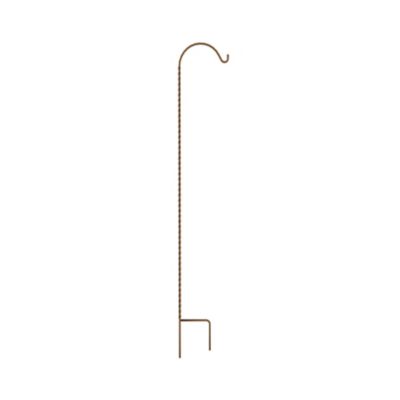
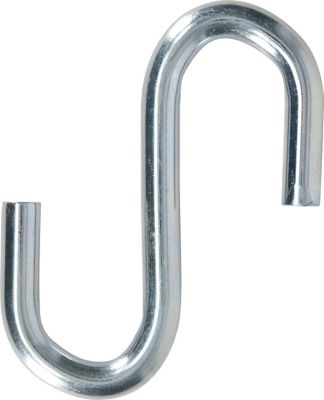
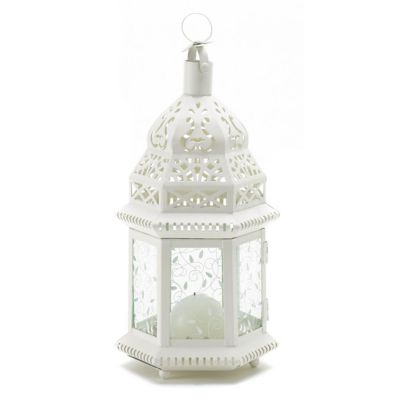
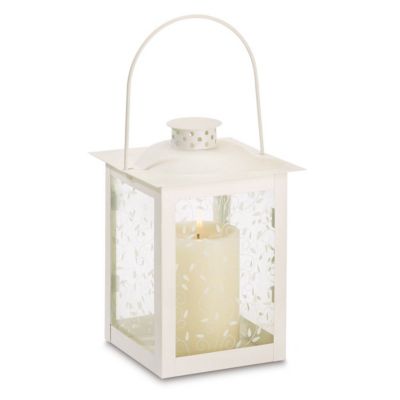
Shepherd hooks for lanterns are metal supports with curved tops that hold hanging lights above the ground. Most stake into the soil, making them a practical choice for lighting a garden path, framing a gate, or adding a soft glow beside a porch. The curved arm leaves room for a lantern to hang freely, while the upright shaft keeps the setup simple and easy to work into a yard. Along a gravel walk, a row of lantern hooks can help mark the route from the driveway to the front steps. Beside a backyard bench, a single hook can hold a light close enough for a quiet evening without taking up space on a small table. Single-arm styles suit individual lanterns, while double-arm designs provide two hanging points; the manufacturer's load limits still apply to each arm and the complete support. Height makes a difference in both appearance and everyday use. A lower hanging point brings light closer to a path, while a higher one can lift a lantern above nearby plants. For a higher placement,
Extra Tall Shepherd Hooks offer another direction to consider, with attention to the lantern's weight and the space beneath it. Check whether the listed height describes the entire hook or the portion that remains above ground after installation. The lantern's power source matters, too. Battery-operated LED lanterns do not need an outlet nearby, although their batteries and controls should remain accessible. Solar lanterns need a location where their panels receive the sunlight specified by the manufacturer; a convenient hanging spot beneath a dense tree canopy may not provide enough charging light. Corded lanterns require an outdoor-rated setup and a cord route that stays clear of foot traffic. A shepherd hook supports the lantern rather than supplying power, so check listing details to understand whether a lantern, stake sections, or other mounting parts are included.
Material, construction, and fit all play a part in how a lantern hook performs. Steel is a common choice because it can support a curved arm with a relatively slim profile, and a powder-coated finish adds a protective layer over the metal. Iron designs may have a heavier appearance, but the material name alone does not establish how much weight a hook can hold. Shaft thickness, the shape of the arm, connection points, and the anchoring design all matter. A bronze-tone or black finish describes the surface appearance, not necessarily the metal underneath. For a simple look along a fence or garden border, matching finishes can keep the supports from drawing attention away from the lanterns. For fit, compare the hook opening with the lantern's hanging loop or handle. The handle should seat fully in the curve rather than balance on the tip, and there should be enough room to lift the lantern on and off without forcing either part. Arm reach is just as important as overall height: a wide lantern needs enough space between its body and the upright shaft to hang without rubbing. Include the lantern's batteries, glass panels, and any permitted contents when checking its total hanging weight against the hook's rating. A large lantern can put more leverage on the support than a compact one, especially when the arm extends farther from the shaft. Double hooks need the loading arrangement specified for that design rather than an assumption that any two lanterns will balance safely. One-piece shafts have fewer connections to check, while sectional shafts may be easier to move or store and need their joints secured as directed. Hooks with ground prongs, foot bars, or separate bases have different installation requirements. A ground stake belongs in suitable soil; it should not be forced into concrete or paving. For a patio or porch with a hard surface, a support specifically designed for that surface is the better fit.
Placement should leave room for people, equipment, and the lantern itself. Along a walkway, set the support far enough back that the curved arm and hanging light do not intrude into the walking space. That extra clearance matters when someone carries a feed sack, pushes a wheelbarrow, or brings groceries through the gate after dark. Keep hooks out of mower routes and away from areas where a lead rope, garden hose, or gate latch could catch on them. Near animal pens, choose a position beyond the animals' reach rather than hanging a lantern where it could be bumped or chewed. Before staking, follow the installation instructions and check for buried utilities and irrigation lines. Firm anchoring matters: loose fill or shallow soil may not hold a stake upright under its intended load, and adding a heavier lantern will not correct a leaning support. Once installed, the lantern should hang clear of branches, fencing, and other surfaces. LED lanterns avoid an exposed flame, making them a straightforward option for many hanging arrangements. If a lantern permits a real candle, follow its clearance and hanging requirements, keep it away from combustible materials, and never leave the flame unattended. Everyday care is simple but worth keeping up with. Wipe dirt from the shaft and hook, follow the finish maker's cleaning directions, and inspect joints and stake connections before rehanging a lantern. Scratches that expose bare metal deserve attention according to the manufacturer's care instructions, and bent or cracked supports should be taken out of service. Removing the lantern before moving the hook helps protect the handle, glass, and curved arm. Shepherd hooks also make a thoughtful gift for someone who enjoys tending a garden, gathering on the porch, or making a backyard feel welcoming. Matching the hook to the recipient's lantern, ground surface, and preferred hanging height makes the gift more useful than choosing by appearance alone.