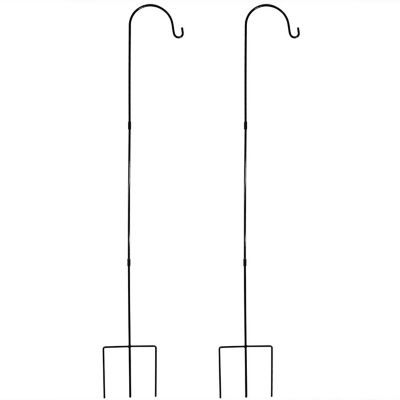
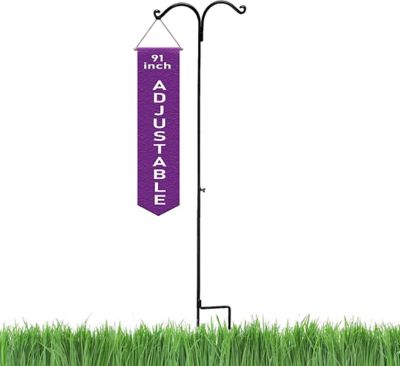
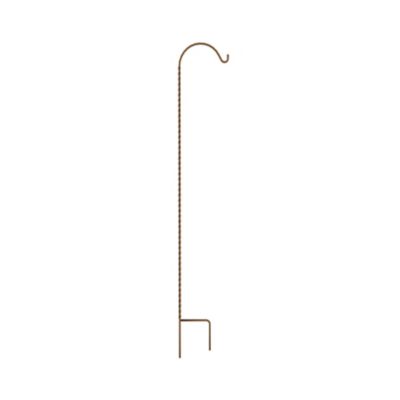
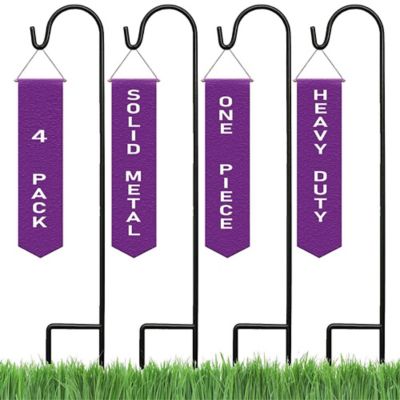
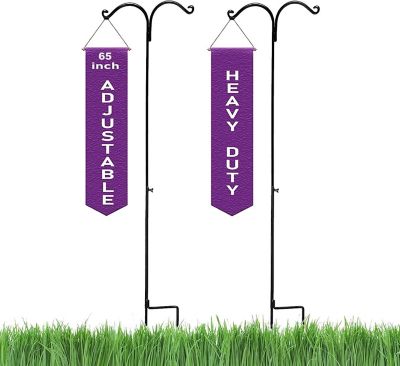
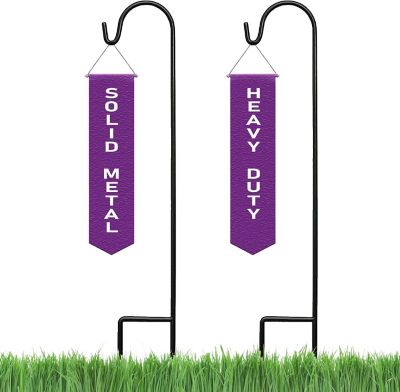
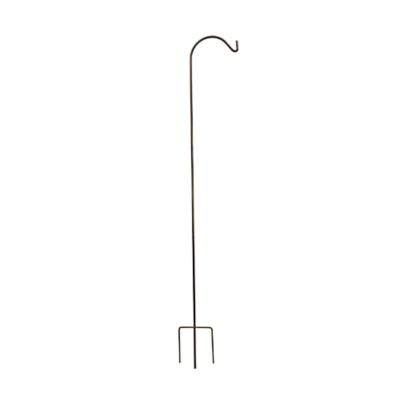
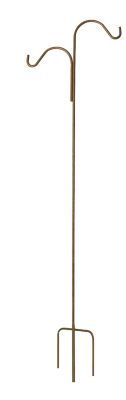
Extra tall shepherd hooks lift hanging baskets, bird feeders, and outdoor lanterns above low-growing plants, giving each piece room to hang without crowding the space below. Their curved tops bring the familiar shape of a shepherd’s crook to a practical yard fixture, while the taller shaft creates clearance for trailing stems, feeder chains, and longer hanging hardware. Many extra tall designs measure roughly 76 to 108 inches overall, although the meaning of “extra tall” varies by maker. The measurement that matters most in the yard is the height of the hanging point after installation. A listed height may include the portion that goes into the ground, and the basket hanger or feeder chain takes up additional space beneath the hook. That difference matters beside a flower bed, where a long basket of trailing greenery needs breathing room, or along a garden path, where a hanging planter should stay clear of shoulders and elbows. Overall height, hook opening, and arm reach all help determine how well a design fits its spot. A narrow curve may suit a slim hanging loop, while a wider opening can accommodate a larger handle, provided the handle rests securely in the curve. Arm reach determines how far the hanging load sits from the upright shaft, which affects both clearance and leverage on the base. Single-arm designs keep the arrangement simple, while double-arm styles make room for two hanging pieces without adding a second pole. Either can suit a farmhouse yard, a small garden beside the porch, or a feeding area visible from the kitchen window. Tall hooks can also bring a hanging display into view above a low fence or broad planting bed. The right proportions leave the basket or feeder as the focal point rather than making the support look oversized for its surroundings. For everyday convenience, the hanging point should also remain within a comfortable reach for refilling, watering, and lifting things down.
Material and construction make a difference when a tall shepherd hook carries weight well above its base. Steel is common in this category, with solid-rod and tubular construction offering different combinations of weight, shaft thickness, and handling. A solid shaft avoids hollow joints along its length, while a tubular design may be easier to move and may include sections that adjust the overall height. Neither construction alone establishes how much weight a hook can carry. The stated load limit, connection design, arm length, and ground support all belong in that comparison. A hanging basket can weigh considerably more after watering, and a feeder becomes heavier when filled, so the working load includes the container, contents, hanger, and any attached accessories. Double-arm designs may have separate limits for each arm as well as a total limit for the whole support. Equal-looking baskets are not necessarily equal in weight, either. A broad clay pot and a lightweight planter can place very different demands on the same hook. Black powder-coated finishes are common and give the metal a simple look that blends with fencing, porch rails, and garden edging. Other protective finishes serve the same general purpose of separating the metal from moisture, though scratches and exposed joints still deserve attention. At ground level, extra height makes the base especially important. Multiple prongs spread support across more contact points, but prong count by itself does not guarantee a firm installation. Prong length, spacing, soil firmness, and the weight hanging off the arm all affect how steadily the pole stands. Loose fill or freshly turned garden soil may not grip a base as firmly as settled ground. A broad basket also places its weight differently from a compact feeder, especially when it hangs farther from the shaft. Ground-stake models belong in suitable soil; they are not freestanding supports for a concrete patio unless the maker specifies a compatible base. Matching the support to both the hanging load and the ground helps limit leaning, twisting, and repeated repositioning.
The best fit also depends on what happens around the hook day after day. For a feeding station near a kitchen window,
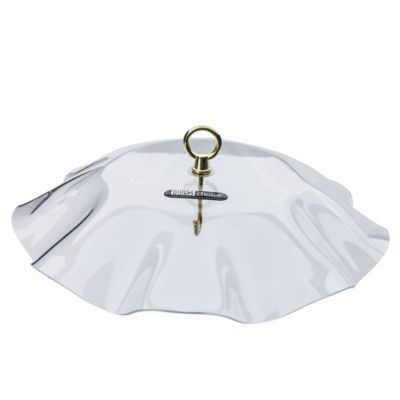
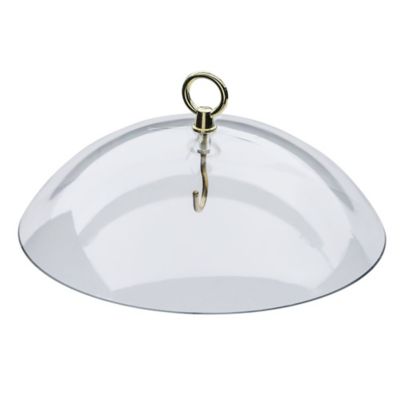
Shepherd Hooks for Bird Feeders offer a way to suspend seed or suet feeders without relying on a tree branch. Extra height can provide room below the feeder, but height alone does not keep squirrels or other animals away. Nearby fences, limbs, and rails can provide access, and a baffle needs to match the pole diameter and have enough clearance to function as intended. A feeding spot also needs room for taking the feeder down, brushing away seed hulls, and cleaning the ground beneath it. Near a garden path, an extra tall hook can hold a basket above surrounding plants while keeping the pole tucked toward the bed rather than in the walking space. For a lantern, the hanger, hook opening, and stated weight limit need to suit one another, and any lighting should be intended for its location. Tall hooks are not meant to support swings, hammocks, climbing children, or loads beyond their ratings. Routine care is straightforward: wipe away dirt, check the finish where hangers rub against the curve, and inspect joints or threaded sections for movement. A hanging load that starts sitting lower or pulling the shaft out of line calls for attention before it goes back up. Removable sections and hanging hardware benefit from a clean, dry storage spot when not in service. Moving a ground-stake hook is easier with the hanging load removed, and lifting by the base rather than wrenching the curved top helps avoid bending the shaft. For someone who enjoys watching birds, tending flowers, or keeping the yard neatly arranged, an extra tall shepherd hook can make a thoughtful gift when its height and purpose suit the space. The most useful choice balances reach, clearance, load capacity, and a firm footing, so the hook does its job without getting in the way of everyday chores.