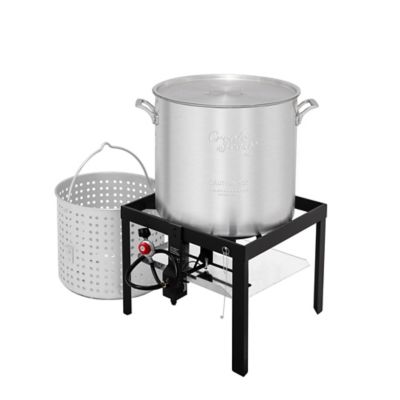
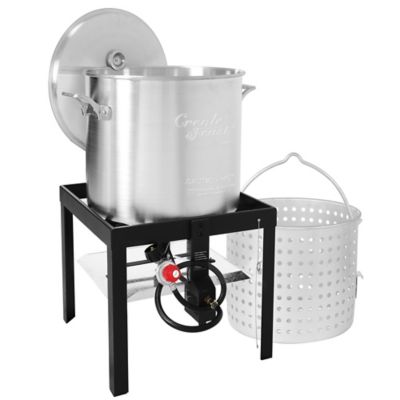
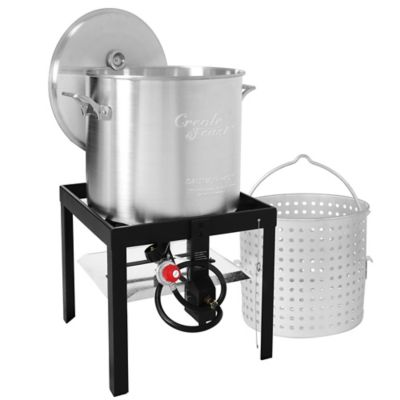
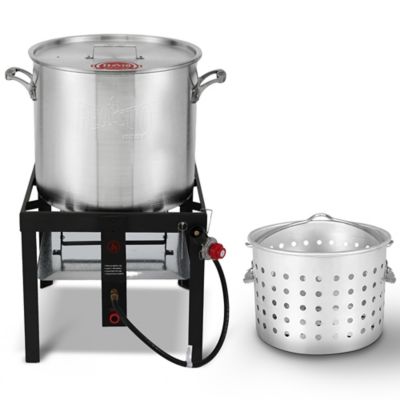
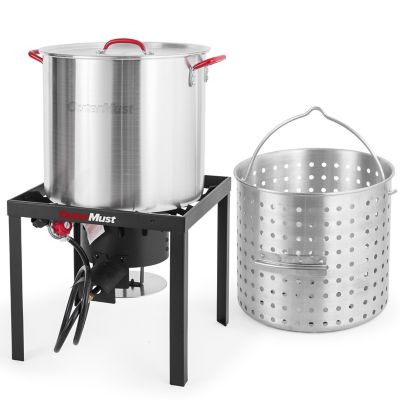
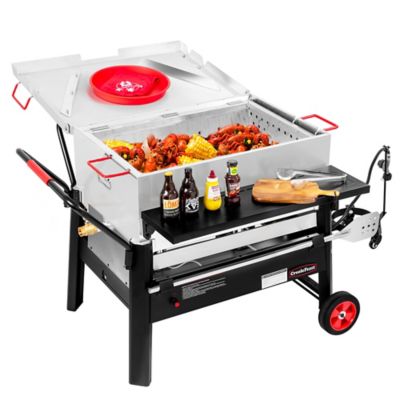
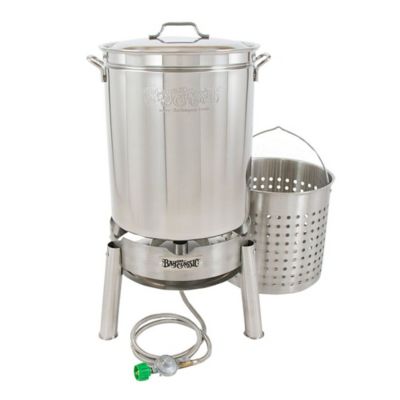
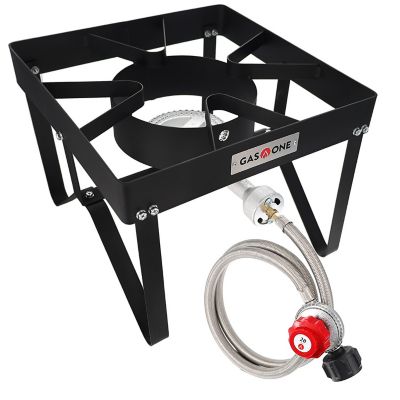
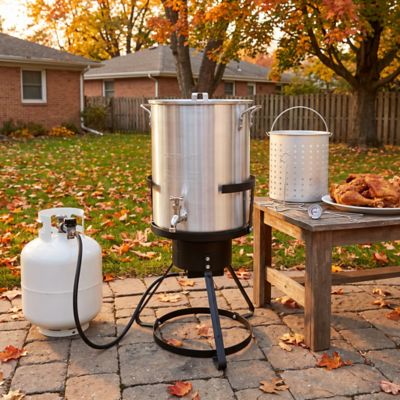
A seafood boiler is a large-capacity cooking setup that typically pairs a metal pot, a removable straining basket and a burner to cook shrimp, crawfish, crab and other boil ingredients. Propane-powered seafood boilers are made for outdoor cooking, bringing the pot and heat source together in one setup for backyard meals, family reunions and tailgate gatherings. There’s room for more than shellfish in that basket, too: corn, potatoes and sausage help turn a batch into a meal worth gathering around. The right size depends on the food going into the pot, the number of batches planned and the space needed for water to move around the ingredients. Pots in the 30- to 60-quart range can suit family meals and smaller gatherings, while 80- to 100-quart setups offer more room for bigger crawfish or crab boils. Larger systems, including some beyond 140 quarts, are geared toward substantial batches and frequent group cooking. Those capacity ranges are starting points, not fixed serving counts. A quart rating describes the vessel’s total volume, and the safe cooking load must leave room for liquid, food displacement and the manufacturer’s required headspace. A basket full of whole blue crabs takes up space differently than several pounds of shrimp, so guest count alone doesn’t tell the whole story. For a household that hosts a few neighbors, a manageable pot may make more sense than the biggest cooker on the patio. For someone feeding a large family crowd, extra basket space can mean fewer rounds at the burner and more time at the table. A complete seafood boiling setup generally brings the pot, basket and cooking stand together, while a separate boiling pot needs a heat source that matches its size and design. Knowing which pieces belong together matters just as much as the quart number stamped on the pot.
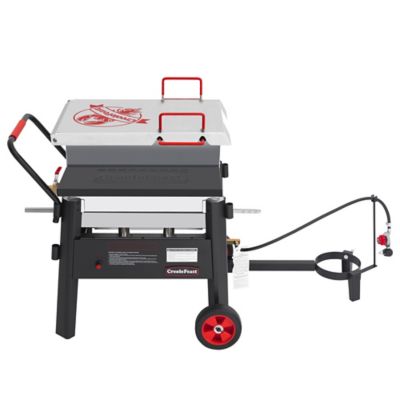
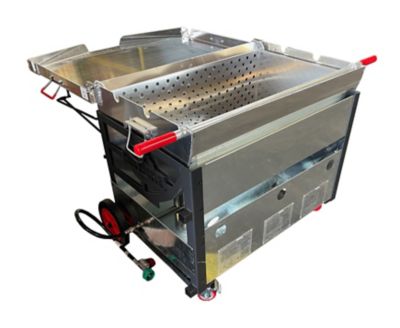
Materials and construction make a difference when a cooker is holding a heavy load of water and food. Aluminum seafood pots are generally lighter than comparable stainless steel pots and conduct heat readily, which can make them easier to move when empty. Stainless steel offers corrosion resistance and a sturdy feel, though salt residue still calls for prompt cleaning. Metal thickness, seams, handle attachment and the fit between the pot and basket all deserve attention; material alone doesn’t tell the whole story. A well-fitting basket leaves space for water circulation while keeping food contained, and perforation size matters when the menu includes smaller shrimp or loose ingredients. Stout lifting handles and a basket that drains freely help with the transition from cooking to serving, but a full basket can still be too heavy for one person to handle comfortably. Some larger systems have basket supports, lift mechanisms or tilting designs that reduce the amount of lifting involved. Cart-style frames can help reposition an empty cooker, although wheels don’t make a hot, loaded system safe to move. Burner output is commonly listed in BTUs, a measure of heat input rather than a promise about boil time. Pot volume, water load and the overall cooker design affect how quickly the setup gets a batch going. Many propane seafood boilers connect to a standard 20-pound cylinder, but the specified fuel source, regulator, hose and connection must match the cooker’s requirements. The stand also needs to support the intended pot securely, without an overhanging base or a basket handle interfering with the burner frame. Outdoor propane setups belong on a level, noncombustible surface, with the clearances listed by the manufacturer—not inside a garage, beneath a low roof or on a wooden deck. Keeping children, pets and foot traffic away from the cooking area gives the person tending the boil room to work without someone brushing past a hot pot or catching a hose.
Practical details often matter most once the boil is finished and everyone is ready to eat. A basket that sits securely in its designated draining position can let liquid return to the pot before the food moves to a serving tray. A lid with an easy-to-grasp handle, accessible burner controls and enough space around the stand can make a long cooking session less awkward. Heat-resistant gloves appropriate for the task offer protection when handling hot components, but they don’t replace a secure grip or help with a load that exceeds someone’s lifting ability. The setup needs room for both cooking and serving, especially when a loaded basket is coming out of the pot and guests are gathering nearby. For someone who cooks at different locations, empty weight, overall dimensions and the number of separate pieces affect how easily the equipment fits into a vehicle or storage area. A tall pot may tuck into a shed corner, while a cart needs a larger footprint and a clear path through the gate. Indoor drink service calls for different equipment, such as the options covered on the
Kitchen Water Boilers page; an outdoor propane seafood cooker belongs in its designated outdoor cooking space. After the meal, the pot, basket and other food-contact parts need cleaning according to the maker’s directions, with salty residue rinsed away and components dried before storage. Some aluminum pieces require hand washing, and harsh cleaners or abrasive pads can damage certain surfaces. Burner openings, hose condition and fittings also warrant attention before the next cookout, following the equipment’s inspection and leak-check instructions. A seafood boiler can make a thoughtful gift for the family cook who already enjoys hosting and has a suitable outdoor cooking area. Matching its size and features to that person’s usual crowd, lifting comfort and storage space makes the gift far more useful than simply choosing the largest pot.