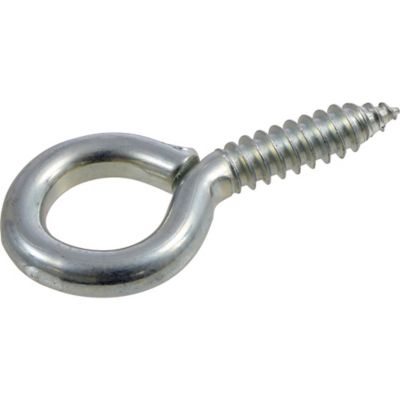
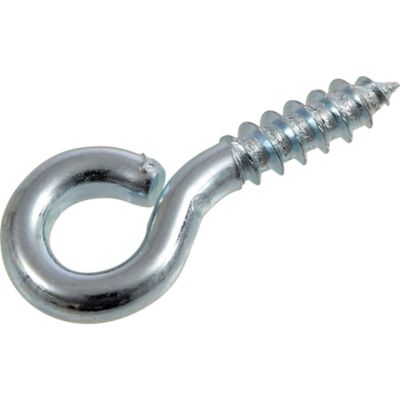
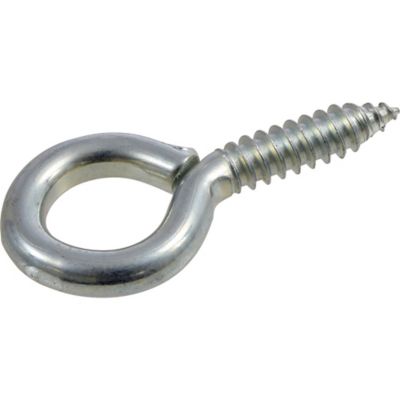
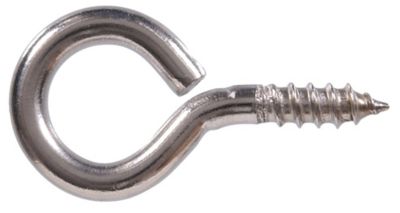
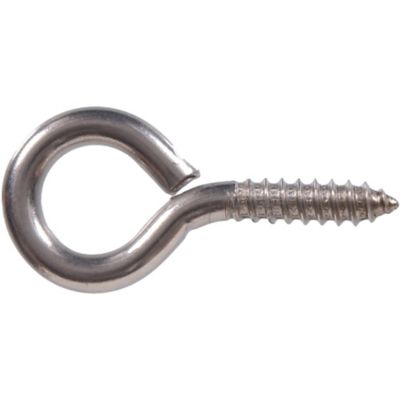
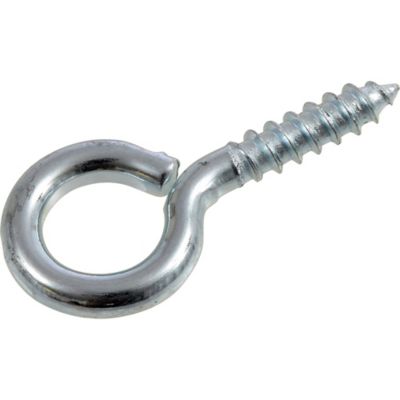
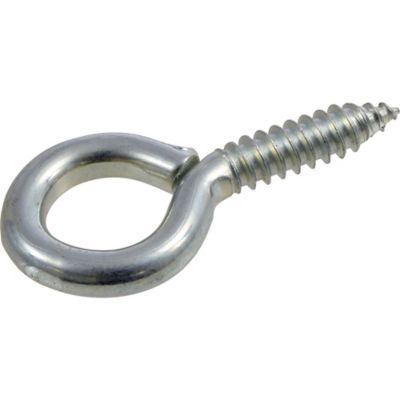
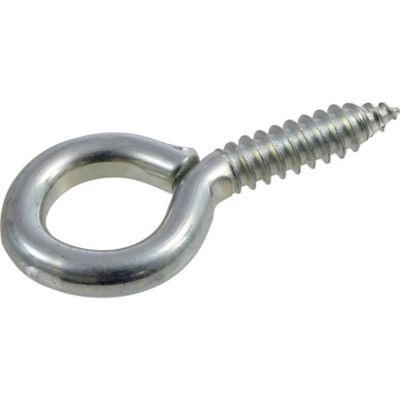
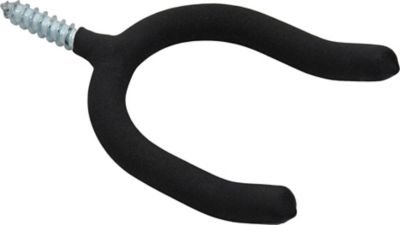
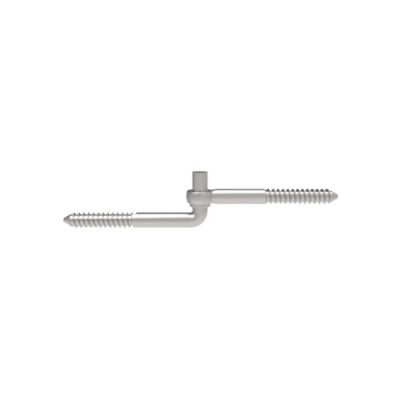
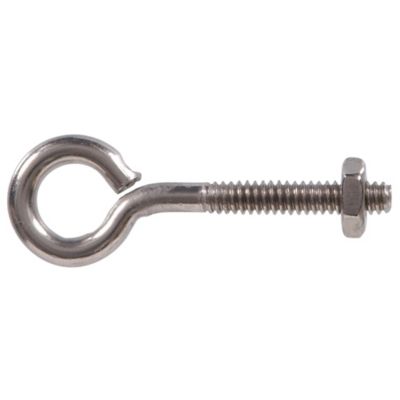
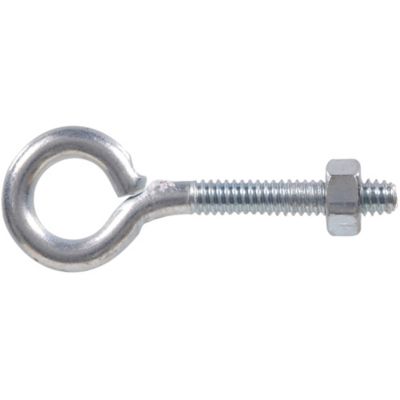
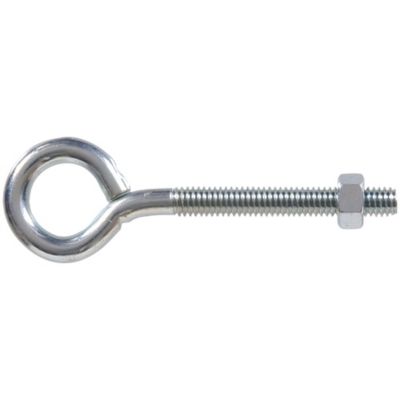
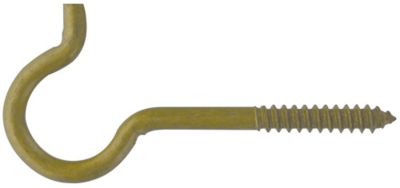
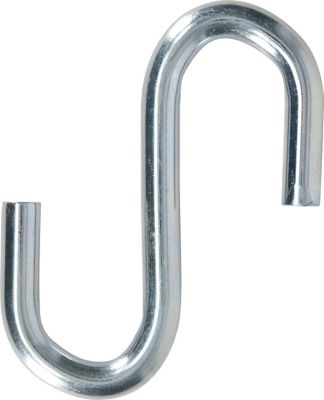
Screw eye hooks are threaded fasteners with a loop at one end, creating an attachment point for cord, wire, chain, or a connecting clip. Commonly called screw eyes, they often have a pointed shank with coarse threads that grip wood, making them handy for light-duty hanging and organizing around a house, barn, or workshop. The eye provides a more enclosed attachment than the open curve of a standard screw hook, although its shape alone does not mean the fastener is rated for lifting or heavy loads. A small sign beside a tack-room door, a cord supporting a lightweight shop display, or a line stretched across a simple project frame can all call for this straightforward style of hardware. The best fit depends on the whole connection: the material receiving the threads, the object being supported, and the hardware passing through the eye. Overall length tells only part of the story. Threaded length determines how much of the shank can engage the mounting material, while the inside opening determines what can pass through the loop. A roomy eye may accept a snap or small connector more easily, but a larger opening is not proof of a higher load rating. A narrow eye can work well with fine cord yet leave too little room for a thicker rope or clasp to move freely. Checking inside dimensions matters more than judging the loop by its outside size. For paired attachment points, matching the eye size and orientation helps a line sit neatly without rubbing hard against one side. Screw eye hooks make the most sense when their dimensions suit the job instead of simply looking substantial. A small fastener in sound material can suit a modest task, while a larger one in a thin panel may still lack the support that connection needs. The mounting surface and the manufacturer’s stated limits matter every bit as much as the fastener itself.
Material and finish deserve a close look, especially around utility sinks, wash areas, and other places where hardware encounters moisture. Steel screw eyes may have zinc plating or another protective finish to help resist corrosion, while stainless steel is often a consideration where dampness or frequent cleaning is part of the setting. The metal grade, coating, and intended environment still matter; no finish makes every connection suitable for every location. Hardware touching treated lumber should have a material or coating approved for that lumber treatment, and dissimilar metals may need attention where damp contact could encourage corrosion. A smooth eye also matters when rope or cord rests against it. Rough edges, damaged plating, and an uneven seam can wear a line as it moves. Some screw eyes have a formed loop with a visible gap or joint, so “closed eye” should not be taken to mean welded construction. Beyond the metal itself, fit starts with the base material. Most pointed, wood-thread screw eyes need sound wood with enough thickness for the required thread engagement. Bare drywall, hollow panels, masonry, and metal call for fastening methods designed for those materials; an anchor is appropriate only when it is compatible with the screw eye and the intended load. Trim and thin cabinet backs should not be mistaken for solid backing. Pilot-hole requirements vary with wood species, shank size, and manufacturer guidance. A properly sized pilot hole can help limit splitting, particularly near an edge, without removing so much material that the threads lose their grip. Seating matters, too: forcing the eye farther than intended can damage wood fibers or distort the fastener. A compatible installation tool can help with repeated work, but control matters more than speed. The goal is a firmly seated connection with an undamaged eye, not extra turning force after the fastener has reached its intended position.
Around a workshop or small acreage, these little fasteners often handle the finishing details that keep a space orderly. They can provide attachment points for light cord arrangements, small hanging containers, or wire supporting a modest plant-training frame, provided the complete setup stays within its stated limits. For hanging containers, the load includes everything inside, not just the empty container. Direction matters as well: a pull straight along the shank places different demands on the connection than a sideways tug, and movement can add force beyond an object’s resting weight. Two screw eyes do not automatically provide twice the capacity, since uneven alignment can leave one carrying most of the load. Where a connection calls for a machine-threaded shank, a matching tapped hole, or through-fastening with a nut,
Threaded Eye Bolts are a related hardware category to compare. Matching the thread style to the mounting method is more useful than choosing by a similar-looking loop. For lifting, overhead suspension, fall protection, or animal restraint, ordinary general-purpose screw eyes are not a substitute for hardware specifically rated and approved for that purpose. Any stated working load also depends on the installation conditions and supporting structure, not just the metal eye. Everyday care is straightforward: wiping away dirt makes it easier to spot corrosion, wear, or movement at the mounting point. A bent loop, widening gap, damaged threads, or looseness in the wood calls for taking the connection out of service and checking the backing before replacement. Cord and wire deserve the same attention wherever they contact the eye. Matching replacement hardware by dimensions, material, and intended use helps keep a small repair from becoming a weak spot. For homeowners, woodworkers, and folks tending a barn or shop, a well-matched screw eye offers a simple attachment point without adding much clutter to the job.