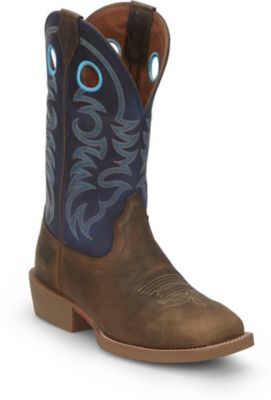
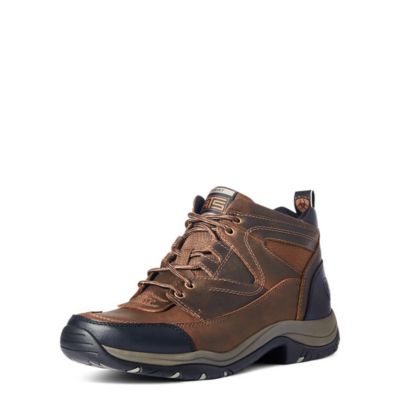
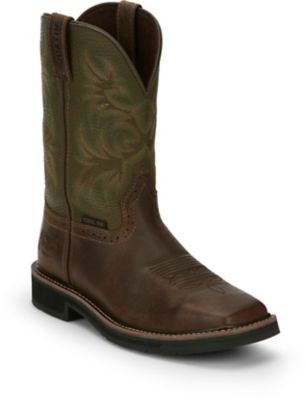
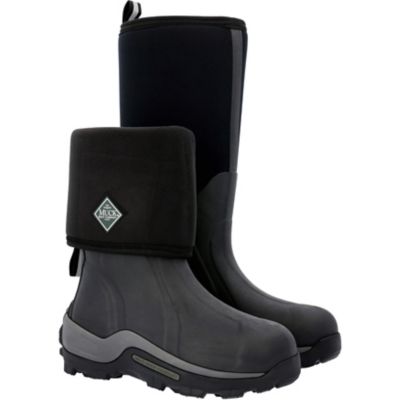
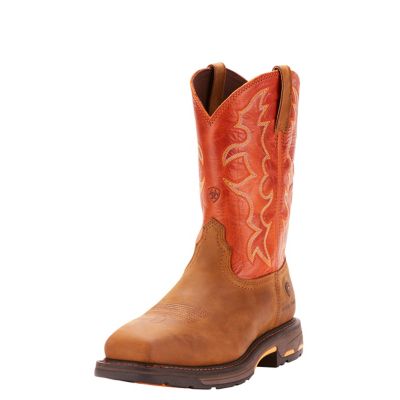
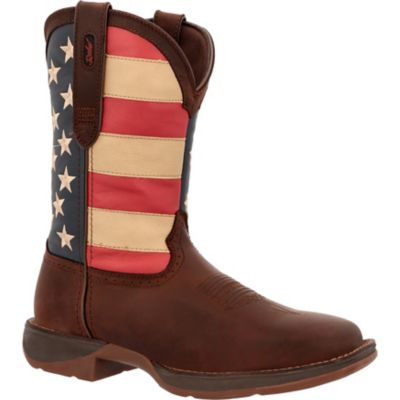
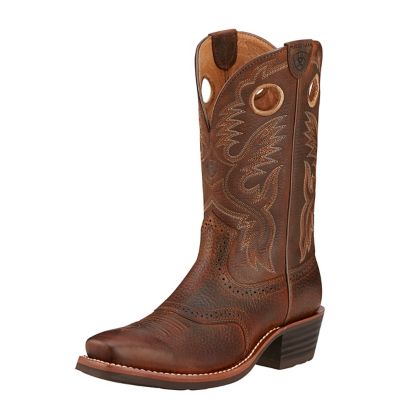
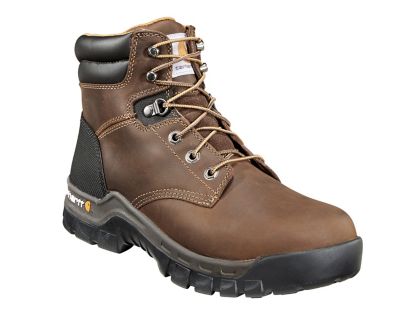
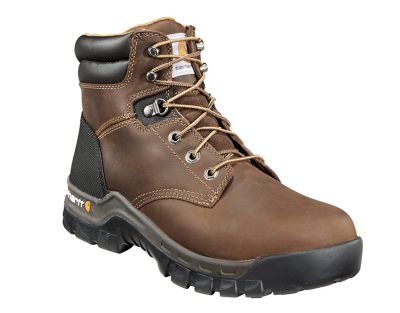
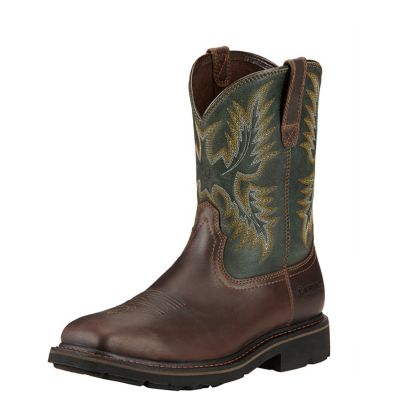
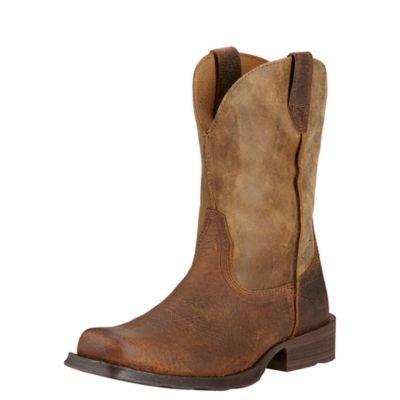
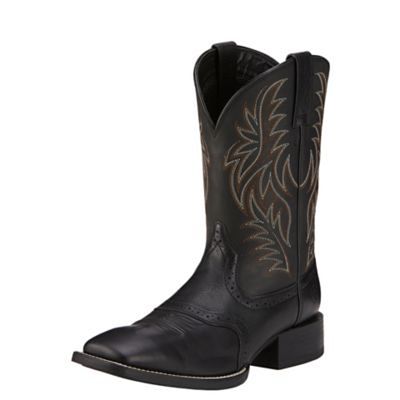
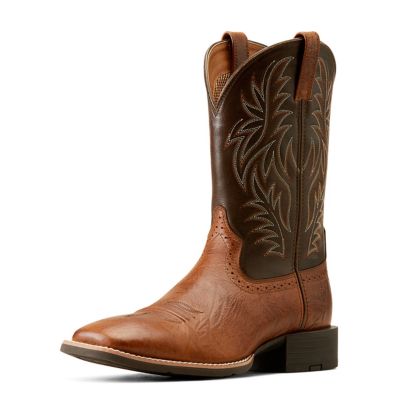
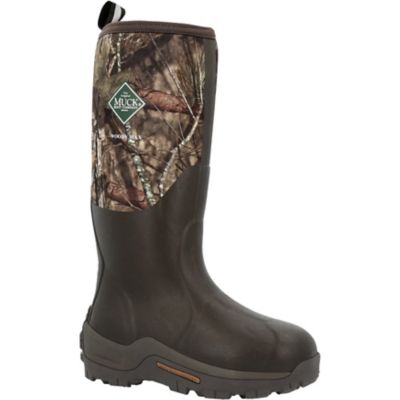
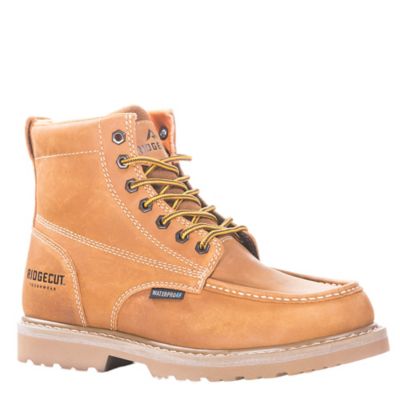
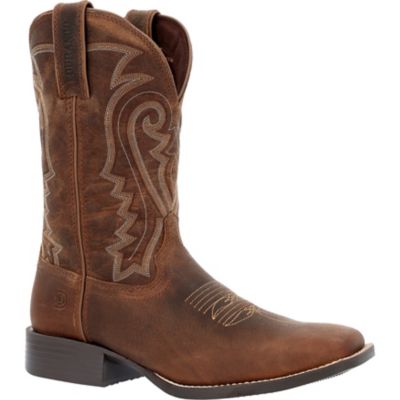
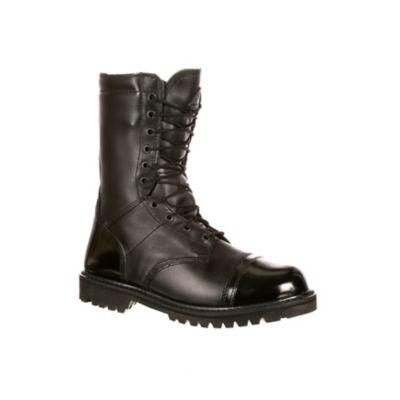
Rugged men's boots bring together hard-wearing uppers, supportive construction and outsoles built for demanding ground. They belong beside the barn door, under a workbench and on the feet of men whose days take them from gravel drives to concrete shop floors. The right pair depends on the job: hauling feed puts different demands on footwear than standing at a bench, climbing equipment steps or heading into town after chores. Leather work boots, lace-up utility boots and pull-on ranch styles each have a place in that mix. Full-grain leather retains the hide's outer grain and offers substantial resistance to everyday scuffs and abrasion, while nubuck has a buffed surface that calls for different cleaning and conditioning products. Leather-and-textile combinations can reduce weight and add flexibility, though exposed fabric panels may need more attention around brush and rough edges. Reinforced toe areas and heel counters help protect high-contact spots from wear, and neatly finished seams matter wherever the upper bends with each step. Construction beneath the foot deserves just as much attention. Goodyear welt construction joins the upper and sole through a stitched strip, and many boots built this way can be resoled by a qualified repair shop. Cement construction bonds the outsole to the upper and often creates a lighter, more flexible feel, but it generally offers fewer repair options. Neither method alone determines how long a boot will last; materials, workmanship, workload and care all play a part. Lace-up boots allow adjustment across the instep and around the ankle, making them practical for men who want a snug, controlled fit. Pull-on boots skip the laces and make it easier to get out the door for feeding time or a quick trip to the shed. Shaft height, heel shape and toe room all affect how these styles feel in motion, so a rugged appearance is only the starting point.
Underfoot details often make the biggest difference over a full day's work. Deep lug outsoles can bite into loose dirt and gravel, while shallower tread patterns may carry less packed soil onto a shop floor. Broad wedge soles spread contact across a larger area and can feel comfortable during long stretches on firm, level surfaces. A defined heel offers a different footing profile, but ladder work and equipment access call for footwear that meets the requirements of the task rather than a choice based on looks alone. Slip-resistant does not mean slip-proof, and traction changes with the surface, contaminants and tread wear. Safety features deserve the same careful distinction. Soft-toe boots suit many chores and everyday settings, but they do not provide the tested impact and compression protection of safety-toe footwear. Steel and composite toe caps can both meet applicable safety standards; the boot's marked rating, not the toe material alone, establishes its protection level. Composite toes are nonmetallic and may reduce weight compared with some steel designs, although the weight of the whole boot depends on its construction. Electrical hazard protection, puncture resistance and metatarsal protection are separate features, not automatic benefits of every work boot. Workplace requirements should settle which ratings belong on the label. Beyond protection, fit determines whether a pair earns a regular spot by the door. Toes need space to spread without striking the front, and the widest part of the foot should sit comfortably within the boot's widest section. The instep should feel secure rather than squeezed. A little heel movement may occur in a new pull-on leather boot, but substantial slipping or rubbing points to a poor match. Trying boots with the socks normally worn for work gives a more useful picture of the fit. Footbeds, work socks and orthotics all take up room, and insulation adds another consideration. Men comparing lined styles can also explore
men's insulated leather boots, keeping interior space and lining thickness in mind. Leather may soften through wear, but break-in should not mean enduring pinched toes or persistent pressure.
Keeping rugged leather boots in working shape comes down to regular attention rather than letting grime build up between long days. Dirt lodged along seams and around the welt can act like grit against thread and leather, so a soft brush after chores makes a worthwhile habit. Manure, oils and other residues should come off promptly with a cleaning method suited to the upper material. Smooth leather often benefits from a compatible conditioner applied as directed, while suede and nubuck generally need their own brushes and care formulas. Overconditioning can soften leather more than intended, and some treatments darken the finish, so testing a small, less visible area helps prevent surprises. If boots become damp during a washdown or other work, allowing them to dry with good airflow, away from direct heat, helps protect the leather and adhesives. Removable footbeds can come out for separate airing, and alternating pairs gives the interiors more time to dry between wears. Laces, eyelets and sole edges are worth a quick look during cleaning. Frayed laces are easy to replace before they snap halfway through a chore, while loose stitching or sole separation deserves attention before a small repair becomes a bigger problem. Rounded tread, uneven heel wear and a footbed that stays flattened can signal that the boots no longer feel or perform as they once did. For farmers, ranch hands, tradesmen and property owners, service life depends on matching the boot to the work as much as tending to the leather afterward. A substantial outsole may earn its keep across a gravel lot, while a lighter build can feel more manageable for errands and routine upkeep. Rugged men's boots also make a thoughtful gift for someone who spends plenty of time on his feet, provided the size, preferred style and any job-required protection are known. From straight-leg work jeans to everyday denim, these boots fit naturally into a practical wardrobe, with useful features that matter long after the first scuff.