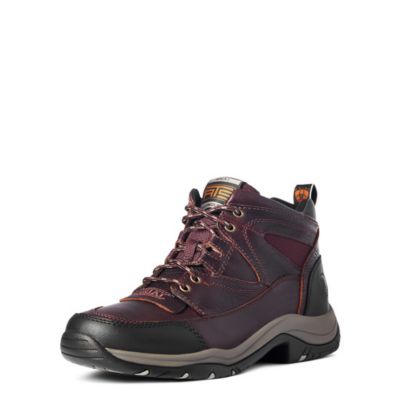
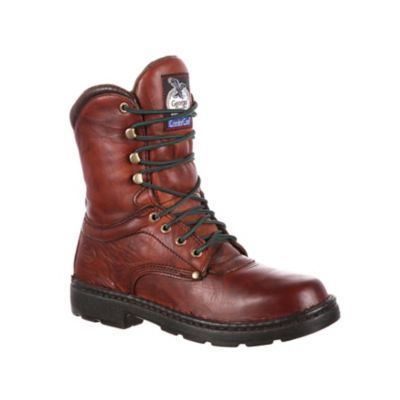
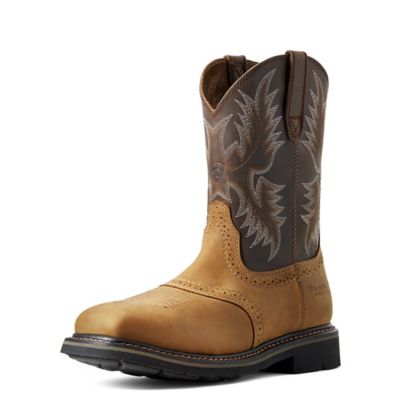
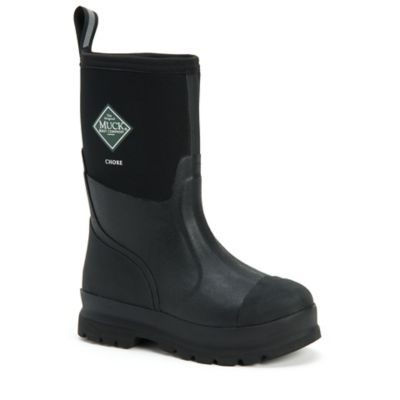
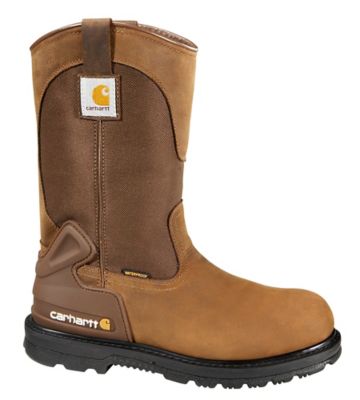
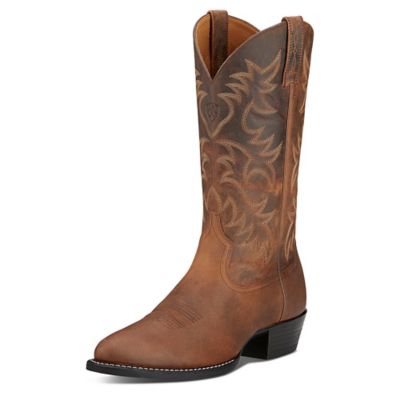
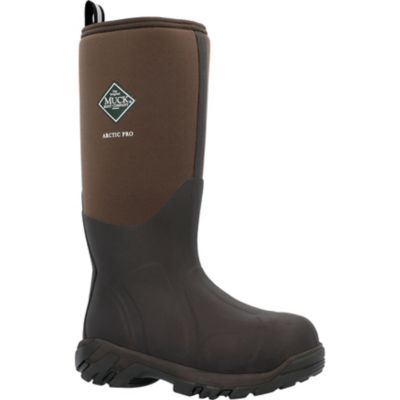
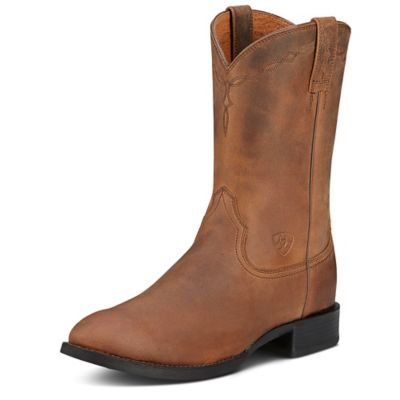
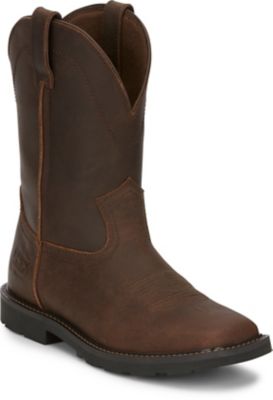
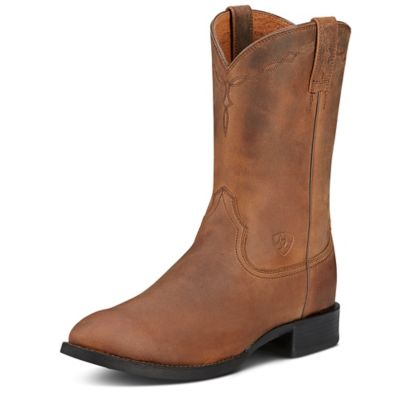
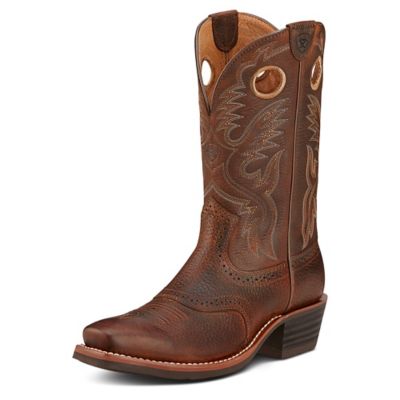
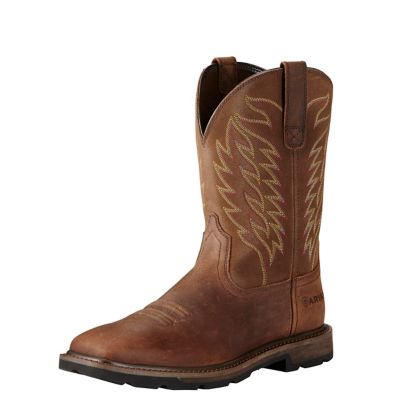
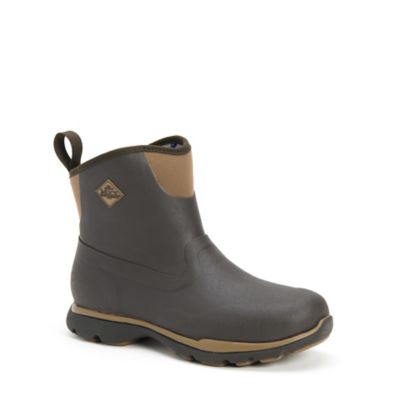
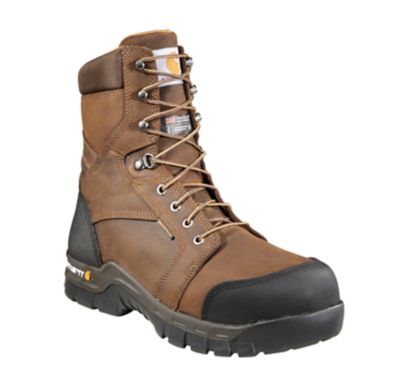
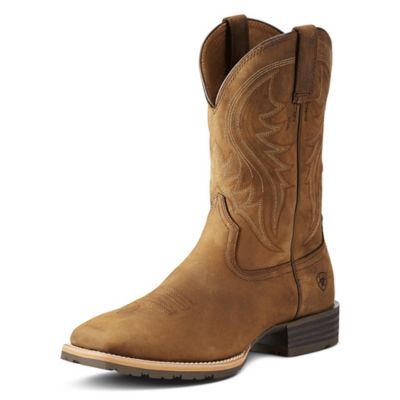
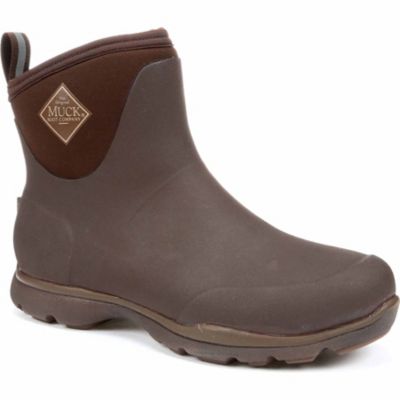
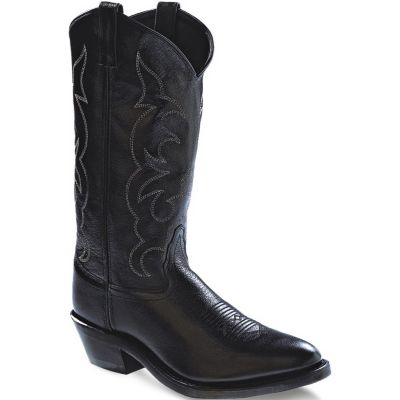
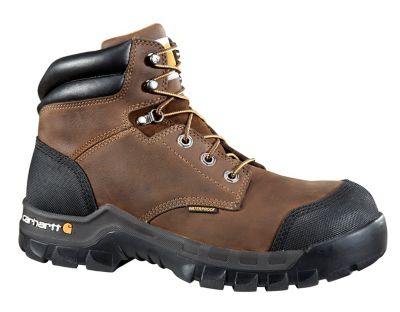
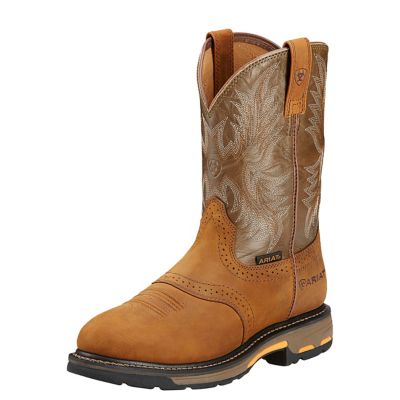
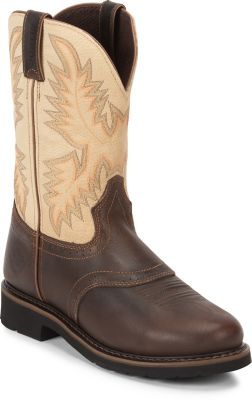
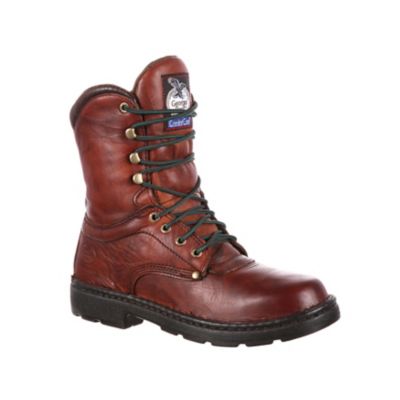
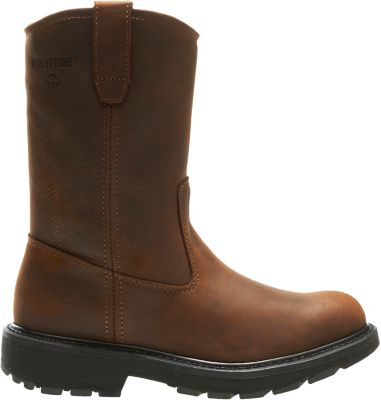
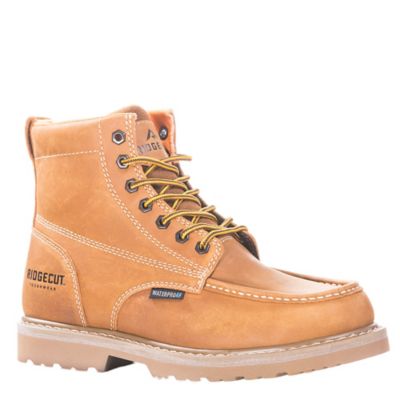
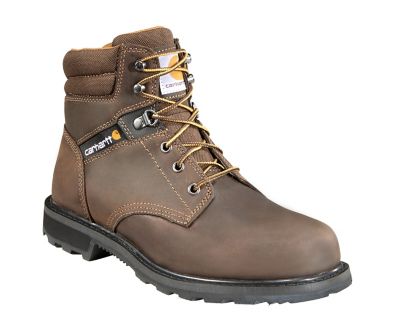
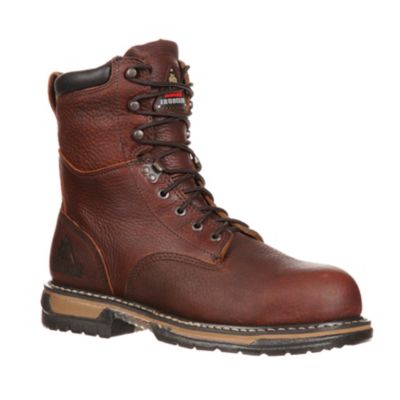
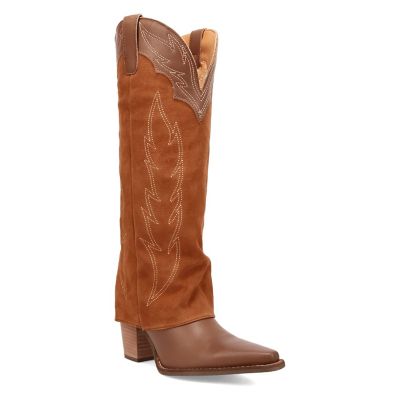
Men’s brown boots cover a wide range of everyday, western, work and dress styles, with shades running from light tan and warm chestnut to deep chocolate. That variety makes brown a natural fit for denim, canvas work pants and chinos, whether the day calls for checking fence lines, spending hours at a shop bench or heading into town for supper. Lace-up boots offer an adjustable fit across the top of the foot and around the ankle, while pull-on western boots keep the profile simple with a taller shaft and no laces to tie. Chelsea boots have elastic side panels and a lower profile that pairs easily with straight-leg jeans or trousers. Chukka boots generally sit around the ankle, with fewer eyelets and a lighter-looking shape suited to everyday wear. Materials make a noticeable difference in both appearance and feel. Full-grain leather keeps the hide’s natural surface and develops creases and character with wear. Nubuck has a lightly buffed surface, while suede has a more pronounced nap and a softer, less polished look. Oiled leather often has a more relaxed appearance, sometimes showing lighter marks where the leather bends. Synthetic uppers and fabric panels can change the weight, flexibility and care needs of a boot, so the material description matters as much as the color. Smooth, darker leather tends to look more dressed up, while lighter brown shades, visible stitching and textured surfaces lean toward casual wear. A plain toe keeps things understated; a moc toe adds a stitched outline across the front; and western stitching gives a taller boot a distinctly country look. Toe shape also changes the silhouette, with round, square and tapered options offering different proportions. None of those shapes guarantees extra room inside, though, since the boot’s internal shape and size determine the actual fit. For a pulled-together outfit without much fuss, brown boots work well alongside blue denim, olive pants, gray layers and a brown belt in a similar shade.
The right construction depends on what a pair needs to handle. Boots worn for feeding livestock and walking gravel paths face different demands than a pair worn mainly to an office or a family gathering. For shoppers narrowing the search to job-focused footwear, the
Mens Brown Work Boots collection keeps the emphasis on work styles. Outsole design is one of the main differences to consider. Deep lugs can provide bite on loose ground, though they may also carry dirt into a truck cab or across a finished floor. Shallower tread is often easier to brush clean. Rubber outsoles, wedge soles and defined heels each have a different feel underfoot, and tread pattern alone does not establish slip resistance. Any traction claim should be checked against the maker’s information and the surfaces involved. Safety-toe boots may have steel, alloy or composite protection, but the stated safety rating—not the material name by itself—determines whether a pair meets a workplace requirement. A western profile or substantial-looking toe does not automatically mean a boot offers protective footwear features. Underfoot construction matters during long stretches on concrete, too. Cushioned footbeds, supportive midsoles and shanks can affect how a boot feels while standing, walking or climbing steps. Removable footbeds may leave room for a compatible orthotic, provided the replacement does not crowd the foot. Welted construction may allow resoling, depending on the boot’s design and condition, while cemented construction bonds the sole to the upper and can offer a flexible feel. Fit deserves just as much attention as construction. Toes need room to move without sliding forward, and the widest part of the foot should sit comfortably within the boot rather than pressing against the sides. Laces can fine-tune the hold, but they cannot correct a toe box that is too narrow. Pull-on boots should feel secure across the instep; a little initial heel movement can be normal, but excessive lifting or rubbing is not a fit to overlook. Trying boots with the socks intended for the job gives a better sense of the space inside. Firm new leather may soften with wear, but painful pressure is not something to count on breaking in.
Men’s brown leather boots tend to show their history, from a crease across the forefoot to a scuff picked up beside the feed room door. Keeping that character from turning into early wear comes down to care that suits the material. Loose dirt is easier to remove with a soft brush before it collects around seams and welt edges. Smooth leather generally benefits from a compatible cleaner and occasional conditioning, following the maker’s directions rather than applying more than the surface can absorb. Too much conditioner can leave leather overly soft or greasy, and some treatments deepen the brown shade. Testing a care product on a small, less visible area helps avoid an unexpected change across the whole boot. Suede and nubuck need tools and treatments intended for their textured surfaces; ordinary polish can flatten the nap or alter the finish. A soft brush can also lift dust from western stitching and the folds around a pull-on shaft. Soles, heels, laces and seams deserve a look now and then, especially on boots that spend plenty of time around abrasive ground or workshop floors. Uneven heel wear, loose stitching or a separating sole can change the way a boot feels and may call for repair. Letting boots air out between wears, loosening laces before taking them off and storing them away from direct heat all help protect their shape and materials. A boot tree or shaft support can help keep an infrequently worn pair from slumping in the closet. For everyday outfits, the most useful brown is often the one that fits naturally with the pants and belts already getting regular wear. For a gift, the recipient’s usual boot size, preferred width and favorite style offer a stronger starting point than color alone, though sizing can vary between designs. Someone who lives in lace-up work boots may value familiar support and adjustability, while someone who favors western boots may care most about shaft height, toe shape and heel profile. A pair chosen around those everyday habits has a place well beyond a single outfit or occasion.