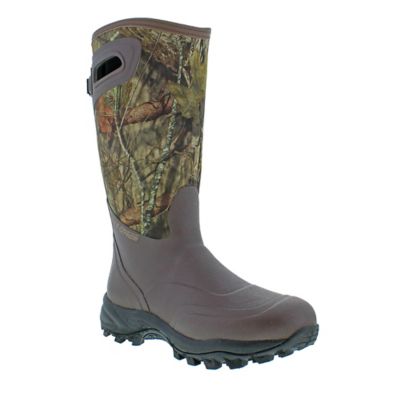
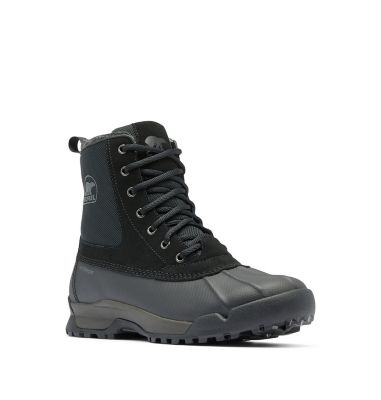
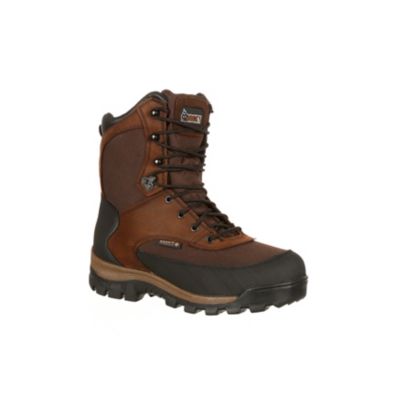
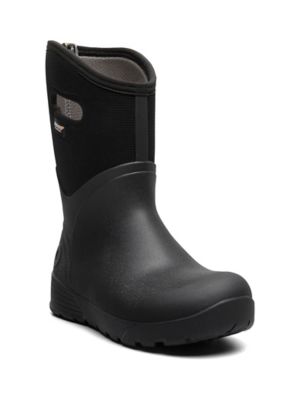
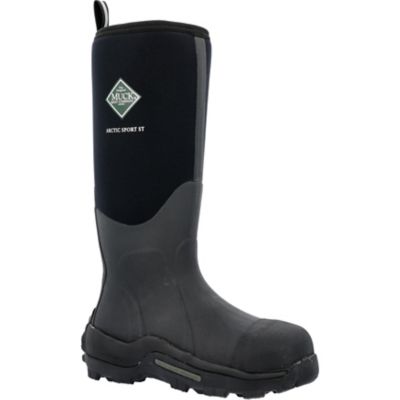
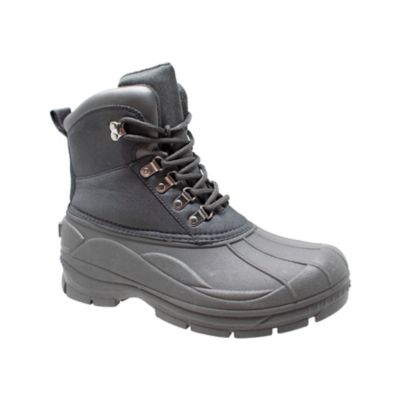
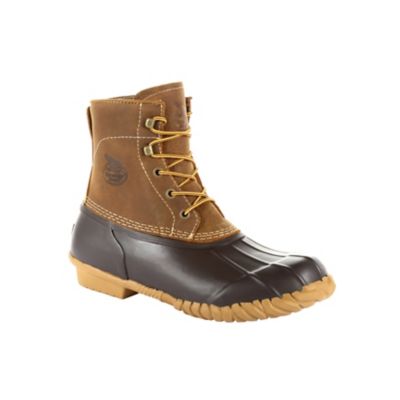
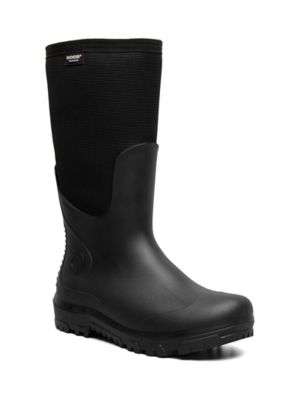
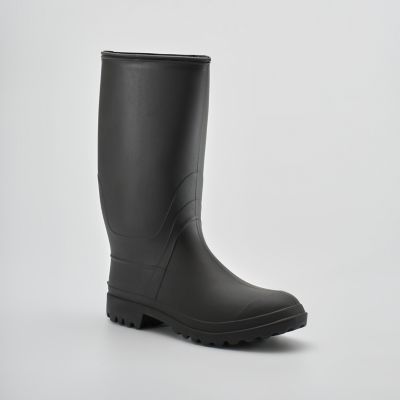
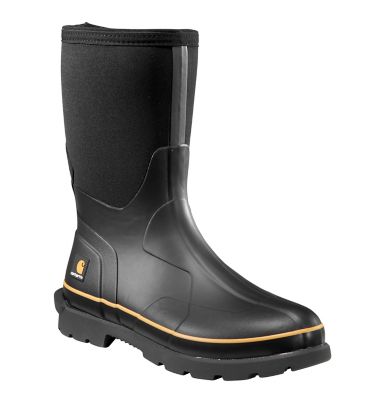
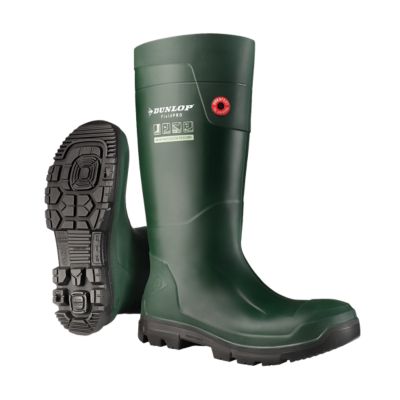
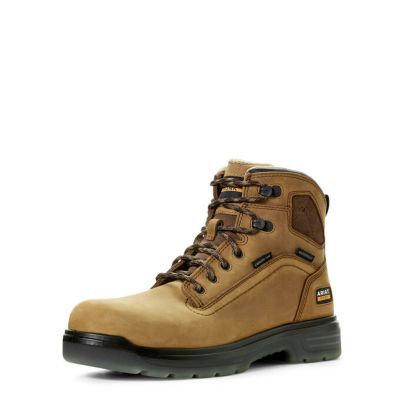
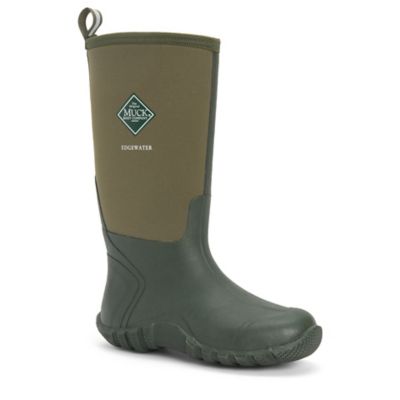
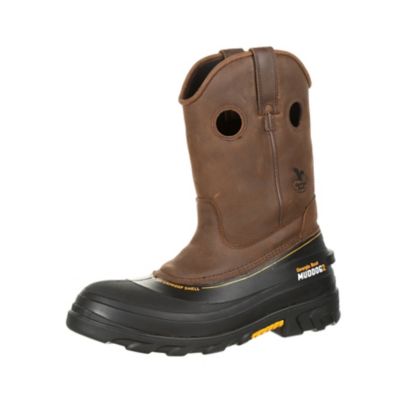
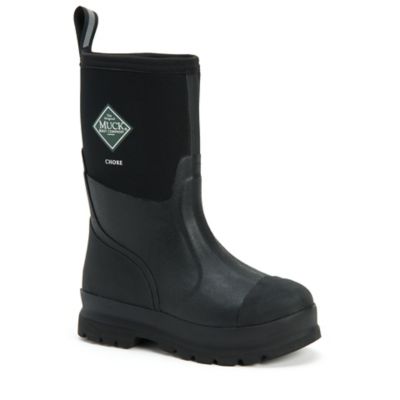
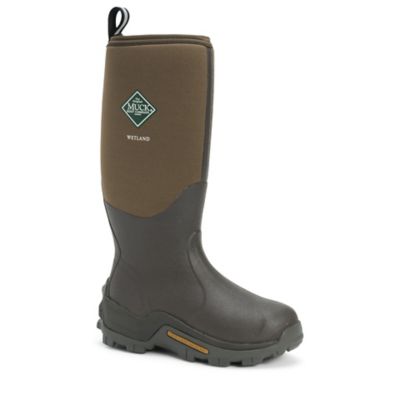
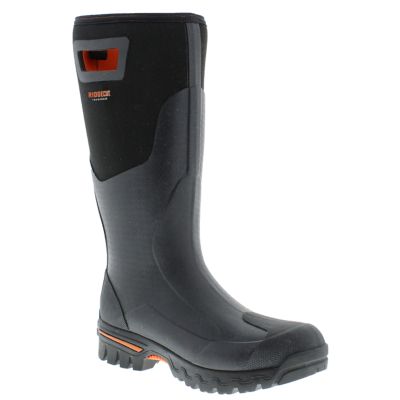
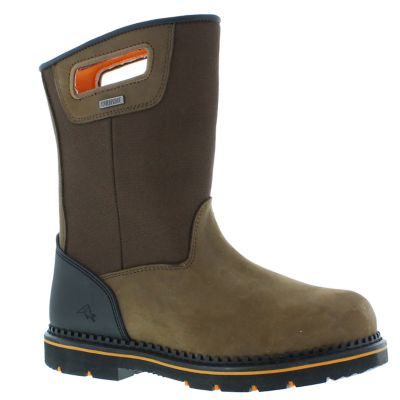
Men's waterproof boots help keep feet dry when work or everyday errands lead through puddles, wet grass and muddy ground. They suit the kind of day that starts with feeding livestock, moves on to checking fence and ends with a stop in town before heading home. Waterproofing can come from a molded rubber shell, a waterproof membrane inside the boot or a combination of treated materials and sealed construction. The distinction matters because a leather upper alone does not make a boot waterproof, and water-resistant footwear is not necessarily built for the same exposure as a waterproof pair. Leather offers a familiar work-boot feel and can soften with wear, while rubber provides a washable barrier for chores around muddy pens, wet barn entrances and garden paths. Some designs pair leather with fabric panels to balance support, flexibility and weight. Others combine rubber lower sections with flexible uppers for easy movement while walking or crouching. Shaft height also changes how a boot fits into the workday. An ankle-height pair leaves more of the lower leg free, while a taller shaft adds coverage against splashes and deeper mud. On lace-up styles, a gusseted tongue can help block water and debris along the opening, though protection depends on how high that connection extends. Water can still enter over any boot's opening, so shaft height and the depth of standing water belong in the same conversation. Outsoles deserve just as much attention as uppers. Open, widely spaced lugs can release mud more readily than tightly packed tread, while lower-profile patterns may feel less cumbersome on firm surfaces. Neither waterproof construction nor an aggressive tread guarantees grip everywhere. Wet concrete, loose gravel, slick boards and ice each present different footing challenges. The right match depends on where the day takes a person, whether that means walking pasture edges, washing down equipment or moving between a shop floor and a muddy yard. These differences give waterproof footwear a practical role beyond simply keeping rain off socks: the whole boot needs to suit the ground, the task and the time spent on foot.
Fit and construction shape how men's waterproof work boots feel after several hours, not just during the first few steps. A comfortable fit leaves room for toes to move without allowing the foot to slide forward on a slope. The heel should feel supported rather than pinched, and the instep should not carry a hard band of pressure from laces or a tight pull-on opening. Sock thickness matters, especially with insulated designs, because crowding the foot can create pressure points and leave less room for warm air around the toes. Too much extra space can bring its own trouble, including rubbing and an unsteady feel on uneven ground. Lace-up boots allow adjustment across the foot and ankle, which can help when feet swell over a long shift. Pull-on boots trade that adjustment for a simpler on-and-off routine, a welcome feature at a back door or mudroom bench.
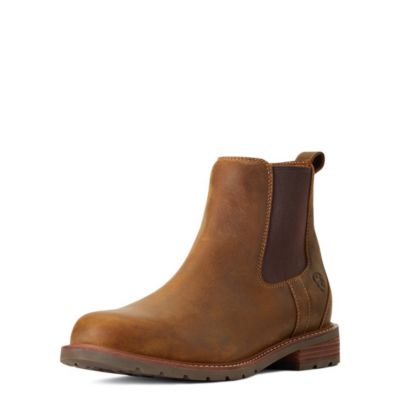
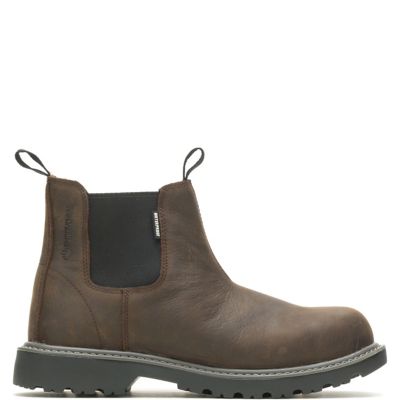
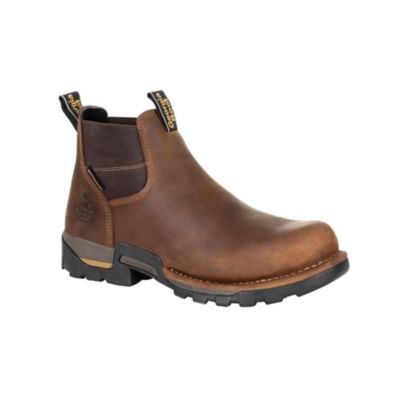
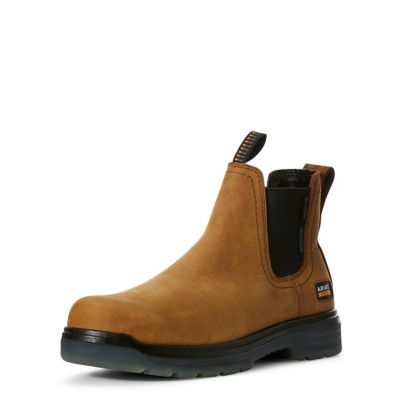
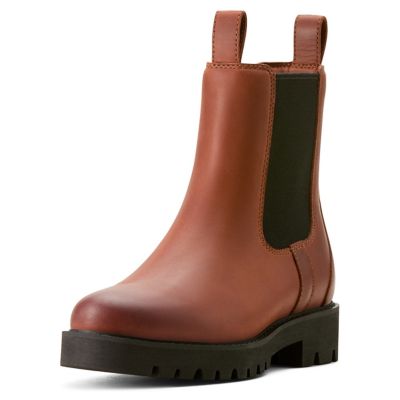
Men's Waterproof Chelsea Boots offer an ankle-height pull-on shape with elastic side panels, making them a practical style for everyday wear when their construction and outsole suit the task. Whatever the style, waterproof protection depends on the complete design, including seams, panel connections and the area around the opening. Underfoot, cushioning can soften repeated steps across hard floors, while a supportive midsole and shank can help the boot feel steadier across uneven terrain. A removable footbed makes drying and replacement easier, though any replacement needs to leave enough space inside the boot. Insulation is another separate consideration: waterproof does not automatically mean warm, and a heavily insulated pair may feel excessive during active work in mild conditions. For jobsites, safety-toe protection, electrical-hazard ratings and slip-resistance claims need their own attention. A waterproof label does not establish any of those features. Workplace requirements should determine the necessary ratings, while the shape and weight of the boot still need to fit the person wearing it.
Long-term wear depends on both the boot's construction and what happens after the chores are done. Reinforced toe areas, substantial heel sections and well-protected seams can help manage repeated contact with gravel, gates, shovel edges and barn floors. Even so, no single material handles every setting equally well. Rubber can be convenient around mud and wash water, but sharp scrap and snagging wire can damage it. Leather needs care to avoid drying out, and persistent dirt along flex points can contribute to surface wear. Caked-on mud is easier to clear before it settles into tread grooves and seams; a soft brush and cleaning method suited to the upper help protect the materials underneath. Leather treatments should match the manufacturer's directions, since the wrong conditioner or waterproofing treatment may affect the finish or membrane performance. Rubber footwear also benefits from cleaning products intended for that material rather than harsh solvents. After a wet day, air drying away from direct heaters or an open fire helps prevent damage from excessive heat. Opening the boot fully and removing footbeds, when possible, gives moisture inside a better chance to escape. That moisture does not always mean outside water has gotten through: perspiration can leave socks damp even when the waterproof barrier is intact. Breathable linings and suitable socks can help manage that, but airflow remains more limited inside waterproof footwear than in open or unlined styles. Farmers, ranch hands, grounds crews, tradespeople and homeowners may all reach for these boots, yet their needs can look quite different. Hours on concrete call for different underfoot comfort than a short walk to a muddy chicken coop. For a gift, knowing the recipient's usual boot size, preferred closure and daily tasks makes the choice more personal and practical. Men's waterproof boots earn their place by matching those everyday details, with coverage, fit and construction that make sense from the first gate latch to the last trip across the yard.