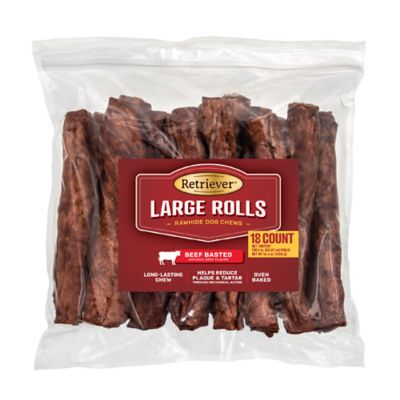
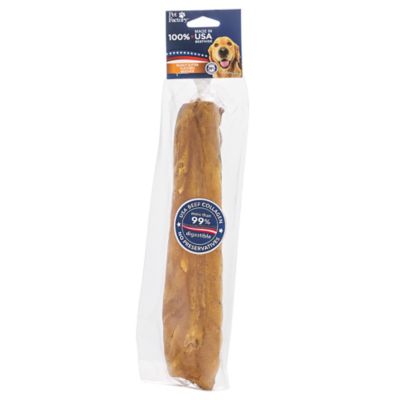
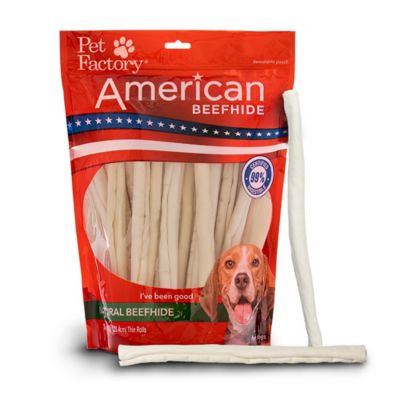
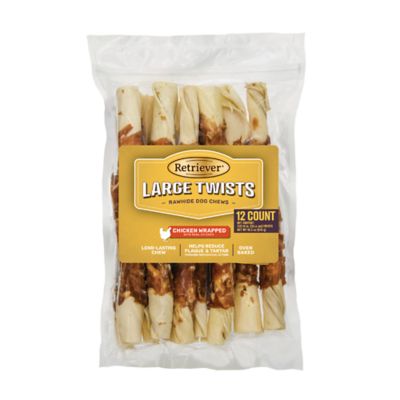
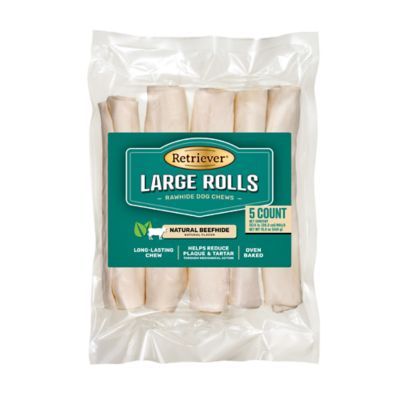
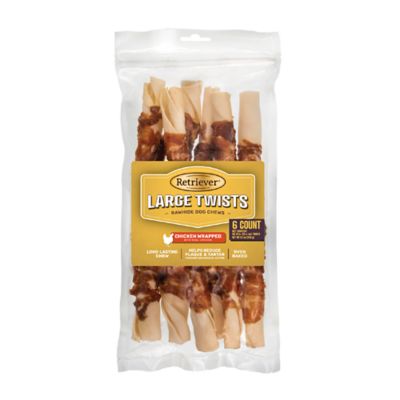
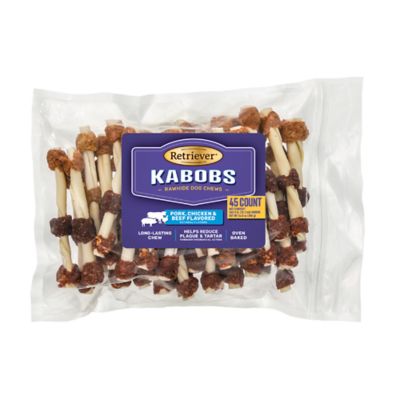
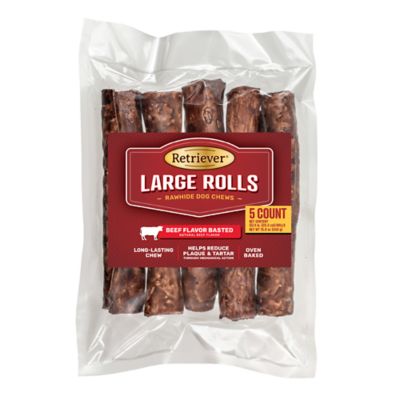
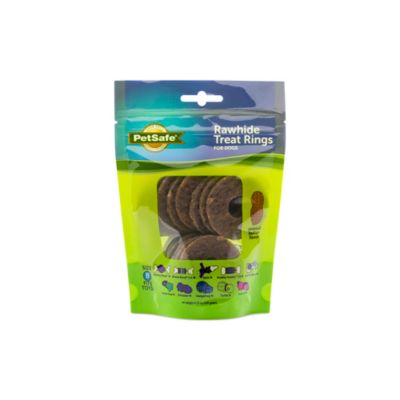
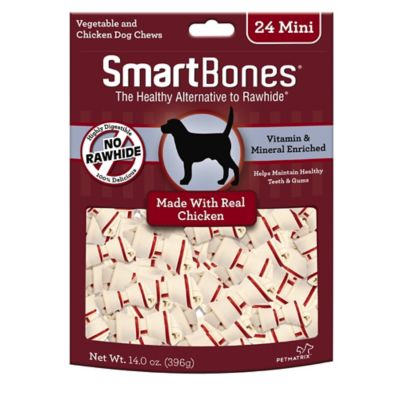
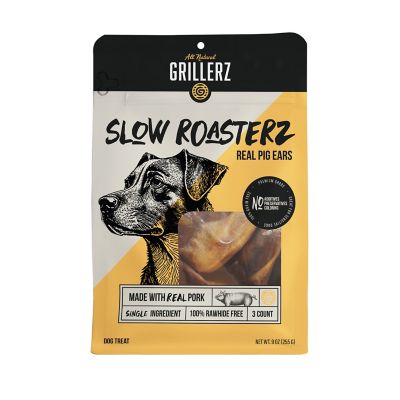
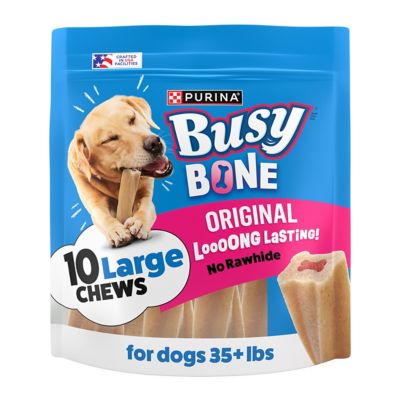
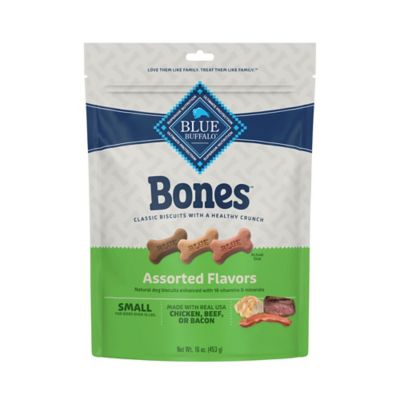
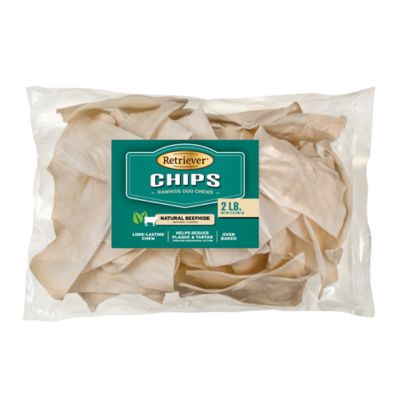
Rolled rawhide for dogs can give a dog a satisfying chew when the house is quiet, the chores are done and they need something to settle into. These firm, rolled treats are made for chewing rather than gulping, and many dogs enjoy the texture and natural flavor as they work at the ends and outer layers. A rawhide roll may also help rub away some surface buildup from the teeth during chewing, though it should not take the place of regular veterinary dental care, brushing or approved dental products. Dogs that like to chew can enjoy a roll in the yard on a crisp afternoon, in a kennel while traveling, or on the rug during the cooler months when outdoor time is shorter. They can be a handy addition to a treat bin for households with working dogs, active family pets and young dogs that need an appropriate outlet for their chewing habits. Rolled rawhide can also make a practical gift for a dog owner, especially when paired with other everyday pet supplies or given to a friend welcoming a new dog. Before choosing, consider the dog’s size, age, chewing style and health needs. The roll should be larger than the dog’s mouth and substantial enough that it cannot be swallowed whole. A small roll may suit a small dog, while a large, strong-jawed dog generally needs a bigger, thicker option. Size recommendations on the package are a useful starting point, but every dog is different, and a dog that tears through chews quickly may need closer supervision and a different type of treat.
Safety matters with any long-lasting chew. Always stay nearby and watch your dog while they enjoy rolled rawhide, particularly the first time you offer it. Take the roll away if it becomes small enough to fit fully in the dog’s mouth, or if it develops loose, soft or ragged pieces that can be pulled off and swallowed. Some dogs chew patiently, while others bite off large chunks or try to finish a treat in a hurry. Dogs that are aggressive chewers, tend to gulp treats, have a history of swallowing nonfood items or have trouble with their teeth may not be good candidates for rawhide. Keep chews away from children and other pets when a dog is using one, since a normally easygoing dog may guard a high-value treat. Offer the roll on a clean, washable surface and follow the package directions for storage, serving size and disposal. Rawhide is a treat, not a complete meal, so account for it along with the dog’s regular food and other snacks. If your dog has food sensitivities, digestive concerns, dental problems or a medical condition, check with a veterinarian before adding rawhide to the routine. A veterinarian can also help match the chew to your dog’s age, jaw strength and eating habits. Stop use and contact a veterinary professional if your dog chokes, vomits, seems painful, has trouble swallowing or shows other signs of illness after chewing. These simple precautions help make chew time more relaxed for both the dog and the person holding the other end of the leash.
When shopping for rolled rawhide for dogs, look at the number of rolls in the package, the individual size, the ingredient information and any guidance for the dog’s weight or chewing level. A multi-count package can be useful for a busy home with more than one dog, while a smaller package may be a sensible way to see how a new dog responds before stocking the treat cupboard. Choose carefully if pets have different sizes or chewing styles; each dog should receive a properly sized roll rather than sharing one that may be too small for a larger companion. It is also wise to keep chews in a cool, dry place, sealed away from moisture, feed bins and curious noses until serving time. During rainy days, cold evenings and the stretch of the year when outdoor play is limited, a supervised chew can add a little enrichment to the daily routine, especially after a walk or training session. Some owners keep one in a travel bag for long drives, visits to family or quiet time at a farm show, but a dog should never be left unattended with a rawhide in a vehicle, crate or room. For dogs that cannot have rawhide or that need a different texture, look for rawhide-free dental chews, rubber toys made for chewing or other veterinarian-approved options, always choosing a size that fits the dog. Explore related
Dog Treat Rolls while comparing choices, and use your dog’s actual chewing habits—not just breed or weight—as the best guide. With the right size, steady supervision and prompt removal of worn pieces, a rolled rawhide chew can become a familiar part of a dog’s treat routine without turning chew time into a free-for-all.