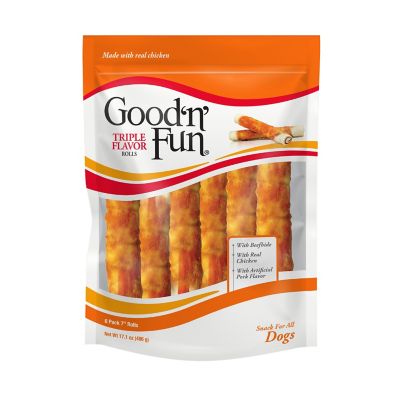
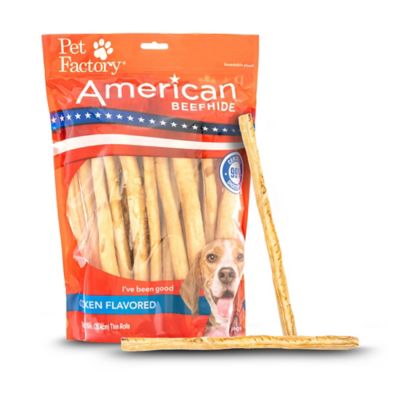
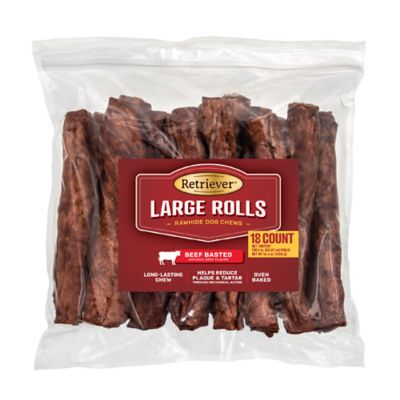
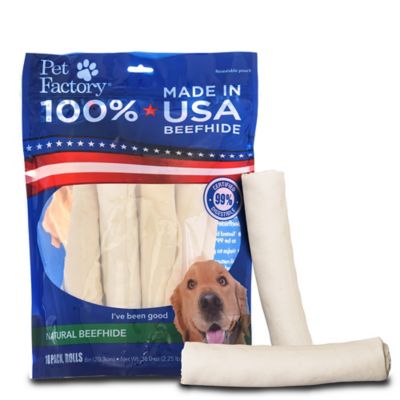
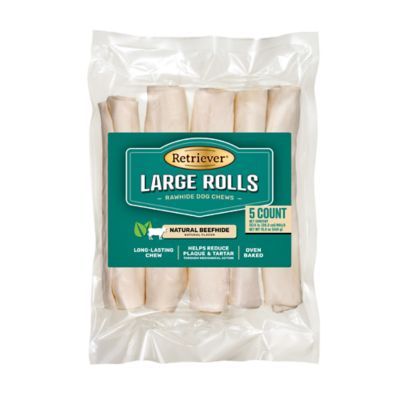
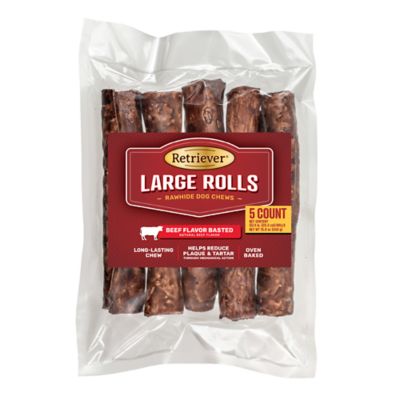
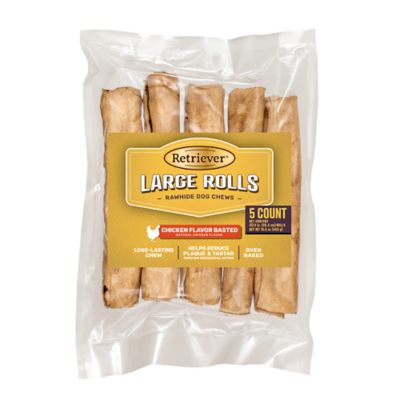
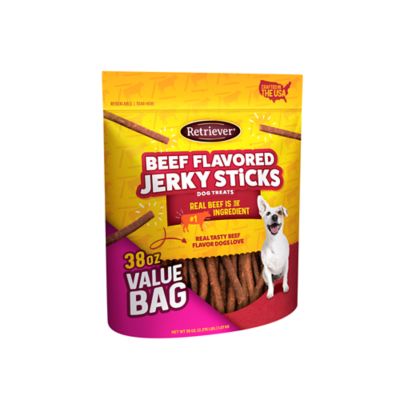
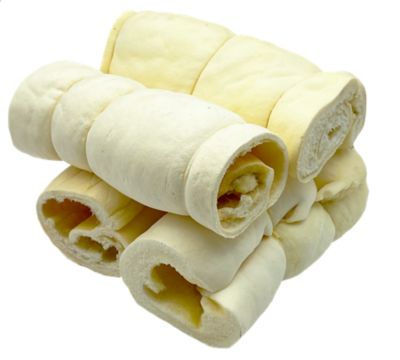
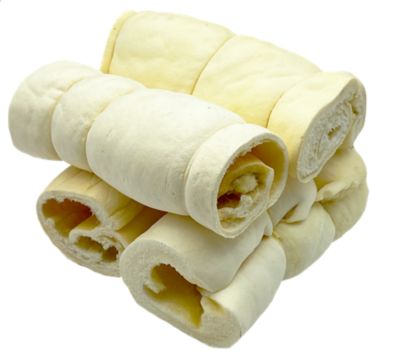
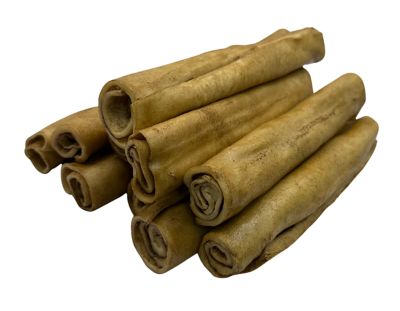
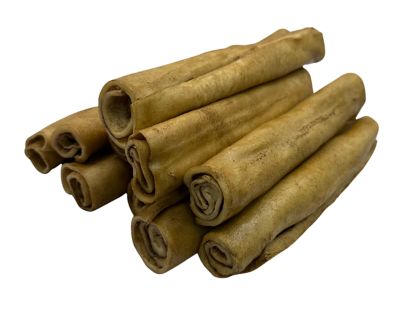
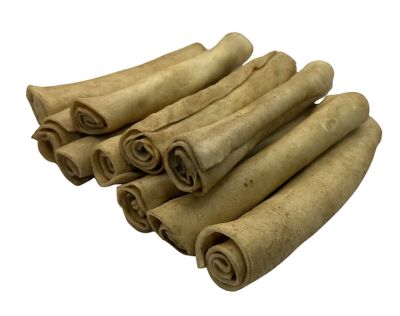
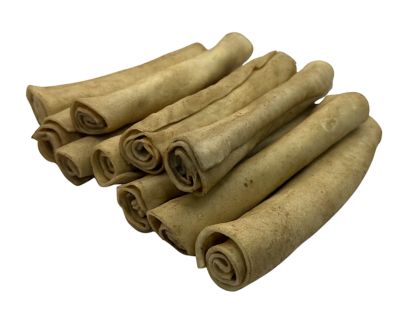
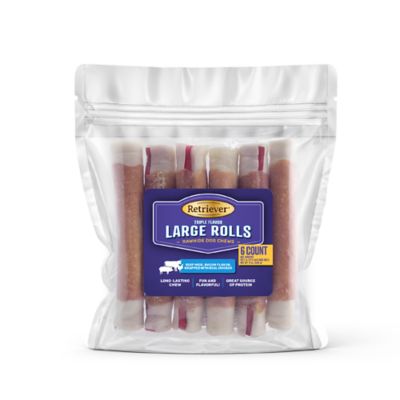
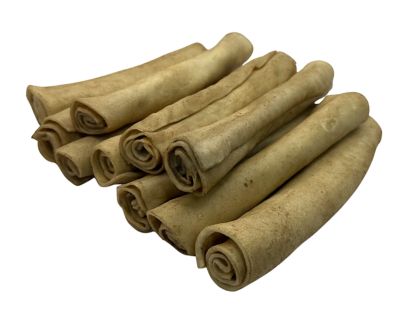
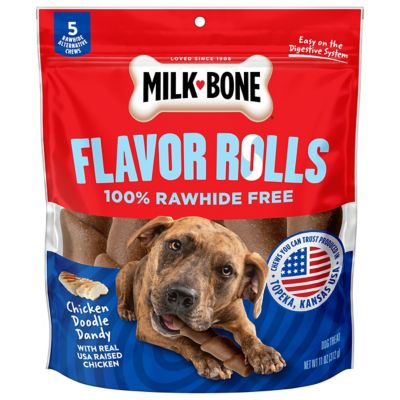
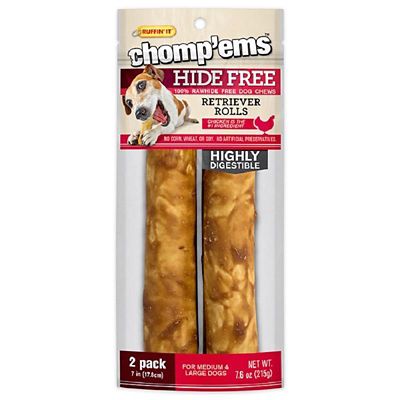
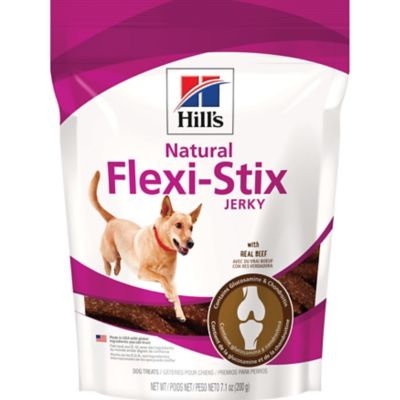
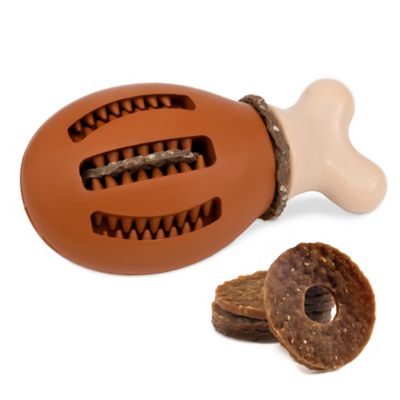
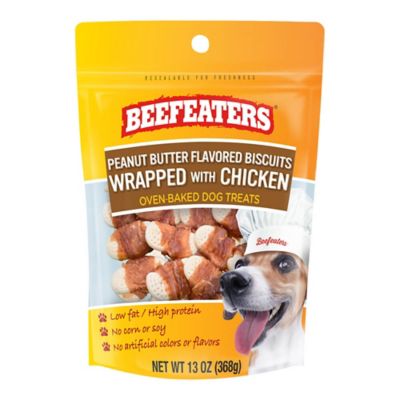
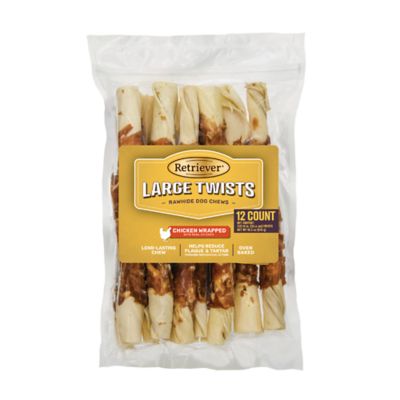
Dog treat rolls give dog owners a handy way to add a little variety to everyday routines, whether that means rewarding a good sit, keeping a young pup busy, or giving an older dog something tasty to look forward to. This category generally includes two very different styles: soft, sliceable meat rolls and firm, long-lasting chew rolls. Soft rolls have a tender texture that makes them easy to cut into small cubes, thin disks, or bite-size pieces. They work well for obedience practice, agility sessions, travel, and those muddy-yard moments when a dog comes back inside and needs a little encouragement to settle down. A soft roll can also be sliced into larger portions for a special snack, crumbled over a regular meal as a topper, or used to help disguise medication when your veterinarian has approved that method. Their strong aroma is often useful with picky eaters or dogs that lose interest in ordinary biscuits, and a pocketful of tiny pieces can turn a short walk around the property into a productive training session. Firm rolls are made for a different kind of enjoyment. They are intended to satisfy a dog’s natural urge to chew and provide an engaging pastime during quiet time in the house, on the porch, or after a long day outdoors. Some are made with beefhide, while others are rawhide-free and use alternative chew materials. Rolled shapes give dogs something to grip and work at, and textured surfaces may help rub against teeth as a dog chews, though no treat can replace regular brushing, veterinary care, or a complete dental routine. For dogs that are always looking for something to carry, gnaw, or settle down with, a chew roll can be a welcome addition alongside other options found in
Dog Treat Toys.
Choosing the right dog treat roll starts with your dog’s size, age, chewing habits, and the job you want the treat to do. For training, look for a soft roll that can be divided into plenty of small pieces without crumbling all over your pockets or the kitchen floor. Tiny rewards are usually enough for repeated practice, especially when your dog is learning a new command, walking politely on a leash, or coming when called across a wide yard. A sliceable roll can also be useful for multi-dog households because you can make portions that suit each dog instead of handing every pet the same-size snack. When choosing a roll for chewing, select a size that is appropriate for your dog and wider than the dog’s mouth, which helps reduce the chance of swallowing it whole. Tough chewers may need a sturdier option, while puppies, senior dogs, and dogs with sensitive teeth may do better with a softer texture. Read the package for feeding directions, ingredients, calorie information, and any age or weight guidance. Treats should make up only a small part of a dog’s overall diet, and portions may need to be reduced if your dog is watching its weight. It is also worth checking for ingredients your pet should avoid, including proteins or grains that have caused trouble in the past. Dog treat rolls can make thoughtful gifts for a new dog owner, a neighbor who helps with chores, or a friend welcoming home a rescue dog. They are practical for a training kit, a boarding bag, or a care package paired with a leash, food scoop, or washable bowl. During warmer weather and into the cooler months, they are easy to pack for camping trips, farm visits, road travel, and long afternoons outside, provided soft rolls are kept at a safe temperature and firm chews are protected from dirt, moisture, and curious livestock.
Safe use and sensible storage help keep treat time enjoyable. Always supervise your dog with a firm chew, especially the first time, and watch for gulping, aggressive chewing, cracked pieces, or small fragments that could become a choking hazard. Take the roll away when it becomes small enough to swallow, and replace it if it develops sharp edges or breaks into pieces that do not suit your dog’s chewing style. Dogs have different jaw strength and eating habits, so a chew that lasts one dog through several quiet evenings may disappear quickly for another. Keep children from taking chews away from a dog, and give pets a calm spot where they will not feel crowded or pressured while eating. Soft meat rolls generally need more careful handling after opening. Wrap them tightly or place them in an airtight container, refrigerate them according to the package directions, and use them within the recommended window; many opened soft rolls are best used within about two weeks unless portions are frozen for later. Let frozen pieces thaw safely before serving, and discard any treat with an off smell, unusual texture, or signs of spoilage. Firm rolls should be stored in a cool, dry place and kept sealed between uses. Treats are best offered as part of a balanced routine, not left out all day, and fresh water should always be available. With the right texture and size, dog treat rolls can fit neatly into the everyday rhythm of country life—from rewarding a dog for staying clear of the feed room to keeping a companion content while boots are being cleaned by the back door.