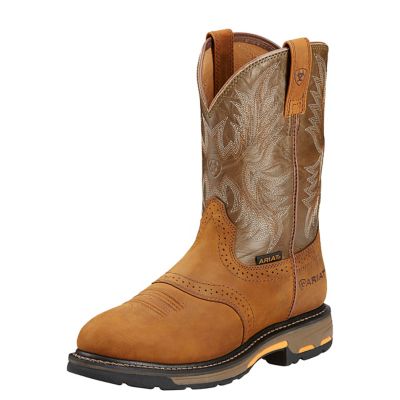
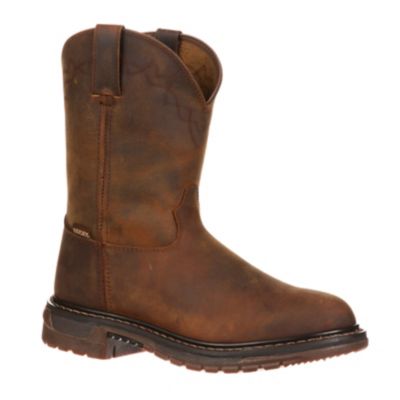
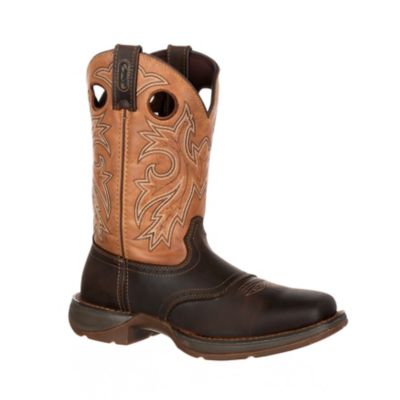
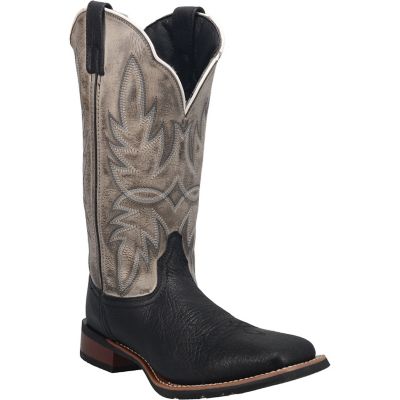
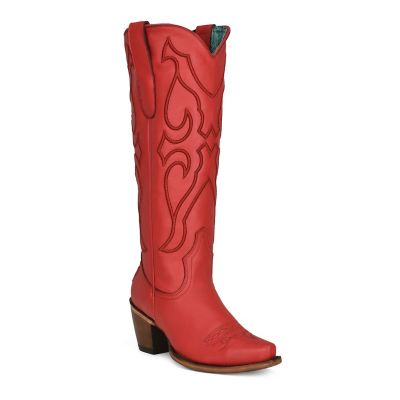
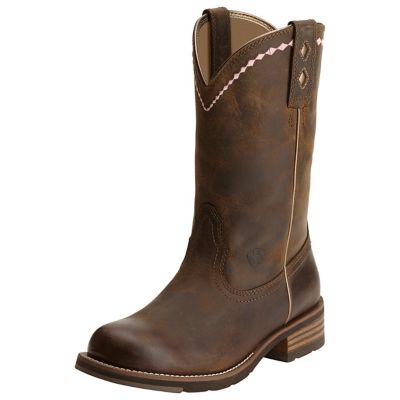
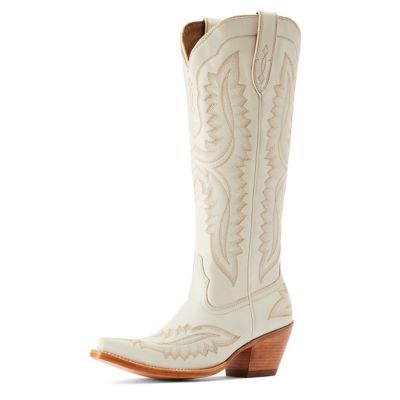
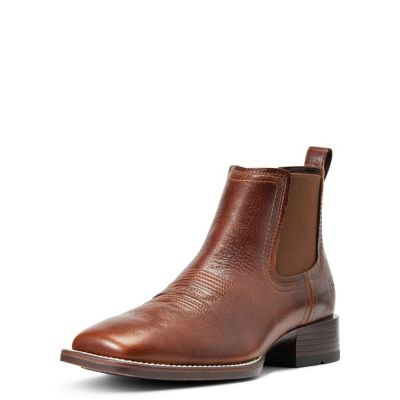
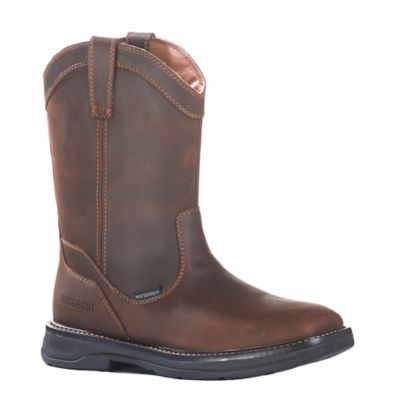
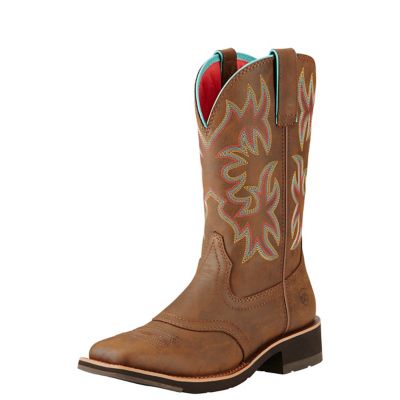
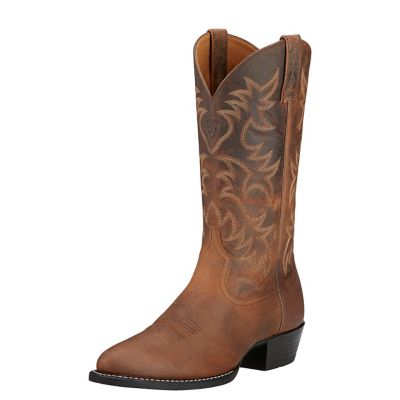
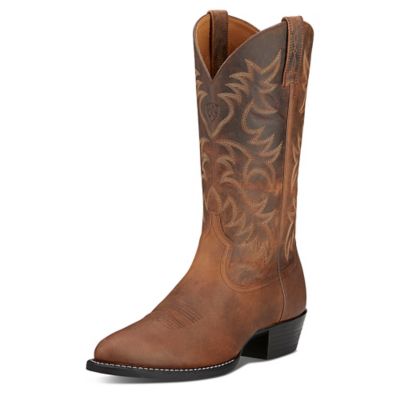
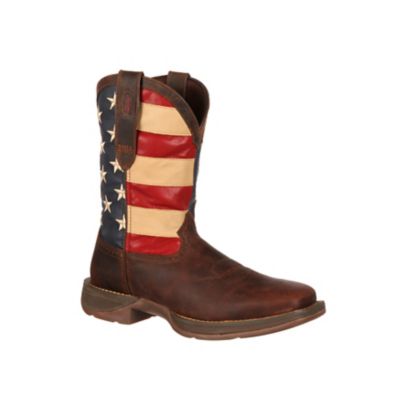
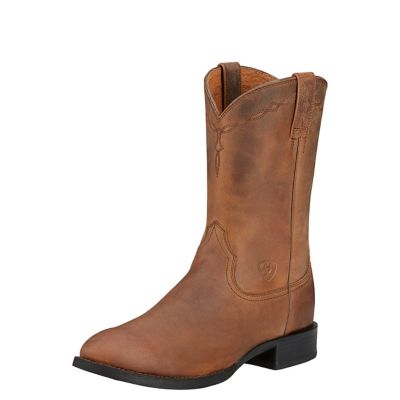
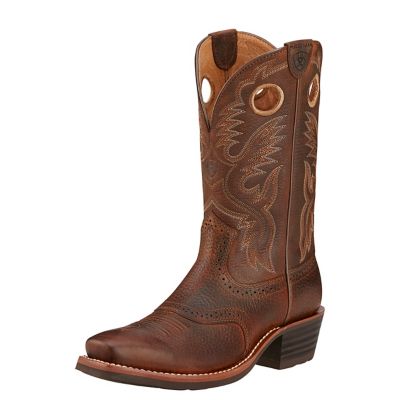
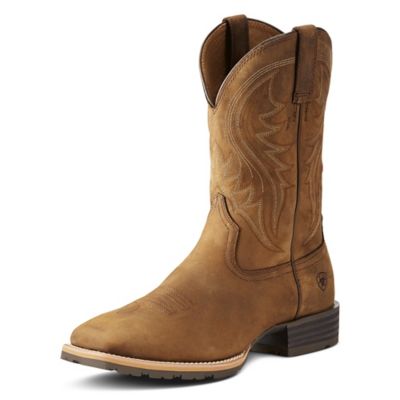
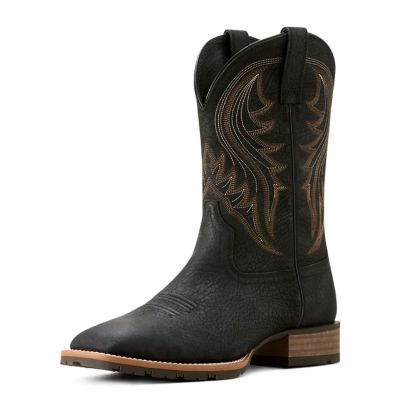
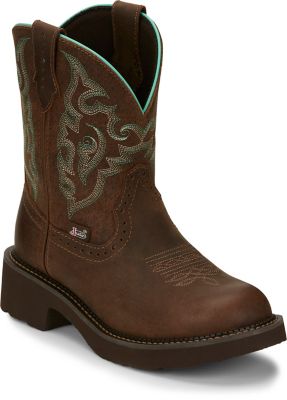
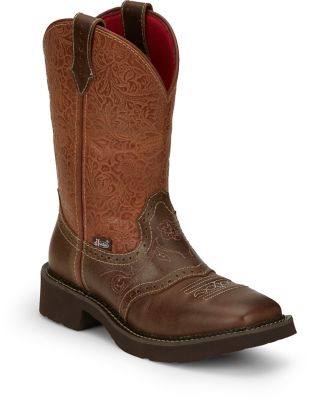
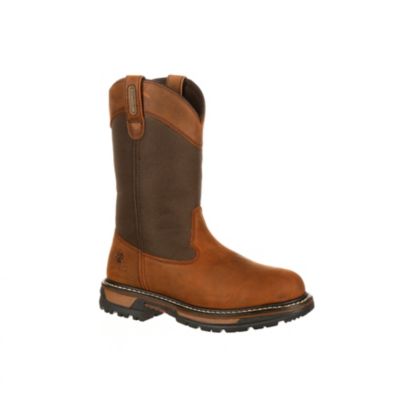
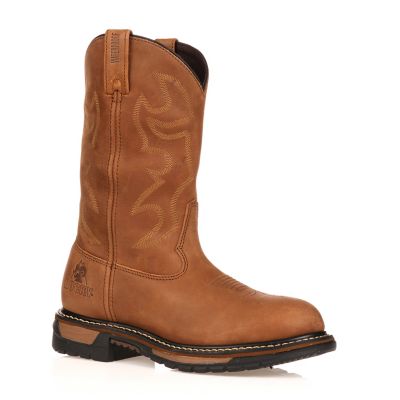
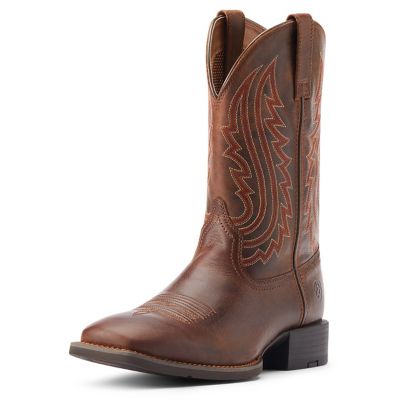
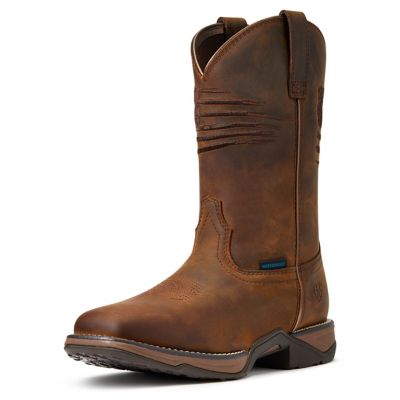
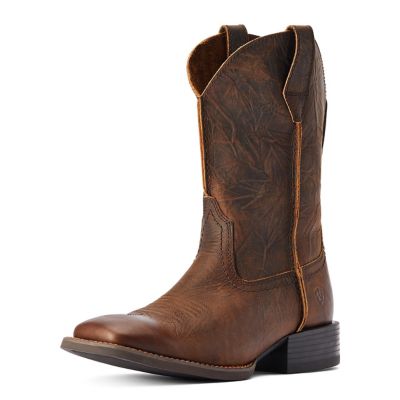
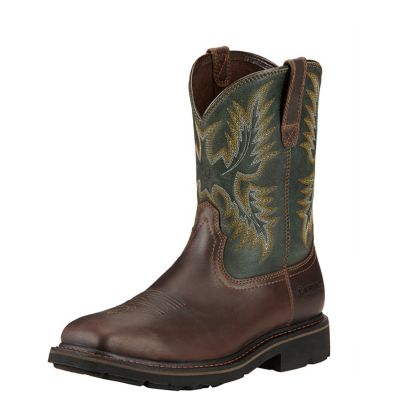
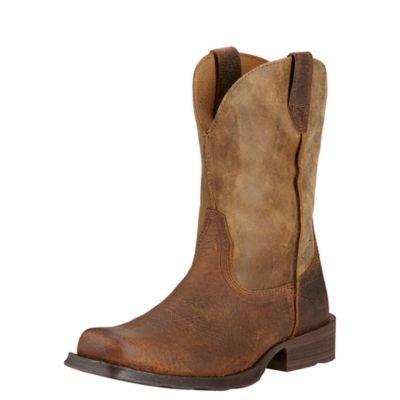
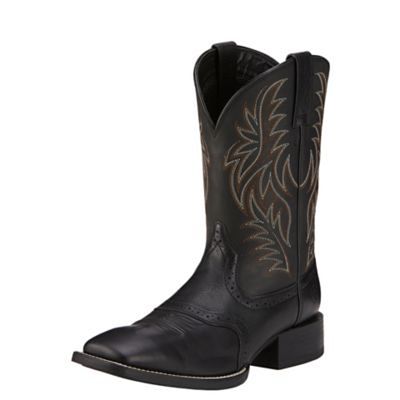
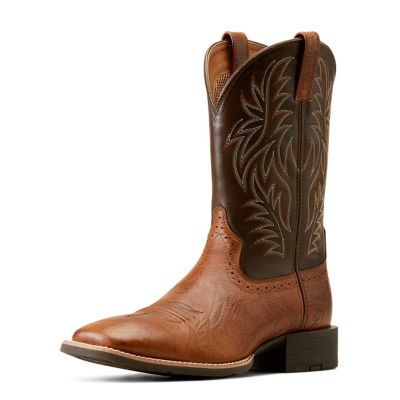
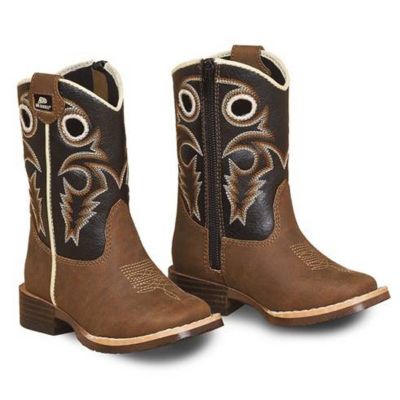
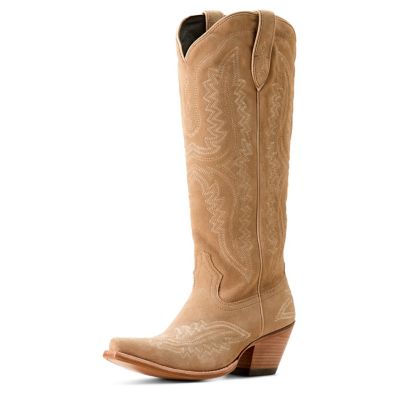
Rodeo boots bring together Western boot styling and practical features for riding, walking, and spending a full day around the arena. The term covers several kinds of cowboy boots rather than one fixed design, so heel height, toe shape, shaft length, and sole construction can vary. Roper-style boots commonly have a lower, broad heel and a round toe, a combination that suits plenty of time on foot alongside time in the saddle. Traditional Western riding boots often have a taller shaft and a more pronounced heel, while square-toe styles offer a different look and, depending on the boot’s shape, more room across the front of the foot. No single silhouette fits every rodeo event or every pair of feet. Someone handling horses behind the chutes has different demands than someone watching barrel racing from the grandstand, even if both favor stitched leather shafts and a familiar pull-on fit. For riders, the heel, outsole, and overall boot width need to work with the stirrups; a broad toe or heavy tread that catches in a particular stirrup is not a good match. A defined riding heel can help limit the foot’s forward movement through the stirrup, but footwear alone does not make riding safe. For walking, a stable heel base, comfortable footbed, and suitable outsole matter more than an especially tall shaft or elaborate stitching. Leather soles offer a traditional feel and can slide more readily against some surfaces, while rubber soles often provide more traction underfoot. Actual grip depends on the tread and the ground, whether that means packed arena dirt, barn aisles, or concrete walkways. Supportive shanks, which sit between the heel and forefoot, help support the arch area and limit excessive twisting in boots built with that feature. These differences give rodeo boots their broad appeal, from working cowboys and cowgirls to families who enjoy the sport and want footwear that feels at home with jeans.
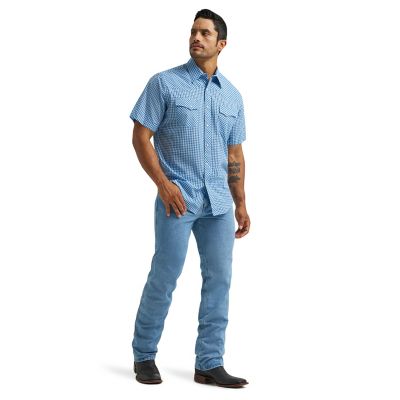
Fit makes the biggest difference once those boots move from the boot rack to a full day of wear. A pull-on rodeo boot should feel comfortably snug across the instep, with room for the toes to rest naturally rather than curl or press against the end. A little heel movement can be normal in a new Western boot, particularly before the sole begins to flex, but pronounced slipping or a foot that slides forward suggests the fit needs another look. The ball of the foot should line up with the boot’s widest point so the sole bends where the foot bends. Toe shape alone does not tell the whole story: a square toe is not automatically a wide fit, and a round toe is not necessarily narrow. Width sizing, the shape of the footbed, and the boot’s overall proportions all play a part. Trying boots with the socks intended for riding or everyday wear gives a better sense of how they will feel during an event. Leather may soften and give somewhat across pressure points, but break-in should not be counted on to fix cramped toes or the wrong length. Shaft openings deserve attention, too, especially for folks with fuller calves or those who prefer jeans tucked inside. Cushioned insoles can ease long stretches of standing, while removable footbeds may leave room for an appropriate replacement insert if the boot has enough interior space. For young rodeo fans, fit checks matter as feet grow; excess room that lets the foot shift around is no substitute for the right size. Boots also make a thoughtful gift for a rider, a rodeo regular, or someone marking a first competition, provided their size, width, and preferred style are known. For men putting together a complete arena-day look,
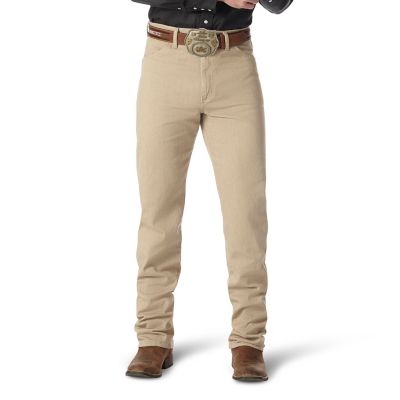
Rodeo Outfits for Men offers a natural companion to boot shopping. Jeans that settle neatly over the shaft let the stitching peek through with each step without bunching tightly around the calf.
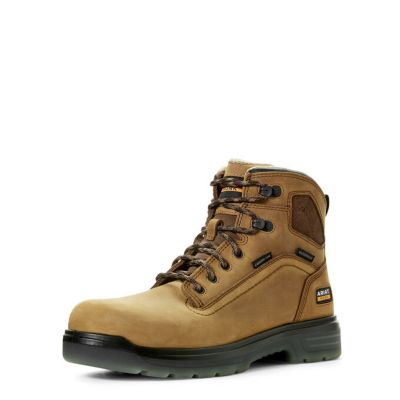
Materials and construction shape how rodeo boots feel, how they hold up, and what care they need along the way. Leather uppers remain a familiar choice for their flexibility, character, and ability to conform gradually to the foot. Smooth finished leather, oiled leather, and suede each have their own feel and upkeep requirements, so the right cleaner or conditioner depends on the finish rather than the color alone. Synthetic uppers offer another option, with care needs and flexibility that vary by material. Inside the boot, smooth linings help reduce friction, while seams, footbed edges, and heel-counter firmness can affect comfort over a long stretch of walking. On the outside, even stitching, firmly attached soles, and reinforced areas around pull straps are worth attention because those parts handle repeated strain. Welted construction may allow a worn sole to be replaced, depending on the boot and a repair shop’s assessment; other attachment methods have different repair options. A leather outsole and a deeply treaded rubber outsole also wear differently, making intended use an important part of the choice. Boots meant mainly for rodeo seating and a dance afterward do not face the same abrasion as a pair worn daily across gravel and barn floors. For chores with specific workplace hazards, a Western appearance does not establish protective performance; safety-toe or other protection should be confirmed in the footwear specifications. Routine care starts with brushing away grit before it works into seams and wiping off dirt with a method suited to the upper material. Damp boots need time to air-dry away from direct heat, and leather conditioner should be applied according to the maker’s directions rather than piled on heavily. Suede generally calls for a suitable brush and products meant for its finish. Keeping shafts supported in storage, checking heel wear, and addressing loose stitching early can help extend a pair’s service life. From the practice pen to the stands, the best match is a boot whose fit, construction, and intended purpose line up with the way the wearer spends the day.