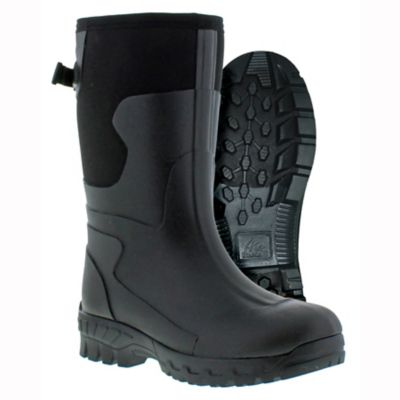
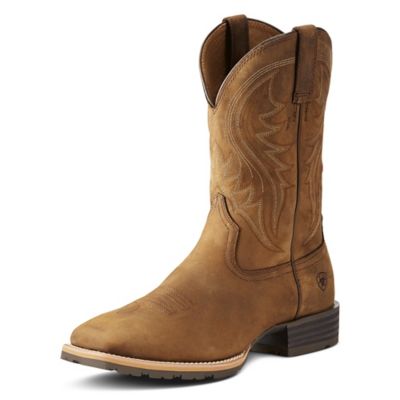
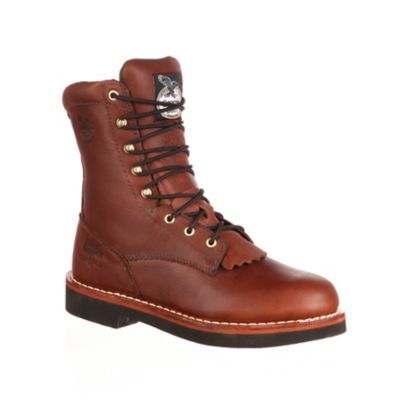
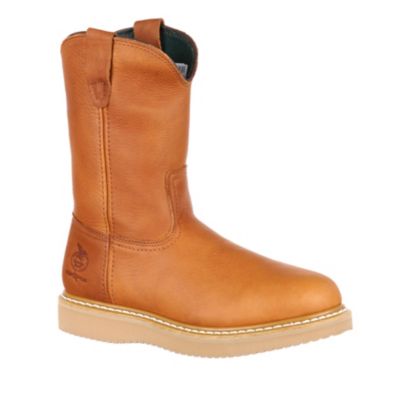
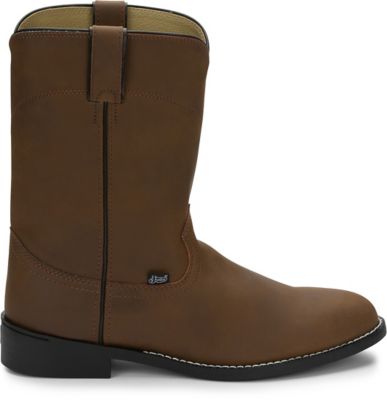
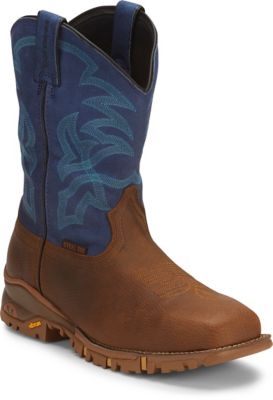
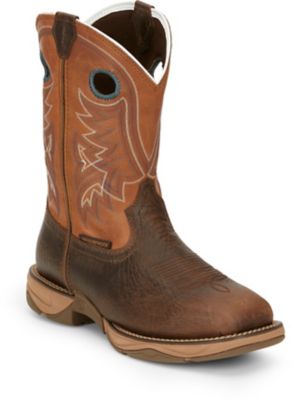
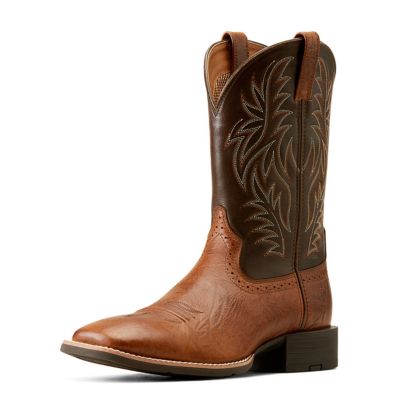
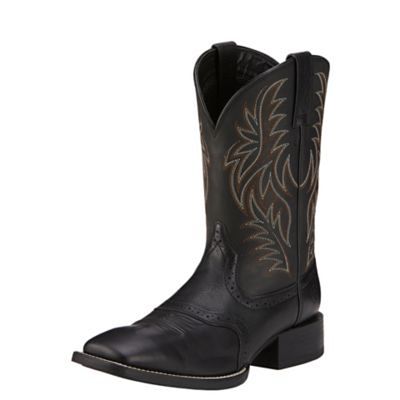
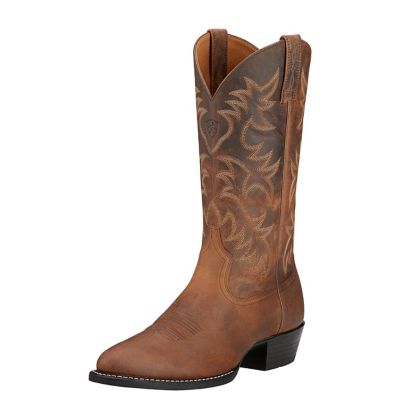
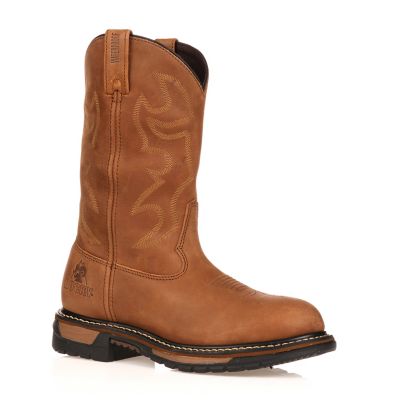
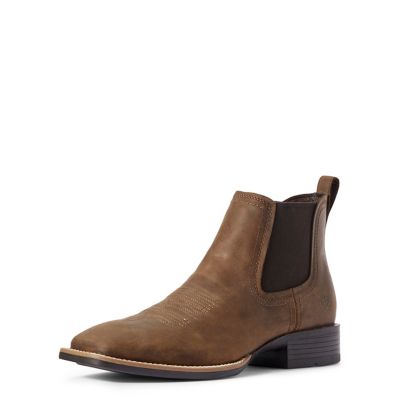
Ranch boots bring Western styling and practical work features together for days that move between the barn, the pasture, the saddle and town. Their pull-on shape keeps laces out of the way, while the shaft adds coverage around the lower leg. What matters most is how the boot matches the job. A pair for checking cattle from horseback has different demands than one for walking concrete alleys, carrying feed or repairing fence. Leather uppers are a familiar choice because they can soften and conform to the foot with wear, while different outsole materials change the feel underfoot. Full-grain leather keeps its natural grain surface, and oiled leather finishes can offer a supple feel with proper care. Roughout leather has a textured surface that gives scuffs a less noticeable place to land, though it needs a different cleaning approach than smooth leather. Rubber and synthetic materials also play a role in chore-focused footwear, particularly where easy cleanup and moisture protection matter. Underneath, rubber outsoles can provide traction and cushioning, with tread patterns ranging from relatively shallow channels to deeper lugs. Deeper tread can help on loose ground, but it can also carry dirt into the truck or tack room. Boots intended for riding need a heel and sole profile suited to the stirrup, along with enough clearance for the foot to move freely. A heavily lugged work sole is not automatically a good riding sole. Toe shape is another practical choice rather than just a matter of looks: square, round and narrower Western profiles feel different across the front of the foot, but the shape alone does not establish fit. For ranch hands, horse owners, livestock exhibitors and anyone whose day includes gates, feed rooms and gravel lanes, ranch boots make the most sense when their construction serves the work rather than simply looking the part.
Comfort in ranch work boots starts with the fit through the heel, instep and ball of the foot. Pull-on boots generally need a secure feel across the instep so the foot does not slide forward with every step. A little heel movement can be normal in a new leather pair, but pronounced slipping, rubbing or pressure across the toes points to a fit problem. Leather may relax across flex points; it should not have to stretch to make room for toes pressed against the end. Trying boots with the socks intended for work gives a better sense of the space inside, especially when considering thicker socks or an additional footbed. Shaft height and opening also matter. A boot that feels fine under straight-leg jeans may bind at the calf, and a roomy shaft should still allow comfortable movement when kneeling beside a water trough or climbing into a pickup. Inside the boot, cushioning can soften repeated steps, while arch support and a stable platform can make long stretches on firm ground feel more manageable. A removable footbed allows replacement when cushioning flattens and can help accommodate an appropriate insert, provided enough room remains for the foot. Construction deserves a close look, too. A welted build may allow resoling, depending on the design and the repair service, while other sole attachments can offer flexibility or a lighter feel. Reinforcement around high-wear areas can matter when boots regularly rub against stirrup leathers or brush against rough surfaces. For tasks involving falling objects or other workplace hazards, safety-toe footwear should meet the requirements of the job; steel and composite toe caps are options, but the boot’s stated rating is what counts. Slip-resistant outsoles and waterproof construction are separate features, not promises attached to every ranch boot. Waterproof membranes, sealed construction and moisture-managing linings each serve different purposes, and no tread makes every manure-coated alley or smooth concrete floor safe.
Long wear depends on both the way ranch boots are built and the care they get after the chores are done. Packed soil around stitching, grit in the tread and manure left on leather can shorten a boot’s service life, so routine cleanup is worth the few minutes it takes. A soft brush lifts loose dirt from smooth leather, while a lightly damp cloth handles remaining residue without soaking the upper. Leather conditioner should match the finish and be applied as directed; too much can leave leather overly soft, and some treatments darken the surface. Roughout and suede call for products intended for their texture rather than an all-purpose leather treatment. Rubber sections need their own compatible care, and waterproof footwear still benefits from clean seams and intact uppers. Boots should dry with good airflow, away from heaters and other direct heat that can stiffen leather or affect adhesives. Pulling out removable footbeds helps the inside air out after a long day. Rotating between pairs, when practical, also gives each pair time to dry fully before the next round of chores. Wear tells a story worth paying attention to: a heel worn unevenly, a sole separating at the edge or a tread worn smooth can change how a boot supports the foot and grips the ground. Repairs may extend the life of some constructions, but worn protective components need more than a fresh coat of conditioner. Beyond the work itself, stitching patterns, leather tones and toe profiles give ranch boots plenty of room for personal taste without getting in the way of their purpose. They pair naturally with jeans and work shirts, and can round out practical outfits alongside
Winter Ranch Wear. As a gift for a horse owner, a family member taking on more chores or someone who appreciates Western footwear, fit and intended use matter more than appearance alone. Knowing the recipient’s size, width, preferred toe shape and everyday tasks helps narrow the choice to boots they will reach for when there is work waiting at the gate.