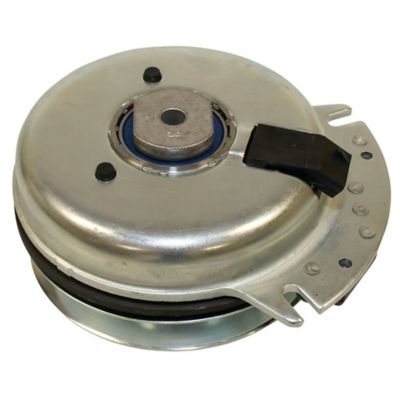
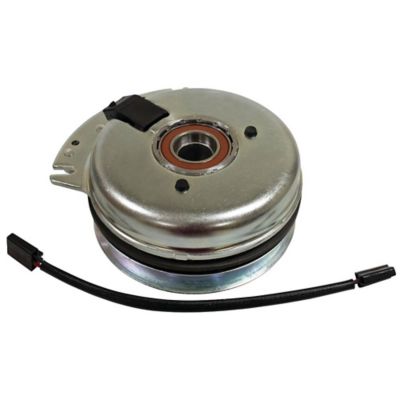
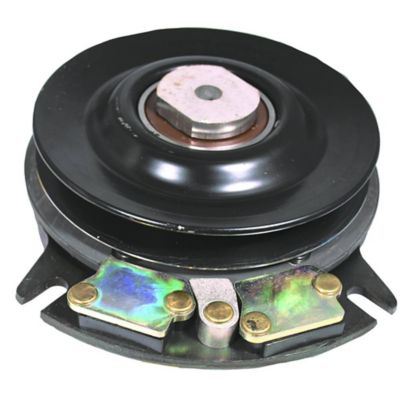
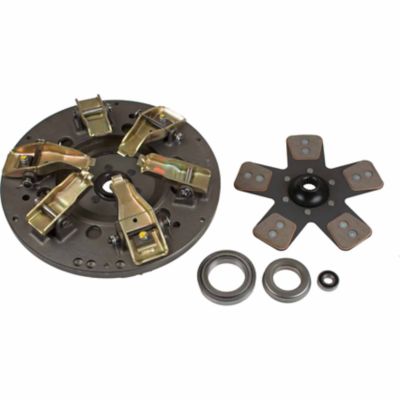
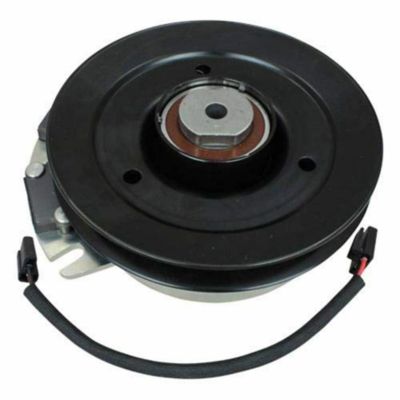
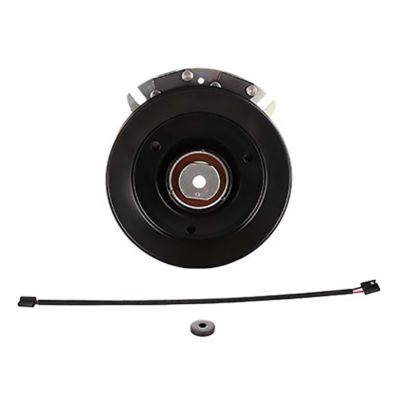
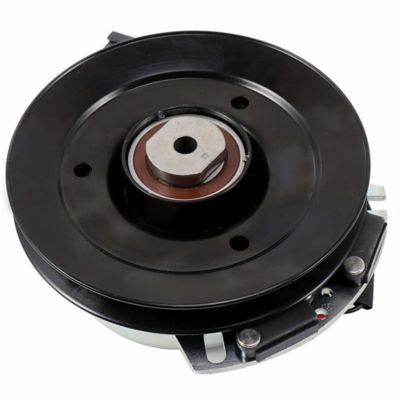
Replacement clutches help bring dependable power transfer back to tractors, utility vehicles, lawn and garden equipment, and other machines that use a manual drivetrain. A clutch connects and disconnects the engine from the transmission so the operator can start smoothly, change gears, stop without stalling, and keep the engine running while the machine is sitting still. Over time, friction, heat, heavy loads, dirt, and repeated stop-and-go work can wear down clutch components. A slipping clutch may show up as an engine that revs without a matching increase in speed, while a dragging clutch can make gears difficult to select or cause the machine to creep with the pedal fully pressed. Chattering, shuddering, grinding, a burning smell, or an unusually high or low engagement point can also signal trouble. These symptoms do not always point to the clutch alone, since linkage, hydraulics, flywheel surfaces, seals, bearings, and transmission parts may play a role. Still, replacing worn clutch components can restore smoother engagement and help prevent a small driveline issue from turning into a larger repair. For equipment used around a farm, acreage, shop, or homestead, a properly matched replacement clutch can make routine jobs feel steady again, whether the machine is pulling a trailer, moving feed, tending fence lines, hauling firewood, or handling chores during the cooler months. Operators working with John Deere equipment can browse
John Deere Clutches to help narrow the search by equipment fit and application.
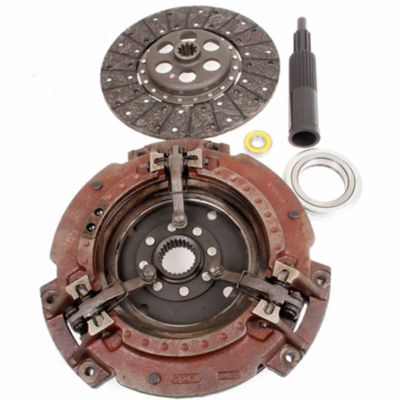
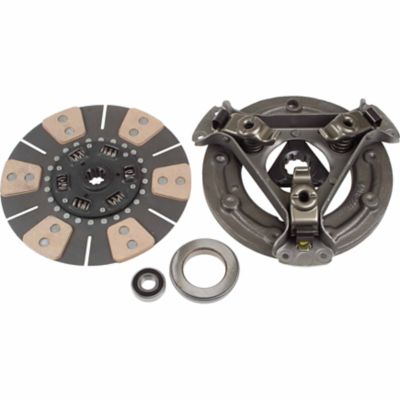
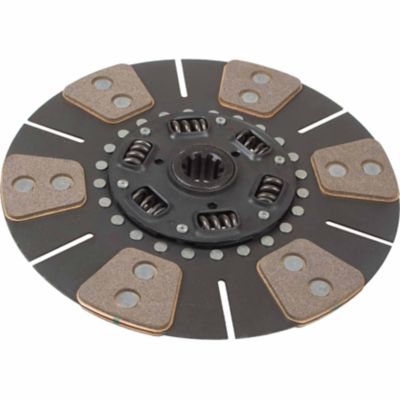
Before ordering a replacement clutch, start with the equipment identification information found on the model plate, owner’s manual, or existing part. Year, make, model, engine size, transmission type, serial number, clutch diameter, spline count, and the number of teeth on related components can all affect fit. Even machines that look nearly identical may use different clutch dimensions or linkage arrangements, especially across production years or changes in engine and transmission design. Compare measurements and manufacturer specifications instead of relying only on a general description. Some repairs call for a complete clutch assembly, while others may involve a single worn component, but replacing only one part can be a poor value if the remaining pieces have similar wear. A typical clutch system may include a friction disc, pressure plate, release or throw-out bearing, pilot bearing or bushing, alignment tool, and related hardware. The disc provides the friction surface that transfers engine power; the pressure plate applies clamping force; and the release bearing allows the operator to disengage the clutch smoothly. During installation, the flywheel and mating surfaces should be checked for cracks, grooves, oil contamination, heat damage, or warping. Oil or grease on friction material can lead to slipping, and an incorrectly centered disc can make transmission installation frustrating or cause early wear. Because access often requires separating or removing the transmission, replacement is a substantial mechanical job rather than a quick bolt-on repair. A trained technician or experienced equipment mechanic can verify the diagnosis, inspect surrounding parts, follow the service manual, and use proper lifting and support equipment. The exact repair cost depends on the machine, parts selected, shop rates, and the amount of labor involved; parts may be relatively manageable while labor rises when the transmission is difficult to reach.
The right replacement clutch should match both the machine and the work it is expected to handle. A compact tractor used for mowing may have different demands than one regularly pulling a heavy implement, loading materials, or working in a feedlot. Think about operating conditions, available horsepower, expected load, pedal feel, and the way the equipment is used before choosing a replacement. Frequent slipping, riding the pedal, starting in too high a gear, overloading, and working with an out-of-adjustment linkage can shorten clutch life, while proper adjustment and smooth engagement help protect new parts. Keep the work area clean during installation, avoid touching friction surfaces with greasy hands, and replace questionable bearings, seals, or hardware while the machine is apart if the service information recommends it. After installation, test the clutch in a safe, open area with the parking brake and controls checked, then ease into normal operation while listening for unusual sounds or watching for continued slipping. Replacement clutches are practical purchases for farmers, property owners, landscapers, mechanics, and anyone who depends on a manual machine to keep daily work moving. They can also be a thoughtful addition to a repair-minded relative’s shop supplies, particularly for someone who maintains an older tractor or work vehicle instead of sending every repair to a service center. Keeping the machine’s records, measurements, and old part information together makes future ordering easier. With careful fitment, sound installation practices, and sensible operation, a replacement clutch can help equipment shift with less strain and deliver reliable service through changing weather and the busy work seasons ahead.