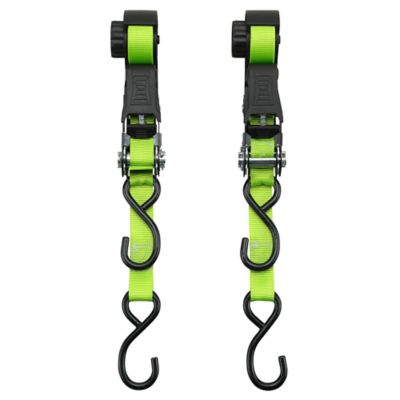
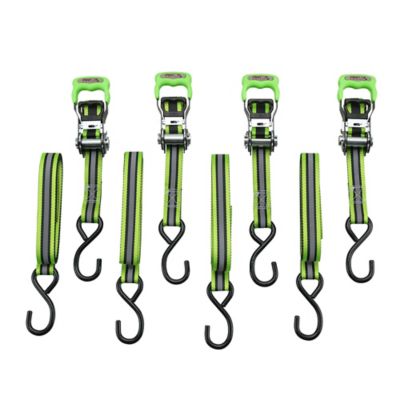
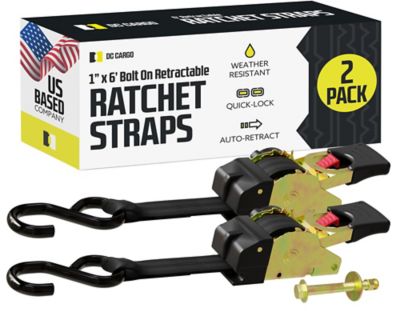
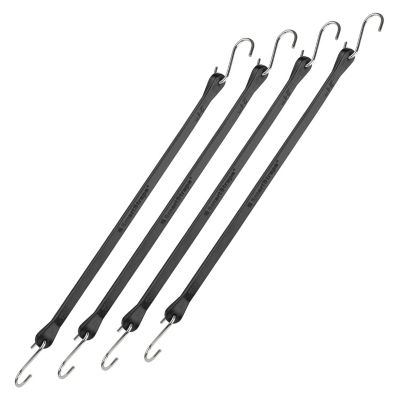
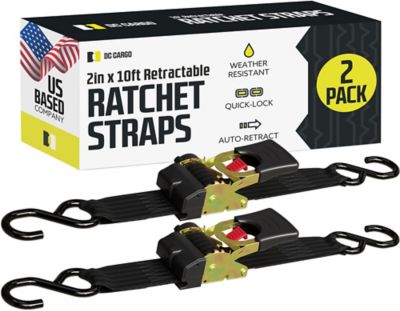
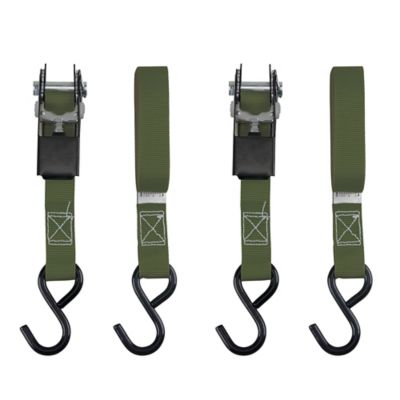
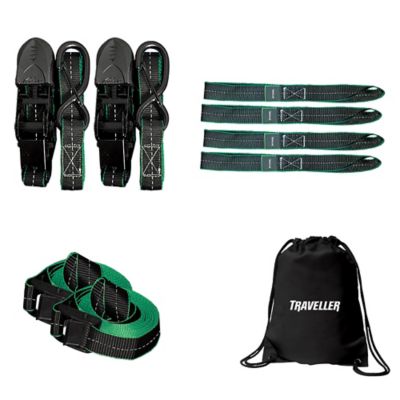
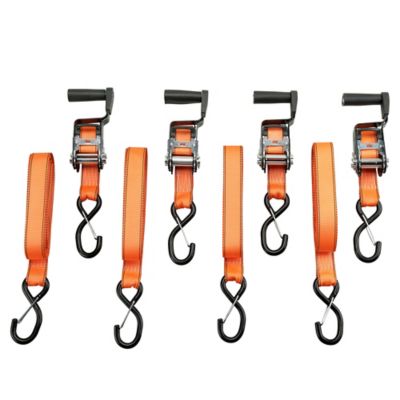
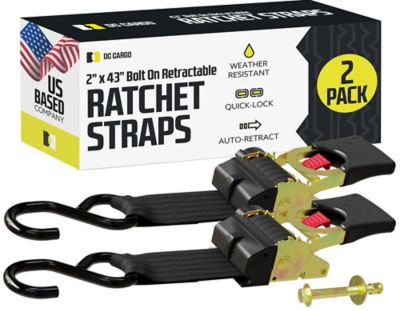
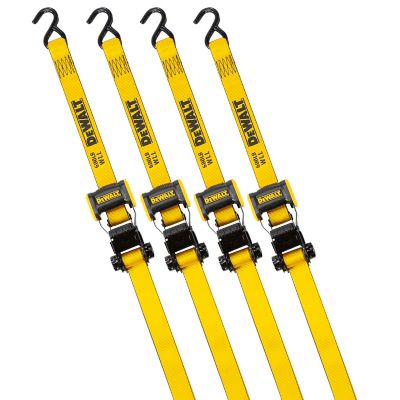
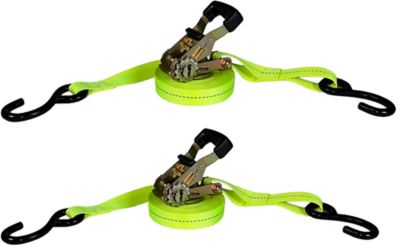
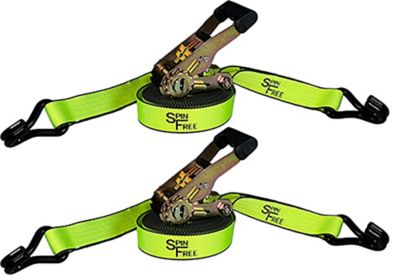
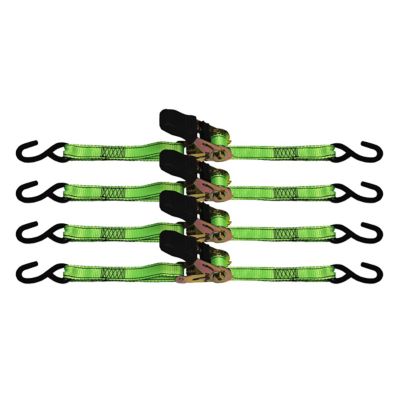
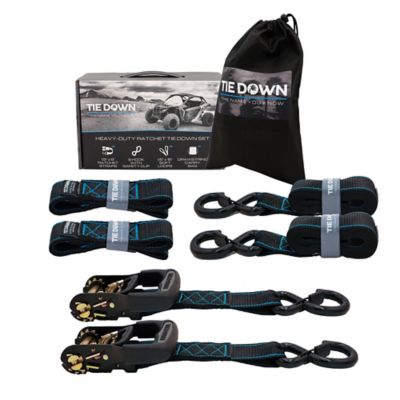
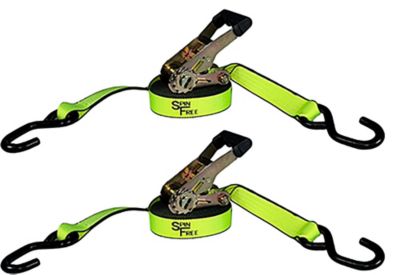
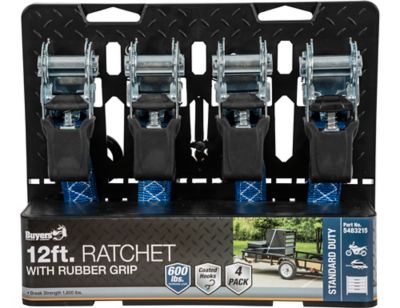
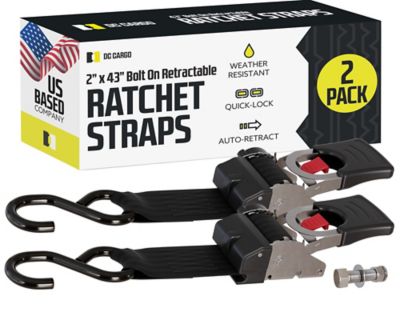
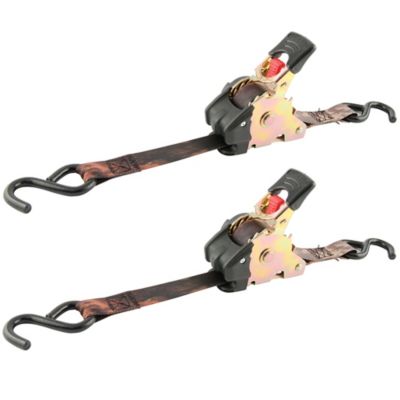
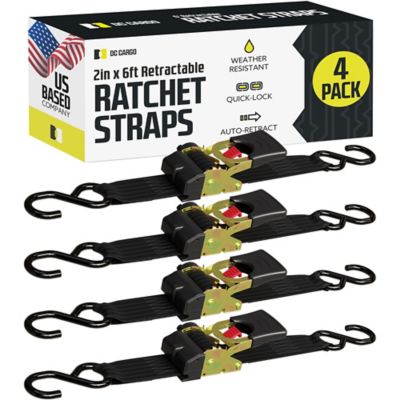
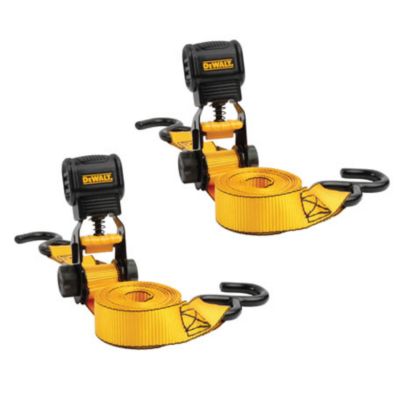
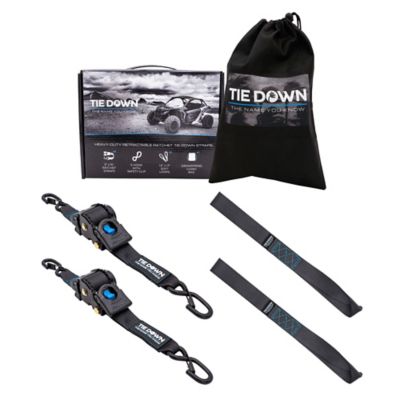
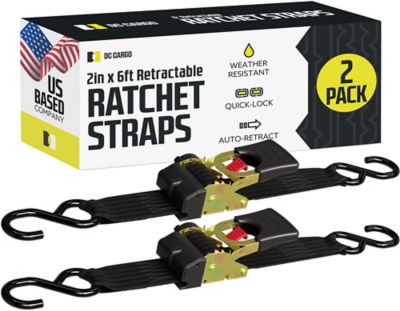
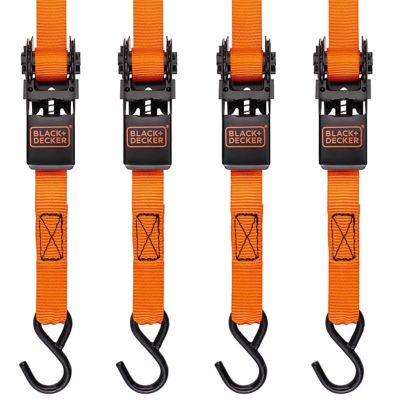
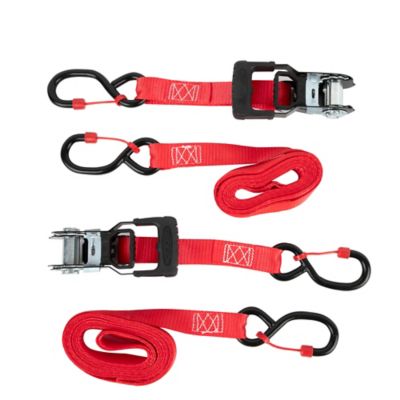
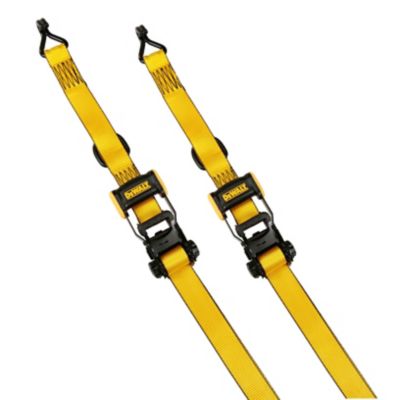
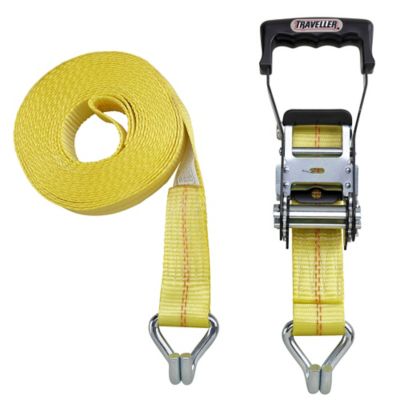
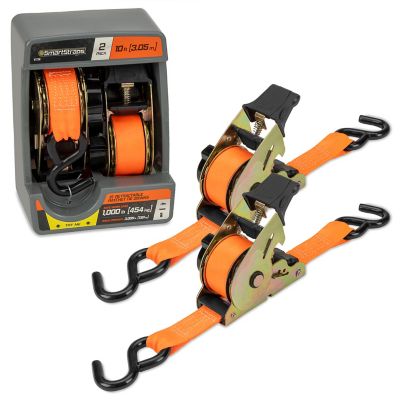
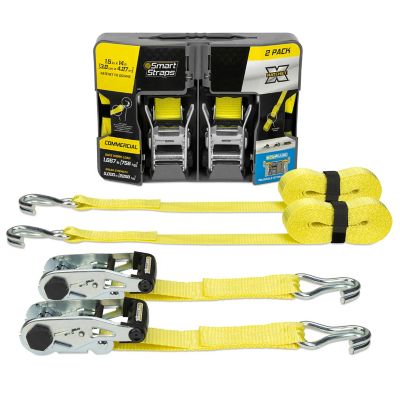
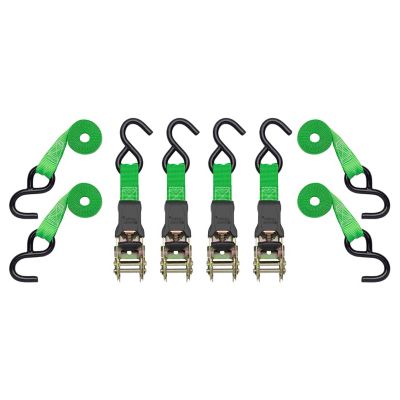
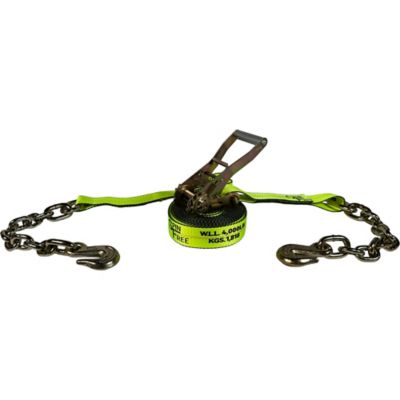
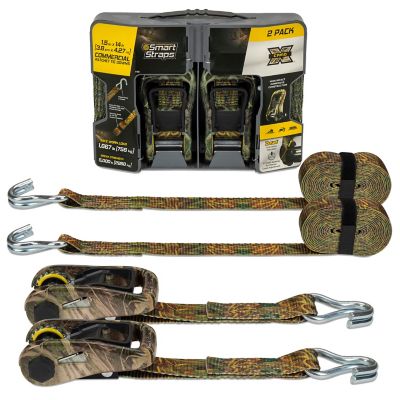
Ratchet straps with S hooks are cargo tie-downs that pair woven webbing and a ratcheting tensioner with curved metal end fittings for connection to compatible anchor points. They help keep loads from shifting in truck beds and on trailers, whether the job involves hauling fencing supplies to a pasture, taking equipment between properties, or bringing furniture home. The ratchet takes up slack and holds tension, while the S hooks provide the connection between the strap and the vehicle or trailer. That combination makes these straps a practical choice for farm owners, contractors, homeowners, and folks who regularly haul gear. Polyester is a common webbing material because it has relatively low stretch under tension and suits many cargo-securement tasks. Strap width, length, stitching, hardware construction, and rated capacity all affect how well a tie-down fits a particular job. A longer strap can reach across a broad load or between widely spaced anchors, but extra length also means more loose webbing to manage. A shorter strap may be easier to handle around compact cargo, provided it leaves enough room for proper engagement with the ratchet. Narrow webbing can fit smaller spaces, while wider webbing spreads contact across a broader area; width alone, however, does not establish a strap’s load rating. S hooks may have a vinyl or similar coating that helps reduce metal-to-metal contact and scuffing at attachment points. That coating is helpful around painted surfaces, but it does not replace proper fit or protection where webbing crosses a sharp edge. Around the farm or shop, the best match is a strap that suits both the cargo and the hauling setup, rather than simply the longest or heaviest-looking option. For someone who spends plenty of time with a pickup and utility trailer, a thoughtfully chosen set of tie-downs can also make a useful gift when the intended load, anchor style, and capacity requirements are known.
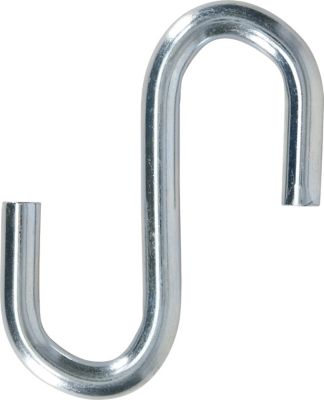
Working load limit, often shortened to WLL, is the rated capacity to look for when comparing ratchet straps with S hooks. It is different from breaking strength, which describes a failure threshold rather than an allowable working load. A higher breaking-strength number should never stand in for the stated WLL. Ratings vary by strap assembly, so the tag and manufacturer’s information matter more than webbing color, hook size, or the way a ratchet feels in the hand. Cargo weight is part of the decision, but the number of tie-downs, their angles, the securement method, and the strength of the anchor points also matter. A stack of lumber resting flat on a trailer presents different demands than a tall piece of equipment that could tip, and a wheeled load needs appropriate restraint against rolling as well as movement in other directions. The complete setup is limited by its weakest component, including the vehicle or trailer attachment points. S hooks need enough room to seat fully in an anchor without riding on the tip or pulling sideways against an edge. A hook that fits through an opening is not necessarily a suitable match if the opening forces an awkward pull. Open S hooks generally depend on maintained strap tension to stay seated, making anchor compatibility especially important; designs with retaining features still require correct attachment. Standalone
Heavy Duty S Hooks have their own dimensions and ratings, and should not be treated as interchangeable replacement fittings unless the strap manufacturer permits that arrangement. Ratchet placement deserves attention, too. There should be room to operate the handle without pinching fingers against a trailer rail, pressing the mechanism into cargo, or leaving it where movement could damage it. For loads such as motorcycles or other wheeled equipment, designated tie-down locations, suitable wheel restraints, and the equipment manufacturer’s directions help determine the setup. Cargo straps are not lifting slings, recovery straps, tow straps, or fall-protection equipment. Matching the equipment to its intended task is just as important as choosing the stated capacity.
Good fit and regular care help ratchet straps with S hooks stay ready for the next hauling job. Webbing should lie flat through the ratchet and along its contact path, with enough engagement to meet the manufacturer’s directions and without so much wound material that the mechanism jams. Loose tails need restraint so they cannot drag, flap into moving parts, or catch on roadside objects. Contact surfaces matter as much as strap tension: a rough board end, sheet-metal corner, or worn trailer edge can damage webbing, while excessive pressure can crush a carton or mark a finished surface. Suitable edge protectors and a secure load arrangement help address those concerns without relying on the strap alone. More tension is not always better, especially around lightweight panels, hollow frames, or cargo with fragile corners. Before a hauling job, the condition of the entire assembly deserves a look, including the webbing, stitching, hooks, ratchet frame, handle, and locking parts. Cuts, fraying, damaged seams, distorted hooks, significant corrosion, or a ratchet that does not engage properly are reasons to take a strap out of service and follow the manufacturer’s replacement guidance. A missing or unreadable rating tag also makes it difficult to confirm that the assembly is suitable for the load. Dirt and grit can collect around the ratchet and work into the webbing, so cleaning according to the manufacturer’s directions helps protect both. Washed straps should dry completely before storage, and chemicals or lubricants should not contact the webbing unless specifically permitted. Rolling or bundling straps keeps hooks from tangling and makes damage easier to spot than when everything is piled loose in a toolbox. Even a carefully arranged load can settle after travel begins, particularly when leaving a gravel lane for the highway, so tension and attachment points need rechecking at safe stops and as required by applicable rules. With the right ratings, compatible anchors, and attention to wear, these tie-downs earn their place alongside the everyday hauling gear that keeps work moving.