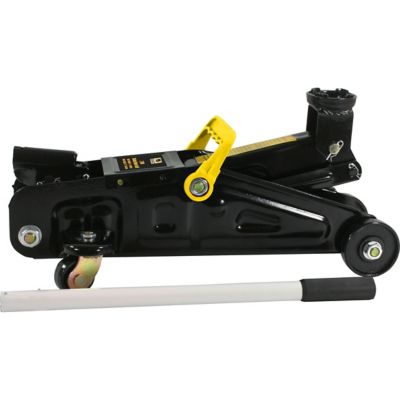
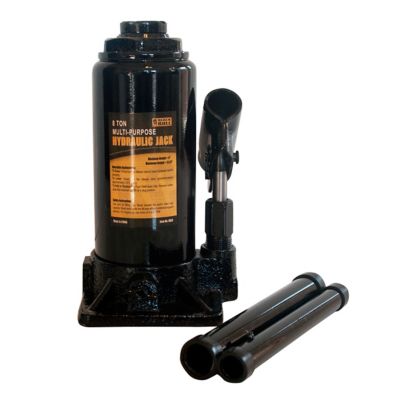
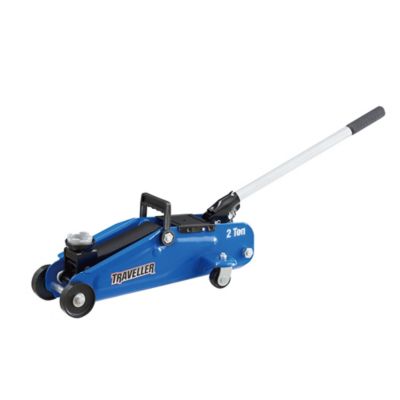
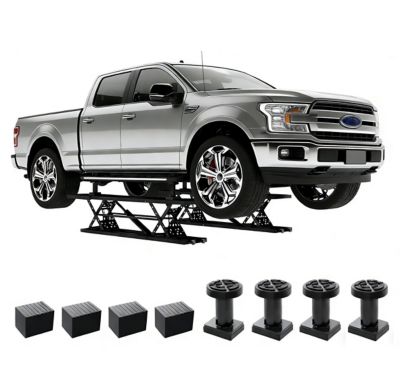
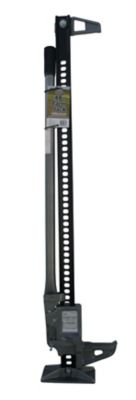
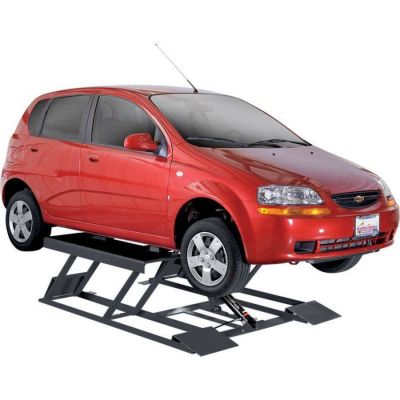
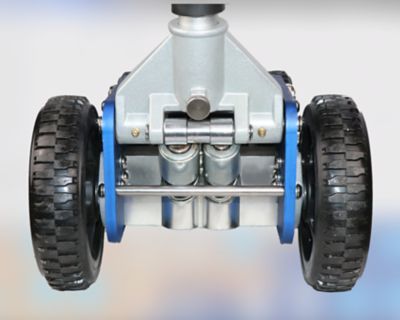
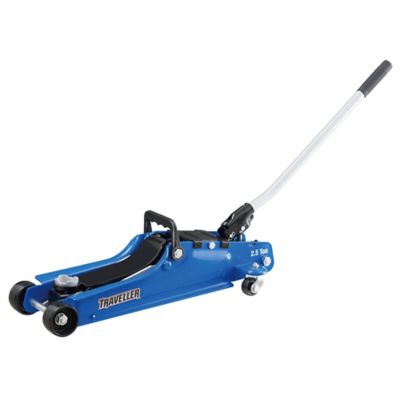
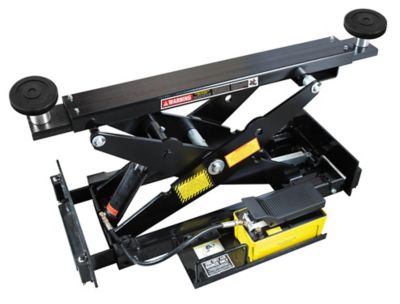
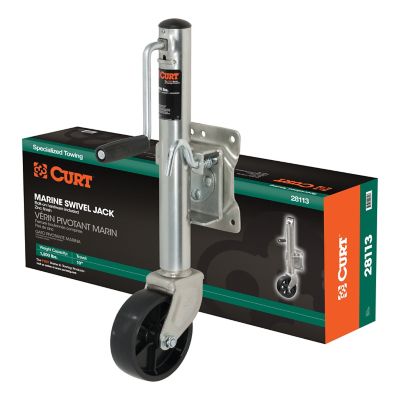
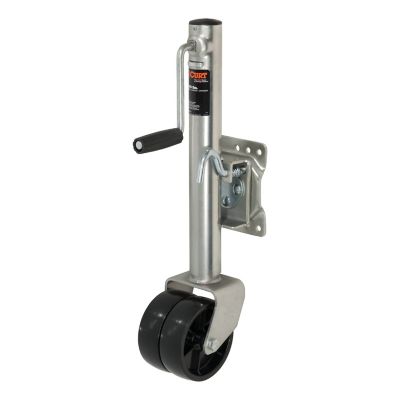
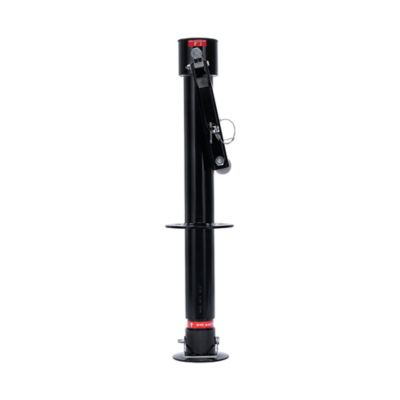
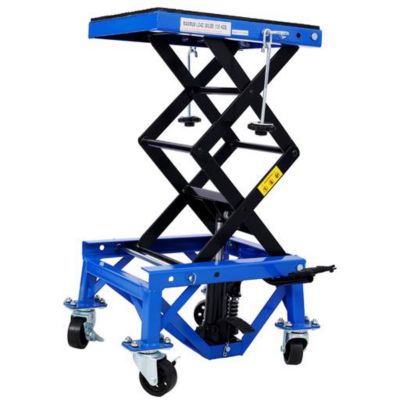
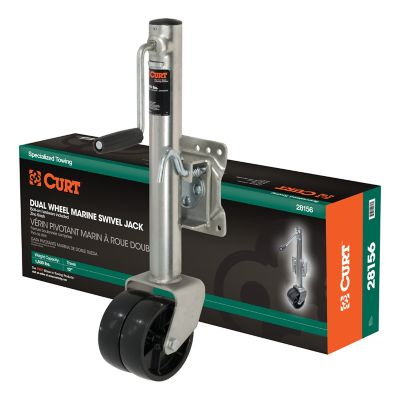
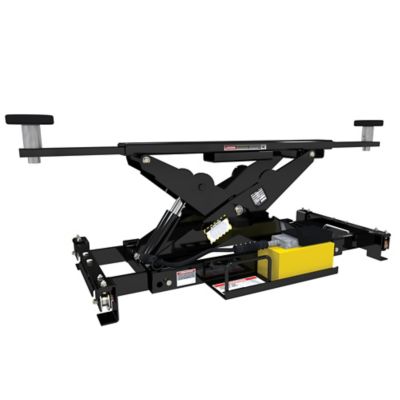
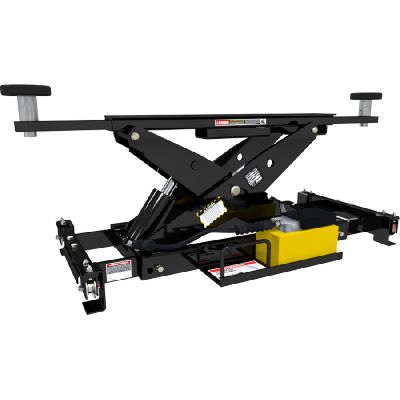
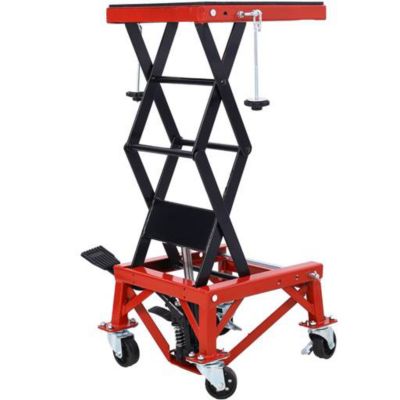
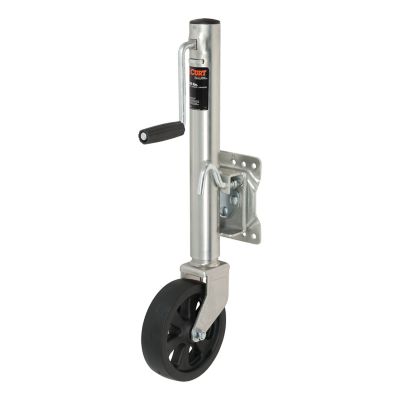
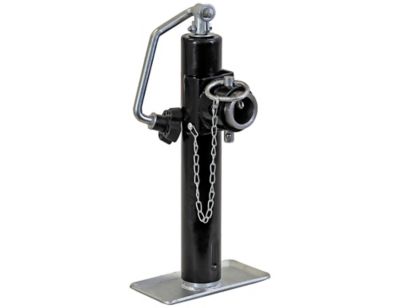
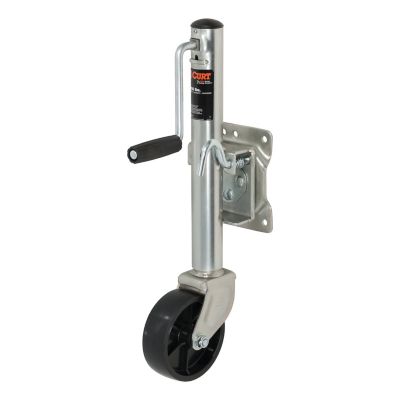
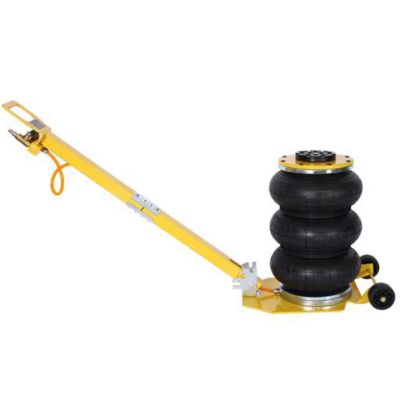
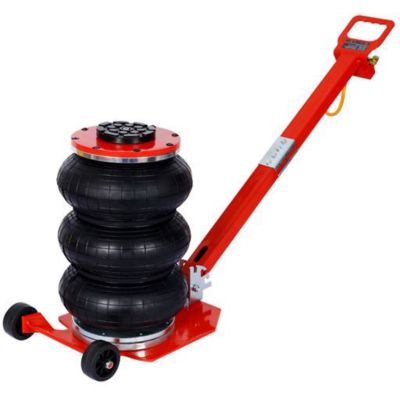
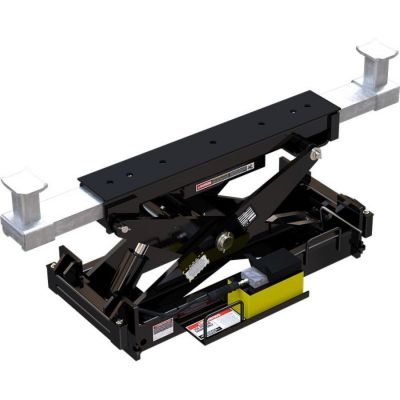
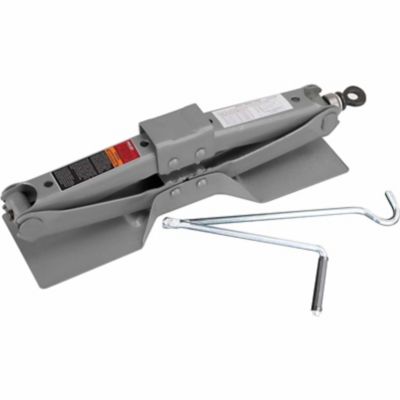
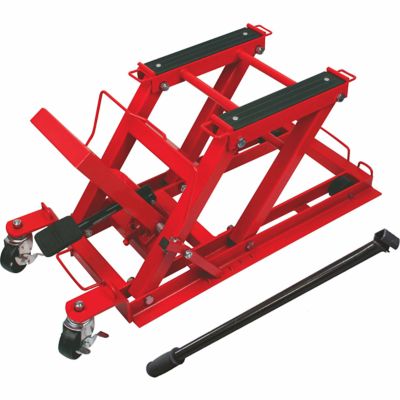
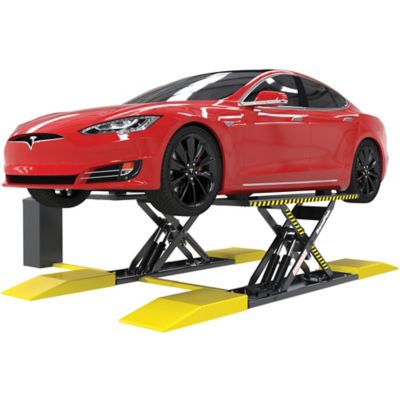
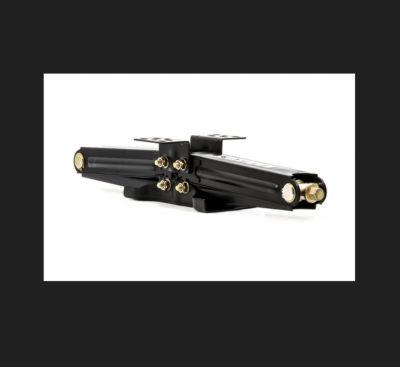
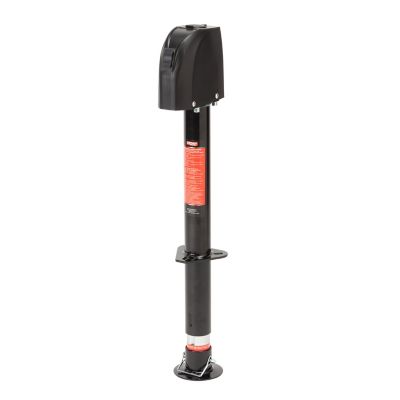
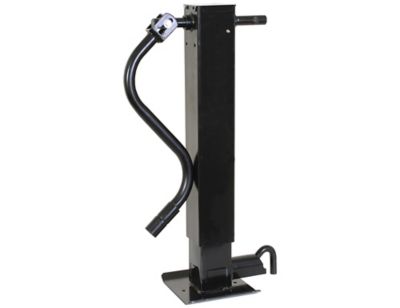
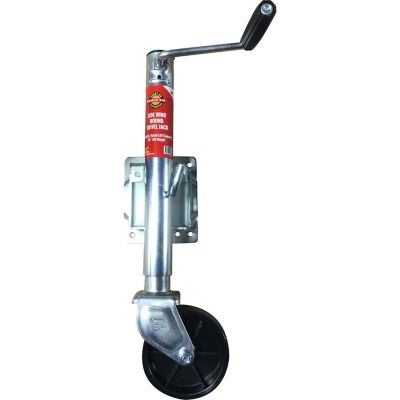
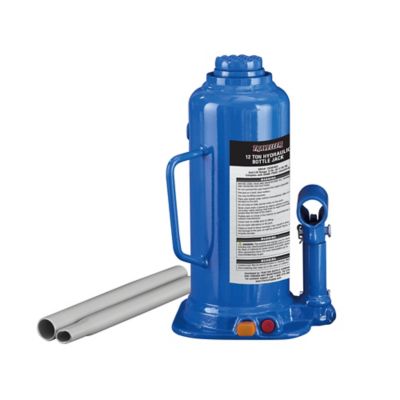
Portable jacks give drivers, farmers, ranchers, DIYers and home mechanics a practical way to lift vehicles and equipment when a tire needs changing, a repair calls for better access or a piece of machinery needs to be positioned safely. Their compact size makes them handy for keeping in a truck toolbox, utility vehicle, trailer, garage or roadside emergency kit. A mechanical scissor jack is a simple, lightweight choice for occasional tire changes and takes up very little room. Compact trolley and floor jacks roll into position and use hydraulic lifting power, making them useful for routine work in a garage or shop where the floor is smooth and level. Bottle jacks lift straight up from a small footprint and are often a good fit for trucks, trailers, farm equipment and other vehicles with sturdy lifting points and enough clearance underneath. Electric 12-volt jacks can reduce the amount of hand cranking needed during an emergency, while some models also include an air inflator for topping off a tire. Frame-style portable lifting systems are built for more involved maintenance and can provide access to the underside of a vehicle without taking up the permanent space of a full shop lift. The right style depends on the vehicle, the work area and how often the jack will be used. Someone who mainly wants backup equipment for a flat tire may value a small, easy-to-store jack, while a person who changes oil, rotates tires or works on several vehicles may prefer smooth hydraulic operation and a broader lifting range. For farm and homestead use, portability matters when the equipment is spread between a barn, shed, gravel drive and field, but the lifting capacity and base design still need to match the job. A jack intended for a passenger car should not be treated as a substitute for equipment rated for a loaded pickup, utility trailer or heavy machinery.
Before choosing a portable jack, check the vehicle’s gross weight information, axle loads and the jack’s rated capacity. The rating should safely exceed the portion of the vehicle being lifted, and it is wise to account for tools, cargo, passengers and attachments rather than judging by the empty vehicle alone. Minimum and maximum lift height matter just as much. A low-profile vehicle may need a jack that slides under a low frame or approved lifting point, while a tall truck or equipment frame may require more reach. Measure the available clearance when the tire is fully inflated and consider whether suspension movement, mud or uneven ground could make positioning difficult. Look for a stable base, a saddle or lifting pad that fits the vehicle’s approved lift point, a handle that gives you room to work and controls that operate without sticking. For roadside use, storage size, carrying weight, a protective case and visibility in poor weather can make a real difference. A 12-volt model should have a cord long enough to reach the vehicle’s power outlet, and the outlet should be capable of supplying the required power. Hydraulic jacks should be kept clean, inspected for leaks and stored according to the manufacturer’s instructions. Mechanical jacks deserve the same attention; bent parts, damaged threads, missing hardware or a slipping handle are signs to stop using the tool. Portable lifting equipment is designed for lifting, not for holding a vehicle indefinitely. Park on firm, flat, level ground whenever possible, set the parking brake, place the transmission in park or in gear, and chock wheels that remain on the ground. Turn off the engine and clear people and loose gear from the work area. Position the jack only at the vehicle manufacturer’s approved lifting point, lift slowly and watch for shifting. Once raised, support the vehicle with properly rated jack stands before doing work underneath it. Never crawl beneath a vehicle supported only by a hydraulic or mechanical jack, and never depend on a jack to lift more weight than its rating allows. Soft soil, loose gravel, slopes, wet grass and roadside shoulders can let a jack sink, slide or tip, so move to a safer surface when conditions allow. For broader lifting and support needs around a shop, barn or building project, explore
Construction Jacks for equipment suited to other heavy-duty tasks.
Portable jacks also make useful additions to a practical emergency kit or a thoughtful gift for someone who spends time on the road, maintains an older vehicle, hauls trailers or works around a farm. A new driver can benefit from a compact jack and basic tire-change equipment kept in the trunk, while an experienced truck owner may appreciate a higher-capacity bottle jack for roadside repairs and trailer work. For a neighbor who enjoys restoring equipment, a smooth-rolling floor jack can become a shop staple; for a hunter, camper or back-road traveler, a portable option that stores securely and works with the vehicle’s lifting points adds peace of mind far from town. During the warmer seasons, portable jacks are handy for preparing trailers, tractors, mowers and recreational vehicles for travel and outdoor work. As cooler weather arrives, they can help with tire changes, seasonal maintenance and getting equipment ready for storage, though cold temperatures, mud and ice call for extra care with footing and handling. Keep the jack where it will stay dry and easy to reach, and pair it with wheel chocks, gloves, a lug wrench, a flashlight and certified jack stands when the work calls for more than a roadside tire change. A jack is one part of a safe lifting setup, and choosing the correct type, capacity and height helps it do that job reliably. With the right match for the vehicle and a solid place to work, a portable jack can save time, reduce strain and keep routine repairs from turning into a long wait for help.