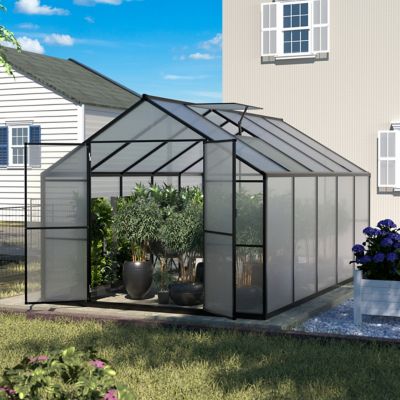
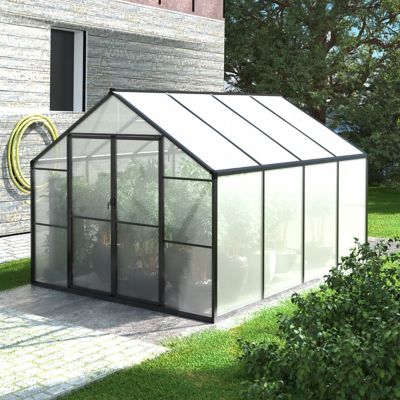
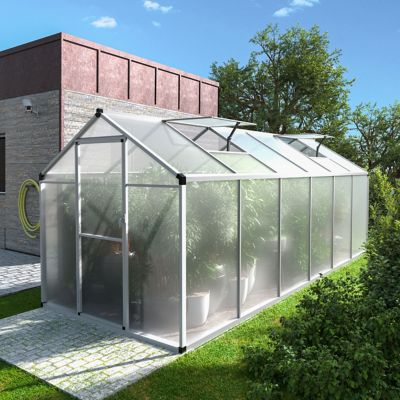
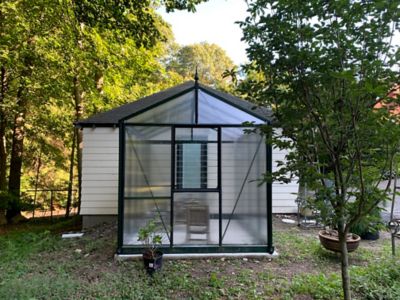
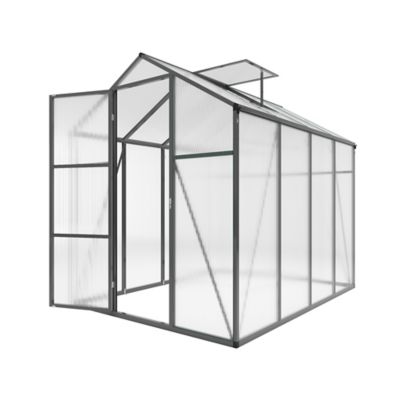
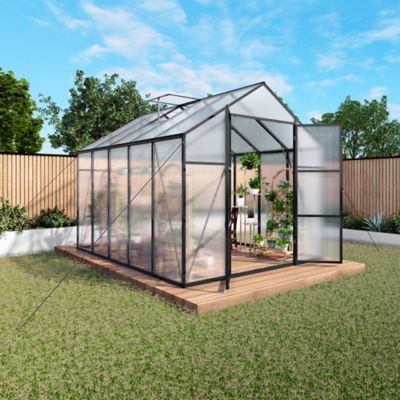
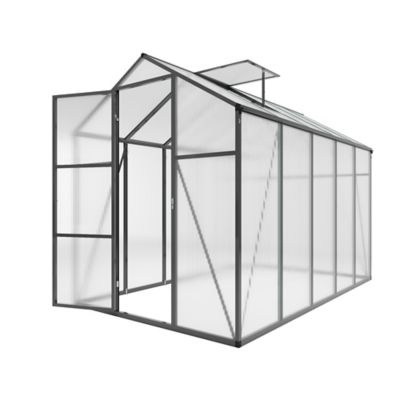
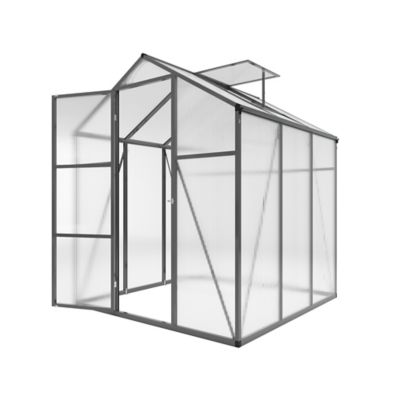
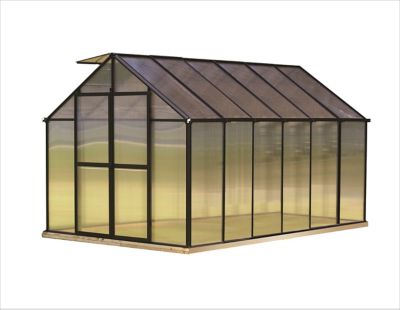
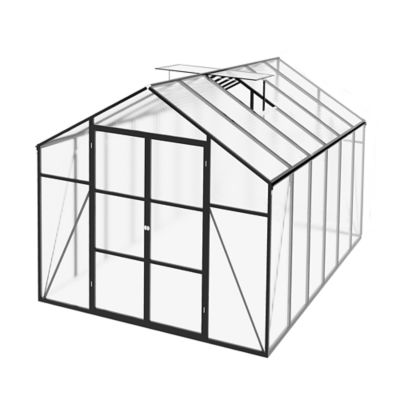
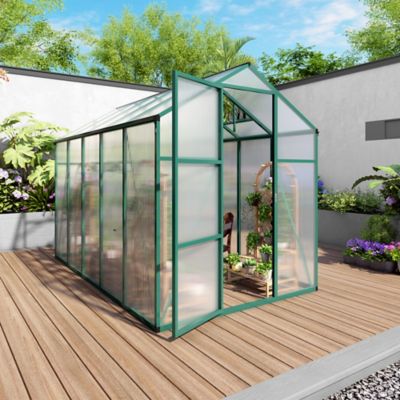
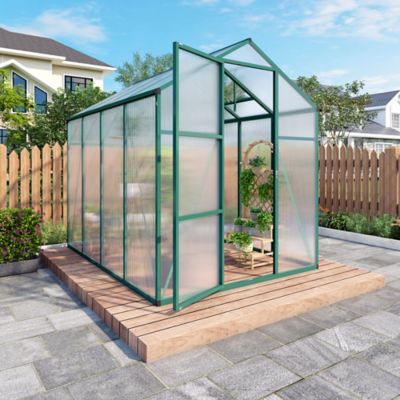
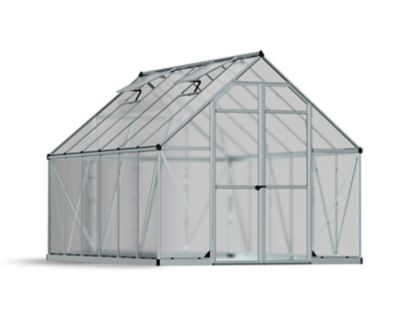
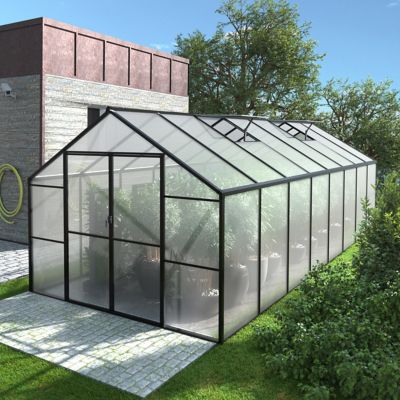
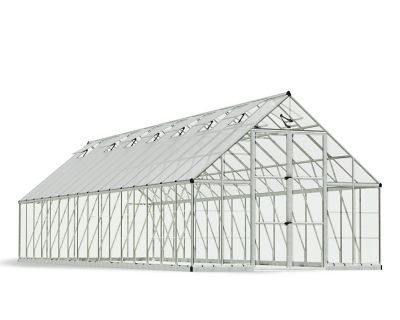
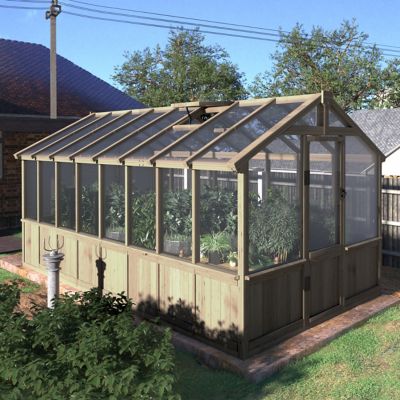
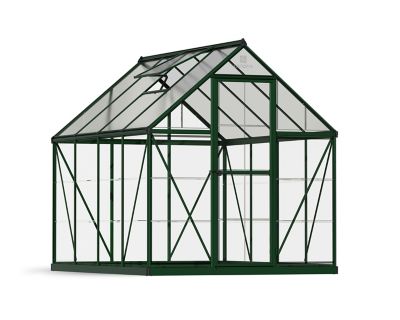
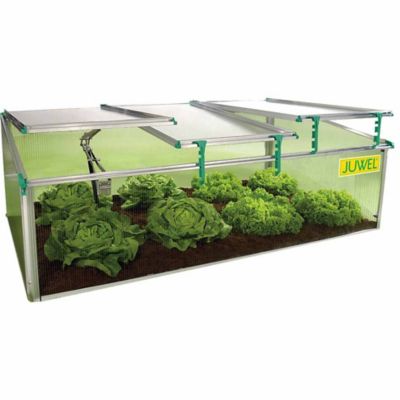
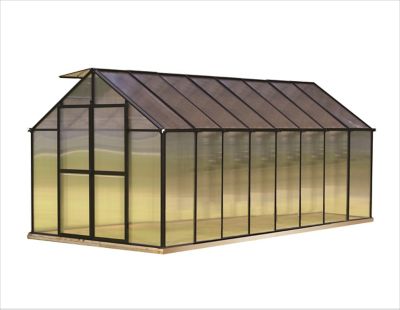
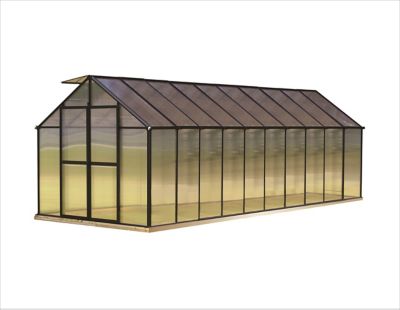
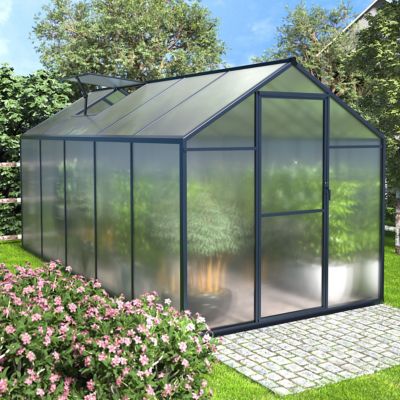
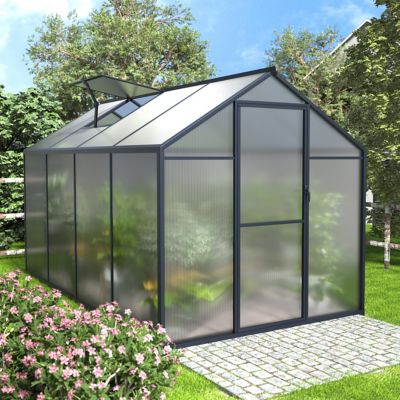
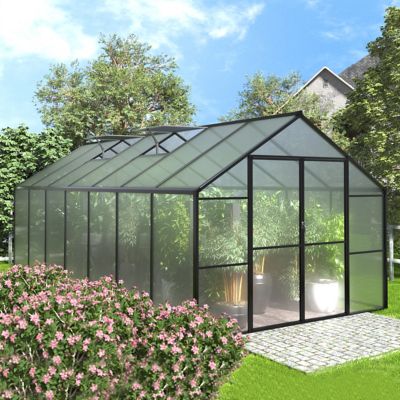
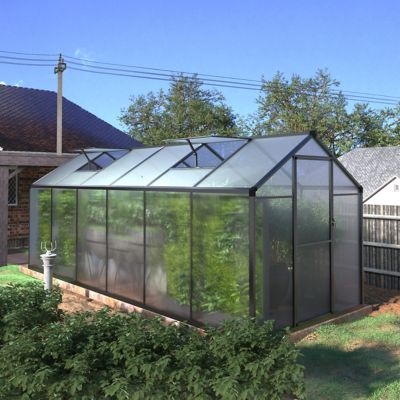
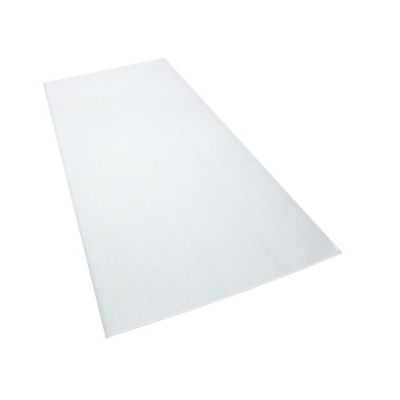
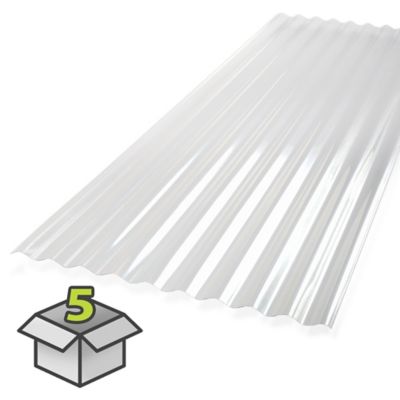
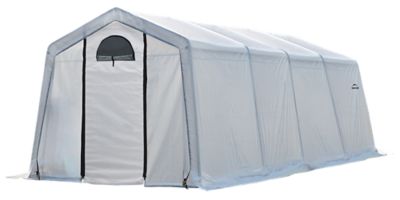
Polycarbonate greenhouses give seedlings, vegetables, herbs, and flowering plants a sheltered growing space without the weight of glass glazing. Polycarbonate is a lightweight, impact-resistant plastic that forms the roof and wall panels on many greenhouse structures. It stands up to everyday bumps better than glass, a welcome trait around a busy garden where wheelbarrows, tool handles, and watering cans move in and out. Panel construction makes a difference in how the space performs. Single-wall panels provide a protective covering, while twin-wall and multiwall panels contain air spaces that slow heat transfer. Compared with single-pane glass, multiwall polycarbonate generally provides better insulation, though actual heat retention depends on panel thickness, construction, frame design, and how well gaps are sealed. Some panels also scatter incoming sunlight, spreading light across plant benches rather than letting it fall in sharply defined patches. That light diffusion can benefit closely spaced seed trays and leafy plants, but it varies by panel design and does not eliminate the need for shade or ventilation. Clearer panels offer a more open view through the walls; textured or cellular panels may look hazier while distributing light more broadly. UV-protected glazing helps limit sunlight-related breakdown of the plastic itself, and the protected surface must face the direction specified by the manufacturer. For a backyard grower, a polycarbonate greenhouse can mean a dedicated place for raising tomato starts, rooting cuttings, or keeping tender plants sheltered. For a small homestead, it can bring propagation trays, potting supplies, and kitchen herbs together under one roof. These structures can help extend the growing season, but an unheated greenhouse is not a guarantee against freezing. Plant needs, local conditions, and any supplemental heating all affect what can grow inside. The right match starts with the kind of growing planned, whether that means a few benches of transplants or enough room to tend plants directly in beds.
The fit of a greenhouse goes well beyond its outside dimensions. Floor space, sidewall height, roof clearance, and doorway width determine how comfortably the structure works once plants and supplies move in. A compact footprint may suit seed starting beside a garden, while taller crops and plants on trellises need overhead room that a low roof cannot provide. Bench depth matters, too: plants at the back should stay within easy reach without leaning across tender stems. A walkway wide enough for a loaded garden cart makes hauling soil and moving containers less of a chore. Freestanding greenhouses offer flexibility in placement, while lean-to designs sit alongside a suitable wall and require careful attention to attachment, drainage, and nearby shade. Aluminum frames resist rust and keep the structure relatively light; galvanized steel frames bring strength but still need attention at scratches, connections, and other exposed areas. Frame bracing, panel retention, anchoring, and the foundation all work together, so panel thickness alone cannot establish a greenhouse’s wind or snow capacity. Twin-wall panels around 4 to 6 millimeters thick appear in many small greenhouse designs. Panels in the 8- to 10-millimeter range, along with thicker multiwall options, generally offer more insulation when comparing similar constructions. However, published performance values for the complete structure matter more than thickness by itself. A thick panel does not make an inadequately supported roof suitable for a heavy load. Manufacturer ratings, installation requirements, and local building rules help establish whether a structure suits its location. A level, well-drained base supports proper door operation and panel alignment, while suitable anchors help keep the frame secured. Nearby trees, outbuildings, and fence lines can affect light and access. Enough space around the outside makes it easier to inspect fasteners, clean panels, and keep roof runoff away from the entrance. A greenhouse should feel like a workable part of the property, not an obstacle between the shed and the garden gate.
Inside a polycarbonate greenhouse, ventilation and everyday access are just as important as the enclosure. Sunlight can raise the indoor temperature quickly, even when the air outside feels brisk. Roof vents let rising warm air escape, and lower openings can help draw fresh air through the growing area. Automatic vent openers can reduce the need for repeated manual adjustments, although their operating range and lifting capacity need to match the vent. Air movement helps manage moisture around crowded foliage, but it does not replace appropriate spacing or careful watering. A hose connection within reach saves carrying full watering cans across the yard, and a floor that drains well keeps routine watering from leaving puddles underfoot. Benches, hanging supports, and shelves should suit the frame’s stated load limits; wet potting mix and filled containers weigh more than they might appear to. Long-term care is usually straightforward when it follows the panel manufacturer’s directions. Gentle rinsing, a soft cloth, and an approved mild cleaning solution can remove grime without scratching the glazing. Abrasive pads and incompatible solvents can damage the surface or its protective layer. On cellular panels, specified tapes, closures, and drainage details help manage moisture and keep debris from collecting inside the channels. Polycarbonate also expands and contracts with temperature changes, making the specified installation clearances and fastening methods important. Periodic checks of seals, door hardware, anchors, and panel clips can catch small problems before a loose edge or sticking door interrupts a day’s work. The material appears in other outdoor structures as well:
polycarbonate roof gazebos provide overhead shelter for gathering spaces, while greenhouses combine roof and wall glazing to create an enclosed growing area. For gardeners who enjoy watching a tray of seedlings become a full vegetable patch, that dedicated space has a practical purpose. Well-matched glazing, a properly secured frame, and enough room to work make a polycarbonate greenhouse a useful home base for the steady, hands-on work of growing.