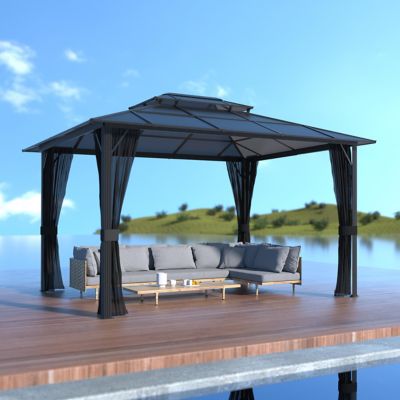
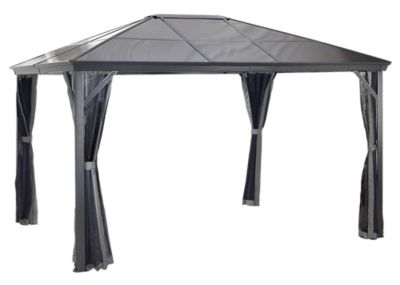
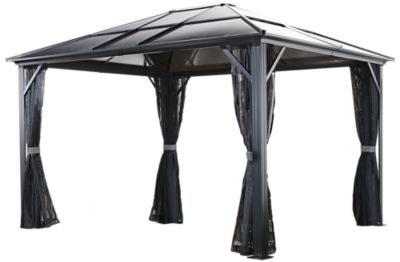
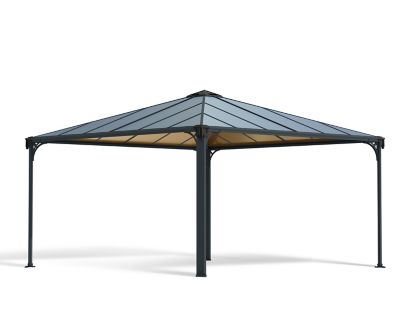
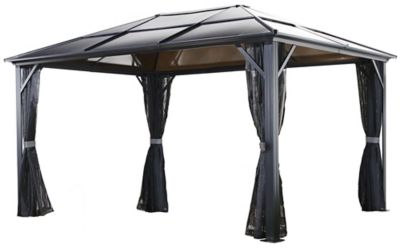
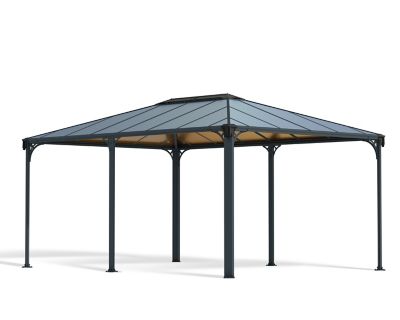
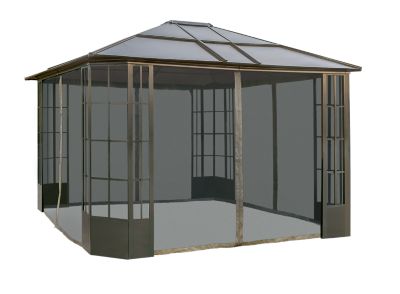
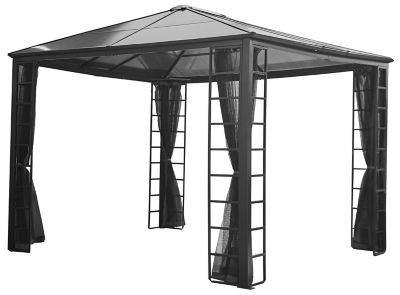
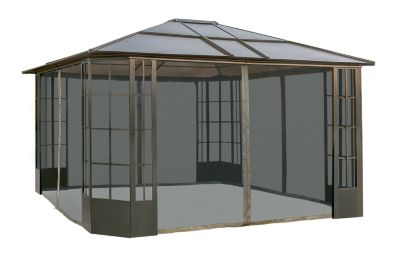
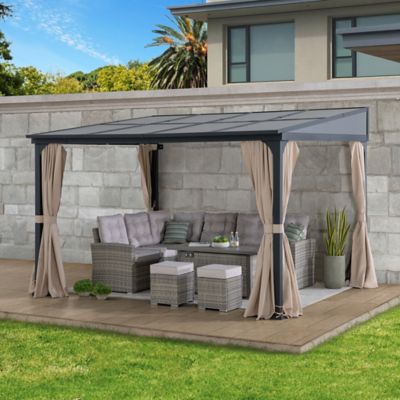
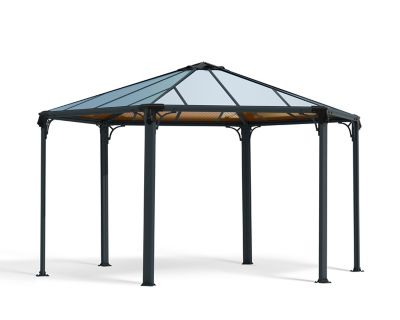
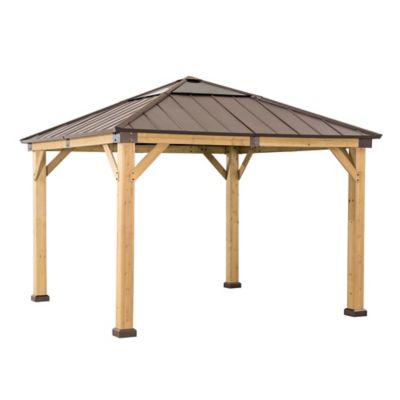
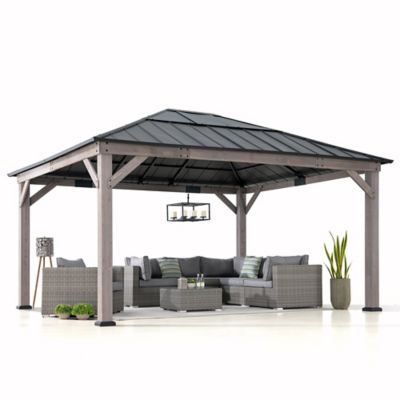
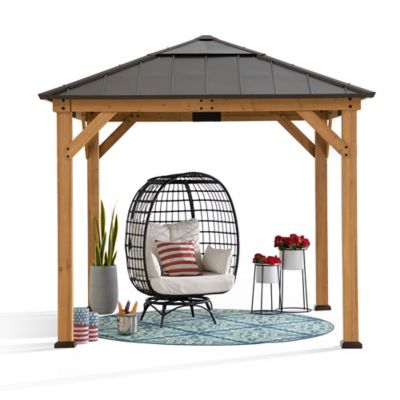
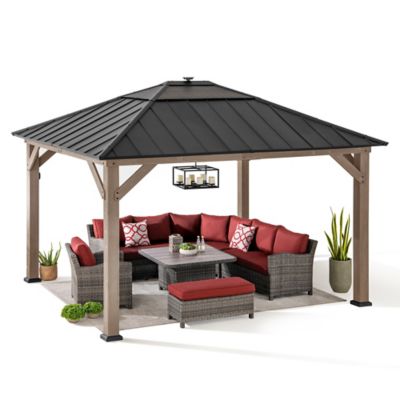
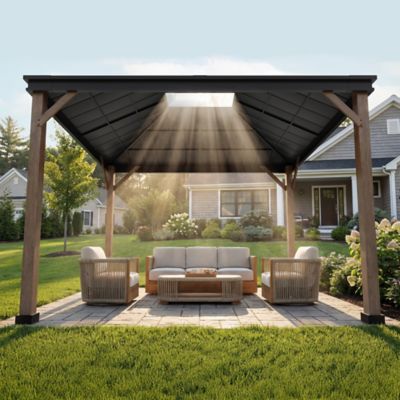
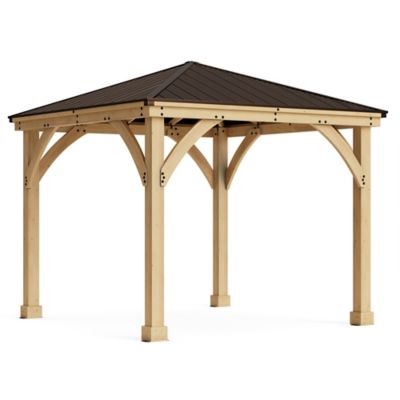
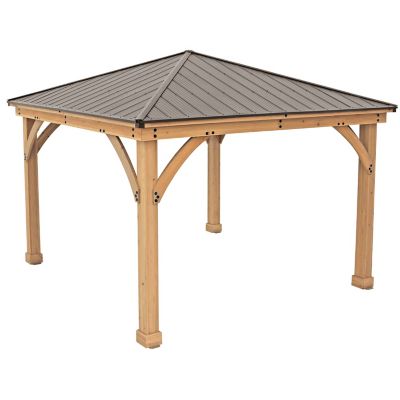
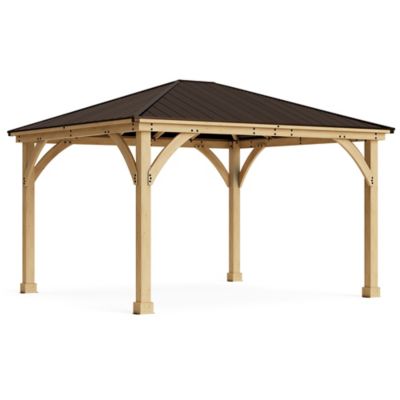
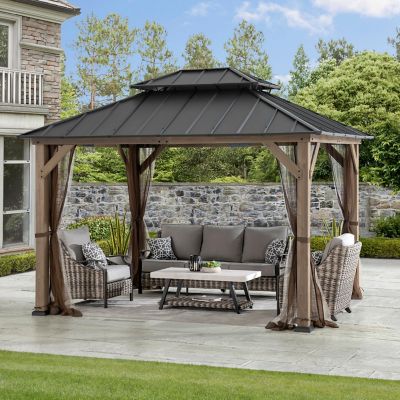
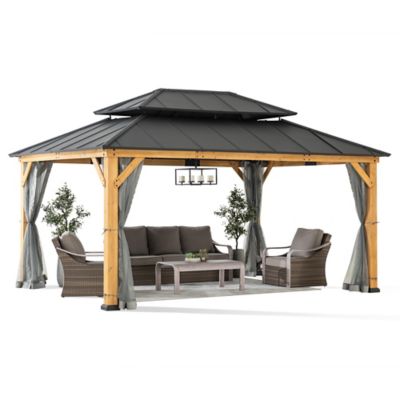
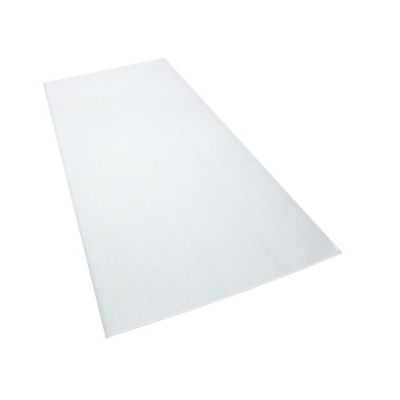
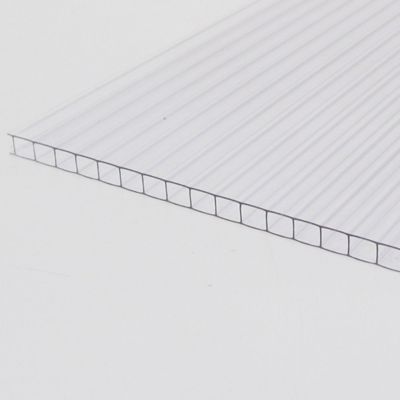
Polycarbonate roof gazebos are freestanding outdoor shelters with rigid polycarbonate roof panels supported by a structural frame. They provide overhead cover for patios, yards and outdoor seating areas, while allowing varying amounts of daylight through the roof. Polycarbonate is an impact-resistant thermoplastic that weighs less than glass of comparable thickness, making it a practical material for an overhead panel system. Unlike a fabric canopy, a polycarbonate hardtop has formed panels that fit into a supporting roof framework. Clear, tinted and cellular panel constructions can create different lighting effects beneath the gazebo, from a brighter gathering space to a more shaded spot for sitting down after chores. Tinted panels may soften glare, but tint alone does not establish how much ultraviolet light a roof blocks. UV protection depends on the panel formulation or protective treatment, so the manufacturer’s specifications matter more than roof color. Panels with a stated UV-blocking treatment can help limit exposure beneath the roof, although sunlight can still enter through the open sides. Shade also does not guarantee a cool interior; roof design, ventilation, panel properties and placement all influence how the space feels. For a picnic table beside the garden, filtered daylight can make the shelter feel open rather than enclosed. Over a set of chairs near the house, it can provide a defined place for coffee, conversation or a card game without turning the yard into an indoor room. Polycarbonate gazebo roofs come in different thicknesses and constructions, and those differences affect light transmission, stiffness and the supporting framework they require. Multiwall panels contain internal channels, while solid panels have a continuous cross-section. Neither description alone establishes the strength of the complete gazebo. Panel fit, frame design, fasteners and anchoring work together as a system. A well-matched roof and frame matter more than any single material claim, especially for a structure expected to remain assembled for extended periods. The result is an outdoor gathering space whose usefulness depends on both the roof overhead and the layout beneath it.
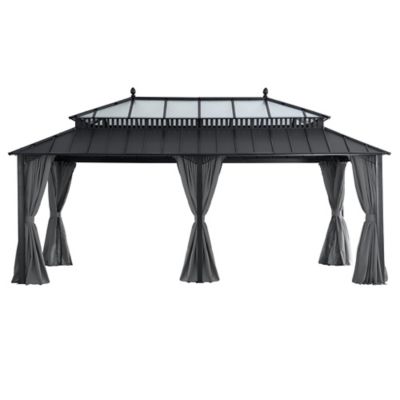
The frame and footprint help determine whether a polycarbonate roof gazebo fits the way a household spends time outside. Aluminum frames keep structural weight down and resist rust, while steel frames may have galvanized or powder-coated finishes that help protect the metal from corrosion. Steel can still rust where its protective finish becomes damaged, and aluminum hardware connections also deserve attention over time. Frame shape, post placement, bracing and connection details are worth comparing alongside the roof material. Overall dimensions may include roof overhangs, so the listed size does not necessarily describe the clear space between the posts. That distinction matters when a long table fits on paper but leaves little room to pull out chairs. A comfortable layout allows room for seated guests, a clear walking path and space to carry a tray without squeezing past a corner post. Roof height and clearance near the edges also affect the fit of taller furniture and the feel of the space. A gazebo beside a back door should leave that doorway easy to reach, while one near a garden path should not interrupt trips between the house and shed. Some designs have a raised second roof section that allows air to move through an upper opening. This can support ventilation, but a double roof does not automatically establish higher wind resistance or greater snow-load capacity. Those ratings belong to the complete structure and depend on assembly and anchoring requirements. Curtains can add privacy or help screen low-angle sunlight, while insect netting can make meals and evening conversations more comfortable. Neither accessory turns an open gazebo into a sealed room, and compatibility depends on its attachment points and tracks. A level foundation, suitable anchors and enough clearance around the roof are important parts of the fit. Patios, decks and prepared ground installations have different fastening needs; a deck may require structural review rather than attachment to surface boards alone. Local setback rules, permits and underground utilities can also affect placement. For a shared household gift, settling the location and footprint beforehand helps keep a generous gesture from becoming a space problem.
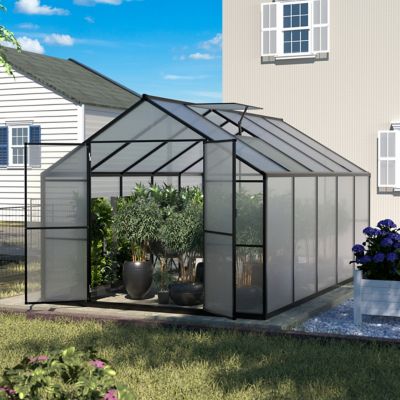
Care for a polycarbonate roof gazebo centers on protecting the panels, keeping drainage paths open and maintaining the frame connections. Polycarbonate can scratch, and some solvents or strong cleaners can damage its surface or UV-protective layer. Manufacturer-approved cleaning methods commonly call for gentle washing with mild soap, water and a soft cloth rather than abrasive pads or scraping. Leaves and other debris caught in roof channels or gutters can interfere with drainage, so access for routine cleaning is a practical consideration before choosing a location. The roof is not a walking surface unless the manufacturer explicitly states otherwise, and maintenance should not involve leaning body weight onto the panels. Replacement-panel support and accessible fastening points can make long-term upkeep simpler. Hardware may need periodic inspection, particularly after the structure has experienced movement or heavy loading, and damaged coatings on metal parts should receive attention according to the care instructions. Resistance to everyday exposure is not the same as protection against every storm. Wind and snow limits vary by design, and an anchoring system must match both the gazebo and its foundation. A roof that sheds rain still leaves open sides, where wind-driven water can reach furniture and cushions. Outdoor furnishings suited to that setting are a better match than indoor pieces, and curtains should not be treated as structural protection. Cooking equipment also needs its own safe location; a gazebo should not be assumed suitable for grills, fire pits or heaters without explicit clearance and installation guidance from the equipment and shelter manufacturers. For most households, the strongest fit is a comfortable place to gather, eat, read or rest while keeping a clear view of the yard. Light-transmitting polycarbonate panels also appear in
Polycarbonate Greenhouses, though those enclosed structures serve a different purpose centered on growing plants. A gazebo keeps the focus on outdoor living, with the right balance of usable space, filtered light, ventilation and manageable upkeep making it a welcome part of everyday life around the home.