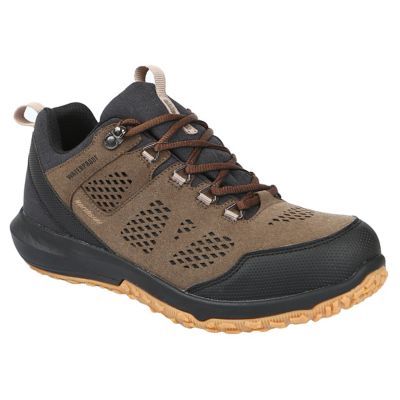
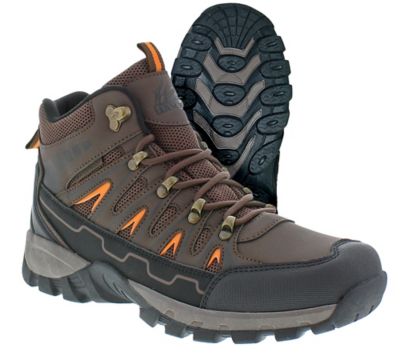
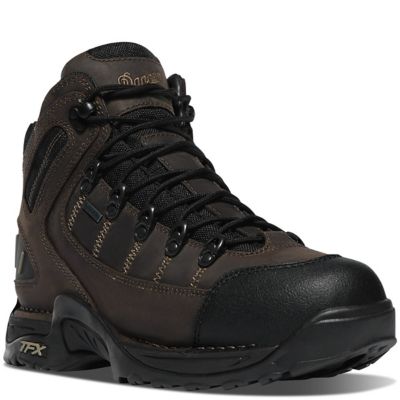
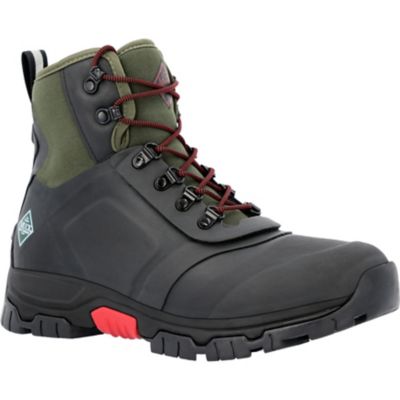
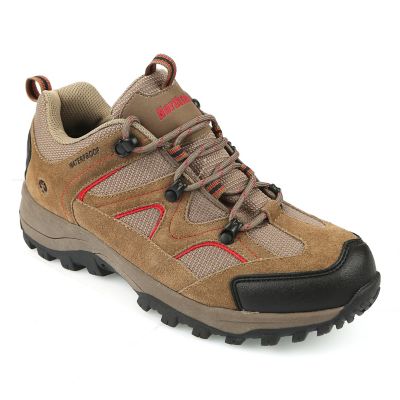
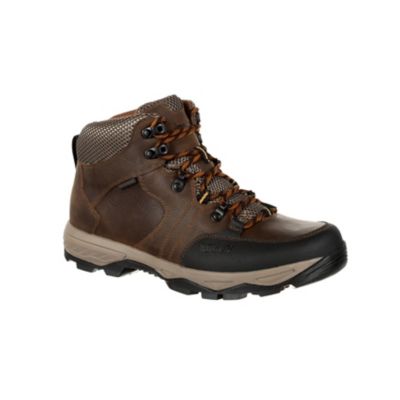
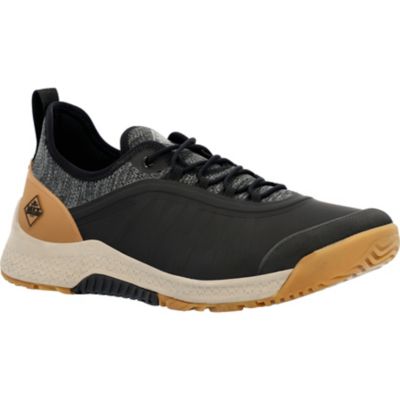
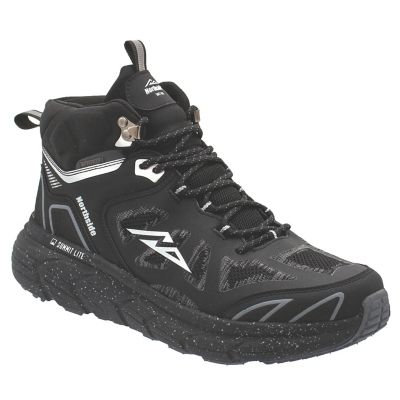
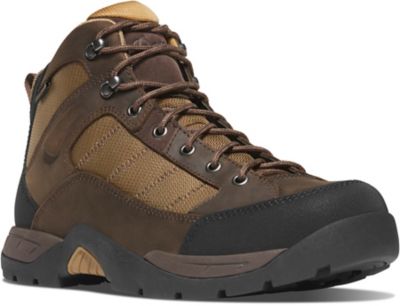
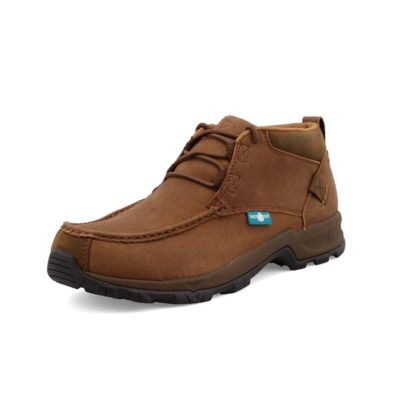
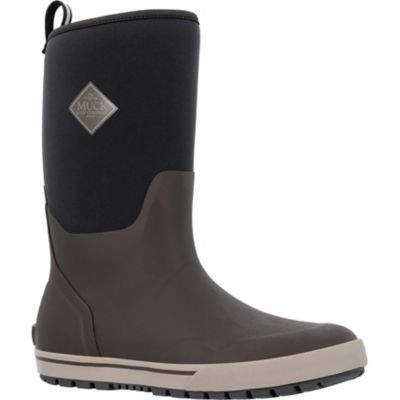
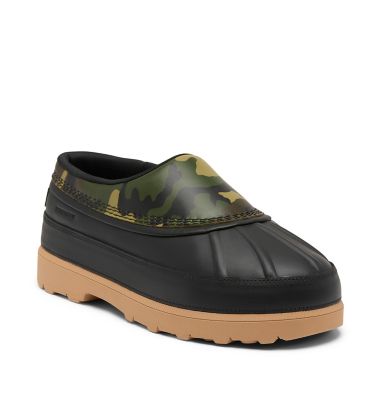
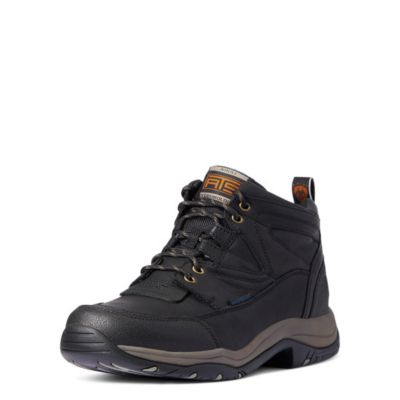
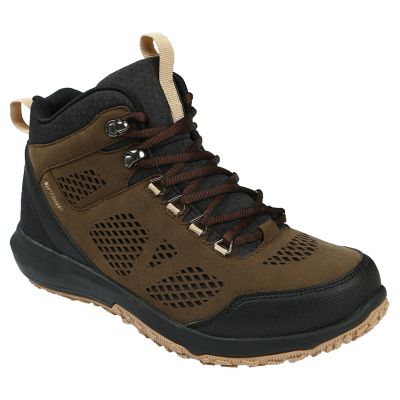
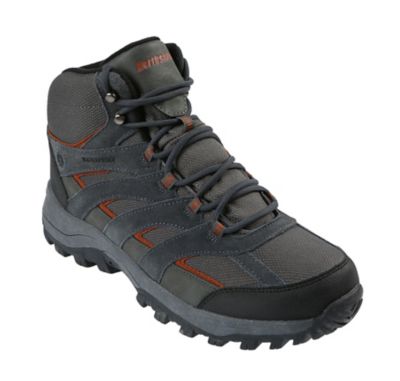
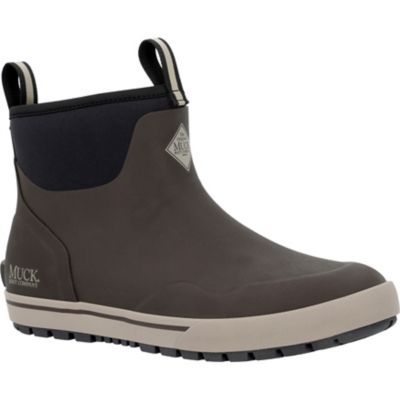
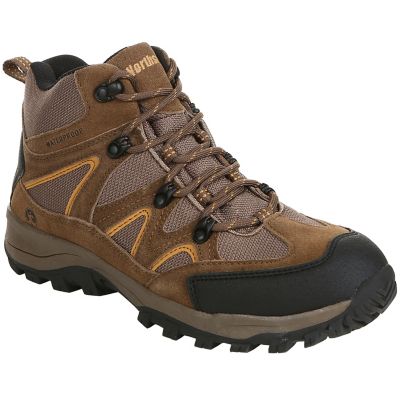
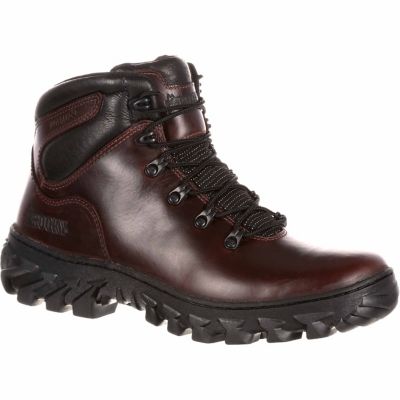
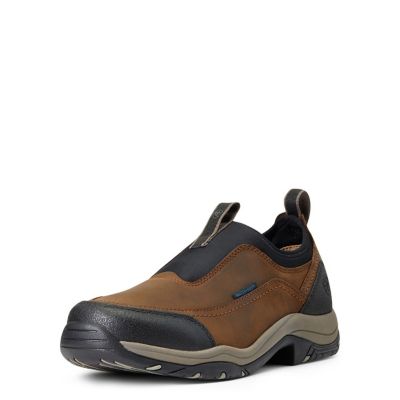
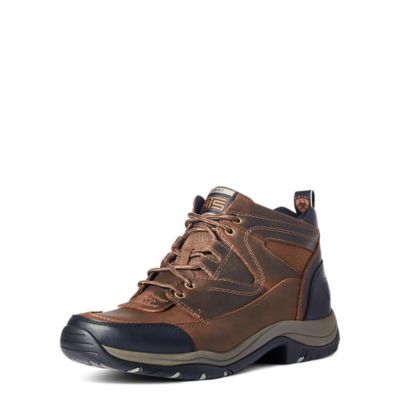
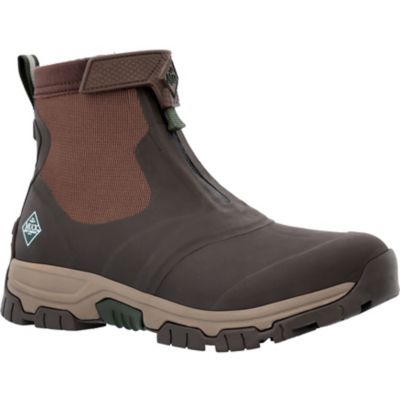
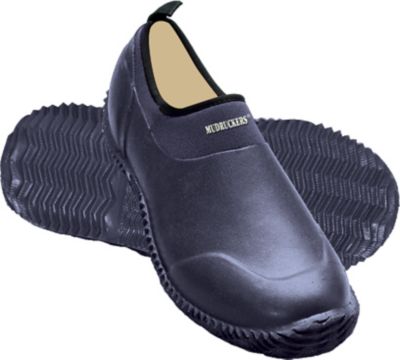
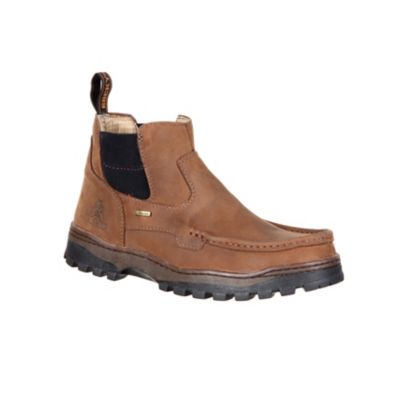
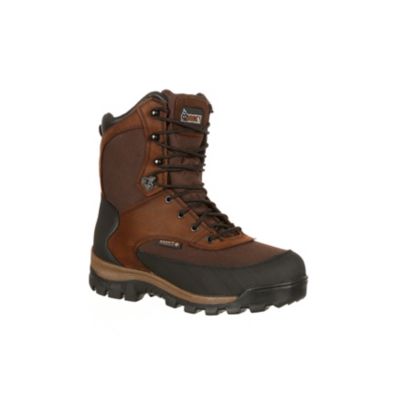
Men's waterproof trail shoes combine water-blocking construction, underfoot cushioning, and traction for walking, hiking, or running on uneven ground. They make sense for a wooded loop after a rain, a gravel lane with standing puddles, or a creekside path where wet grass brushes against your feet. Many have a low-cut shape that leaves the ankle free to move, offering a lighter feel than taller hiking footwear. Waterproof protection often comes from an internal membrane, sealed construction, or a combination of materials designed to keep outside moisture from reaching the foot. A water-repellent outer finish helps moisture bead on the surface, but that finish alone is not the same as a waterproof barrier. Leather uppers can provide structure and resistance to scuffs, while synthetic fabrics can help keep weight down and allow more flex. Mesh panels may appear over a waterproof lining, so an airy-looking upper does not necessarily mean water can pass straight through. Reinforced toe areas and overlays help shield high-wear spots from roots, brush, and loose stone. Some designs also have a tongue attached along its sides to help limit entry around the laces, though the height of that attachment matters. Water can still enter over the collar, especially during deeper crossings or when runoff travels down the leg. Underneath, rubber outsoles and raised tread lugs help the shoe grip loose dirt, gravel, and mud. Deeper, widely spaced lugs generally suit softer ground and allow mud to shed more readily, while shallower patterns can feel smoother on firm paths. Rubber compound and tread layout both affect grip; no tread makes slick rock, wet boards, or algae-covered surfaces risk-free. The right balance depends on the route, whether that means an easy mile around a pond or several hours picking through a rocky hillside. Waterproof construction can help keep feet comfortable through damp stretches, but it does not prevent sweat buildup, and breathability varies with the materials and construction.
Fit and underfoot feel matter just as much as keeping water out. Men's waterproof trail shoes cover a range of designs, from flexible trail-running styles to more structured walking and hiking options. A runner heading down a twisting dirt track may favor lower weight, a secure midfoot, and cushioning that feels responsive at a quicker pace. Someone walking a rutted farm lane or carrying a daypack may prefer a firmer platform that feels steady over scattered stone. More cushioning is not automatically better for every foot or every route; a tall, soft sole can feel different from a lower, firmer one when the ground tilts sideways. Some shoes include a protective plate or a firmer layer underfoot to reduce the sharp feel of rocks, but these features vary by design. There should be enough space for toes to spread and move without the forefoot sliding around. A little clearance ahead of the longest toe helps keep it from striking the front on downhill stretches, while a snug heel helps limit rubbing as the foot rolls forward. Width matters through the whole shoe, not just across the toe box. Pressure along the outside edge, pinching over the instep, or steady heel lift can signal a mismatch that tighter lacing will not fix. Trying shoes with the socks intended for the trail gives a better sense of fit, especially when thicker socks or a separate insole take up additional room. Feet can swell during a long outing, so a fit that feels barely roomy enough at the start may feel crowded later. Laces should hold the foot without creating hot spots across the top. New footwear may soften with wear, but it should not need painful stretching to become comfortable. For men whose outings center on a steady walking pace,
Men's Trail Walking Shoes offer another category to consider alongside waterproof options, with fit, tread, and cushioning still central to the choice.
Regular care helps waterproof trail footwear keep doing its job after muddy miles and dusty backroads. Dirt left packed around seams and flex points can rub against the upper with every step, while dried mud in the tread can interfere with how the lugs contact the ground. A soft brush and a gentle rinse are often enough for routine cleanup, followed by a cleaner approved for the shoe's materials when needed. Manufacturer care directions take priority, particularly with leather, waterproof linings, and bonded parts. Harsh detergents, solvents, and machine washing can harm materials or finishes unless the maker specifically permits them. Drying deserves the same attention as cleaning. Loosen the laces, open the tongue, and remove removable insoles so moisture has a way out. Good airflow is preferable to a clothes dryer, heater, or close spot beside the woodstove, where concentrated heat can affect adhesives and stiffen some uppers. A compatible water-repellent treatment may help restore surface beading as the original finish wears away, but it cannot repair a torn membrane or a split seam. Leather care products also need to match the footwear; heavy oils or waxes are not suitable for every construction. Between outings, a dry storage spot helps prevent lingering dampness inside. It is worth watching for smooth tread patches, separating soles, cracked uppers, and cushioning that no longer feels even from one foot to the other. Those changes can affect comfort and footing long before a shoe looks completely worn out. For a man who spends weekends checking a fishing spot, walking the back acreage, or exploring local trails, waterproof trail shoes can also be a practical gift. Knowing his usual size is a starting point, but his preferred width, sock thickness, and walking habits make the choice more personal. Whether the plan is a short loop close to home or a longer stretch of unfamiliar trail, a well-fitting pair should match the ground underfoot and the way he likes to move.