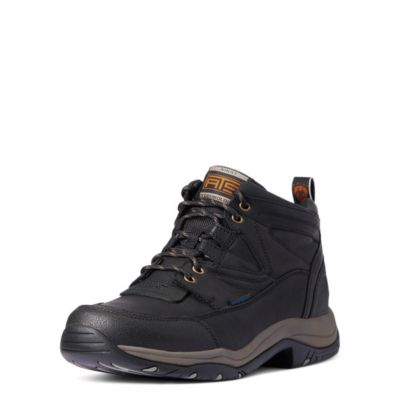
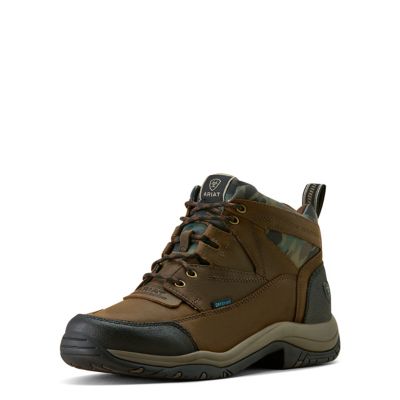
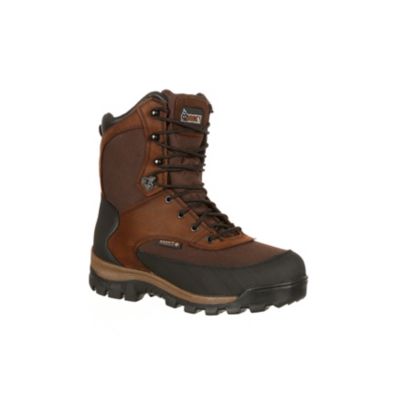
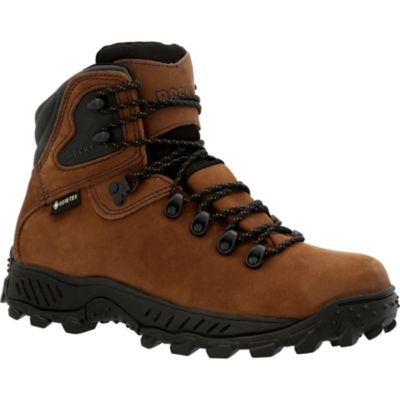
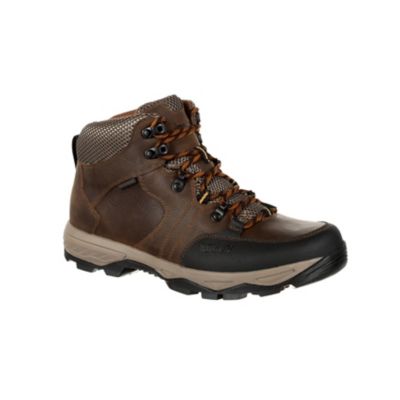
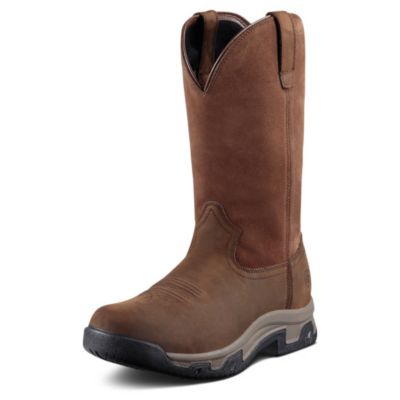
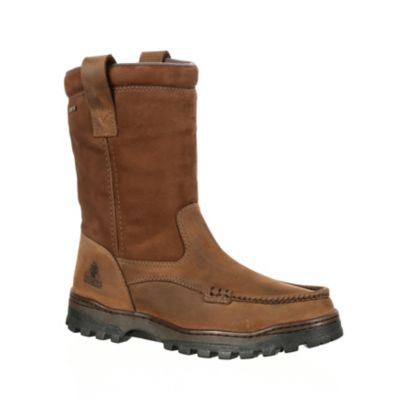
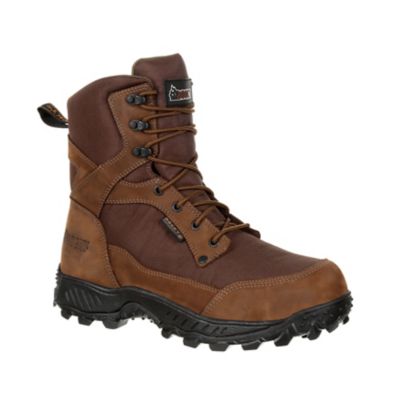
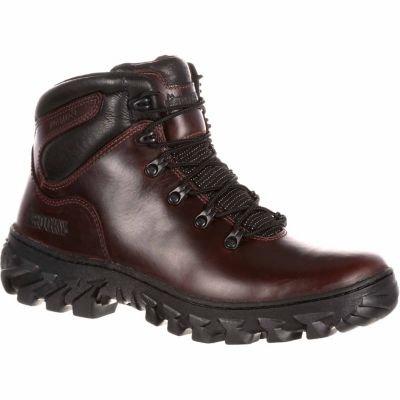
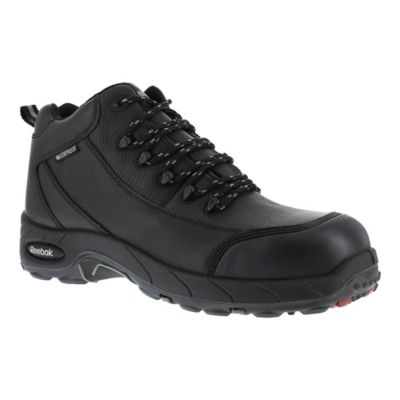
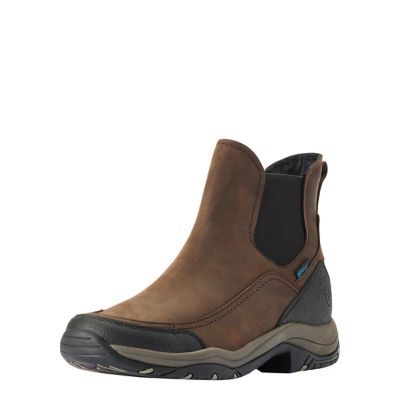
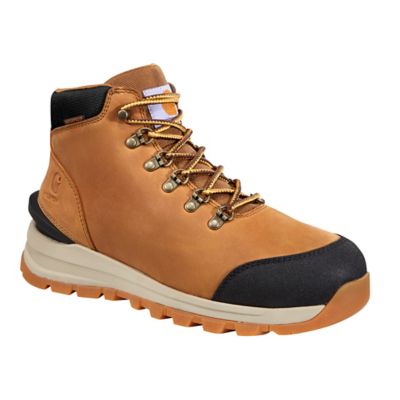
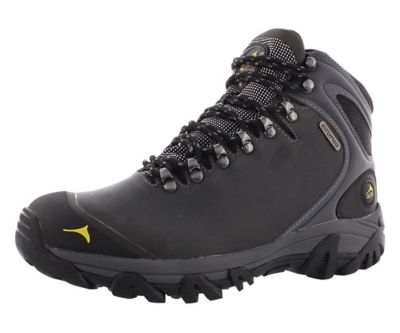
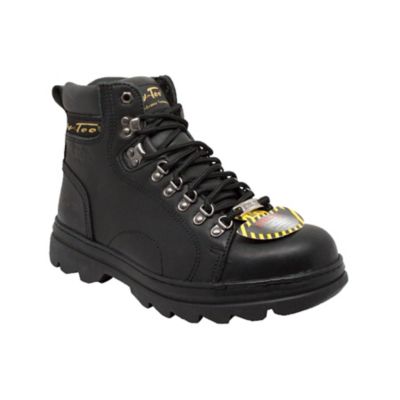
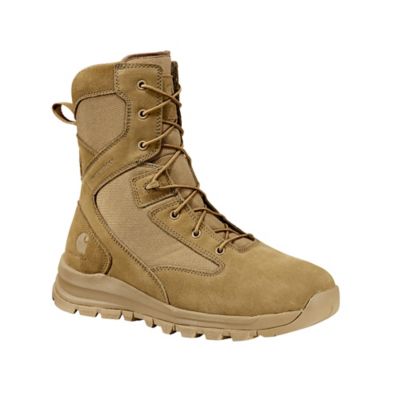
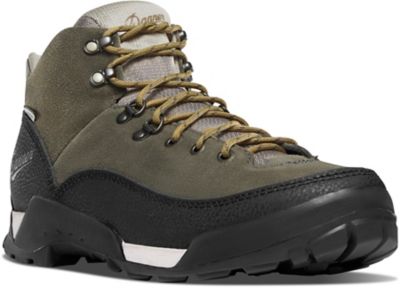
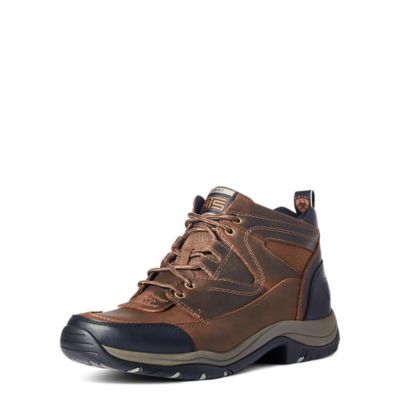
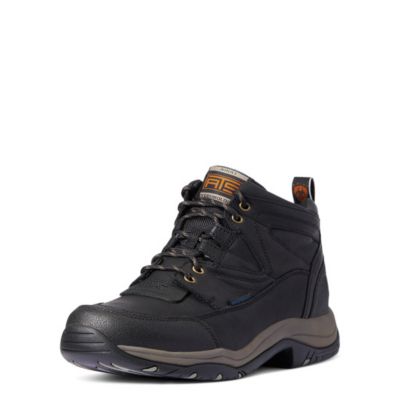
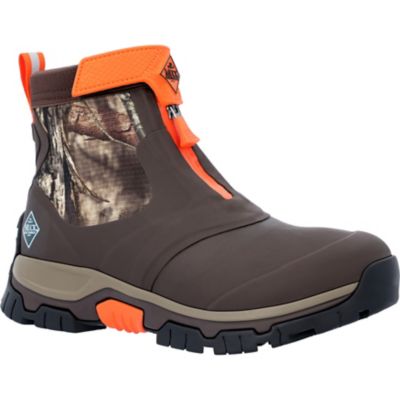
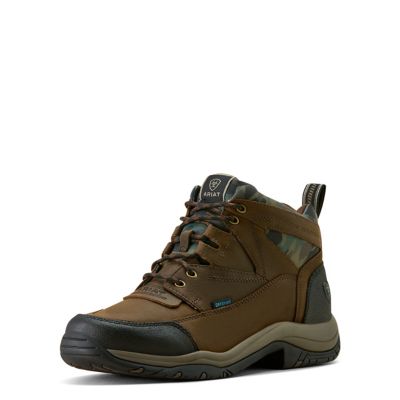
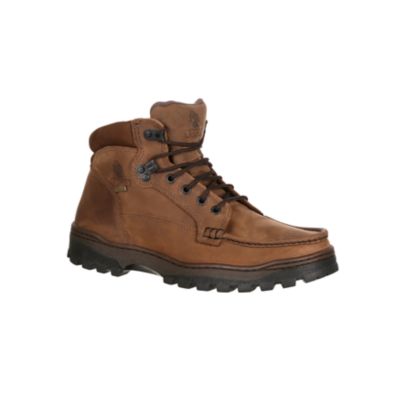
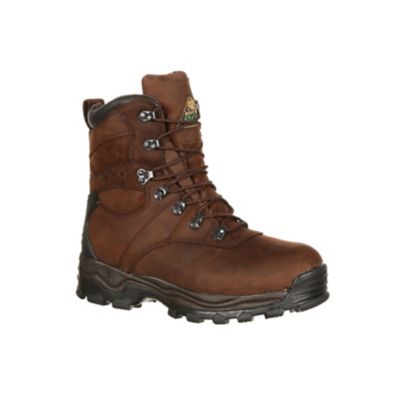
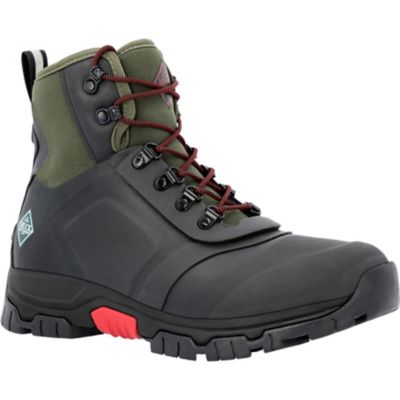
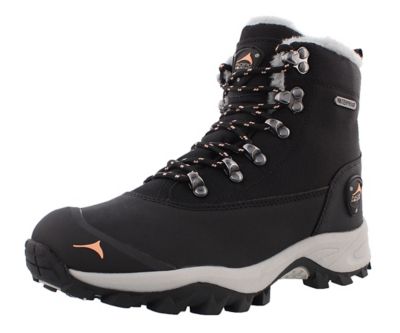
Waterproof men's hiking boots pair trail-ready traction with a barrier against outside moisture, making them a practical choice for creekside paths, rain-soaked grass and muddy stretches between the trailhead and the ridge. Their waterproof protection generally comes from a membrane or liner inside the upper, along with construction that limits water entry through seams and other openings. Leather alone does not make a boot waterproof, and a water-repellent surface treatment is not the same as an internal waterproof barrier. Full-grain leather uppers bring a substantial feel and resistance to abrasion, while nubuck offers a softer, brushed surface with similar considerations for cleaning and care. Textile and synthetic panels can reduce weight and add flexibility, which matters on a long walk with plenty of uphill steps. Reinforced toes and heel areas help protect the upper from scuffs when the path runs through roots, loose stone or brush. A gusseted tongue, attached along its sides, helps keep water and trail debris from slipping through the opening beneath the laces, though the height of that attachment affects how much coverage it provides. Waterproof does not mean ready for deep crossings: water can still enter over the collar, and hiking boots are not a substitute for wading footwear. Breathability matters, too. Waterproof membranes are designed to block liquid water while allowing some moisture vapor to escape, but sweat can still build up during a steady climb. Moisture-wicking socks and a fit that leaves room around the toes help manage that inside-the-boot dampness. Lightweight waterproof hiking boots often suit day hikes, fishing access trails and walks along wooded property lines. More substantial leather or mixed-material boots can make sense for rougher routes and backpacking, where the feet spend hours carrying both the hiker and a loaded pack. The right balance depends on the ground underfoot and the distance ahead, not simply on how rugged a boot looks. A flexible boot may feel easygoing on a packed dirt path, while a firmer platform can feel more settled when stepping across uneven rocks.
Underfoot construction makes a real difference when a trail changes from gravel to slick roots to soft creek-bank mud. Rubber outsoles with pronounced lugs provide edges that can bite into loose ground, and wider spacing between those lugs can help release mud rather than carry it along. Traction depends on both tread shape and rubber compound; a deep tread pattern does not guarantee a sure footing on wet rock or smooth timber. A defined heel edge can help with footing on descents, while cushioning in the midsole softens repeated impacts over hard-packed ground. Firmer midsoles and internal support pieces can limit excessive flex on uneven terrain, although too much stiffness may feel cumbersome for an easy afternoon walk. Some boots include a protective plate that reduces the feel of sharp stones beneath the foot. Mid-cut hiking boots balance ankle coverage with room to move, while taller designs add coverage and may have a more structured feel. Collar height alone, however, does not determine stability or prevent an ankle injury; outsole width, heel hold, underfoot firmness and fit all play a part. Fit deserves just as much attention as waterproof construction. Feet need enough toe room for a downhill stretch without sliding forward inside the boot, and the heel should stay reasonably settled rather than lift with every step. Width matters through the forefoot and instep, not just at the toe tips. A snug fit should hold the foot without squeezing it, and thicker socks should not turn a comfortable boot into a tight one. Trying boots with the socks intended for hiking gives a better sense of that balance. Feet can swell over a long outing, so a little breathing room is helpful without leaving so much space that the foot shifts sideways. Removable footbeds make room for compatible replacement insoles when needed, though a thicker insole can change the fit. Lacing adjustments can ease pressure over the instep or improve heel hold, but they cannot fix a boot that is the wrong shape for the foot. Leather may soften with wear; pinched toes should not be counted on to sort themselves out.
Care helps waterproof hiking boots keep doing their job after the trail dust settles. Mud left on the upper can draw moisture from leather as it dries, and grit around seams or flex points adds friction with every step. Gentle brushing and cleaning with products suited to the upper material help remove that buildup without harsh treatment. Leather, nubuck and synthetic fabrics have different care needs, so the manufacturer's directions matter when choosing a cleaner, conditioner or water-repellent treatment. Too much leather conditioner can soften areas meant to retain structure, while an unsuitable treatment may change the appearance or breathability of the upper. A surface treatment can help water bead up instead of soaking into the outer material, but it will not repair a damaged waterproof liner. After a wet outing, loosening the laces and removing the footbeds lets the inside dry more freely. Moderate airflow is a better choice than setting boots against a stove, heater or other strong heat source that can affect leather, adhesives and lining materials. Checking tread wear, loose stitching and lifting sole edges gives a clearer picture of when the boots need attention. Hiking footwear also has its limits around chores: waterproof trail boots should not be assumed to provide safety-toe protection, electrical-hazard protection or other workplace features unless those ratings are specified. For shorter routes where a lower collar and freer ankle movement suit the outing,
Men's Waterproof Hiking Shoes provide another trail-footwear option. Boots may be a thoughtful gift for a hiker, camper or family member who enjoys walking the back acres, especially when the recipient's size, width and preferred fit are known. Whether the route follows a familiar fence line or heads toward an unfamiliar ridge, waterproof hiking boots earn their place through a sensible combination of moisture protection, comfortable fit and construction matched to the miles ahead.