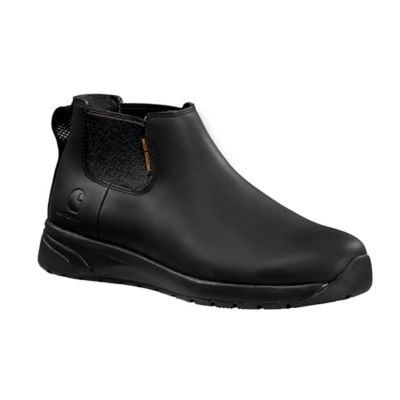
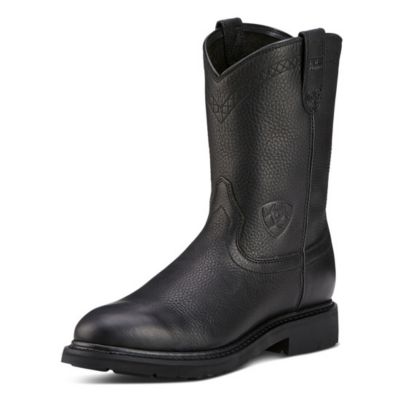
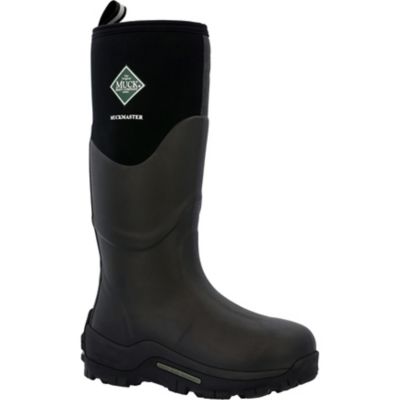
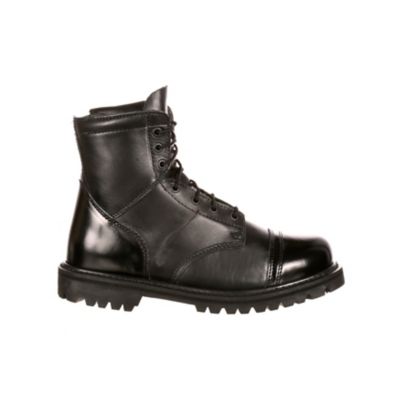
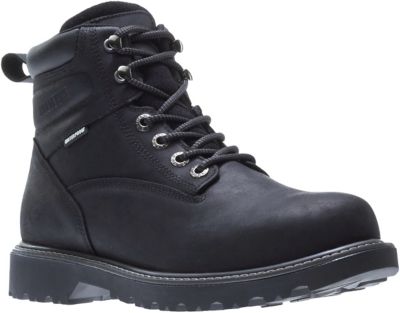
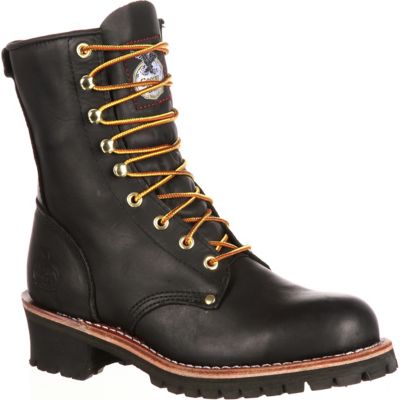
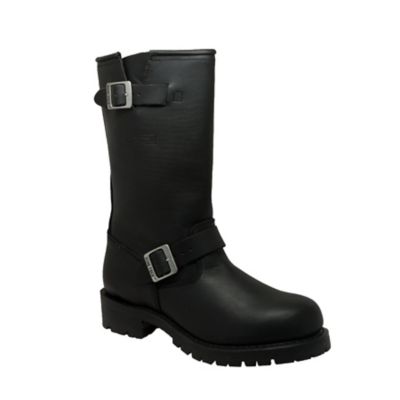
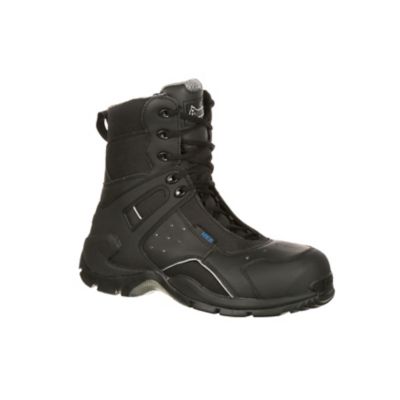
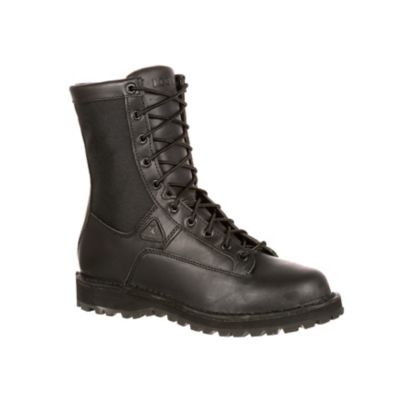
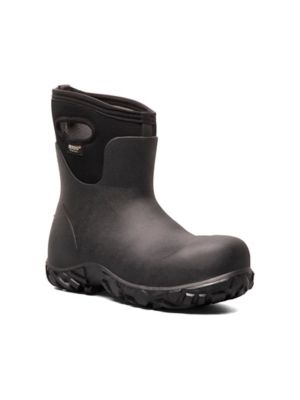
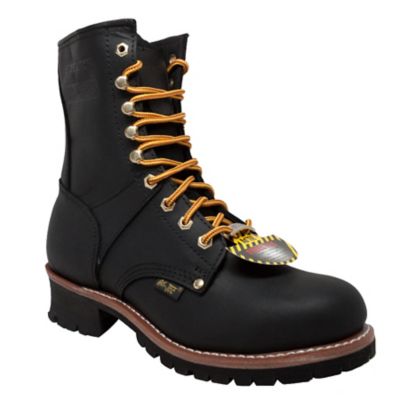
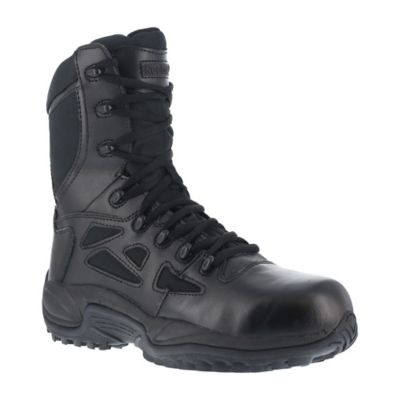
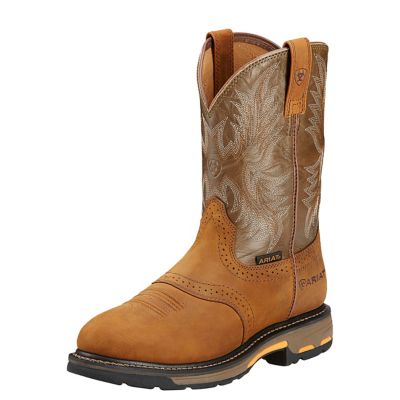
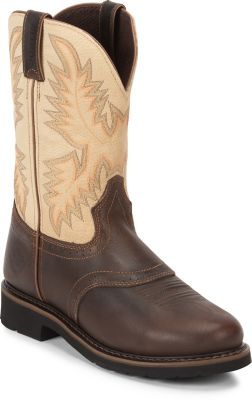
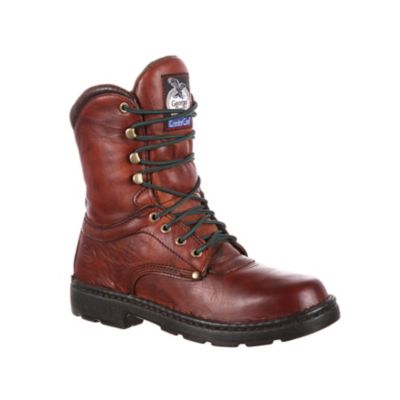
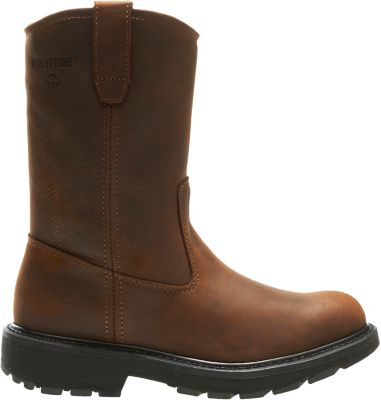
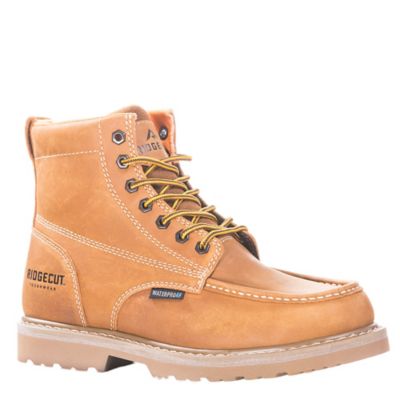
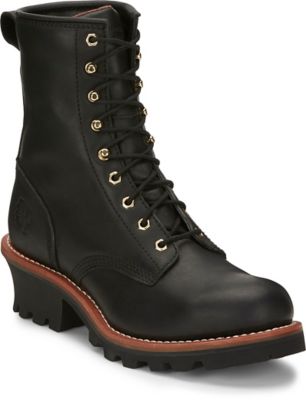
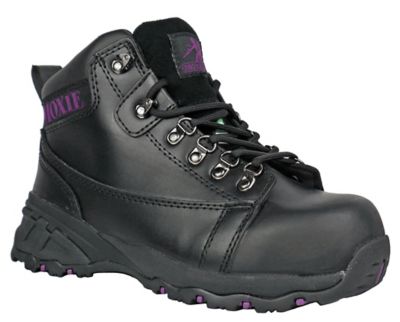
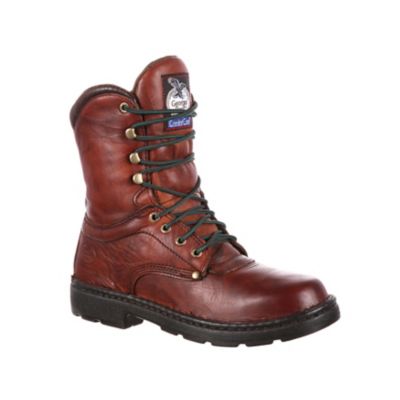
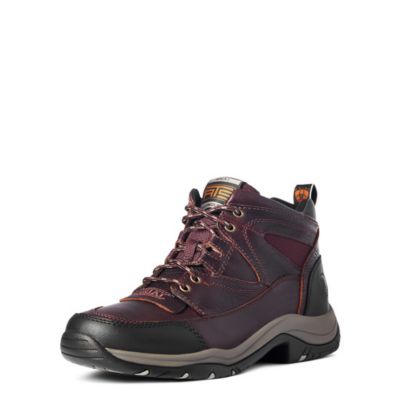
Men’s black work boots bring a straightforward look to footwear built for getting things done, whether the day involves checking fence lines, moving feed sacks, running equipment or spending hours on a shop floor. The black finish pairs easily with work jeans, utility pants and uniforms, but there’s more to the choice than color. Upper materials, sole construction and the way a boot holds the foot all affect how it feels once the job gets going. Leather uppers offer a firm, substantial feel and can become more flexible with regular wear and proper care. Full-grain leather keeps the hide’s outer surface, while other leather finishes may have a smoother, more even appearance. Neither a black finish nor a leather upper automatically makes a boot waterproof; that protection depends on the boot’s construction and stated features. Fabric panels can reduce weight and add flexibility, though exposed seams and mixed materials call for their own care. Around a barn aisle or equipment shed, the toe and heel often take the first knocks, so reinforced areas and protected stitching are worth considering. Underfoot, outsole shape matters just as much as the upper. Deeper lugs can help grip loose ground, while flatter tread patterns generally carry less dirt onto finished floors. Broad wedge soles spread contact across more of the ground, and defined heels give a different feel underfoot. Rubber and polyurethane soles vary in weight, flexibility and resistance to workplace substances, so the material name alone doesn’t tell the whole story. Black can help make everyday marks less noticeable, although pale dust, dried mud and worn edges still show. For farmhands, mechanics, warehouse crews and folks handling property chores, the right combination comes down to the surfaces underfoot and the demands of the work, not simply how tough a boot looks on the shelf.
A work boot needs room where the foot moves and support where it settles. Men’s black work boots come in different widths, toe shapes and shaft heights, and those differences can be noticeable long before the end of a shift. Toes should have space to spread without pressing against the front or sides, especially when kneeling beside a trailer hitch or bending to lift a bag. The heel should feel secure without rubbing, and the middle of the foot should feel held rather than squeezed. Work socks and any regularly worn insoles belong in the fit picture because they change the space inside the boot. A thick sock can take up more room than expected, while an added footbed can lift the heel and reduce toe clearance. Leather may soften with wear, but a boot that pinches at the toes shouldn’t be counted on to stretch into the right size. Lace-up styles let the wearer adjust tension through the foot and ankle, which can help accommodate different foot shapes. Pull-on styles offer quick entry and fewer laces to catch or come untied, though getting the instep and heel fit right is especially important. Taller shafts add coverage, while shorter shafts leave more room around the lower leg. Cushioning can soften the feel of hard floors, but cushioning and support aren’t the same thing; a soft footbed still needs a stable base beneath it. Safety features deserve the same attention as fit. Steel, composite and alloy toe caps differ in weight and shape, and the protection needed depends on the workplace’s requirements. A soft-toe boot isn’t a substitute where protective footwear is required. Slip resistance, puncture resistance, metatarsal protection and electrical hazard ratings address different concerns, so one feature shouldn’t be taken to mean that every hazard is covered. Even a slip-resistant sole needs sensible footing around oil, loose gravel or manure. Matching stated ratings to the job helps keep the choice grounded in what the wearer actually does, whether that means handling lumber, working near rolling equipment or walking between buildings.
Regular care helps men’s black work boots stay flexible, presentable and ready for the next round of chores. Dirt packed into stitching and grit left along the sole edge can wear on materials over time, so a quick brushing after a dusty job does more than tidy the appearance. Mud is easier to deal with before it sits in thick layers, and manure or other worksite residue should be cleaned off with a method suited to the upper and outsole. Smooth leather often benefits from an appropriate cleaner and conditioner, while suede, nubuck and fabric need different treatment. Black polish can refresh compatible finished leather, but polish isn’t a replacement for conditioning or a waterproofing treatment. Following the footwear maker’s care directions helps prevent a product meant for one material from staining or weakening another. Boots that become damp need time to dry away from direct heat, with enough airflow inside to clear moisture from the lining. Rotating between pairs, when practical, gives each pair more drying time and makes it easier to notice small problems before they grow. Frayed laces, loose stitching, separating soles and tread worn smooth are signs that a boot needs attention. Replaceable laces and removable footbeds can freshen the fit, but they can’t restore a damaged protective toe or rebuild a worn-out outsole. Some stitched constructions allow professional resoling, depending on the design and condition of the boot. For work that calls for a lower cut,
Mens Black Leather Work Shoes offer another option to consider alongside taller footwear. Boots can also make a practical gift for someone starting a hands-on job or spending more time caring for acreage, provided the recipient’s size, width and workplace requirements are known. The most useful pair is one that suits the person’s daily routine: enough coverage for the task, the right protection for the setting and a fit that still feels right after hours on foot.