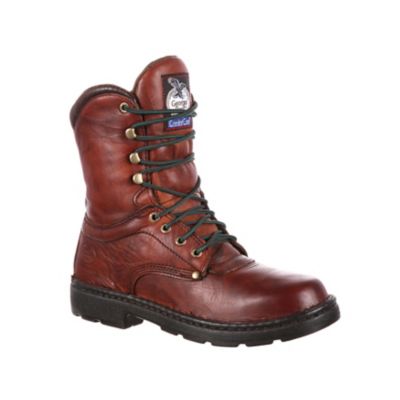
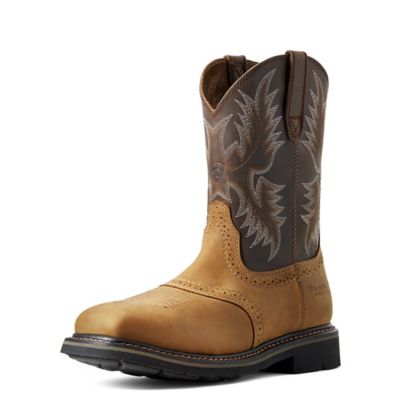
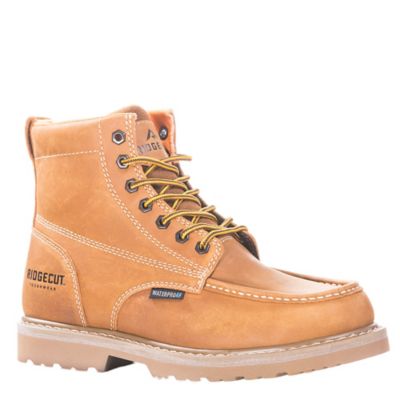
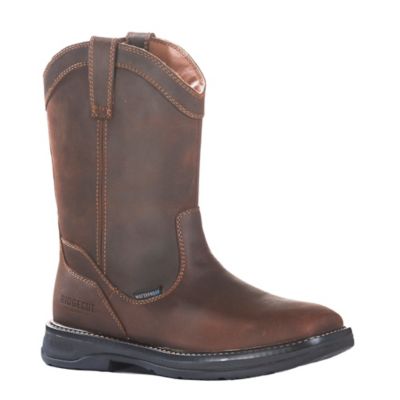
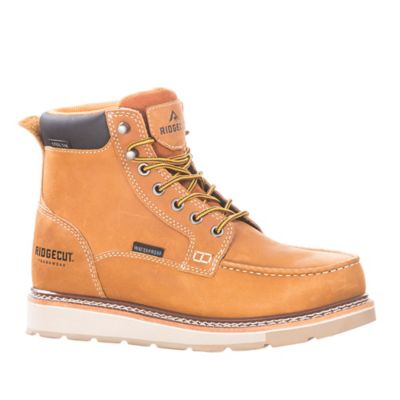
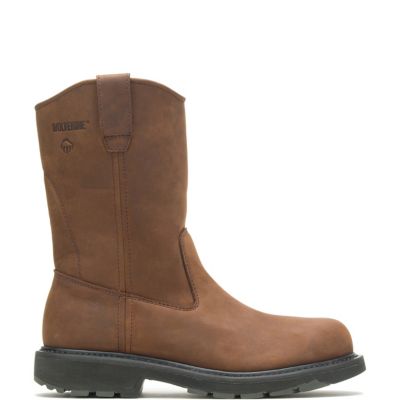
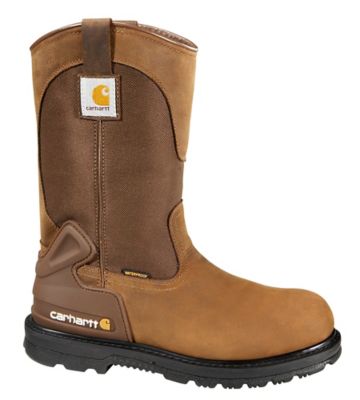
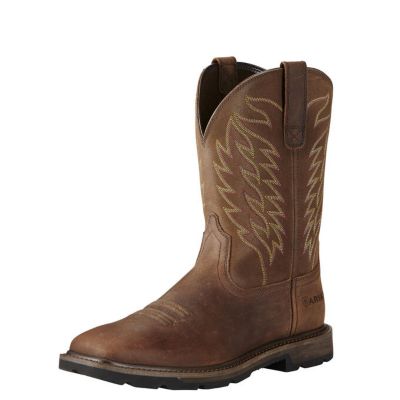
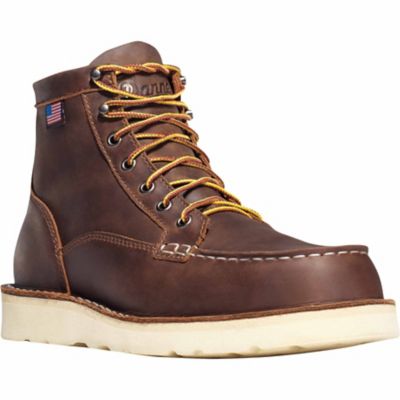
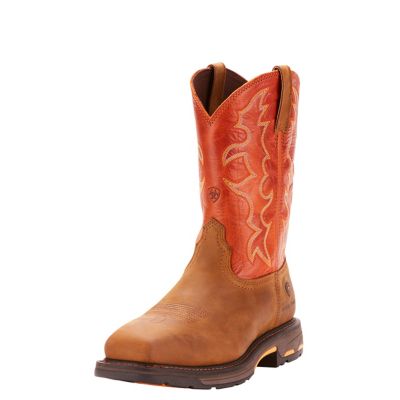
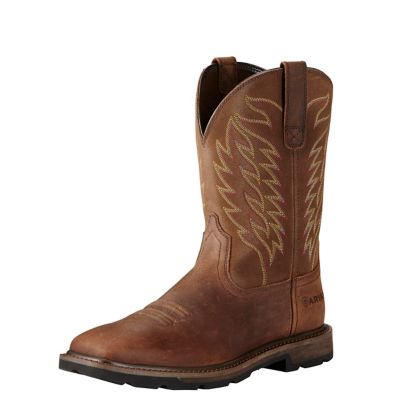
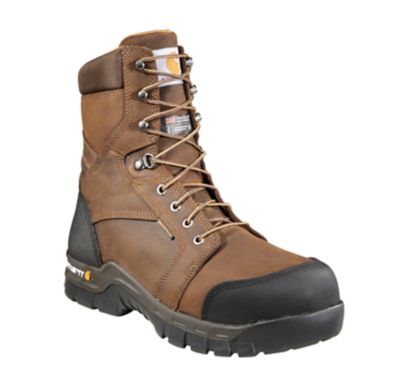
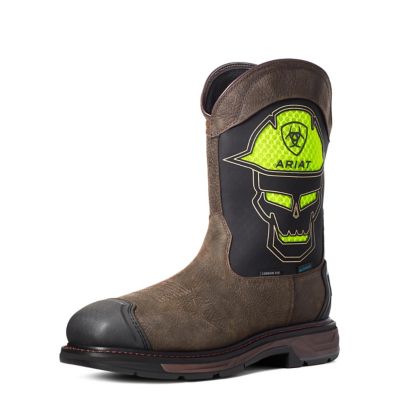
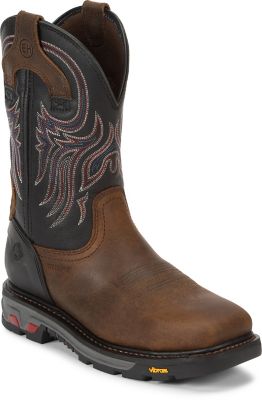
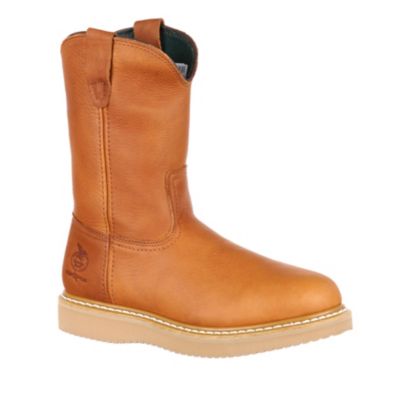
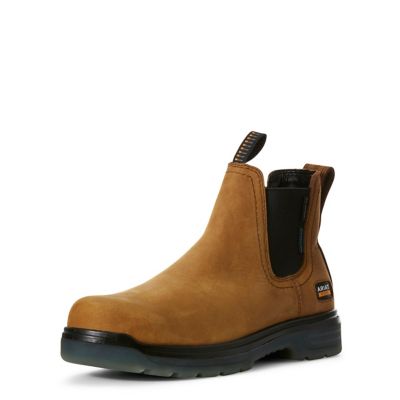
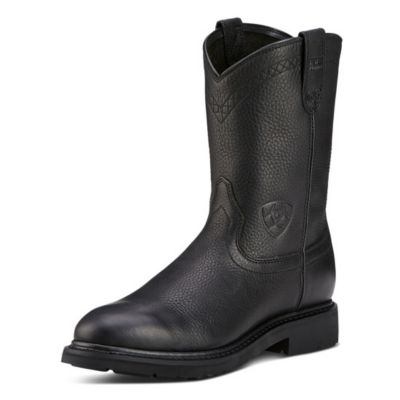
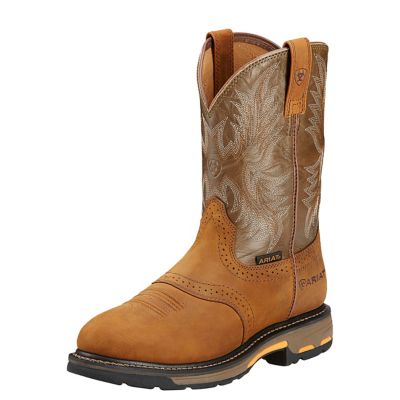
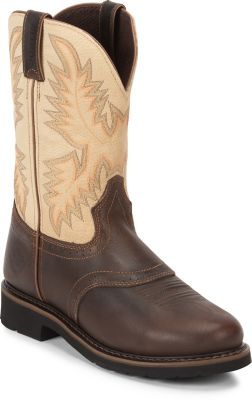
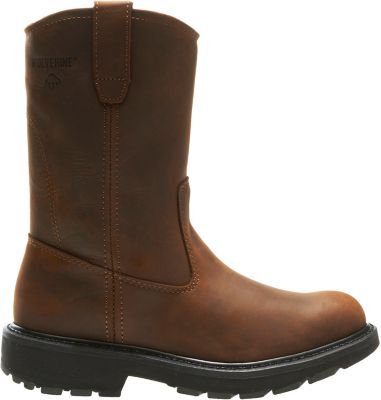
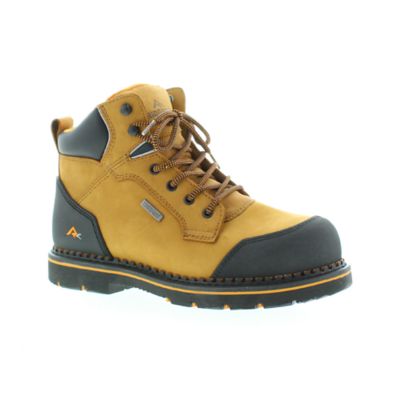
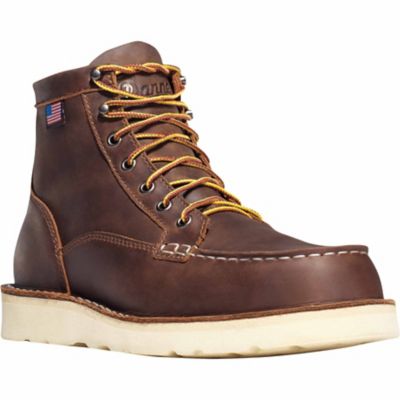
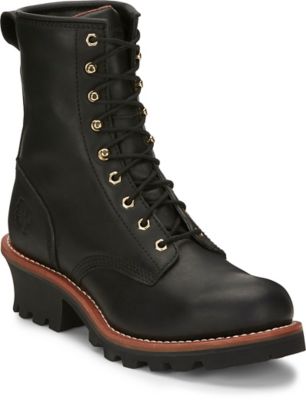
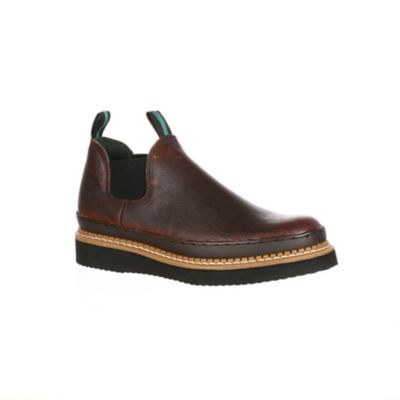
Men's leather work boots have a place beside the back door, on the jobsite and anywhere the day calls for steady footing and protection underfoot. Farmhands, equipment operators, carpenters and folks tending their own acreage all put different demands on a pair, but the basics stay much the same: leather that flexes where the foot bends, a sole suited to the ground and enough support to stay comfortable through a full day's work. Full-grain leather keeps the hide's outer grain intact and often shows natural markings, while top-grain leather has a more even surface. Neither description tells the whole story on its own; leather thickness, stitching, lining and construction all affect how a boot feels and wears. Smooth leather generally wipes clean more easily than a textured surface, which matters after a trip through the barn aisle or a dusty equipment shed. Unlined leather can feel less padded and take on the shape of the foot over time, while fabric linings may help manage moisture inside the boot. Underneath, outsole design makes a noticeable difference. Deeper lugs can help grip loose ground, though they may also carry gravel and dirt onto a shop floor. Shallower tread can be easier to brush clean between chores. A defined heel may suit certain ladder tasks, while a broad wedge sole spreads contact across more of the foot when standing on flat surfaces. Oil-resistant and slip-resistant claims describe different features, so one should not stand in for the other. Construction matters over the long haul, too. Some welted boots can be resoled if the uppers remain sound, while cemented construction can offer flexibility with less weight. The right combination depends on whether the day means walking fence lines, standing at a workbench or climbing in and out of equipment.
Fit deserves just as much attention as leather and tread, especially when work shifts involve a lot of walking or standing.
Leather Work Boots for Men should leave room for the toes to move without letting the foot slide around inside. A snug instep can help hold the foot in place, but pressure across the ball of the foot, pinched toes or rubbing at the ankle are signs that the shape or size may not suit the wearer. Leather can soften and give with wear, but it will not turn a short boot into a longer one. Trying boots with the same thickness of socks worn on the job gives a better sense of the fit, and checking both feet matters because one may need a little more room. Any planned replacement footbed needs space as well; stacking cushioning into an already snug boot can crowd the toes and change how the heel sits. Lace-up styles allow adjustment through the instep and ankle, while pull-on styles rely more on the relationship between the heel, instep and shaft. Some initial heel movement can occur in pull-on construction, but excessive slipping can lead to rubbing. Toe protection is another fit and task consideration. Steel, alloy and composite safety toes each have different characteristics, and their suitability depends on the boot's stated rating and workplace requirements. A soft toe does not provide the same impact or compression protection as a rated safety toe. Jobs involving nails or sharp debris may call for puncture-resistant construction, while other workplaces have electrical-hazard or metatarsal-protection requirements. Those features need confirmation on the boot's labeling rather than a guess based on appearance. Even a substantial-looking leather upper cannot substitute for the protection a particular task requires. Cushioning and a supportive shank can help with comfort, but neither makes a boot right for every surface or every worker.
Leather work boots also benefit from a little attention between jobs, and the care routine should match the leather finish and construction. Loose grit along seams and around the sole can act like sandpaper as the boot flexes, so brushing it away helps protect those areas from unnecessary wear. A soft brush and a lightly damp cloth handle much of the everyday cleanup on smooth leather, while cleaners intended for the particular finish are a better choice for stubborn grime. Manure, oil and other jobsite residue deserve prompt attention rather than a long stay on the upper. Letting boots air out after wear gives trapped moisture a chance to escape; removing removable insoles can help the inside dry more fully. Direct heat from a heater or dryer can damage leather and adhesives, so room-temperature drying is the safer approach. Conditioning can keep appropriate leather finishes from becoming overly dry, but more is not always better. Heavy applications may darken the surface or leave residue, and some treatments are not suited to suede, nubuck or waterproof constructions. The manufacturer's care directions are the best starting point, with any new treatment checked first on a small, out-of-the-way spot. Waterproof boots still need attention at seams, flex points and the upper, and water can enter over the top regardless of the barrier inside. Regular checks of worn tread, separating soles, broken stitching and damaged laces help catch small problems before they interrupt a day's work. Rotating between pairs, when practical, also allows more drying time between wears. For someone buying a gift, the recipient's usual boot size is only part of the picture: width, preferred shaft height, daily tasks and required safety ratings matter just as much. A pair that suits those details is far more useful than one chosen for looks alone, whether it is headed to a working farm, a repair shop or a long list of chores around the property.