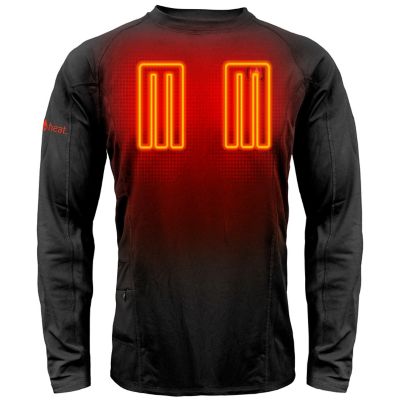
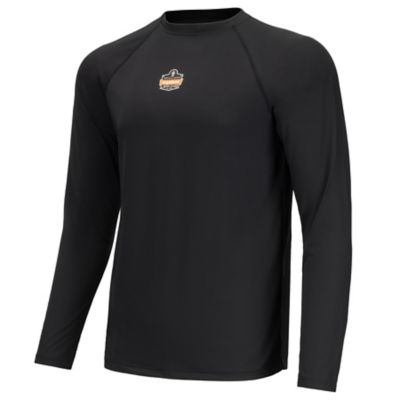
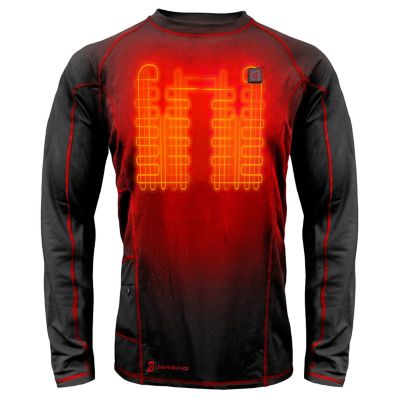
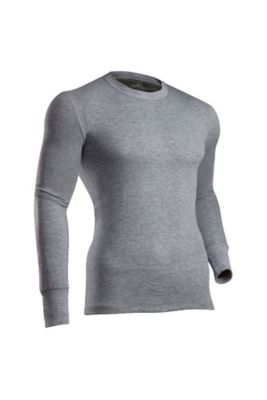
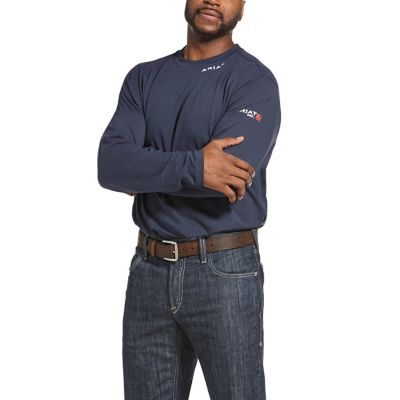
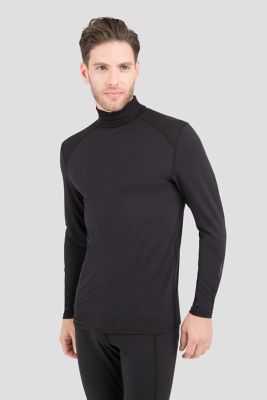
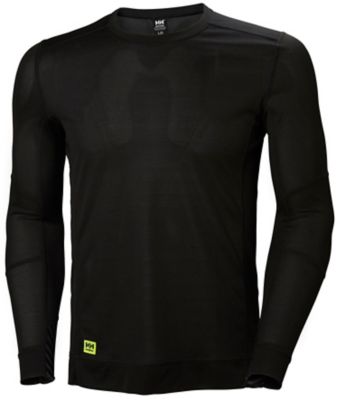
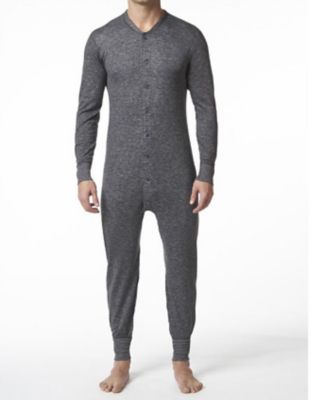
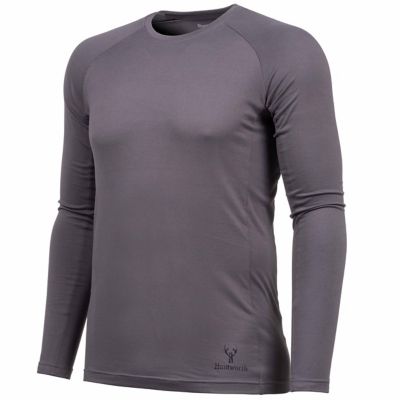
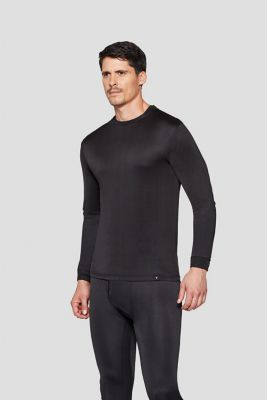
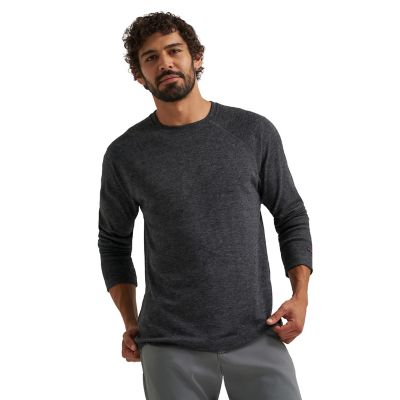
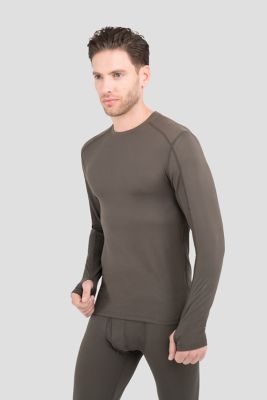
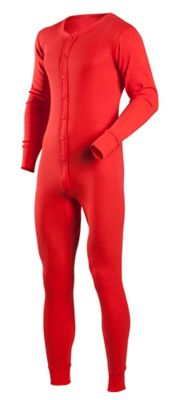
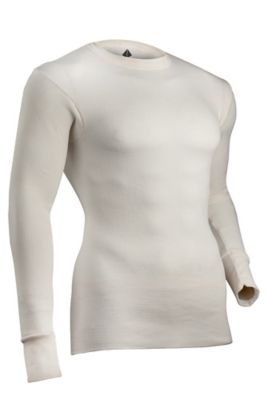
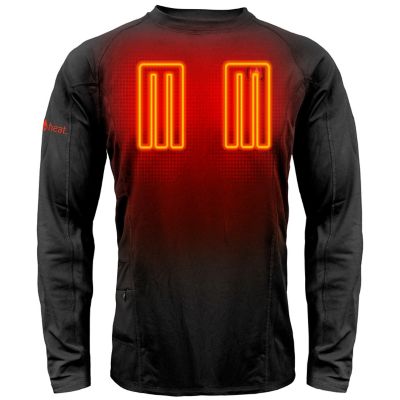
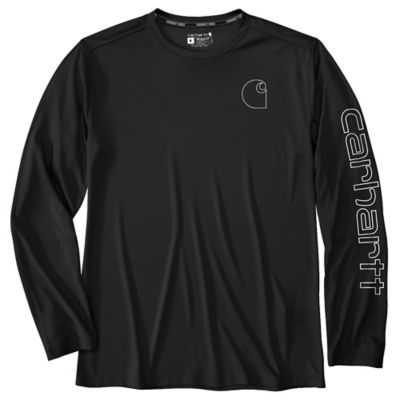
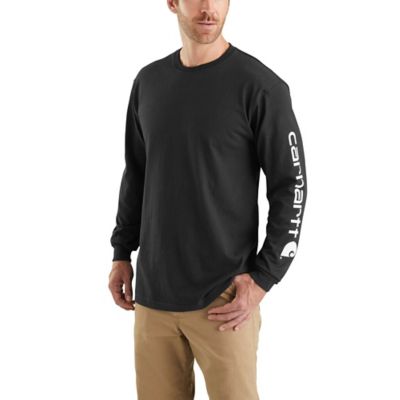
Long sleeve base layers are next-to-skin shirts that help manage moisture and provide a foundation for warmth beneath everyday workwear and outdoor clothing. During the cooler months, that first layer can make a difference between feeling comfortable through morning chores and carrying a damp chill into the rest of the day. Moisture-wicking fabrics move perspiration away from your skin so it can spread across the fabric and evaporate, while insulating materials help hold warm air close to your body. How well the whole outfit performs also depends on the layers above it, your activity level, and the weather. Someone stacking firewood has different needs from someone sitting quietly in a hunting blind, even when the thermometer reads the same. Lightweight long sleeve base layers generally suit active work and milder conditions, offering coverage without as much insulation. Midweight fabrics provide a middle ground for days that include both movement and downtime. Heavier thermal tops add insulation for colder conditions or slower-paced activities, though extra warmth can become uncomfortable when the work picks up. Fabric weight descriptions vary between manufacturers, so material, construction, and fit deserve a look alongside the weight label. A long sleeve thermal shirt is not always a sweat-wicking performance layer; some styles put more emphasis on softness and warmth for everyday wear. That distinction matters when a morning starts with feeding livestock, moves into hauling supplies, and ends with standing beside the fence talking to a neighbor. For changing conditions, a breathable base layer beneath an insulating shirt or fleece and a weather-appropriate outer layer gives you room to adjust. The base layer handles moisture near your skin, the middle layer supplies much of the insulation, and the outer layer helps protect against wind or precipitation. Together, they offer more flexibility than relying on one thick shirt to do every job.
Material is one of the biggest purchase considerations for long sleeve base layers because it affects drying time, warmth, feel, and care. Polyester fabrics generally absorb little moisture and dry quickly, making them practical for brisk walks, steady barn work, and other activities that bring on a sweat. Nylon can add abrasion resistance, while a small amount of elastane or spandex supplies stretch for bending, reaching, and lifting. The exact blend and knit matter, so a synthetic shirt can feel smooth and light or soft and substantial. Merino wool offers temperature regulation and natural odor resistance, which can be helpful for repeated wear on camping trips or long days away from home. It can also retain some insulating ability when damp, but no wet shirt is a substitute for dry clothing and suitable weather protection in cold conditions. Fine merino fibers often feel softer against the skin than coarser wool, although individual sensitivity varies. Wool-and-synthetic blends combine characteristics of both materials, with performance depending on their proportions and construction. Cotton thermals offer a familiar, soft feel for relaxed wear, light chores, or time indoors, but cotton holds moisture and dries slowly compared with many performance fabrics. For sustained exertion in cold weather, moisture-managing synthetics or wool are generally better choices. Fabric texture also affects comfort: waffle knits create small pockets of air, brushed interiors add a cozy feel, and smooth knits tend to slide easily beneath another shirt. None of those details tells the full story on its own. Breathability, thickness, and the rest of your outfit all influence how warm you feel. Care requirements are worth weighing before buying, especially when work clothes go through the wash often. Some wool garments call for gentler washing and drying, while many synthetic layers offer simpler care. Following the garment label helps protect stretch, shape, and fabric performance. Price comparisons are most useful when they account for fiber content, fabric weight, construction, and how often the shirt will earn a place in your weekly rotation.
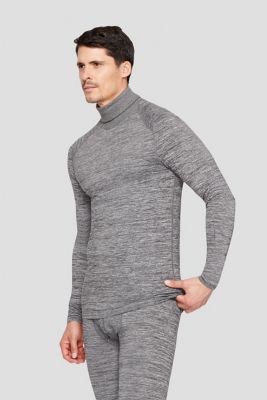
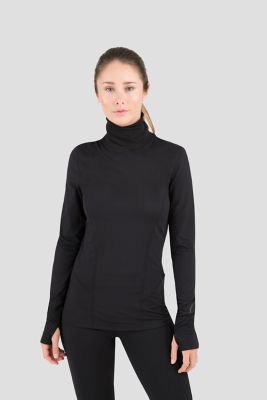
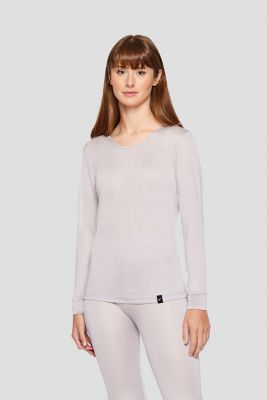
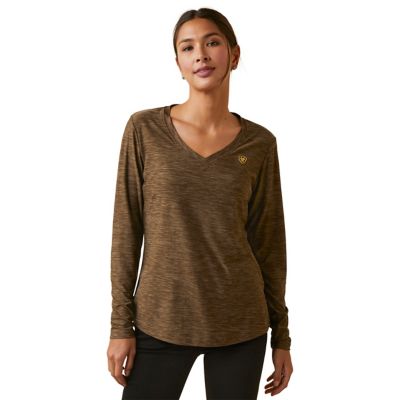
Fit turns those fabric features into everyday comfort. Most moisture-managing long sleeve base layers work best with a close fit that maintains contact with the skin without pinching or restricting movement. Compression is not necessary unless it is a feature you want. A shirt should leave enough room to reach overhead, lean across a workbench, or bend to fasten a gate without pulling hard through the shoulders. Sleeve length matters when your arms are extended, and a longer hem can help keep the shirt tucked as you move. Flat seams and tag-free necklines may reduce rubbing beneath shoulder straps or snug outerwear, while stretch panels and shaped sleeves can make active days more comfortable. Crew necks sit neatly under most shirts; higher necklines provide more coverage, and zip-neck designs allow some ventilation when your workload increases. Thumbholes, when available, can help sleeves stay in place while you pull on another layer, though a simple cuff may feel better beneath gloves. Shoppers comparing cuts can explore
Women's Thermal Long Sleeve Shirts for options within that category, checking size charts and garment measurements rather than assuming every thermal fits alike. Long sleeve base layers make sense for farm and ranch workers, hikers, hunters, anglers, and anyone who spends part of the day outdoors. They are equally useful beneath everyday clothes for a chilly commute or an evening at an outdoor ballgame. As a gift, a thermal top is a practical choice for someone who is always heading out before the house has warmed up, especially when you know their size, preferred fabric, and usual activities. A lighter layer may serve the person who rarely stands still, while a warmer one may better suit someone watching over a field or riding along on a cold morning. The best match is not simply the thickest shirt on the shelf. It is the layer that feels right against the skin, fits beneath the clothes already in the closet, and suits the work or recreation ahead.